


 Photography: Kara Rosenlund
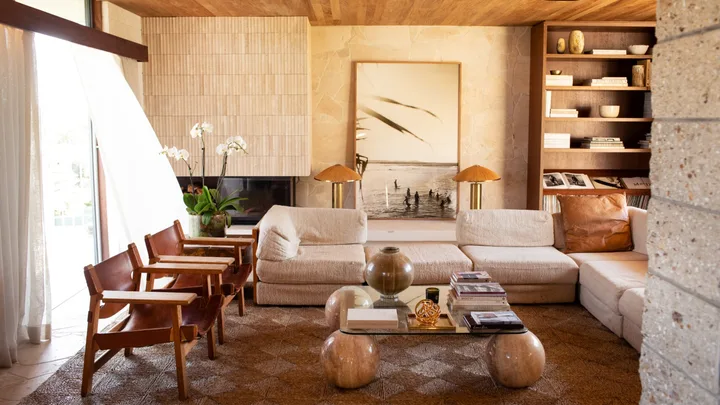
Hanging art on your walls can instantly elevate the look and feel of your home. When done correctly, art can inspire certain moods, tie-in colour themes and add a personal touch to your space. But how does one even know which piece is right for their home, and how to make it work?
On a recent episode of The Edit podcast, My Reno Rules judge and interior stylist Julia Green answered a few art queries we’d been pondering, including how you choose art for your home. “I think you’ve got to ask yourself, in the way you live and in your own home, what makes you feel good and what makes you feel calm, and how that’s going to translate into how you’re going to hang your art work,” she told podcast host Elle Lovelock.
Listen to Julia Green on The Edit podcast:
While choosing a fabulous artwork is a matter of personal taste (and household budget!), styling it in a space is an art form in itself. To help guide us in this pursuit, we enlisted the help of Julia Green and visual artist Lara Scolari to share their expert tips on how to decorate with wall art at home.
How to decorate with wall art
1. Consider the size of your room
Size and scale is vital in styling artwork in your home.
“Let’s make sure the [artwork] fits in the space you’re planning to put it,” Julia advises. “You could have a Picasso in the house, and if it’s the wrong scale, it can all just look terrible. So, scale is everything, and it really needs to be thought through from the outset.”
“One of the best ways to do this is to take cues from the very space itself,” says leading contemporary visual artist Lara Scolari. “No matter what type of space you have, the first thing to consider is the dimensions of the space you’re wanting to fill.”
“Get some tape, or even some blu-tac to roughly mark out the dimensions of what you believe is the perfect sized artwork for the space – then measure it. Take a photo of the space and your surrounding decor and then take both the image and the measurements with you to the gallery.” You can also blu-tac sheets of A4 paper to the wall to understand if a piece is too big or too small.
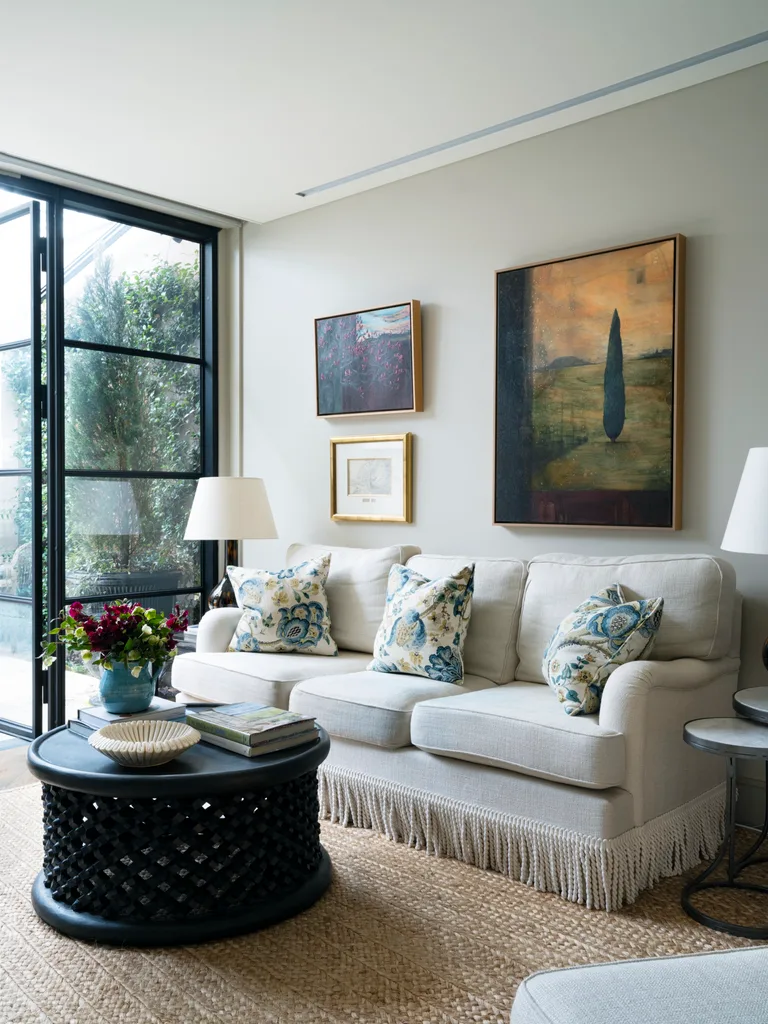
Julia also reminds there are now great digital options to preview a piece in your space. Greenhouse Interiors offers a free, 3D art app, GI Art, that can ‘place’ artworks from the website in your space to see if they’re a good fit.
2. Styling tips and matching themes
Whilst an artwork is effective in making a statement, it’s important to keep within the decorating style of other elements in your room, including the architectural style and existing design theme. This can work both ways – you may have a much-loved piece that will form the basis of the entire room design, or you might be shopping for a piece to complement a mid-century modern lounge suite.
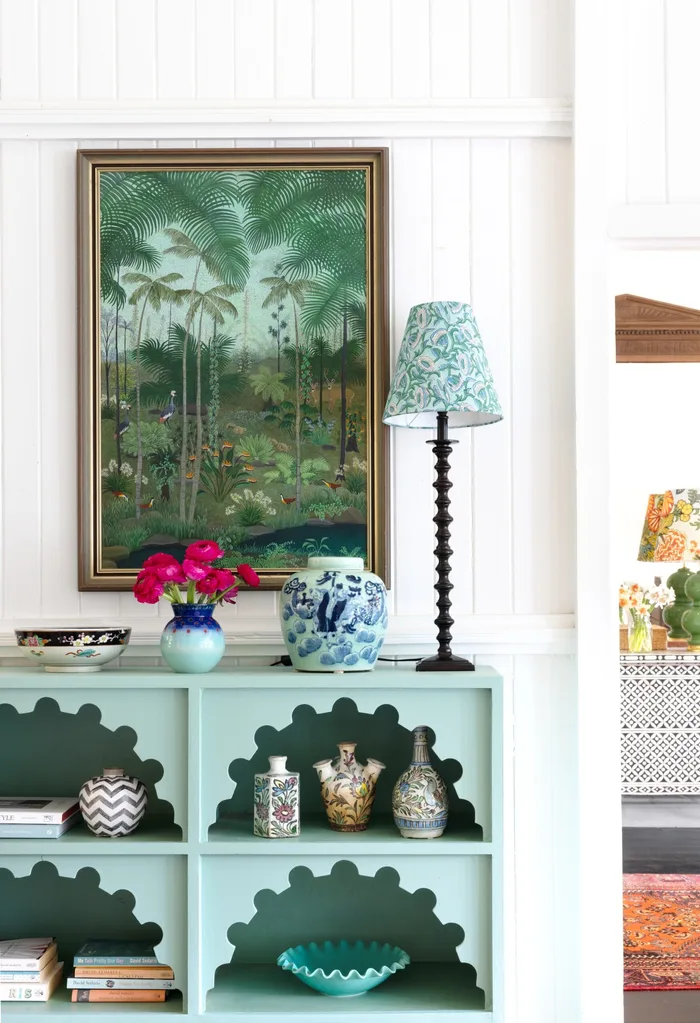
You might also want to consider the existing architectural elements of the space. For example, “If the room you’re decorating has lots of exposed timber, you want to consider carefully what you frame any artwork in,” suggests Lara.
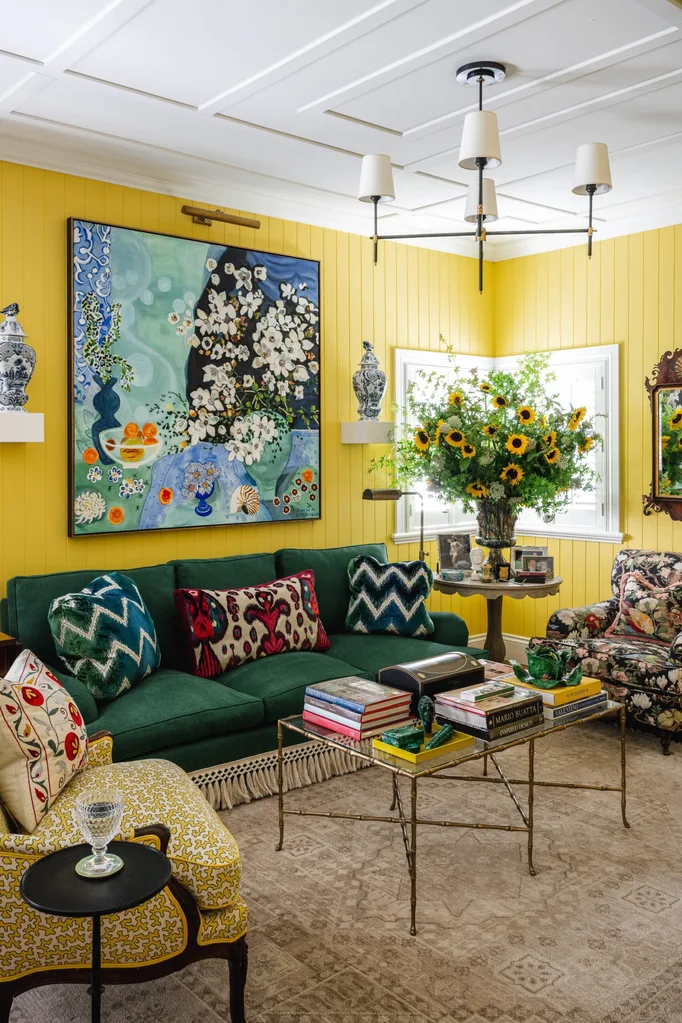
Wall art can also be used to complement or lock-in colour themes. If you’ve bought your artwork before other accessories, Julia suggests you “pick up cues from the chosen piece to inform the space. For instance, repeat the use of a bold colour in accessories or furniture items to enhance the overall palette.”
Meanwhile, if you want the artwork to make a bold statement in the room, consider the size and scale of surrounding furniture and accessories. “Lots of incidental small pieces may clutter the overall look, whereas bold shapes will enhance it,” she says.

3. White vs. coloured walls
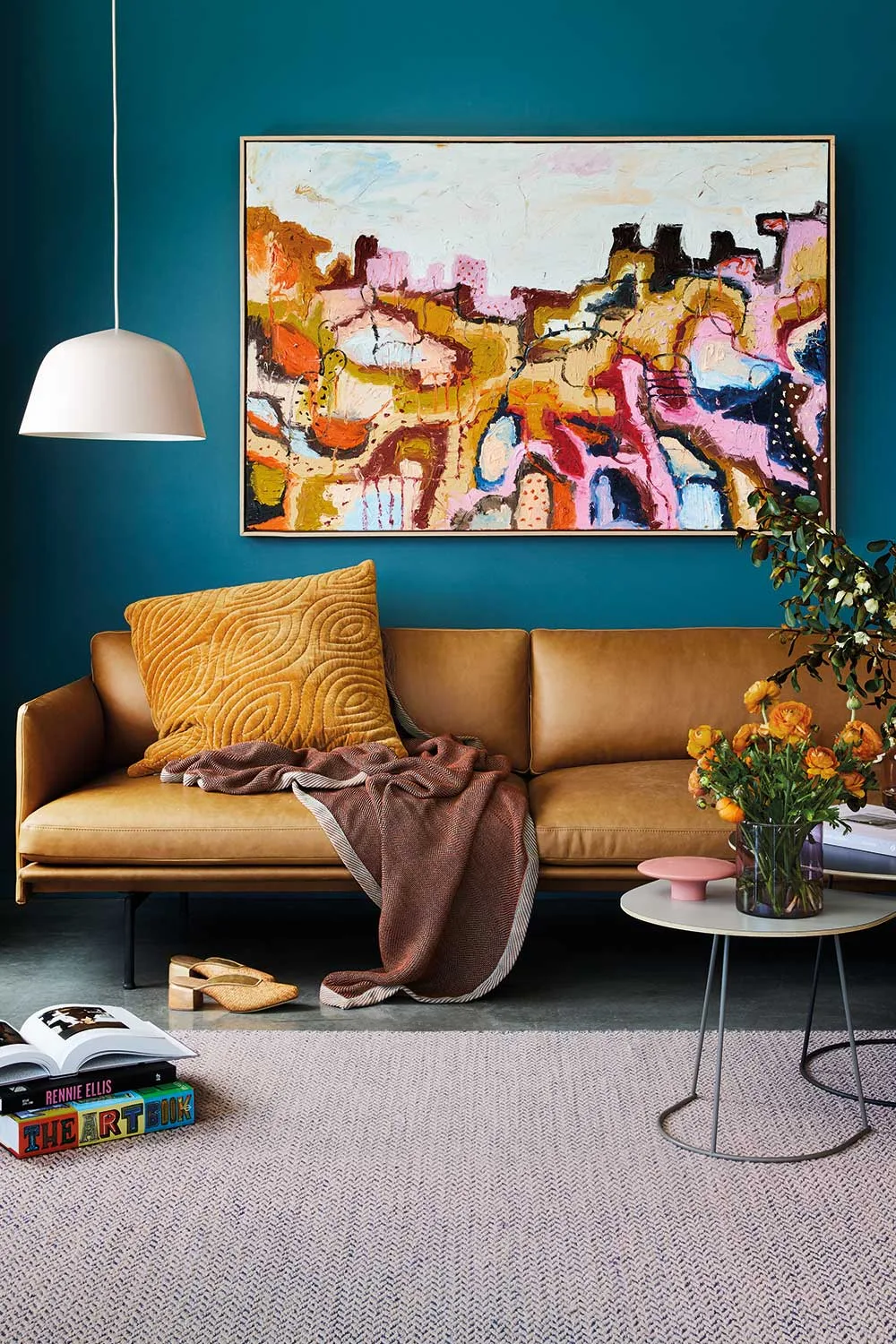
“Most people think that bold colours ‘pop’ against white backdrops, and whilst this is true to an extent, let it not be forgotten that they often ‘pop’ even more against darker colours,” says Julia Green. “A wall colour with depth is a match made in heaven for bold hues.” Just think about art galleries. While some modern art spaces will stick to white walls, historically, art galleries utilise coloured walls to enhance the depth and beauty of artworks.
Lara agrees, adding: “Bear in mind that you might want to re-paint the colour of the wall where the artwork will hang to make the artwork pop, and to further incorporate your art into the space.”
“Feature walls can be painted in a rich, bold hue and display a large scale dynamic abstract artwork that complements the energy and style of the room,” Lara notes.
4. Gallery wall vs. statement piece
On her episode of The Edit podcast, Julia answered a listener question about whether they should style their artwork on a “gallery wall”, or if they should do individual pieces or different walls. Julia’s advice was to look inward at your personal tastes. “Are you a minimalist or are you a maximalist?” she poses. “That may well dictate [if you opt for] single, punchy moments on your walls is going to make you feel better than crazy, busy, eclectic gallery hangs.”
In other words, if you love kitsch cottage clutter or eclectic bohemian decoration, a gallery wall may be for you. Meanwhile, if you prefer Scandi or other minimal style aesthetics, the one-off hang might be your best friend.
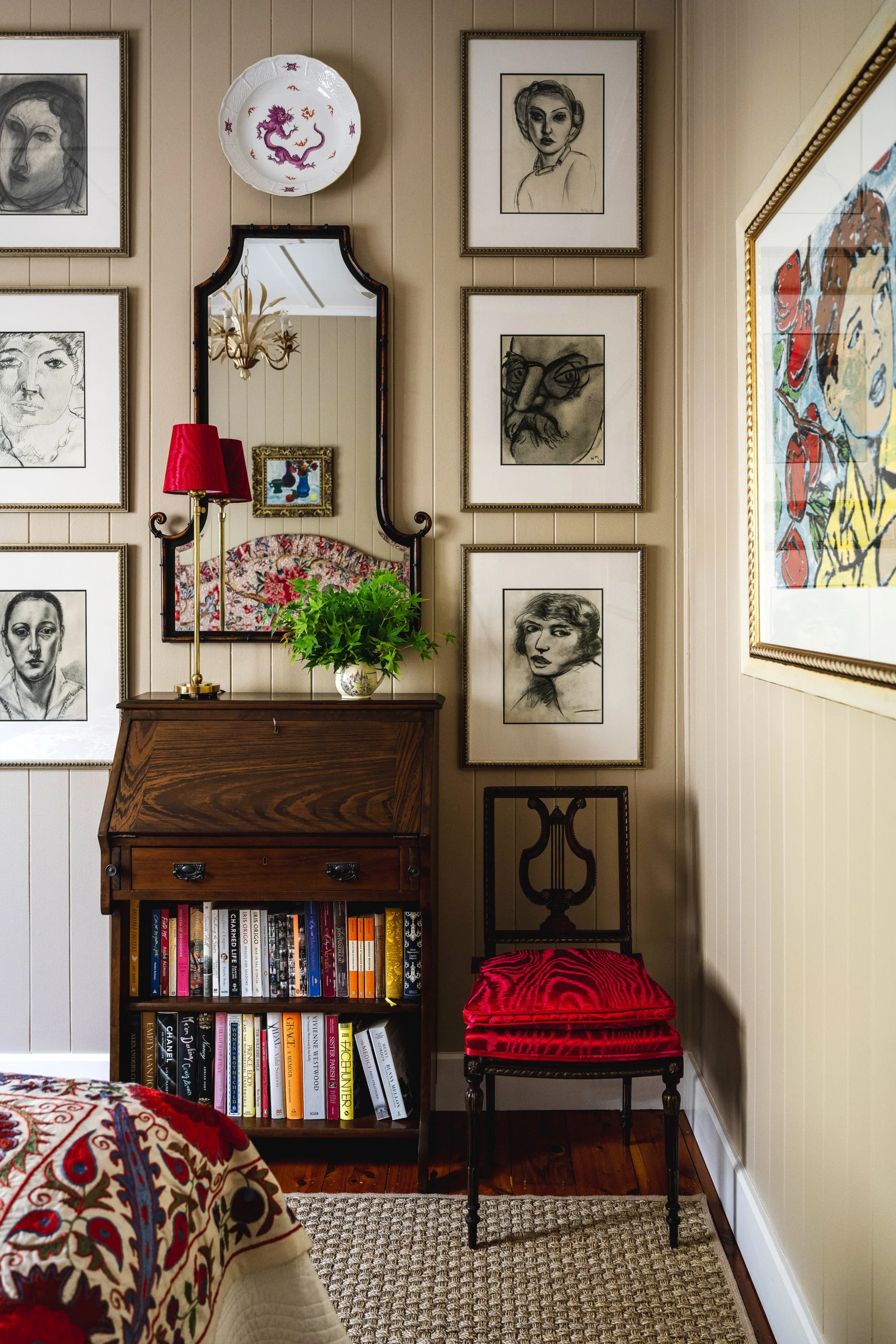
Lara adds that gallery walls can be a great option to showcase collected items of a shared theme. “If you’ve chosen a more eclectic style for your interior, you have greater scope to collect pieces of interest from your life and travels and display them together,” says Lara. “Artworks within the eclectic space can once again become a collection – but best to keep a common theme. This is also a great opportunity to hang your art in a gallery-style arrangement. You can almost get away with anything, so really feel free to go for it.”
Meanwhile, when it comes to feature walls, framing can be key. If your artworks are all by the same artist or are the same type of work (e.g. black-and-white photos, vintage film posters), you can use the same frames. However, if you’re doing a gallery wall with all different artworks, Julia recommends leaning into the eccentricity with different frames.
“Ideally, you should have different frames. If they’re all in the same frames, it’s going to look like you tried to match them all together. You need to make it look like it’s an honest mistake but gosh, you’re clever!” Julia advises.
5. Tips for hanging art
As with choosing your artwork, actually hanging it on your wall will come with plenty of measuring, plotting and planning. Julia’s expert advice for hanging art at home is to have a ‘horizon line’, particularly when doing a gallery-style wall display. This means having the top of the artworks all start along the same horizontal line.
“[A horizon line] just means they’re all hanging from the same line across the wall,” Julia explains. “Even if one starts here, one falls down here, one’s a square, one’s rectangular, they’ve got a commonality. That in itself will make them look like they were considered and meant to be together.”
If you’re going for the gallery wall hang, Julia also recommends plotting it on the floor first. “To get [a gallery wall] right, it’s [doing] good, old-fashioned puzzles on the floor,” Julia says. “You’re going to have to put them all together [on the floor] and work out down there how it could look up there [on the wall].” Using a measuring tape, pencil and tape, you can then plot out your floor design on your wall.
6. Try before you buy
One modern-day benefit of shopping for wall art is that some vendors have trial or return periods. “We offer all of our clients fourteen days because sometimes you need to sit with it for seven days and go, ‘yes, I’m loving it more every day’, or ‘I just don’t know’, and that’s okay,” Julia says of her Greenhouse Interiors.
Other online wall art stores with return periods include Bluethumb, Olive et Oriel, Art Lovers Australia, and Urban Road.
Watch Julia Green’s episode of The Edit on YouTube, or listen on your chosen podcast platform:

