
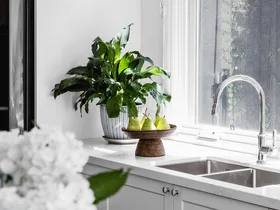
The peace lily is the plant that is most likely to survive in your home, even if you have a black thumb (like me). It will even keep you healthy while doing it. As an undemanding friend to any gardener cursed with the inability to keep plants alive, peace lillies (Spathiphyllum) thrive in low-light areas, adding rich greenery to dull corners. They also double as stylish air-purifiers for the bathroom, kitchen, or office with minimal upkeep.
If yours is looking a little worse for wear, try these simple steps to revive it.
IN THIS ARTICLE
- Drink up: How to water
- The sweet spot: Ideal light
- Feed for flowers: How to fertilise
- Pet warning: Are they toxic?
- The air-purifying myth: Do they really clean the air?

Drink up: How to water
Drooping, crunchy leaves means you’re simply not watering it enough. Immerse in a bucket or sink filled with water and soak overnight or until leaves stand tall again. Allow to drain and continue to keep the potting mix moist with regular watering, but don’t over water as they’re prone to root rot. Better to administer the occasional good soaking and let it dry out in between.
Less water is needed in the cooler months.
Your peace lily also loves a good misting, particularly in summer, to keep the leaves fresh and a wipe to remove any dust build up.

The sweet spot: Ideal light
Peace lilies don’t like being exposed to too much light. You’ll know a peace lily is getting too much sun when its leaves turn yellow. If you notice this happening, move it to an area of your home that receives dappled light.
Feed for flowers: How to fertilise
Feed occasionally with a slow release fertiliser or more often with a liquid one, to encourage healthy growth and a burst of lovely white spathe-like flowers in spring.
Pet warning: Are they toxic?
All parts of the peace lily plant, including the flowers, leaves and stems, contain a small chemical compound that can cause irritation to the mouth and throat, if ingested. This chemical can affect adults, children and pets, so to prevent injury, it’s best to keep this plant out of reach of kids, cats and dogs.
It’s important to note, however, that peace lilies are not true lilies. True lilies (Lilium) are highly toxic to cats and dogs.

The air-purifying myth: Do they really clean the air?
Peace lilies are often touted as air-purifying plants, capable of removing formaldehyde and benzene, as a result of the NASA Clean Air Study. Attempts to replicate the results of the test have repeatedly failed, so the plant’s ability to remove volatile organc compounds (VOCs) is ‘up in the air’.




Related stories

Native ad body.

Native ad body.




Native ad body.