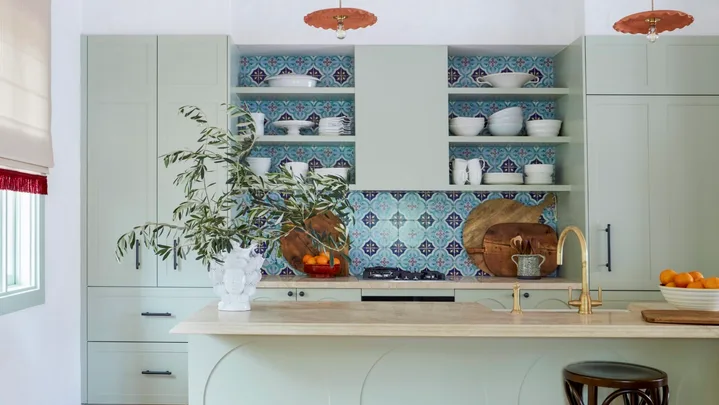
 Photography: Maree Homer
There’s no doubt about it: Italians know their way around a kitchen. And it’s not just the hearty meals they concoct to nourish the family or celebrate in style that make these work spaces so enviable. It’s the vibrant colour and pattern, with a touch of all-important texture, that ensures Italian kitchens are the latest style we can’t get enough of.
And we have a stunning example for you to tour. Interior designer Lisa Burdus brought a taste of Italy to Australia with this chic beachside home and even shared her best tips for Italian kitchen and dining room design.
An Australian take on European design
Two levels, both alike in decoration and design, make up this stunning holiday home for a married couple and their three adult daughters in NSW’s Port Stephens. Unlike most multi-storey homes, each level of this build is entirely self-contained, meaning the family is able to enjoy shared experiences while still having their own space for quiet moments, or to entertain their own guests.
The kitchen and dining area on the upper floor comfortably services six people, with a balcony and barbecue perfect for hosting more intimate parties. This design left interior designer Lisa Burdus with a fairly unusual task. How do you renovate a smaller, secondary kitchen without making the space feel less impressive than its larger counterpart?
For this Italian-inspired kitchen, the trick was maintaining the same luxe material palette, full of flamboyant fabrics, striking custom-made tiles and serene paint selections. Stunning seaside views didn’t hurt, either. “It’s a bit more of a cosy space,” says Lisa, “but it has exactly the same outlook onto the bay.”

Inside the material palette
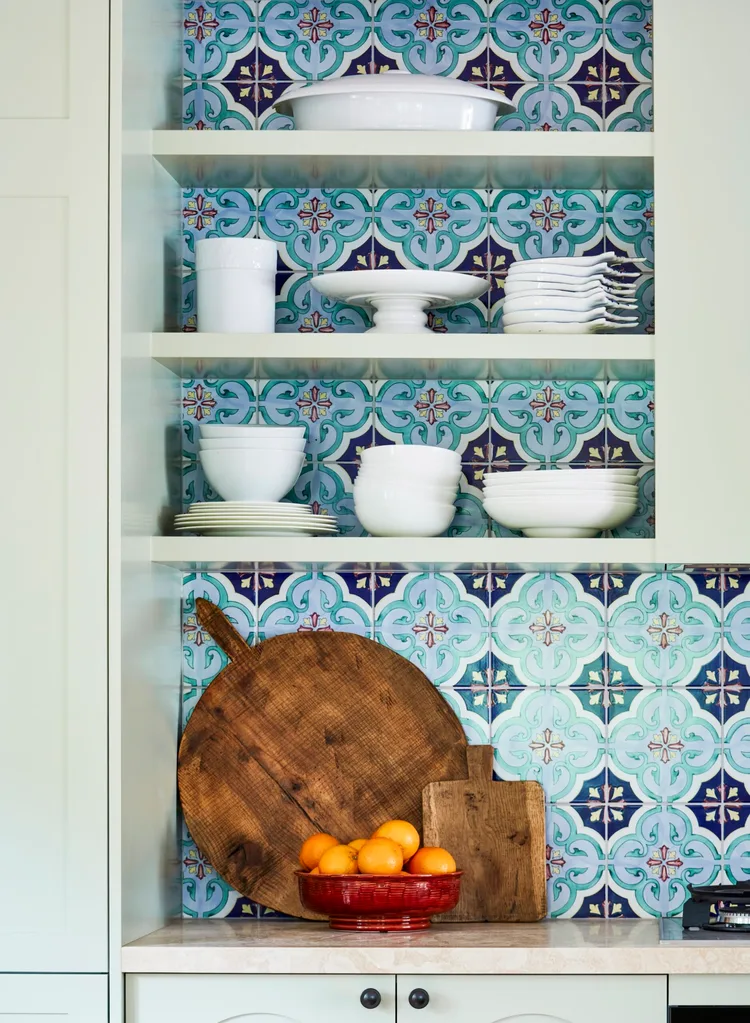
The style inspiration came from Le Sirenuse, a hotel on Italy’s Amalfi Coast. “When putting together the scheme, I started with the tiles,” explains Lisa. “We wanted it to be authentic.” To do so, she travelled to Italy, working with supplier Francesco de Maio to create custom hand-painted tiles for every room.
“Layout is where I start. This is a beach house, so the placement of furniture has to make use of the view” – Lisa Burdus, interior design
Italian kitchen design tip #1
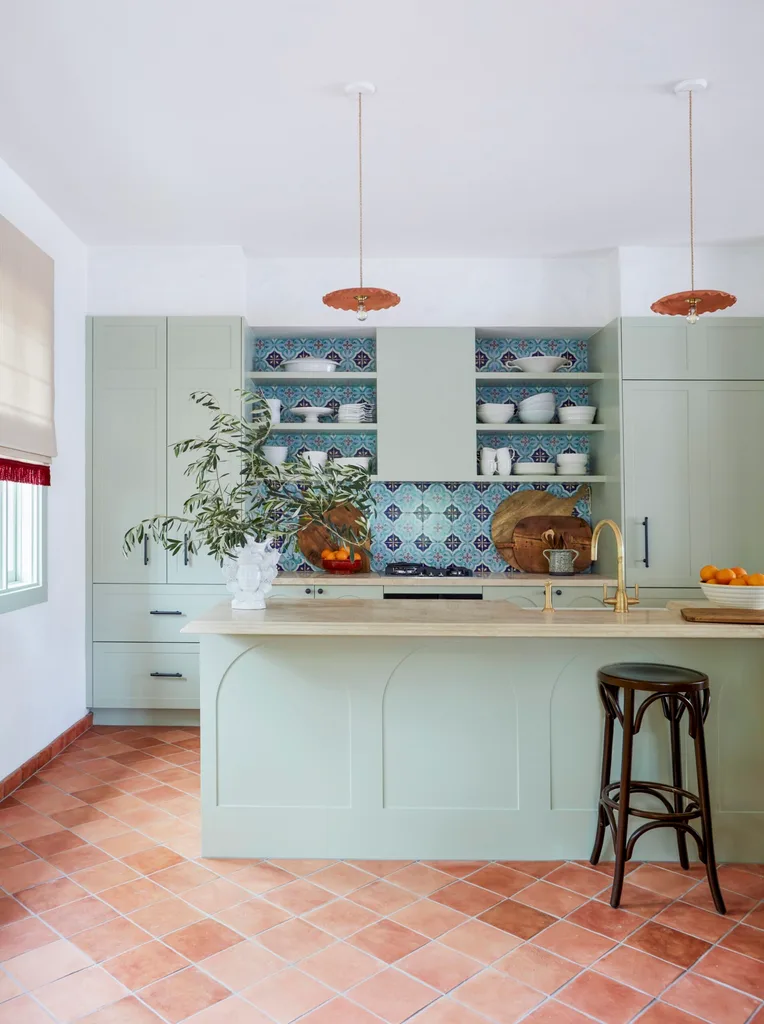
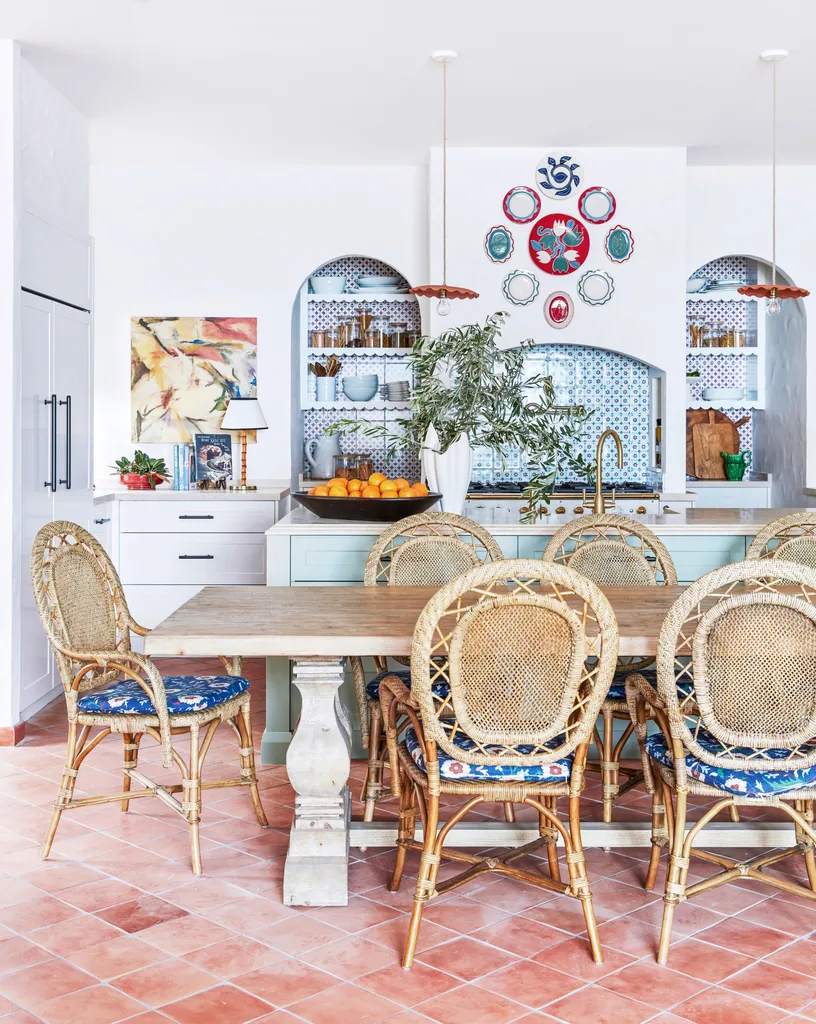
Colourful, prettily patterned tiles are essential ingredients in Italian kitchen design. In this kitchen, large terracotta floor tiles add warmth, while splashback tiles feature blues and greens in a classic lotus pattern. The hues harmonise with Dulux Pale Sage on the joinery and window trims, and a Worldstone Solutions ‘Navona’ travertine benchtop with a lamb’s tongue edge.
“Whatever material you have on the floor, bring it up on the walls or ceiling, whether it’s in texture or colour. It just balances it out,” says Lisa. Here, the terracotta floor echoes ‘Wavy Edge’ terracotta lampshades from Straw London.
Italian kitchen design tip #2
Lisa believes seating comfort is a key concern in any dining area, especially if you plan on entertaining. After all, long and luxurious lunches just feel especially European.
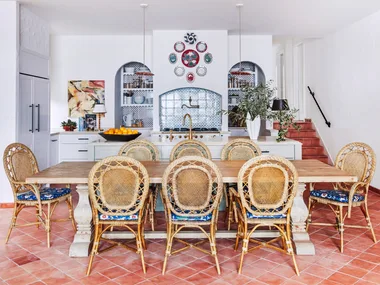
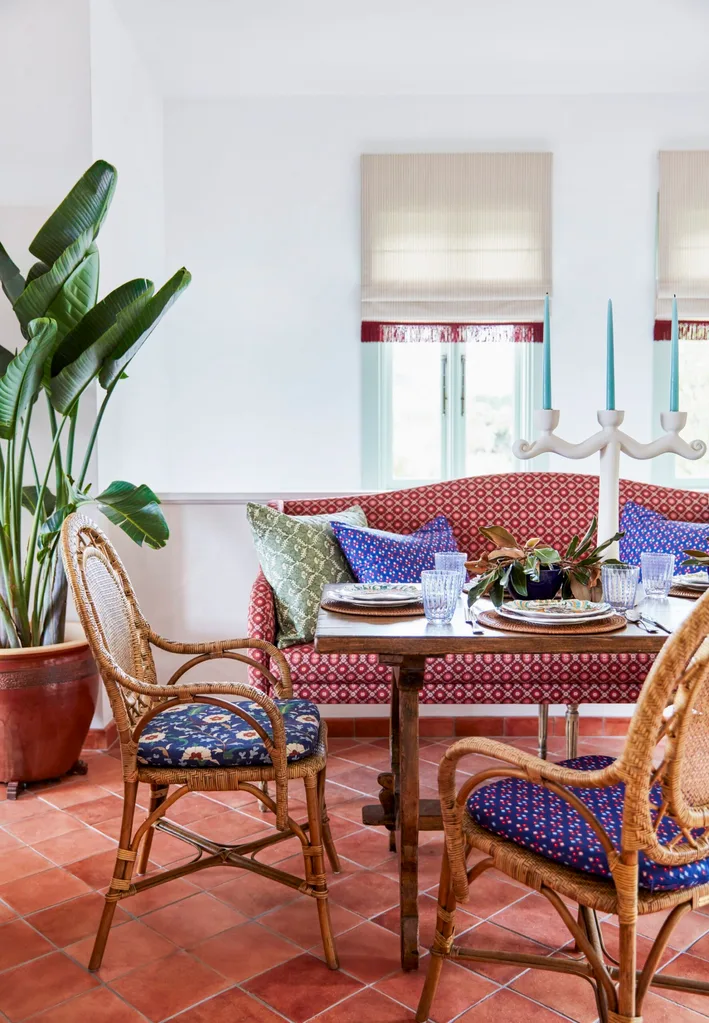
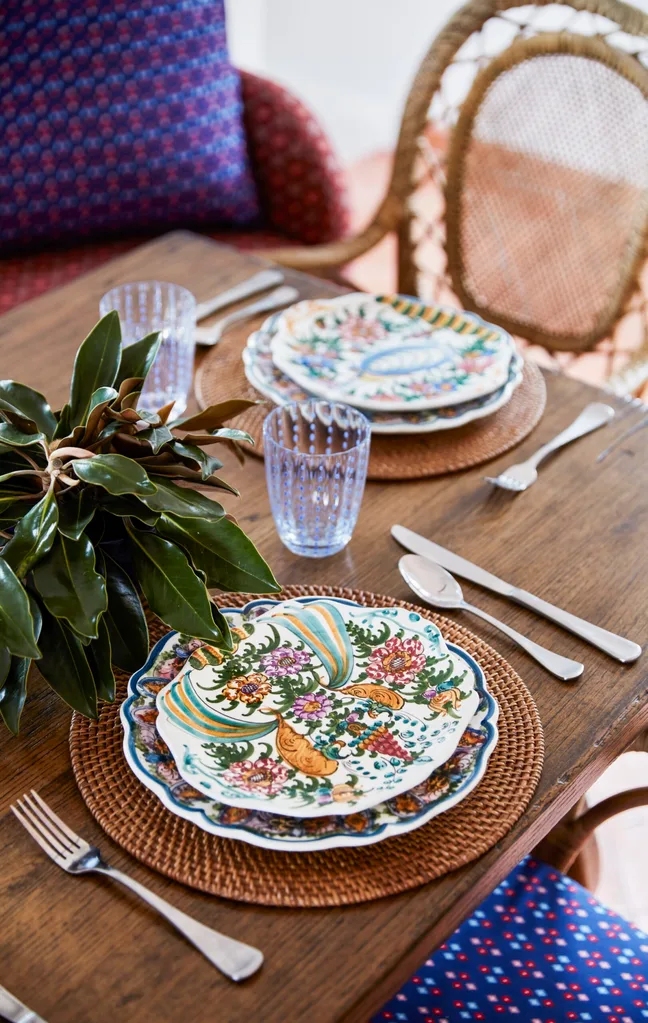
“I like dining spaces where you can sit for a long time,” Lisa shares. “It has to be comfortable.” She achieved this with the ‘Romantica’ dining chairs by Sika Design, sourced through Domo. Custom-made seat cushions add another layer of comfort, covered in Schumacher ‘Floralia Sisal’ fabric in Indigo and ‘Anastasia’ in Blue. The latter also appears on the banquette cushions, alongside Namay Samay ‘Pattey’ print in Conifer.
The banquette serves a practical and decorative purpose. Positioned against the stairs, it adds a plush colour pop against the half-wall finished in Porter’s Paints Irish Linen. Custom-designed by Lisa in Schumacher ‘Larissa’ fabric in Burgundy, it comfortably seats up to three people. “Don’t underestimate a banquette, but don’t make it too long,” warns Lisa. “You only want three people, maximum.”
Italian kitchen design tip #3
Balancing act “You need the right balance between hard surfaces and soft furnishings. With the tiled floors, I felt we needed curtains and blinds on all the windows,” says Lisa. She designed chic Roman blinds with Classic Cloth ‘Padstow’ fabric in Dijon, and added the fun ‘Loire Bullion’ fringe in Merlot from Samuel & Sons.
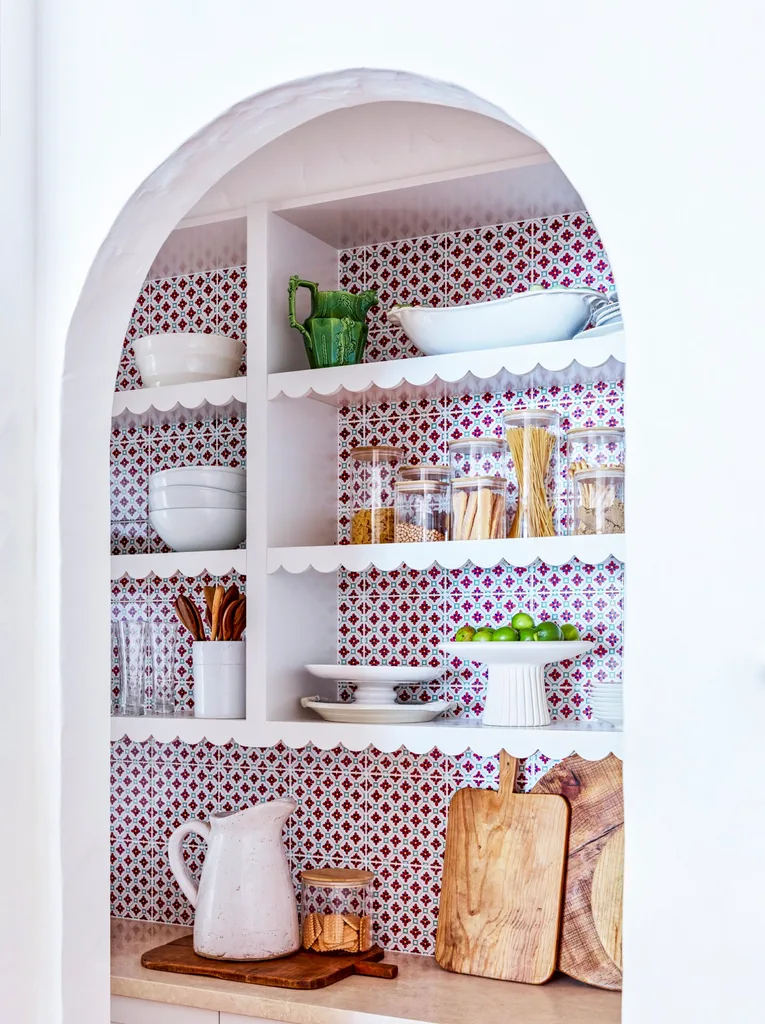
A mixture of brass finishes on the kitchen tapware and hardware maintains the sense of luxury, without detracting from the show-stopping tiles and fabrics. Armac Martin ‘Sutton’ pull handles and knobs in Dark Aged Brass were used on the joinery, while Lisa opted for a statement Perrin & Rowe ‘Orbiq’ sink mixer in Satin Brass, both from The English Tapware Company.

Be the first to read this story by subscribing to Home Beautiful magazine.