


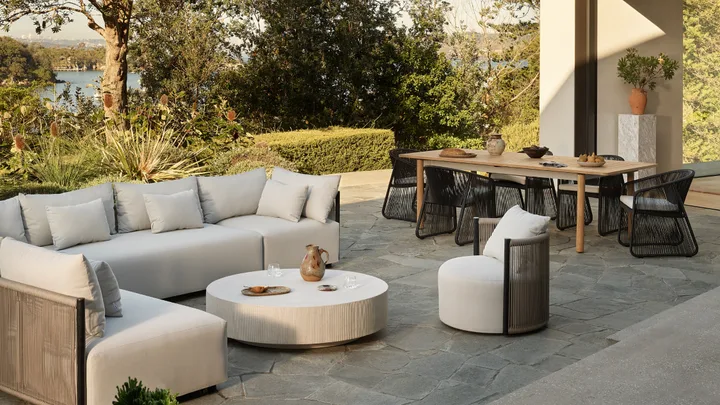
 Coco Republic
Throwing a party? The secret to a memorable night isn’t just the food and drinks – it’s how you arrange your furniture. From cosy seating clusters to styling tricks that guide guests where to sit, Home Beautiful editor-in-chief Elle Lovelock and Coco Republic Head of Interior Design, Anna DiNapoli share their tips in our step-by-step guide on how to make your home flow beautifully and keep the conversation going.
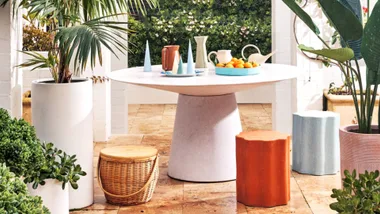
“The most important factor is how you plan to use your outdoor space day-to-day,” says Anna. “If you love sharing meals outdoors, hosting dinner parties, or barbecuing with friends, a dining setting is essential. If your lifestyle leans more toward relaxation, quiet moments with a book, casual drinks, or sunbathing, a lounge area may be more rewarding. Family dynamics also matter — young children may get more use out of versatile lounge pieces, while those who entertain regularly often benefit from a dedicated dining table.”
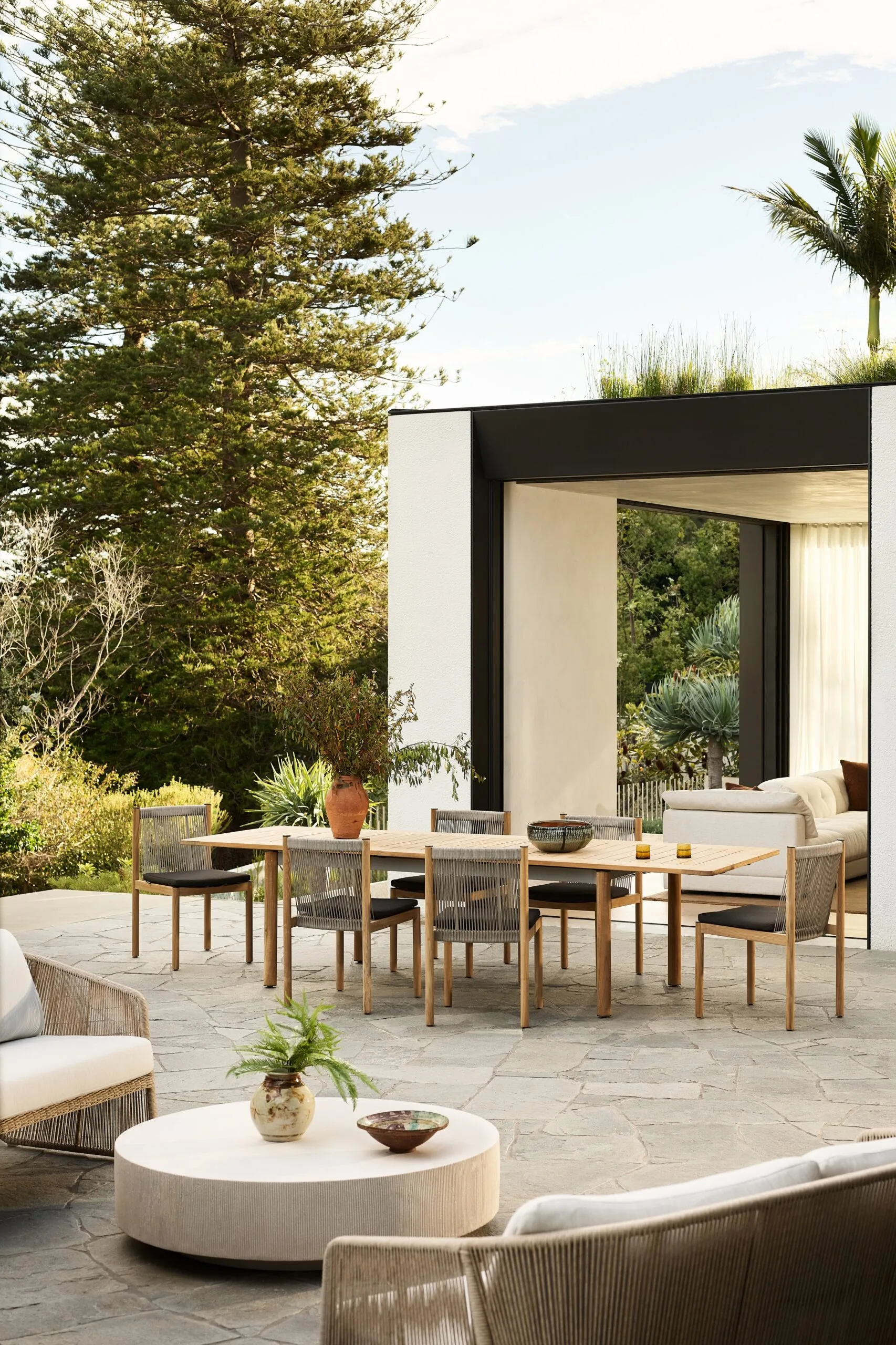
(Credit: Coco Republic)
Step 1: Choose smart fabrics
“If you’re investing in new pieces, think about how they’ll perform when guests are in the mix,” says Elle. “Washable or protected fabrics are a must – you’ll thank yourself later if red wine meets the sofa. These days, even outdoor fabrics work beautifully indoors. Many are so soft and refined you’d never guess they were designed to withstand the elements, but they’ll stand up to the realities of entertaining.”
Materials and weather conditions play a key role – particularly when choosing between dining and lounging furniture. Anna’s advice is to ensure your outdoor furniture withstands the elements where it will live in your home. “In sunny climates, UV-resistant fabrics and powder-coated aluminium frames help prevent fading and wear. In coastal areas, rust-proof materials like stainless steel or aluminium are crucial,” Anna warns. “Lounge settings often feature cushions, which may need covers or storage in wet weather, while dining tables are usually easier to maintain year-round. Matching materials to your climate and maintenance preference ensures longevity.
“Timber offers a warm, natural look but requires maintenance to stay pristine.”
Anna DiNapoli, Coco Republic Head of Interior Design
Step 2: Blur the line between indoors and out
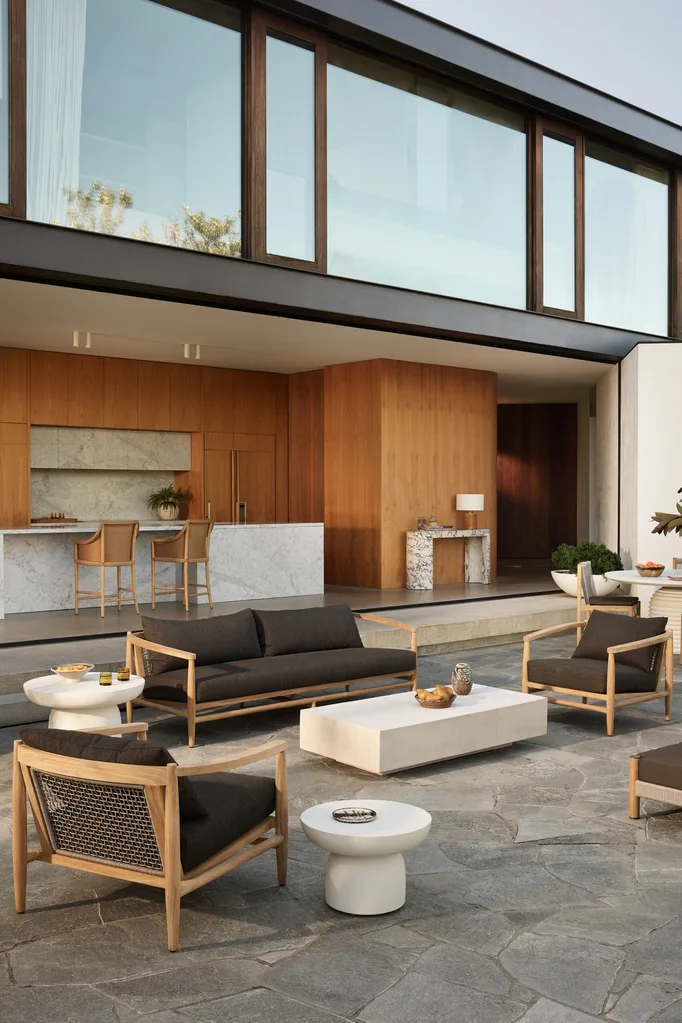
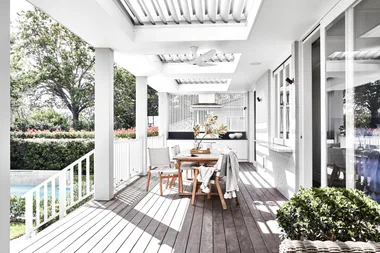
A seamless party experience often flows between the living room and the garden. “To keep the look cohesive, ensure your outdoor furniture echoes your interior style,” says Elle. “Whether that’s matching materials, colours or shapes, a sense of continuity creates harmony and makes the transition from one space to the other feel effortless.”
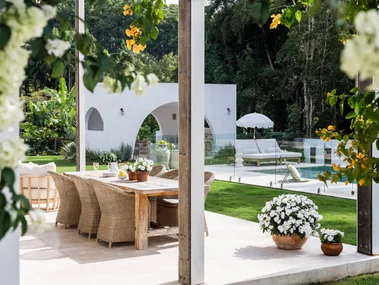
Anna agrees that cohesion is key here. “Use complementary materials, colours, and finishes across both settings so they feel unified rather than separate. Define zones with rugs, planters, or lighting — placing the dining area closer to cooking zones and the lounge near a view, pool, or firepit.” Select furniture that can be arranged in various flexible configurations. “Low-profile dining tables or “chat-height” tables can double as both dining and lounge-friendly solutions,” says Anna. “Layering textures and maintaining a consistent design language ties the two functions together seamlessly.”
(Credit: Coco Republic)
Step 3: Encourage conversation
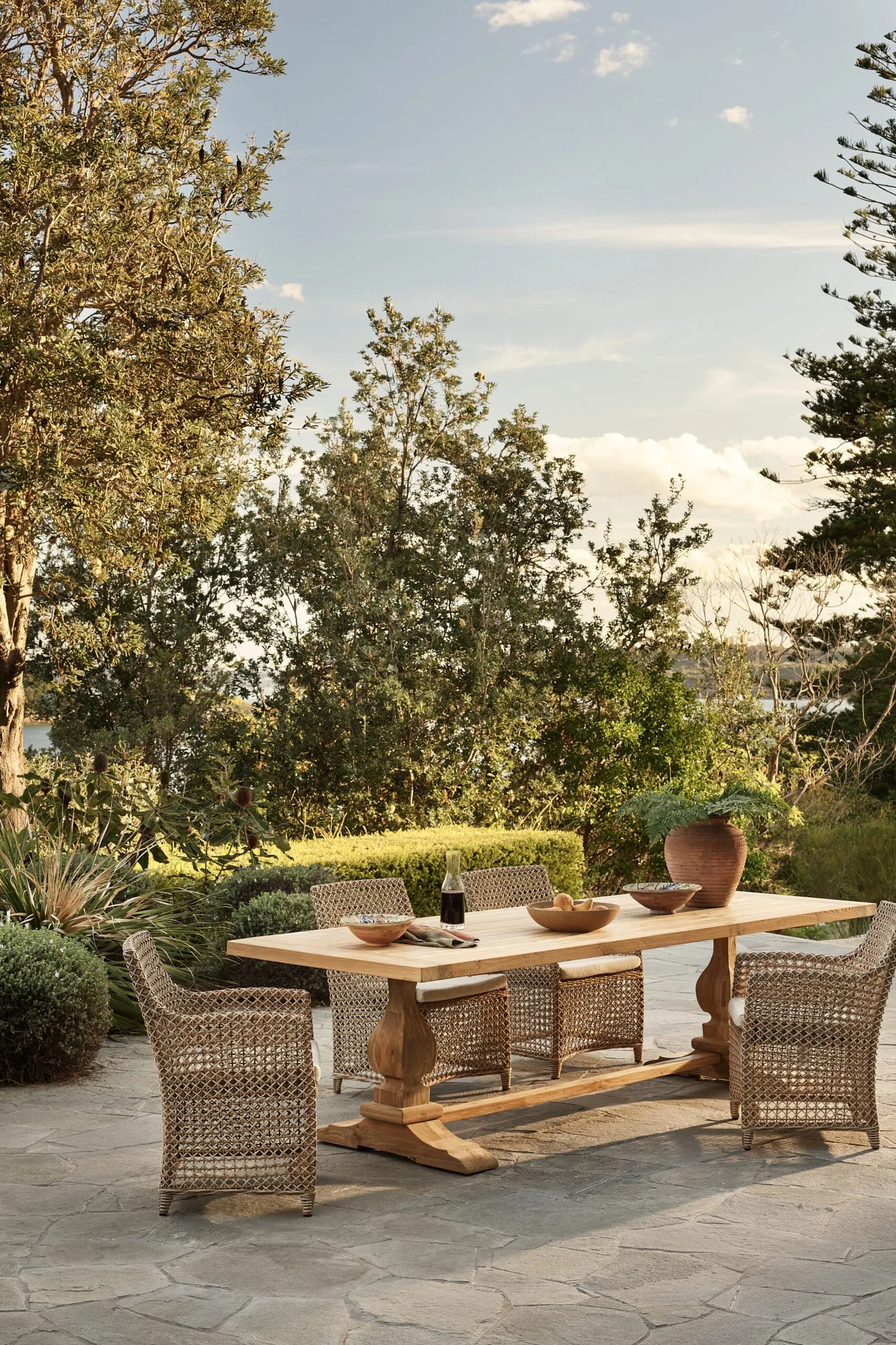
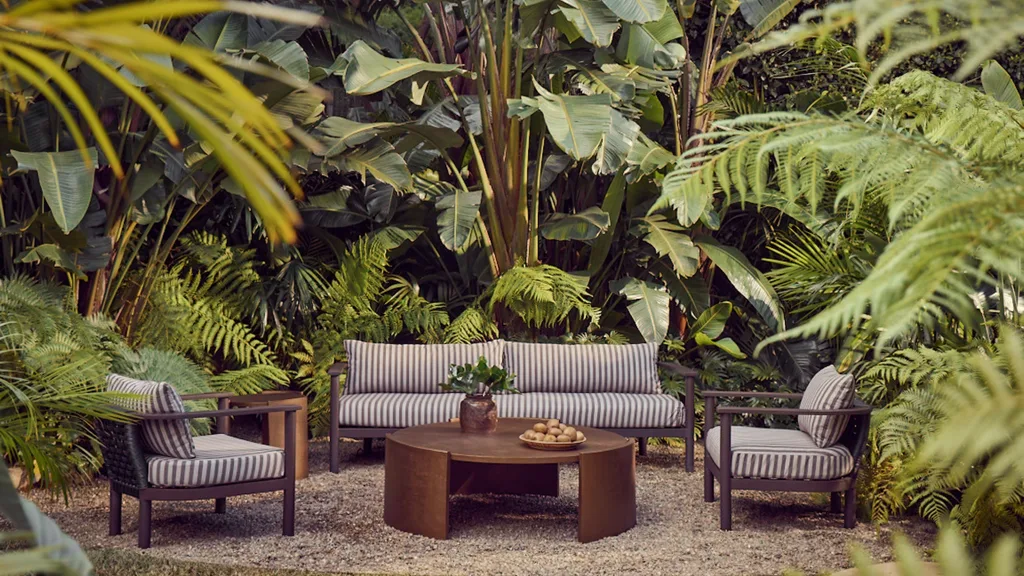
In terms of furniture layout, you may need to choose between lounging and dining furniture. “The biggest mistake I see when people set up for guests? Lining seating up against the walls like a waiting room,” says Elle, who instead recommends grouping furniture to promote interaction. “Pull armchairs and sofas closer so people naturally face one another – it makes chatting so much easier.” Anna agrees, adding that space will dictate the functionality of your outdoor entertaining zone. “In smaller balconies or courtyards, you may need to choose one primary function — either a table for dining or a small sofa for comfort. Larger spaces, such as gardens or terraces, allow for both, but creating zones is crucial. Dining areas work best near kitchens or barbecues for easy hosting, while sofas are often placed to take advantage of views, shade, or sunlight. Flow between areas should feel natural and uncluttered.”
“Remember, it’s hard to join in if you’re stuck on a long sofa at one end, so break up big seating zones into smaller, more intimate clusters.”
Elle Lovelock
Step 4: Set the right number of chairs
At the dining table, more isn’t merrier. If you’re hosting four at a six-seater table, take away the spare chairs. “Empty seats create a sense of absence and can make guests feel awkward,” says Elle. “A perfectly filled table feels warm, welcoming and just right.”
To make the most of your space, consider how you will use it most to hit the comfort factor where you need it most. “Dining chairs are upright and structured, supporting proper posture for meals,” says Anna. “They’re ideal for eating but less suited to long hours of lounging. Lounge seating, on the other hand, is deeper, cushioned, and designed for comfort — perfect for reading, napping, or relaxing with friends.
Dining vs lounging furniture: the pros and cons for your alfresco zone
Pros
- Dining: Perfect for meals, structured seating for larger groups, creates a clear entertaining hub
- Dining: While essential for entertaining, may see less frequent but more memorable use
- Lounge: Adaptable configurations, encourages relaxation, suitable for both small and large gatherings, often more comfortable for long use
- Lounge: Offers more versatility for daily use
Cons
- Dining: Limited flexibility, requires more space, may not be used daily unless meals are consistently taken outdoors
- Lounge: Not ideal for full meals, usually needs side tables or low tables to function well for drinks and snacks
Step 5: Get the cushions right
Cushions can make or break a sofa when entertaining. They should support guests so they can sit up straight without sliding down, but don’t go overboard with outdoor cushions. “If people are perching on the edge because there’s no space to sit, you’ve gone too far,” says Elle. Strike a balance between comfort and practicality.
Step 6: Be the guide
When guests arrive, don’t leave them hovering with a glass in hand. Welcome them, pour a drink, and guide them to where you’d like them to sit. It sets the tone immediately and makes everyone feel at ease.

Step 7: Create moments of movement
How do you determine whether guests would benefit more from a dining table or relaxed lounge seating? “It depends on the type of entertaining you do most often,” says Anna. “For long lunches, special events, or dinner parties, guests will appreciate a formal dining setting. For cocktail evenings, afternoon grazing platters, or casual weekend get-togethers, lounge seating encourages mingling and creates a relaxed, social atmosphere. Many hosts choose both if space allows, creating a natural flow from dining to lounging.”
If space is tight, break up proceedings throughout the day. “One of my favourite entertaining tricks is to stage the evening in different zones,” says Elle. “Begin in the living room or outdoor lounge with drinks and canapés, then move to the dining table for the main event. It keeps the energy fresh and makes the night feel like a little journey.”
Step 8: Define your zones
Help guests identify where to gather by styling with intention. A vase of flowers, a drinks tray or a plate of canapés signals, “This is where you belong.” These little markers make seating areas obvious and inviting, and they double as gorgeous styling touches.
Hosting is all about making people feel comfortable, and your furniture layout plays a starring role. With a few simple tweaks, you can transform your home into the perfect backdrop for a party that flows beautifully from start to finish.

