


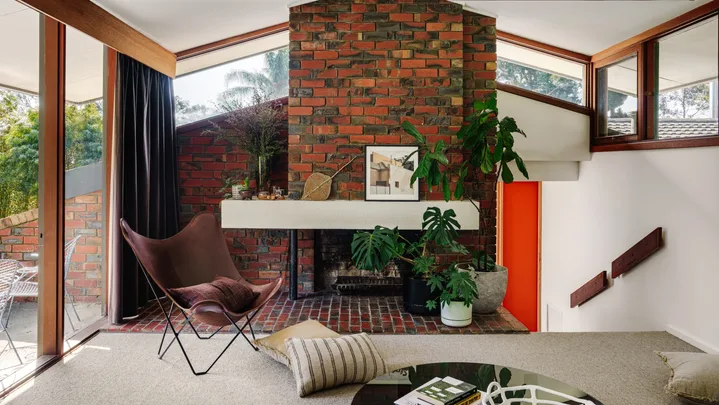
 Photography: Marnie Hawson / Styling: Belle Hemming
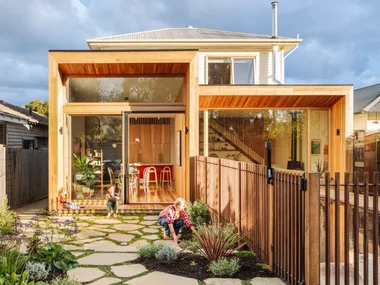
Kirsten and Greg, parents of Lewis, 19, and Maggie, 15, were enchanted when they first saw this house in 2012. But while the heritage-listed mid-century property in south-east Melbourne was structurally sound, the colour scheme of peach and pale blue from an update in the 1980s dated the home.
Restoring the mid-century style home
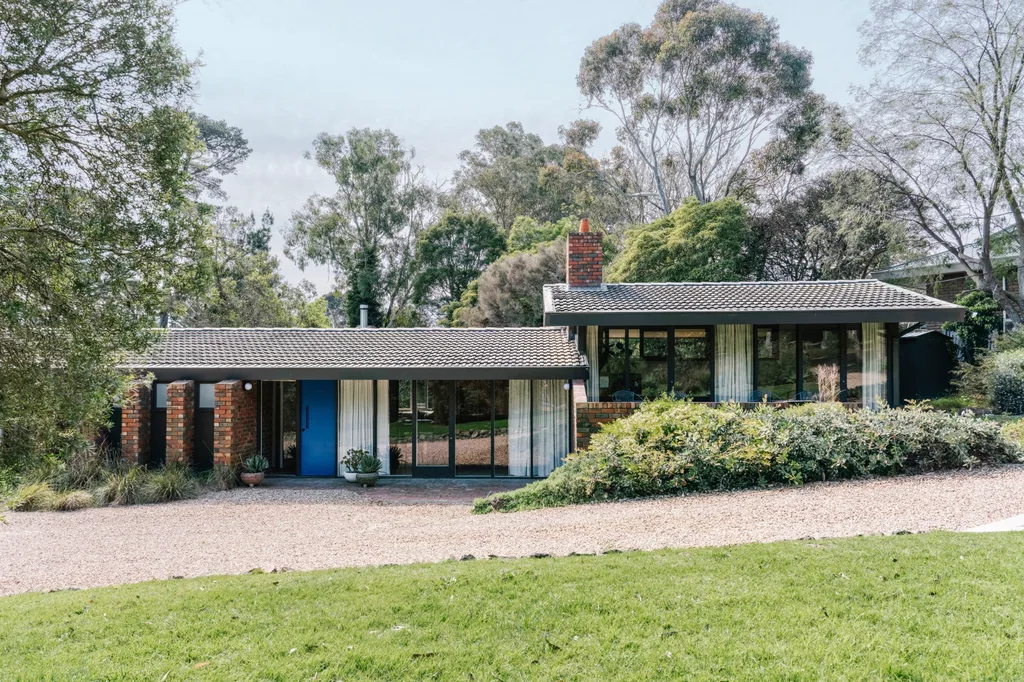
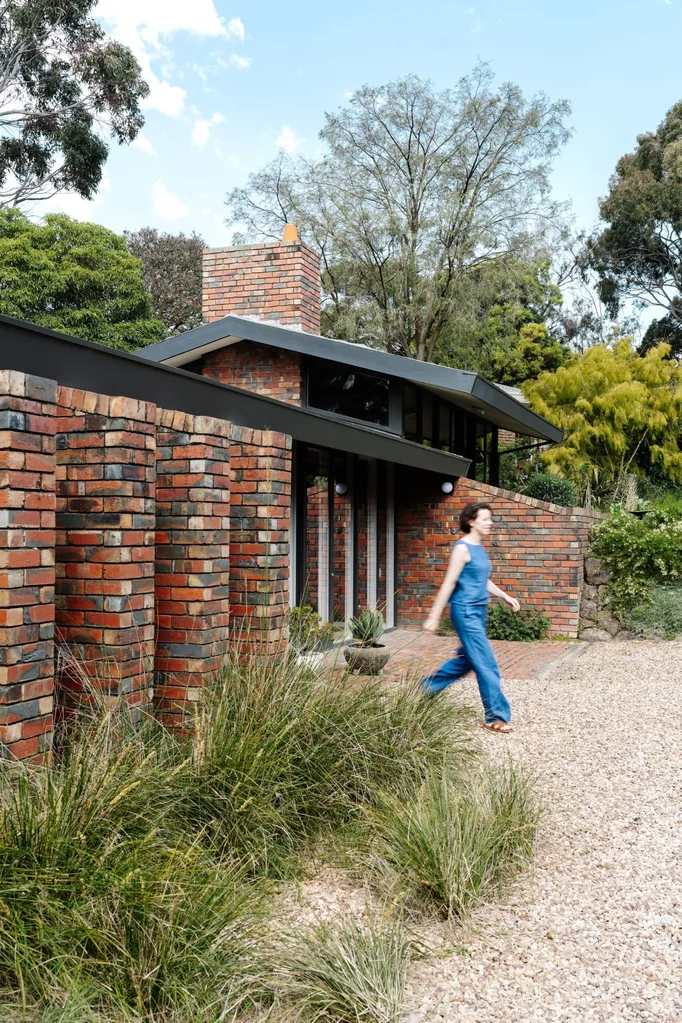
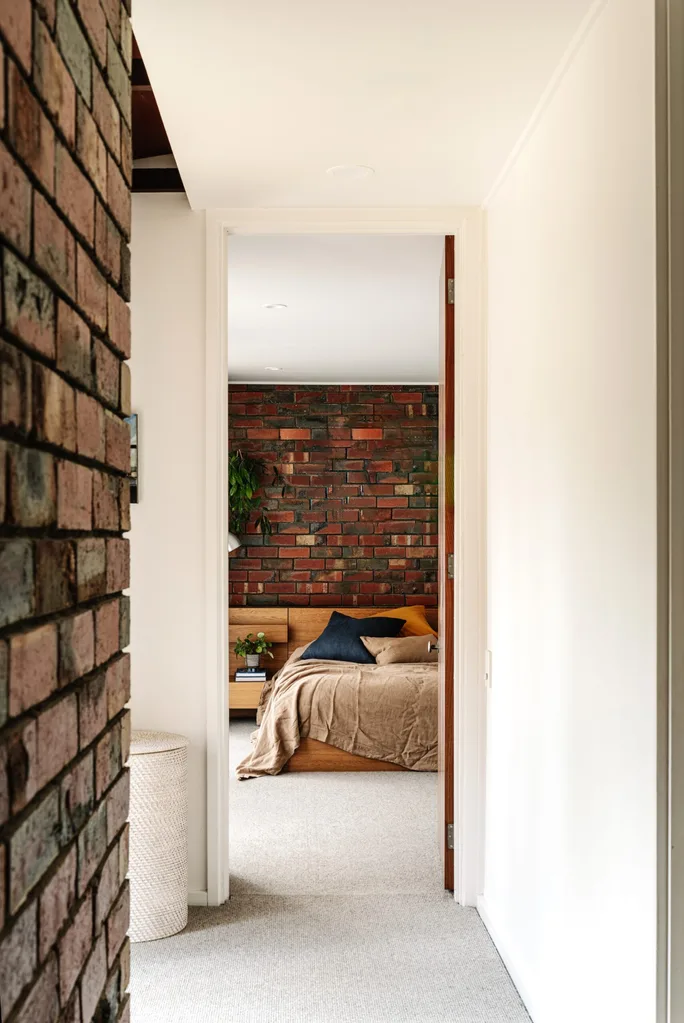
In 2019, the couple reached out to Nicola Dovey of Drawing Room Architecture – an interior design and architecture studio. In no rush to get started, Kirsten and Greg were focused on giving every aspect of the mid-century home’s renewal careful consideration. “We were speaking to Nicola for a long time before we progressed – about three years from the initial contact until we commissioned the designs. It’s so important to do our research with a mid-century house. Remember that a lot of the craft, texture, timber and colour is what makes it appealing. Don’t paint over the brick or woodwork if you can help it.”
“As all the works were to be internal,” explains Nicola, “there was no need for a planning permit. However, a building permit is still needed for any significant amount of internal work.”
Mid-century style
“Do your research to find a sympathetic designer or architect and builder for a mid-century house” – Kirsten, homeowner
This home’s mid-century style was originally showcased in the pages of Home Beautiful in 1968.
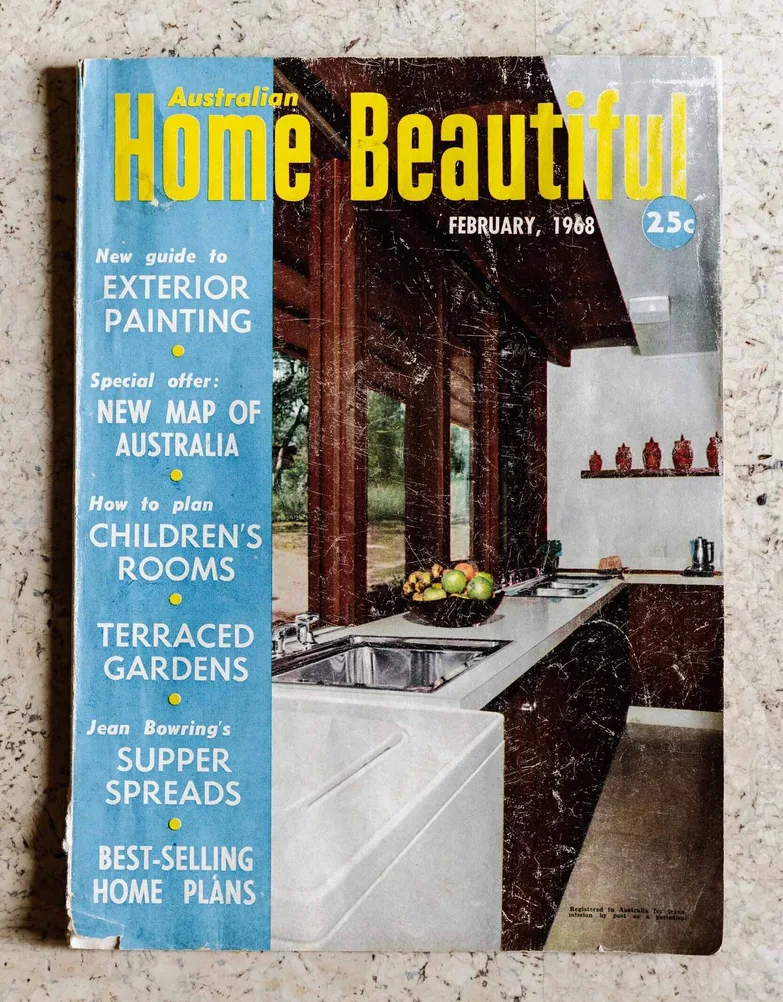
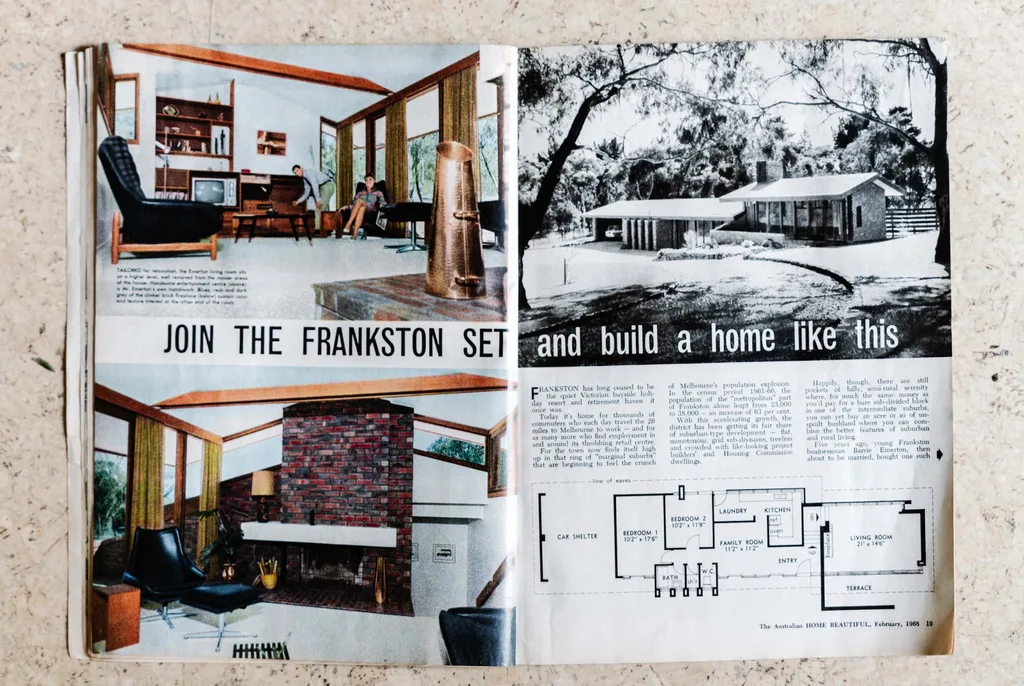
Indeed, there’s always been something special about this split-level modernist marvel. At the time, the site was described in the magazine as “thickly clothed with native gums, she-oaks and scrubby growth, dipped down at a one-in-six slope from the road, and seemed a marvelous prospect for the sort of house that looked as though it was growing out of the ground.” Little wonder that this warm and inviting home has captivated residents and visitors for generations.
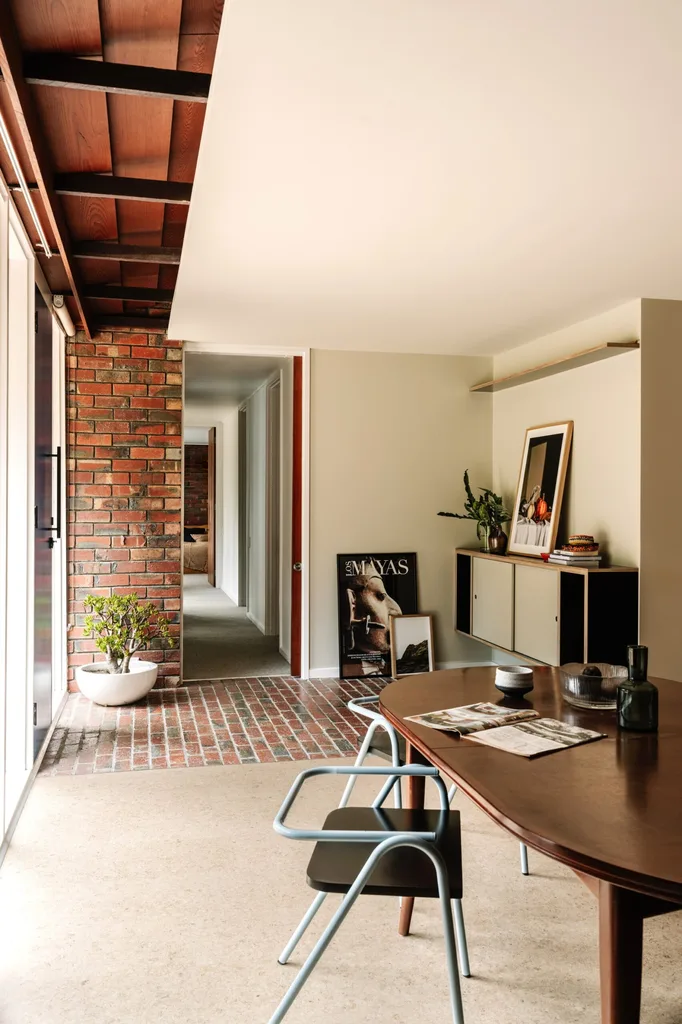
“The floor-to-ceiling windows, brickwork and use of timber throughout the house made it very special and unusual” – Kirsten, homeowner
Behind the mid-century design
Kirsten and Greg’s wish-list was well-defined from the outset. “A more thoughtful use of space in a new kitchen and also in the living area, better ‘flow’, warmth, a bit of colour, hard-wearing materials, lots of storage, more bench space – we really like to cook – an informal space for the kids to study and still be connected to everyone in the family,” says Kirsten, adding with a smile, “and cosiness!”
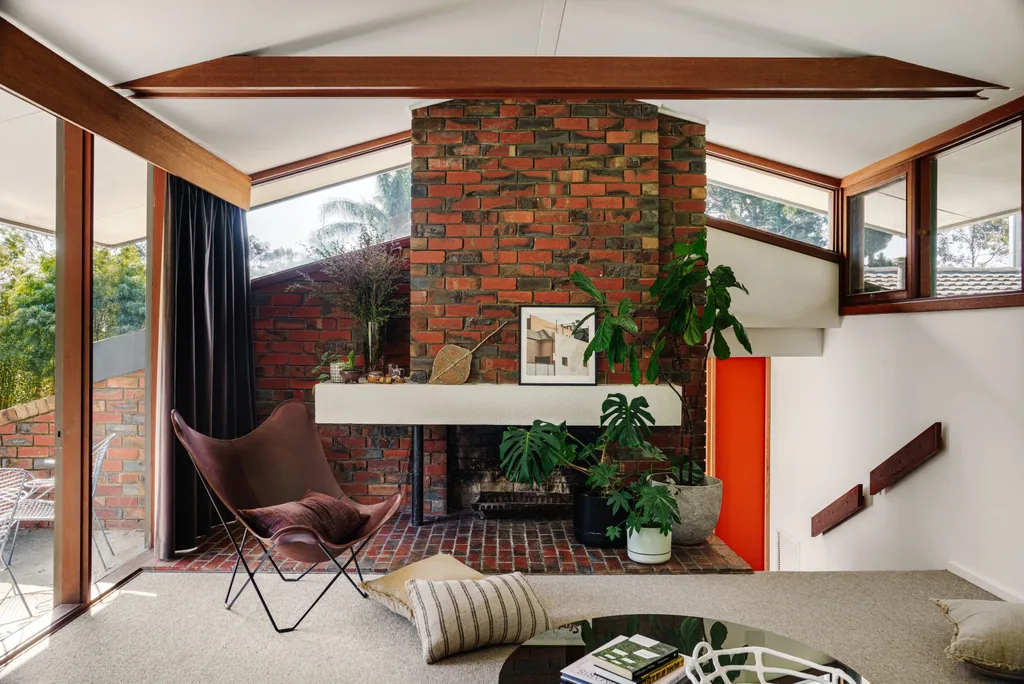
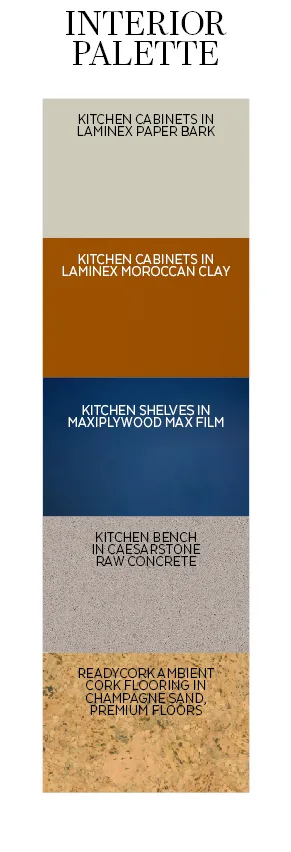
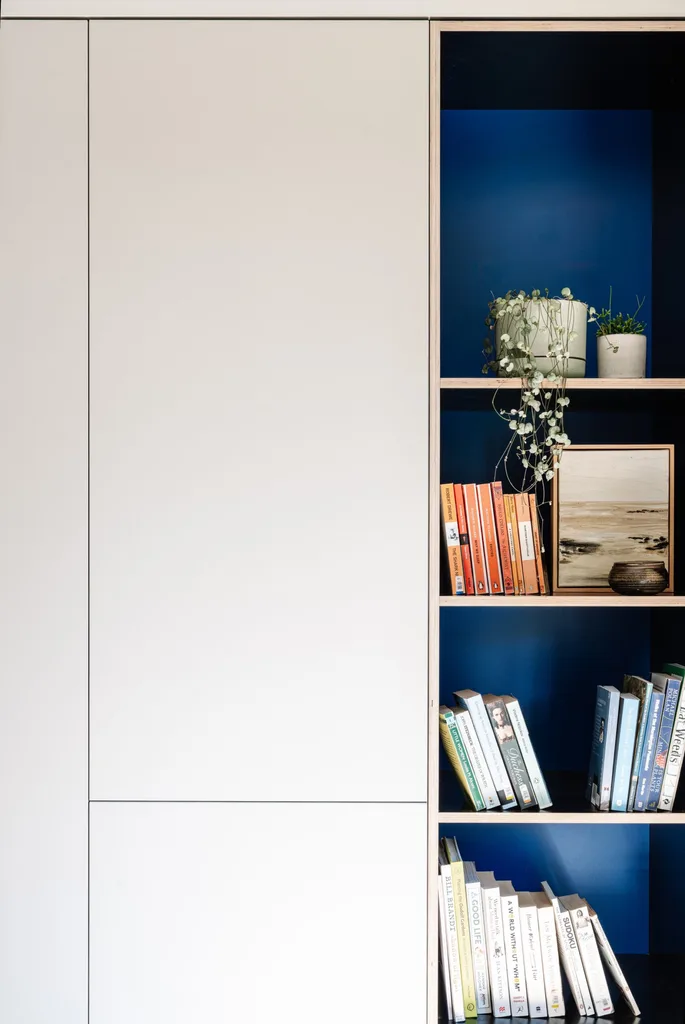
When it came to the bold colour and highly tactile material palette, Nicola took inspiration from the past while looking to practicality for the future. “We presented materials that referenced the earlier mid-century elements – laminate, stainless steel, linear wall linings and timber detailing, as well as colours popular in mid-century design – oranges and mid-blues,” she says.
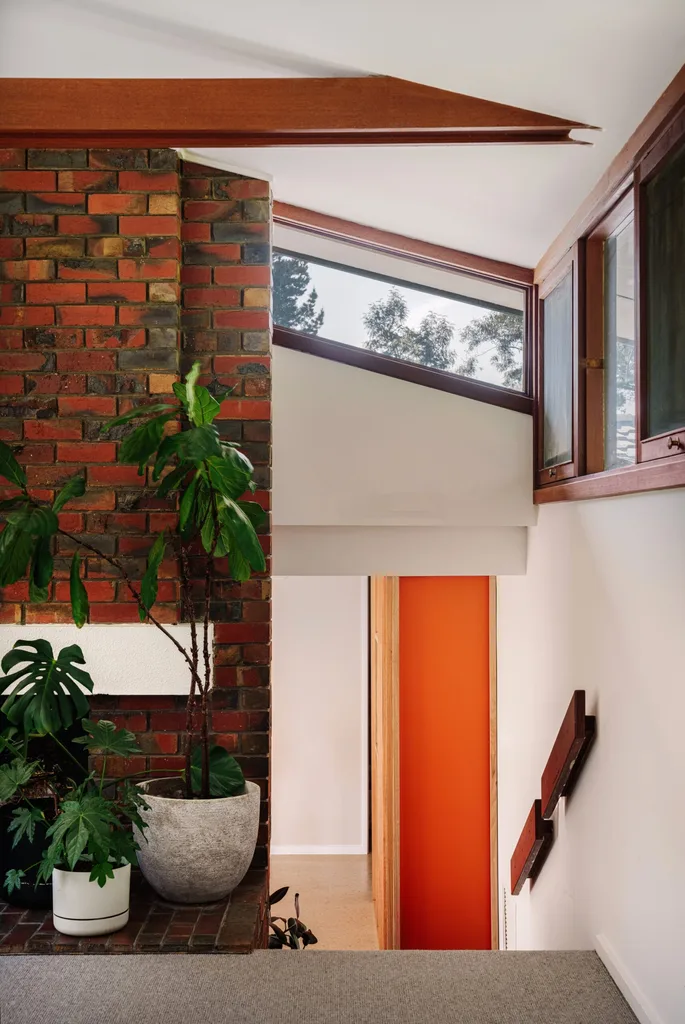
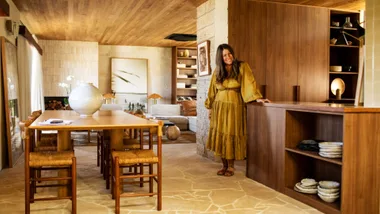
“The overall design of the living area is much more open, friendly and practical. It’s great for a family that likes to entertain and hang out together” – Kirsten, homeowner
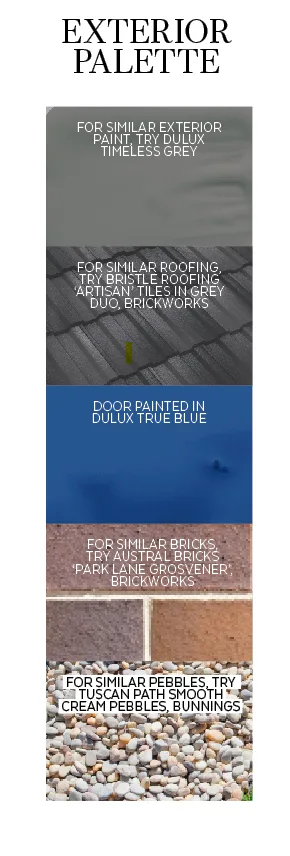
Recreate the mid-century palettes
The project timeline
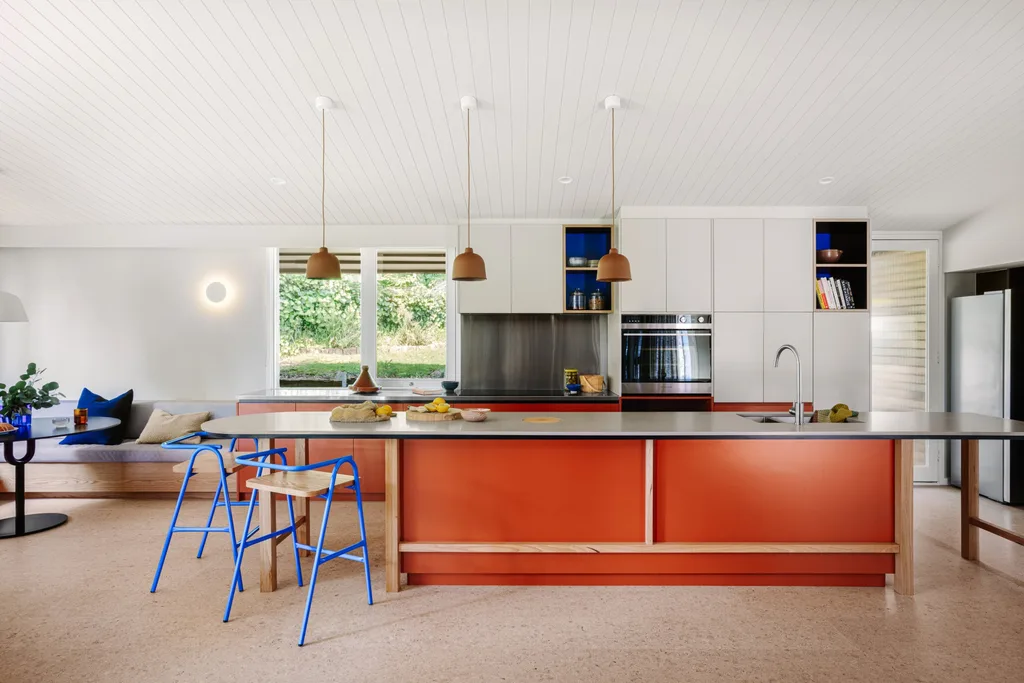
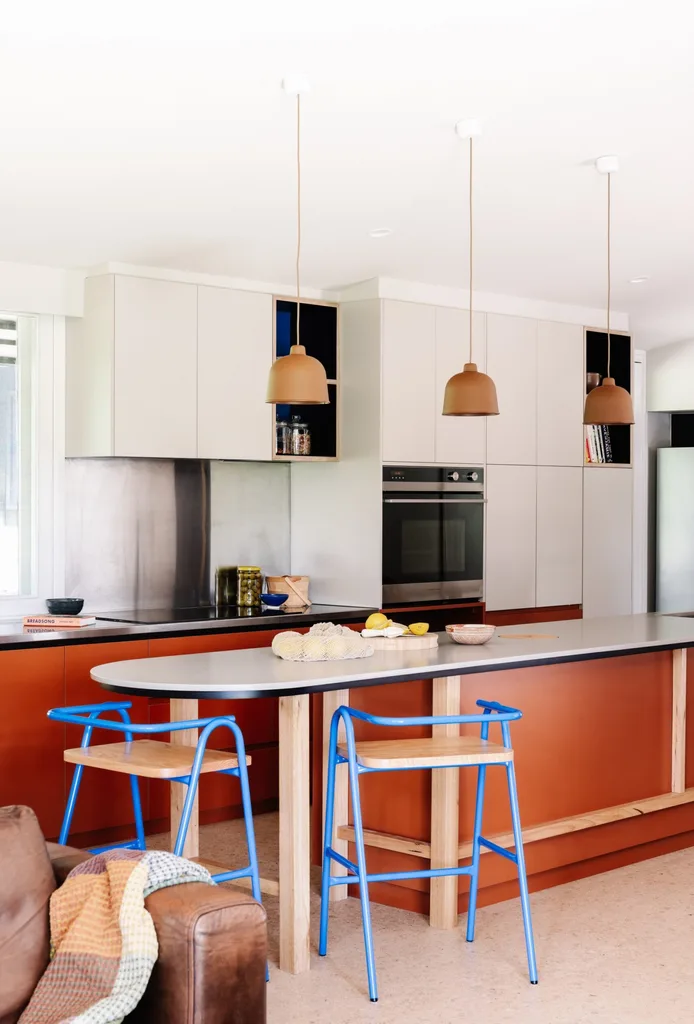
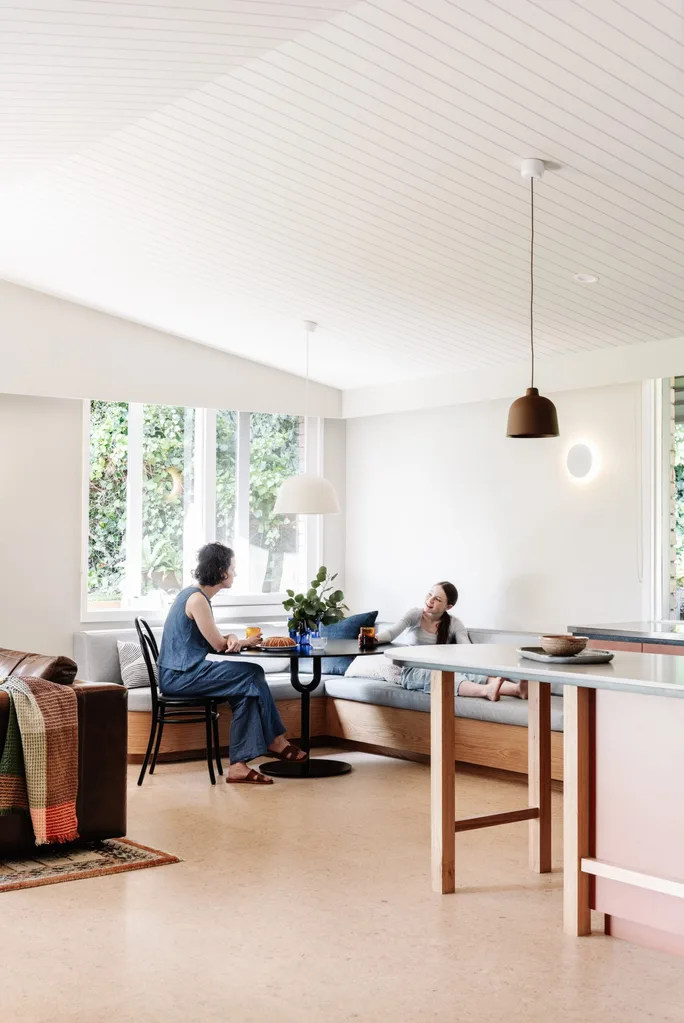
Over a five-month period, the project was brought to life. “A new all-electric kitchen was set up in a slightly different location, with a generously-sized island bench, lots of storage and a new pantry area,” says Nicola. “Bench seating was also set up to create a family meals area and a new slow-combustion fireplace was installed.”
Making your heritage renovation sustainable
“It was important to improve the home’s energy efficiency and comfort,” says Nicola of the decision to install an all-electric kitchen, as well as replace the home’s gas heating and cooling with electric. After all, mid-century style doesn’t have to come at the cost of modern environmentalism.
“Stainless steel was used for the back workbench and splashback, as it’s an exceptionally durable and recyclable material,” explains Nicola of the choice.
The ageing floor tiles needed to be replaced. Sustainable cork flooring was selected for its sound-absorbing quality and softness underfoot. Of course, it also had “great colours and wonderful curly shapes.”
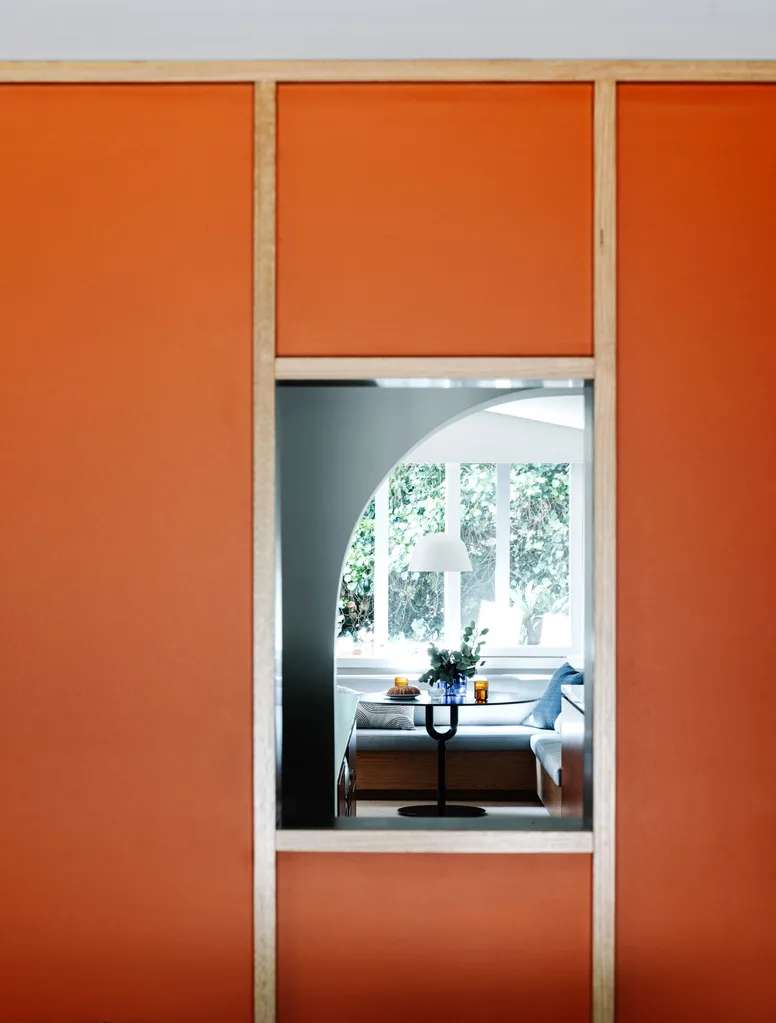
“In the living area, a curved pelmet means a linen curtain can be drawn over the existing windows so the space can stay cosy in cooler seasons,” says Nicola.
Breaking down the budget
Carefully pricing everything before the commencement of the works was key. This ensured that the kitchen, living and dining renovation was successfully completed within the couple’s $260,000 budget. The landscaping cost approximately $25,000 in addition to this amount.
“Nicola was great and worked to our budget,” says Kirsten. “We only wanted to spend a certain amount so as not to over-capitalise. We didn’t want – and can’t really afford – an enormous mortgage.”
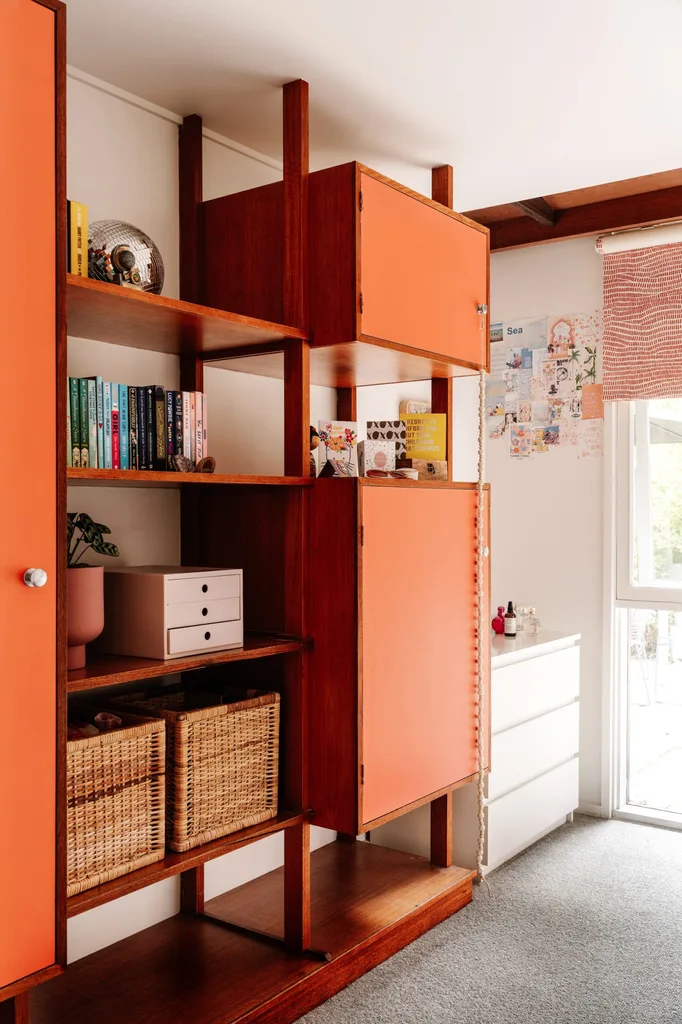
With this mindset, most of the furniture pieces that were used are either long-cherished collectables owned by the family, savvy Facebook Marketplace finds or original to the heritage home. As Kirsten explains: “Good design doesn’t need to break the bank.” It also perfectly suits the mid-century style.
The biggest renovation lessons
Kirsten recommends living in a home prior to embarking on any renovation. “That way, you can work out how the sun moves around the space and get to experience the house in different seasons, so that you don’t do anything too drastic,” she explains. As for what the original owners might think of the home’s latest incarnation, Kirsten’s hope is that “they’d love it as much as we do”.
Source book
Architecture and interior design: Nicola Dovey, Drawing Room Architecture, drawingroomarchitecture.com.au
Builder: Buena Vista Homes, buenavistahomes.com.au
Landscaper: Marcus McCausland, Element Garden Design & Construction, elementgardens.com.au
Permaculture designer: Miriam Ransom, Daily Gardener, dailygardener.net

Be the first to read this story by subscribing to Home Beautiful magazine

