 Samsung
Australians have a complicated relationship with the clothes dryer. Research conducted by Samsung shows that 62% of us would rather use an indoor drying rack to keep energy costs down, and half of us worry about power use every time we press start. Yet the way we shop for laundry appliances is shifting: once essential to realise ultimate laundry goals, a matching washer/dryer pair matters less than it did in 2024, while running costs, convenience and durability of the whitegoods we’re investing in matter much more.
We went to the source and spoke with two experts who know what local households really want from their laundry. Jiwoong Kim, Vice President and the Head of Living Product Planning Group of the Digital Appliances (DA) Business at Samsung Electronics, and Phil Gaut, Director – Consumer Electronics at Samsung Australia have spent years developing products to meet our needs.
In this article
- How three years of such development produced the Bespoke AL Laundry Combo
- Why heat pump technology deserves a second look
- What smart features, including seven years of software upgades, mean for households
Fifty years of laundry, reinvented
Jiwoong Kim, Vice President and the Head of Living Product Planning Group of the Digital Appliances (DA) Business at Samsung Electronics
Q: How has the way Australians live changed in the past 50 years and what do you see as Samsung’s part in that evolution?
“Washing machines are among the home appliances that have undergone the most change over the past 50 years. While consumers once focused simply on washing their clothes, a variety of needs have emerged as lifestyles have modernised. For example, dryers were developed to meet the need to dry clothes as well as wash them, and integrated one-body models were introduced for consumers looking to make better use of their laundry space.
Personalised needs, such as wanting to wash clothes better, provide better care for particular fabrics, or finish laundry more quickly, have also influenced the evolution of washing machines.
Samsung has broadened its product range in response to these changes. From standalone washers and dryers to all-in-one combos, consumers can choose the product that best suits their lifestyle based on the design and performance they want.”
“One of consumers’ biggest frustrations with laundry was the inconvenience of transferring clothes to the dryer after washing.”
Jiwoong Kim, Vice President and the Head of Living Product Planning Group of the Digital Appliances (DA) Business at Samsung Electronics
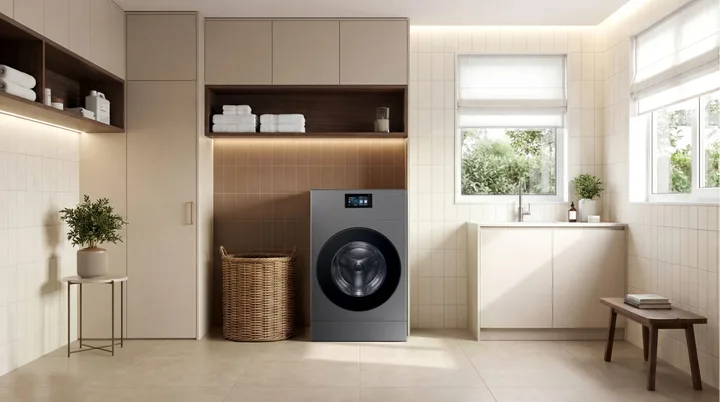
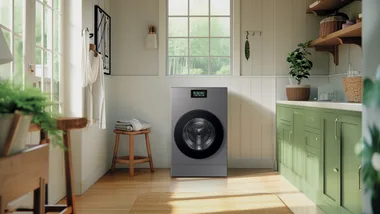
“The Bespoke AI Laundry Combo is a good example. Recognising the need, we invested in three years of ongoing development to launch an all-in-one product that combines a 19.5kg washing capacity and a 10kg heat pump drying capacity. Combining a washer and dryer in one appliance reduces the installation space required, while features that make laundry easier, including Super Speed, which completes washing and drying within 69 minutes[1], and the AI Wash & Dry +[2] cycle, which optimises the wash cycle by sensing factors such as laundry weight, certain fabric types and the level of soiling, help make everyday life more convenient.”
Design for the way we live now
Q: How did global consumer and design trends feed into Samsung’s design and development of the Bespoke AI Combo?
“Samsung incorporated two changes into the Bespoke AI Laundry Combo in response to evolving consumer and design trends.
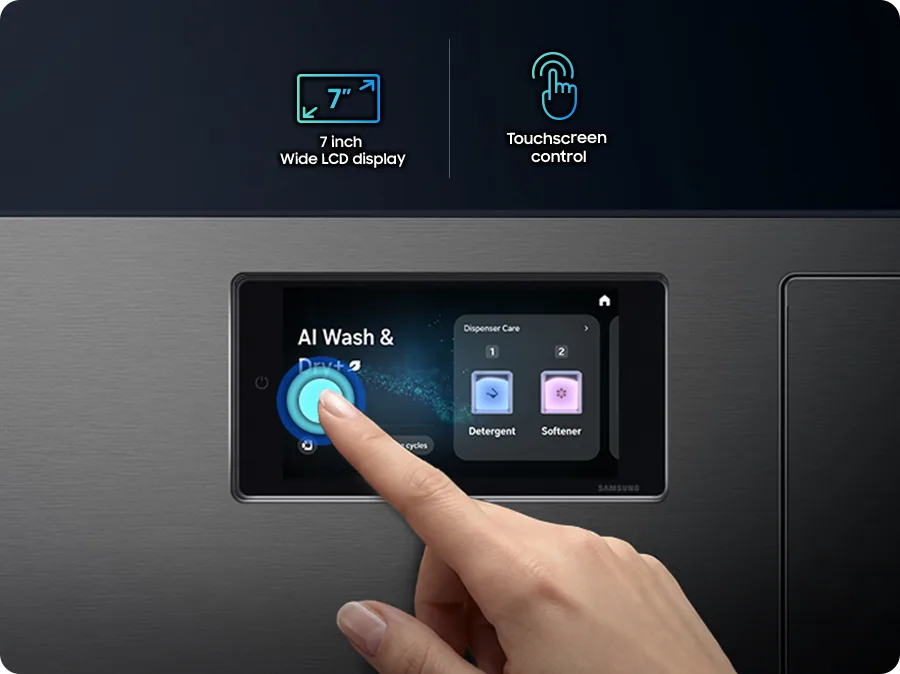
The first is a change in how consumers use the product. For consumers accustomed to touch controls through smartphone use, we introduced a 7-inch AI Home touchscreen display in place of conventional dials and buttons, offering intuitive operation and detailed information much like a smartphone. The large screen allows consumers to check the progress of their laundry, view a range of cycles and features at a glance, and easily select them.
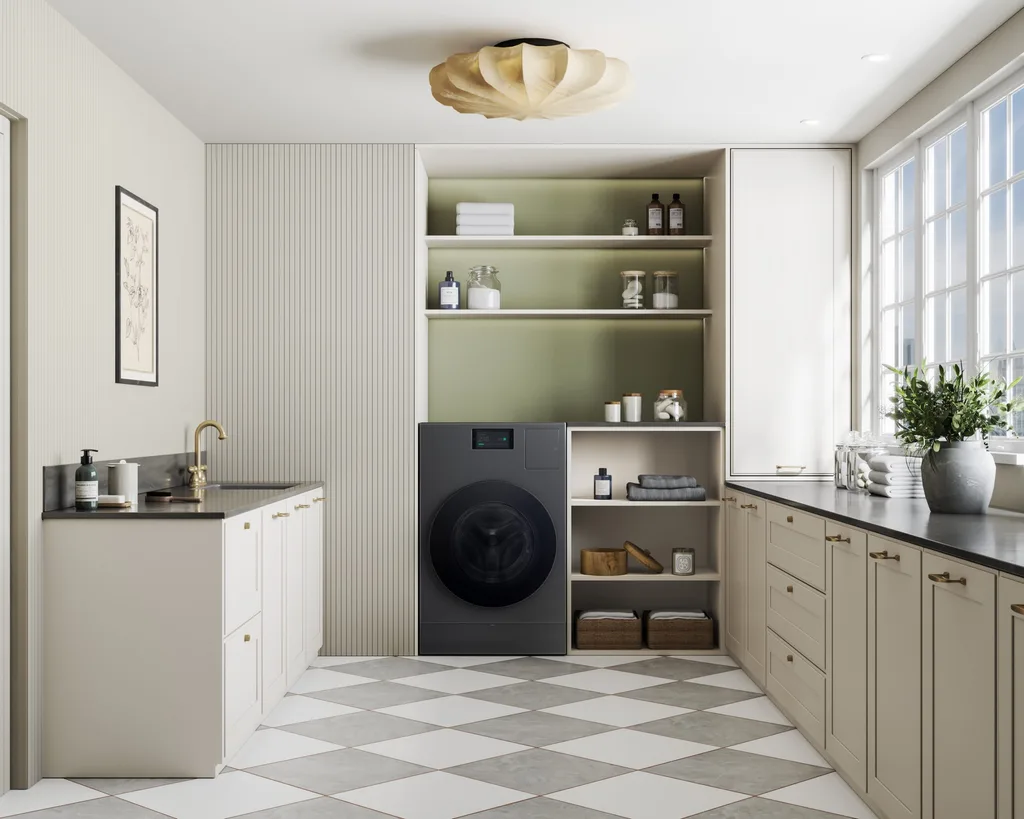
The second is a change in the front design. The Bespoke AI Laundry Combo features a mono body design, with the entire front formed in a single process to create a clean, premium appearance without the impression of multiple parts joined together. This creates a design that fits naturally into the home’s interior, rather than simply serving as a machine for doing laundry.”
The heat pump myth
Q: What don’t people know about heat pump dryers?
“Consumers generally assume that dryers inevitably use a lot of electricity. In a Samsung survey, 62% of Australians said they preferred an indoor drying rack to a dryer to reduce energy costs, while half (51%) said they worried about energy use every time they used a dryer.”[3]
“Heat Pump technology offers a gentle and highly efficient way to dry clothes by utilising a closed-loop system that recirculates warm air and uses a refrigerant rather than electricity to heat it.”
Jiwoong Kim
“The Bespoke AI Laundry Combo elevates this efficiency with its advanced Hybrid Heat Pump technology, featuring a built-in heater that quickly preheats the air to the ideal drying temperature regardless of the external environment. This rapid heating system allows you to start drying immediately, reducing drying time by up to 60%.[4] Once the optimal temperature is reached, the Inverter Heat Pump takes over, efficiently maintaining the warmth by recycling the air. Additionally, AI Energy Mode via SmartThings reduces drying energy use by up to 20% less energy during the wash cycle and up to 10% less energy during the dry cycle when compared to using the same cycle without AI Energy Mode.[5] It has an impressive 10-star rating for energy efficiency.”[6]
Bespoke AI Laundry Combo: the specs
- 19.5kg washing capacity
- 10kg heat pump drying capacity
- 69 minutes to complete washing and drying with Super Speed
- 7-inch AI Home touchscreen display
- Up to 60% shorter drying time with Hybrid Heat Pump technology
- Up to 20% less energy during the wash cycle and up to 10% less during the dry cycle with AI Energy Mode via SmartThings, compared with the same cycle without it10-star energy efficiency rating
Why Australians do it differently
Phil Gaut, Director – Consumer Electronics, Samsung Australia
Q: What does Samsung love about Australian households? Why are we different, what informs our decision making?
“Throughout Samsung’s product development process, we believe that when design and technology are in perfect harmony, we can develop a product that provides genuine value to consumers worldwide. Samsung continually strives to create products that blend seamlessly into our customers’ lives.
The way Australians live and experience their life is constantly changing, so we are constantly refining and evolving our product innovations to offer meaningful experiences, no matter what Samsung products a family chooses.”
“Australians looking to replace or upgrade their laundry appliances are focused on whether a product genuinely suits their lifestyle.”
Phil Gaut, Director – Consumer Electronics, Samsung Australia
Q: What makes Australians unique in what they look for in laundry appliances?
“Trust, reliability and durability are key purchase drivers, however, put simply, Australians want laundry appliances in capacity sizes that suit their family and are built to last. While design continues to be important to Australians, families who are looking for new laundry appliances today are less concerned about whether the washer and dryer matches than they were in 2024[7] and more interested in the convenience and energy savings they bring to everyday life.
Capacity, ease of use and remote scheduling are important. Dryers on the other hand are purchased based on energy efficiency. In fact, Samsung insights show that 68% of Australians looking to purchase a dryer in 2026 prioritise features that reduce running costs, before looking for features that deliver quick, precise drying (53%).”[8]
Australian shoppers: what we’re really looking for
- 62% prefer an indoor drying rack to a dryer to reduce energy costs
- 51% worry about energy use every time they use a dryer
- 68% of those looking to buy a dryer in 2026 prioritise features that reduce running costs, ahead of quick, precise drying
Smart features are gaining ground in laundry appliances
Q: How readily are Australians adopting AI features in appliances?
“Interestingly, AI-based features such as sensors that alert owners when clothes are dry, auto-detergent dosing based on load weight and soil levels, and the ability for appliances to detect and diagnose faults, have increased in interest, rising to be a consideration for over a fifth of Australians (22%)[9]. Practical functions like anti-crease settings (42%), sanitisation (33%), and cool air options (29%) continue to appeal to Australians. Remote app control is also growing in interest (24%) showing that connectivity is becoming more relevant[10] amongst Australian shoppers.”
Connectivity that earns its keep
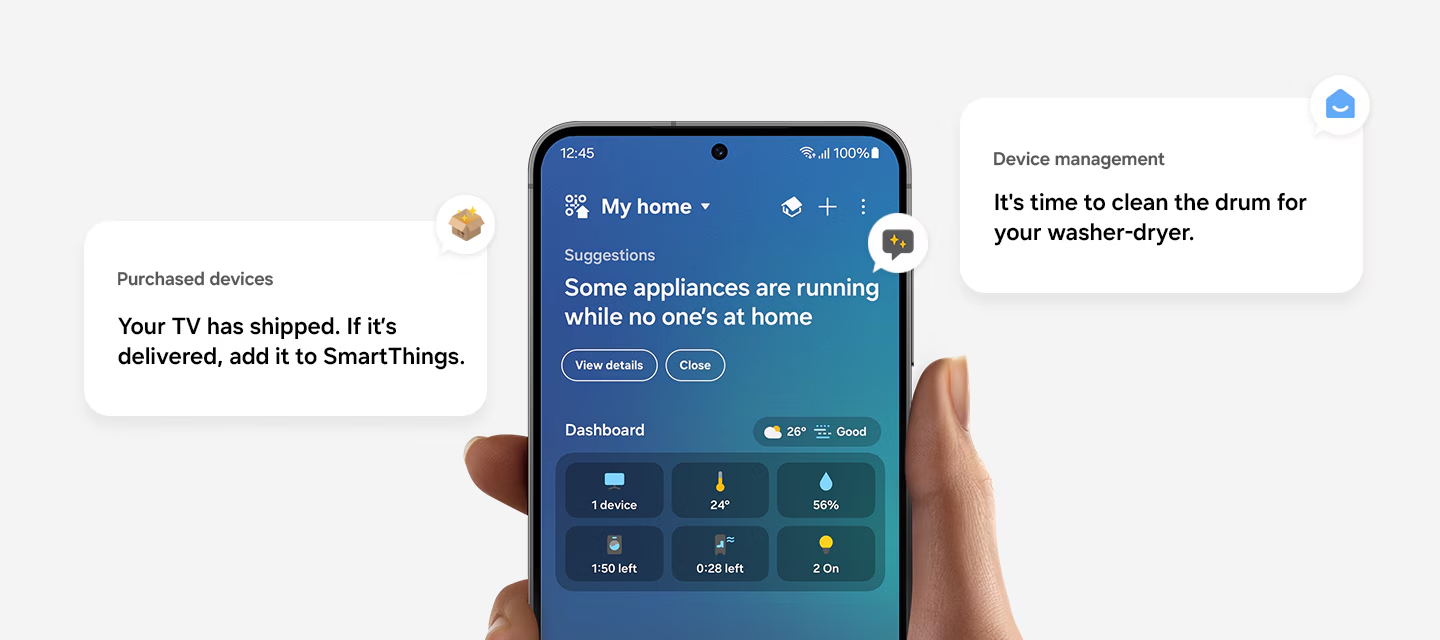
“Connectivity is certainly gaining momentum, and Samsung is proud to continue leading the market in this space, having recently celebrated 10 years of SmartThings. Knowing that consumers are looking to understand what a feature does for them to ultimately make their life easier, better, more efficient, and through platforms like Samsung’s SmartThings[11], Wi-Fi enabled laundry appliances offer remote monitoring, energy tracking and even proactive product diagnostics, empowering Australians to take control over their appliances.
Subsequent benefits include fewer repeat cycles because a load has finished a cycle at an inconvenient time and is now sitting damp and forgotten. The ability to understand when off-peak and solar-supported times kick-in at a glance help to lower household running costs. Samsung’s remote HRM remote product diagnostic service allows customer service experts to address device issues as they arise in real time. The result is fewer surprises, better efficiency and more control for Australians.”
Smarter appliances for 7 years
“Finally, Samsung is supporting Wi-Fi enabled laundry appliances with ongoing software upgrades to ensure ‘smart’ appliances offer increasing intelligence for years to come. Samsung’s Wi-Fi enabled laundry solutions launched in 2024 onwards receive seven years of enhancements in usability, intelligence, and security including upgraded Knox security, service expansion such as support in multiple languages, and refined user interfaces for improved navigation.”
While better technology may never make laundry our favourite pastime, it’s good to see Samsung listening to Australians and working to understand the way we live. Appliances that ease life’s pain points and are faster, more efficient and better-looking are a welcome step forward. And who doesn’t want their time and money back?
SAMSUNG DISCLAIMERS
[1] Based on internal testing and verified by Intertek for the cycle time was measured when drying a DOE (50% cotton / 50% polyester) 3 kg load (based on bone dry) with a Super Speed cycle on model WD90H**AH***.
[2] AI Wash & Dry +’s detection and sensing capabilities are based on our deep learning models trained using predefined set of data and may yield inaccurate or incorrect results. New datasets may be introduced to our learning models from time to time to enhance its accuracy. Test conditions include Super Speed cycle, wash temp. set to Cold, rinse set to 1, spin set to Extra High, dryness level set to Normal, room temp. of 23℃, and tap water temp. of 15℃.
Results may vary depending on actual usage environment.
[3] Pureprofile Research, commissioned by Samsung, March 2026. N=1,001.
[4] Based on internal testing of the cycle time when drying an IEC 3 kg load with Cotton cycle. Results: Bespoke AI Laundry Combo model with a heat pump (WD*0****H***) = 78 minutes vs. WD21B6400KV/** combo model with a condenser = 202 minutes, which is a reduction of 60%. Individual results may vary based on actual load contents.
[5] Based on internal testing and verified by KATRI (Korea Apparel Testing Research Institute) with IEC 3 kg on AI Wash & Dry + cycle with AI Energy Mode ON.
[6] 10 star energy rating only applies to drying performance of the appliance. Washer component has a 4.5 star rating.
[7] Nature research commissioned by Samsung 2025. Sample nationally represented. N = 1,500
[8] Nature research commissioned by Samsung 2025. Sample nationally represented. N = 1,500
[9] Nature research commissioned by Samsung 2025. Sample nationally represented. N = 1,500
[10] Nature research commissioned by Samsung 2025. Sample nationally represented. N = 1,500
[11] Available on Android and iOS devices. A Wi-Fi connection and a Samsung account are required.

Samsung inspires the world and shapes the future with transformative ideas and technologies. The company is redefining the worlds of TVs, smartphones, wearable devices, tablets, digital appliances, network systems, and memory, system LSI, foundry and LED solutions. For the latest news, please visit the Samsung Newsroom at news.samsung.com.

Related stories
Native ad body.
Native ad body.

Native ad body.
Tried and tested: The LG Styler Steam Closet is in a league of its own