


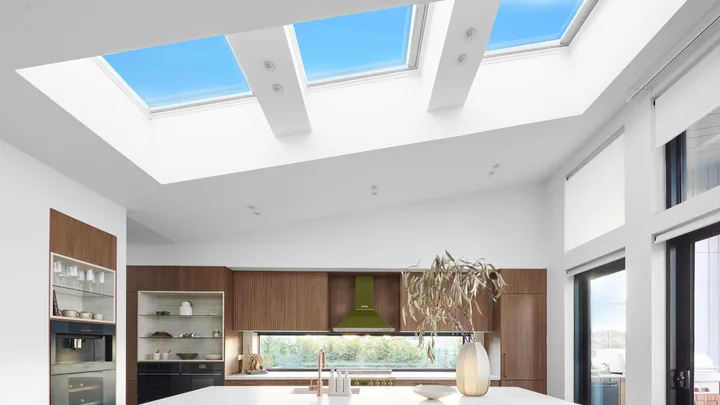
Natural light has long been a defining feature of beautiful homes. But in Australia today, two very different housing realities are shaping how that light enters our spaces.
On one side are expansive architectural homes designed around soaring ceilings and an abundance of light. On the other are compact, multi-storey houses on narrow blocks, where privacy and density can make natural light harder to capture.
Yet regardless of size or layout, we’re spending more than 90% of our time inside so how you feel indoors, truly matters. One thing is for sure: homes simply feel better when they’re filled with fresh air and natural light.
While skylights are often associated with grand architectural builds, their original purpose was much simpler; bringing daylight and ventilation into the spaces that need it most. Today, modern skylights are increasingly being used as a practical design solution in homes of all sizes including existing homes, helping brighten darker rooms while supporting healthier, more comfortable living.
Why natural light matters
Beyond aesthetics, natural light plays an important role in how our homes feel and function. Exposure to daylight can support our circadian rhythms, boost mood and reduce reliance on artificial lighting during the day. Skylights can also support passive ventilation by allowing warm air to escape through the roof while cooler air circulates below, helping to create a more comfortable indoor environment, with less reliance on air conditioning and therefore, less energy use and lower bills.
For brands such as VELUX, this shift reflects a broader move toward homes that prioritise wellbeing, sustainability and smarter use of natural resources.
“At VELUX we say you need to optimise well-being for people and climate. We need to design buildings that are very low on energy usage and low on embedded CO2.” – Anders Dam Vestergaard, VELUX’S Executive Vice President.
But one of the most common questions homeowners have is simple: where should skylights actually go to make the biggest difference?
Where skylights work best in the home
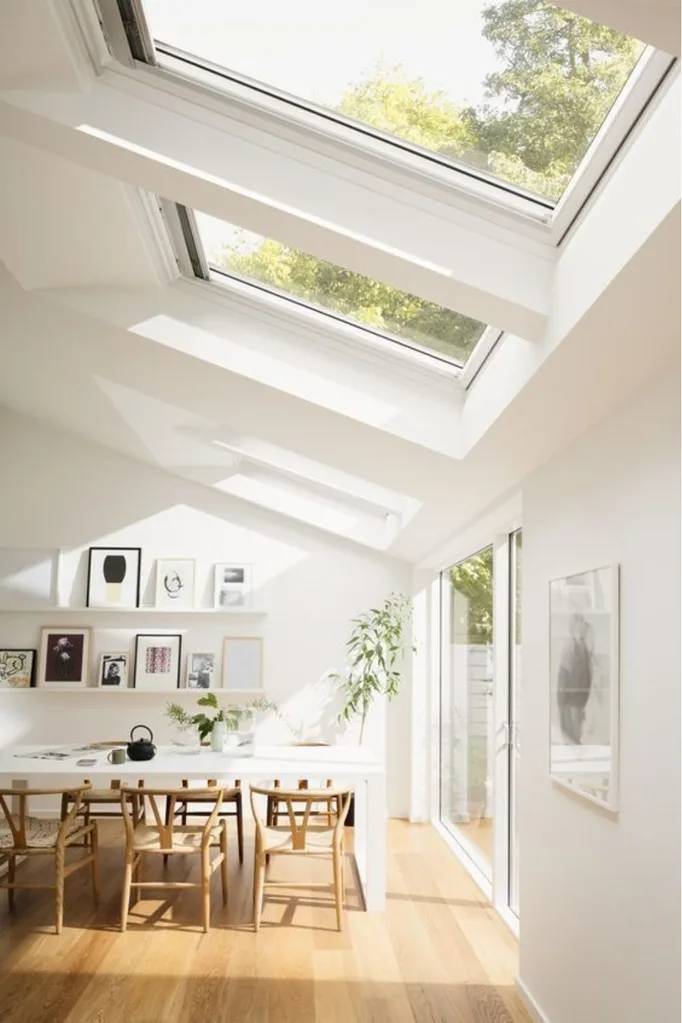
Skylights can make a surprising difference in rooms that typically lack windows, delivering up to 2–3× more natural light than vertical windows, thanks to their position capturing light from above “It’s a different light than you get through your facade windows – the sun has more direct access through skylights, so if you want to deeply penetrate your house with light, skylights are the only opportunity” says Dam Vestergaard.
“Too many people do not understand the power of the roof. That’s a bit of a shame. The magic happens if you decide to open it.” – Anders Dam Vestergaard, VELUX’S Executive Vice President.
Some of the most effective locations include:
- Kitchens – natural task lighting above benches or islands.
- Bathrooms – add daylight and ventilation without sacrificing privacy.
- Laundries – adds natural light and ventilation to an often dark, small space.
- Hallways – brighten central spaces with no external walls.
- Stairwells – bring light through multiple levels of the home.
Here are some of the rooms where skylights can have the greatest impact.
Kitchen skylight ideas
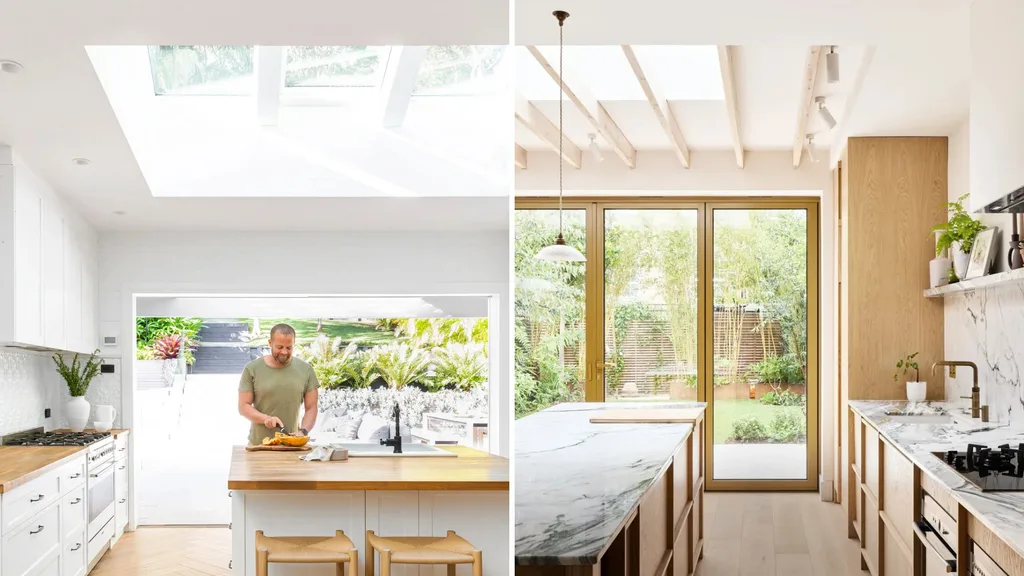
Kitchens are one of the hardest-working rooms in the home, making good lighting and ventilation essential for both cooking and entertaining.
A well-positioned skylight above a kitchen island or preparation zone introduces soft, natural task lighting exactly where it’s needed. Unlike artificial lighting, daylight shifts throughout the day, creating a warmer and more inviting atmosphere for everything from morning coffee to evening meals.
In homes where neighbouring properties limit wall windows, skylights can also help draw daylight deeper into the room, making the kitchen feel brighter and more spacious without compromising on comfort including warmth during the cooler months, and heat during harsh summers. VELUX skylights are engineered for Australia’s climate with thermally efficient double glazing that blocks up to 80 per cent of radiant heat and 99 per cent of harmful UV rays, meaning you can have all the benefits of natural light, without compromising on comfort.
Bathroom skylight ideas
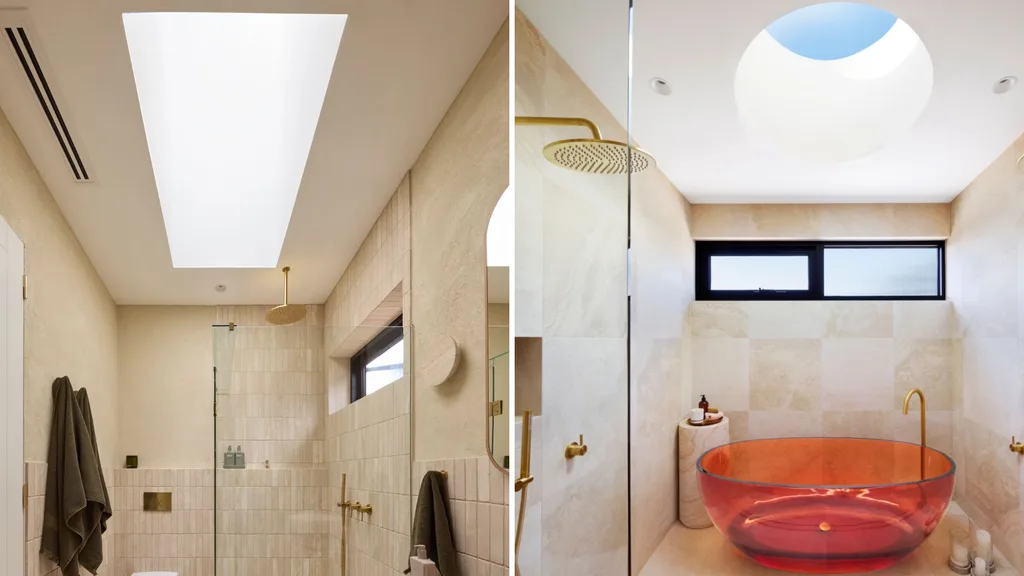
Bathrooms often require privacy, which can mean sacrificing windows and natural light. Skylights offer an elegant solution, allowing daylight to enter from above while maintaining complete privacy.
Openable skylights can also help release steam and humidity after showers, improving airflow and reducing moisture build-up, mould growth and reliance on fans. Positioned above a bath or walk-in shower, they double as a stunning design feature — spotlighting key elements while adding dimension to the space and maintain privacy.
Skylight ideas for hallways and central spaces
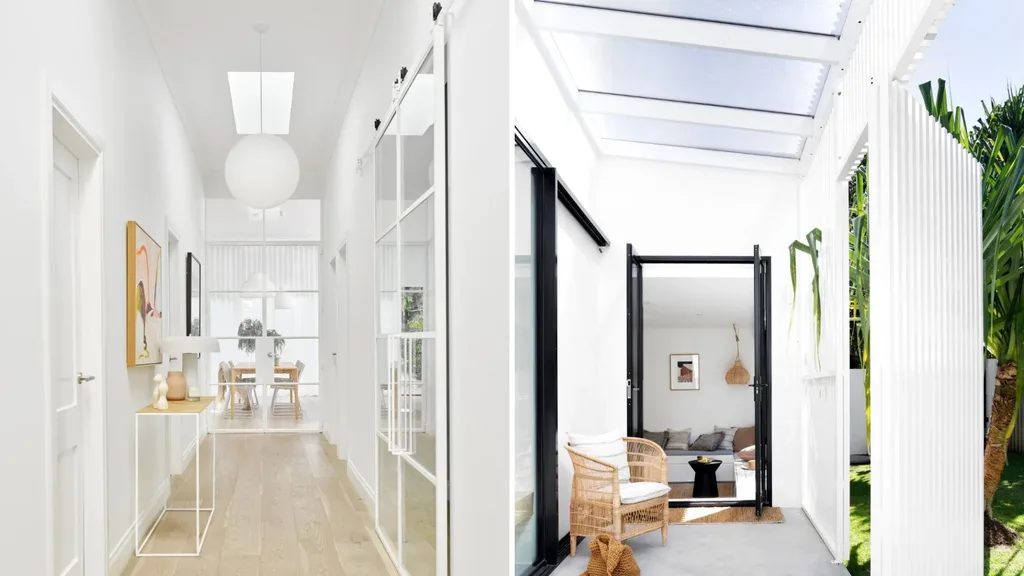
While the outer edges of a home often enjoy plenty of windows, the centre can feel noticeably darker. Hallways, stairwells and transitional spaces are ideal candidates for skylights, bringing daylight into areas that rarely see the sun, creating a more expansive feel.
Even a narrow skylight in a hallway can dramatically transform how a space feels, helping light travel further through the home and creating a more open, welcoming atmosphere.
See the impact of natural light before you renovate
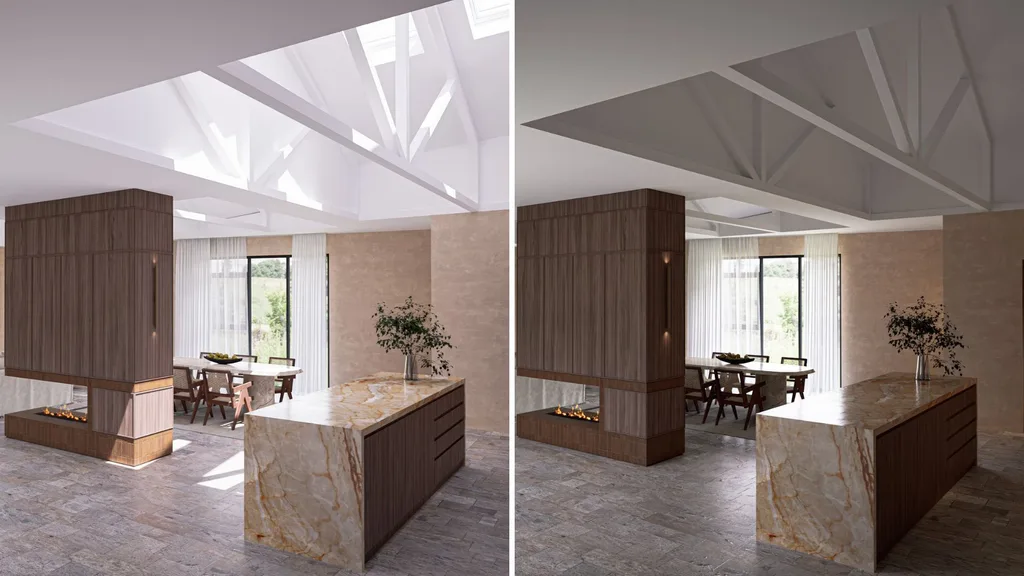
For homeowners planning a renovation, visualising how natural light will transform a room can be difficult. To help bridge that gap, VELUX has launched Australia’s first VR-enabled skylight showroom in Alexandria, Sydney.
The immersive experience combines a physical showroom with virtual environments that demonstrate how daylight transforms a space with natural light throughout the day. Visitors can explore four distinct interior styles — including Modern Industrial, Coastal, Mediterranean and Farmhouse — while seeing firsthand how skylights influence light, colour and atmosphere.
Whether brightening a kitchen, illuminating a hallway or improving airflow in a bathroom, skylights are increasingly being viewed as more than a design feature. They’re part of a broader shift toward homes that prioritise wellbeing, sustainability and everyday comfort.

For more than 80 years, the VELUX Group has created better indoor environments by bringing daylight and fresh air into homes and other buildings all over the world. The VELUX Group was founded in Denmark and is today an international company with a presence in 37 countries.

