


 Photography: Martina Gemmola
Feng shui has been used for centuries to help people improve how their home looks and feels. From improving energy to enhancing your luck, feng shui principles go beyond aesthetics. And when it comes to your bedroom, feng shui can actually help you sleep.
A bedroom is the place you go to relax your mind and body, and restore your energy. When the energy — known as Qi (pronounced ‘chee‘) — flows smoothly, you’re more likely to sleep well and wake up properly refreshed. However, poor bedroom layout or clutter can disrupt this energy and create restlessness, stress, and even tension in relationships. The good news is small adjustments can make a big difference.
Certified Feng Shui Master Jane Langof recently sat down with the Home Beautiful podcast, The Edit, to enlighten us with some of her best tips.
18 rules for bedroom feng shui
1 . Place your bed in the command position
One of the most important feng shui rules is positioning your bed so you can see the door while lying down — but not directly in line with it. This is known as the command position, which symbolically gives you control over your life and surroundings. “The ideal placement for the bed is up against a solid wall without a window, in the space that’s diagonally opposite the door because that’s the area where energy is most contained,” Feng Shui Master Jane Langof says.
2. Don’t place your bed beneath a window
Windows and light invite energy into a space. This can be good during the day, but when you sleep, a window in close proximity can muddle the energy of the room and disrupt your sleep. Instead, place your bed against a solid wall, ideally with space on either side.
“If you do have to have your bed against a window, which people do because they can be constricted with the placement of walk-in robes or doors to an ensuite and so forth, then have some solid curtains and a solid headboard. Something like an upholstered headboard is really good,” Langof adds.
3. Don’t sleep with your feet facing the door
Known as the ‘coffin position’, sleeping with your feet pointed directly towards the door is said to bring a bad energy. occurs when your feet are pointed directly at the door fo. In feng shui, this position is believed to drain energy and create vulnerability while sleeping. “The issue with that is that the energy [from the door] is rushing straight towards the bed,” Langof explains. “We need to create some sort of buffer to stop that energy flow.”
The number one solution is to simply close the door while you sleep. Alternatively, place an energetic ‘buffer’ towards the end of your bed. “Have something like a ottoman or a rug just to just to slow that energy flow down.”
4. Don’t store items under the bed
Under-bed storage blocks the flow of Qi. An open space under the bed allows energy to circulate around your body while you sleep, promoting deeper rest and emotional clarity. If you must store something there, keep it limited to soft items like spare bedding.
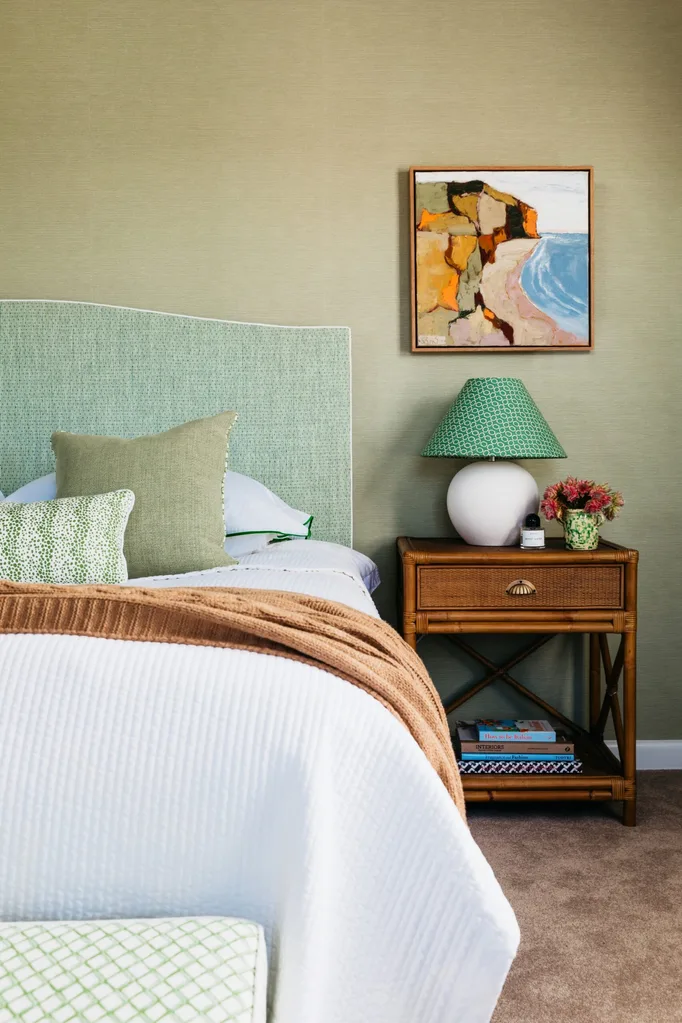
5. Have a solid head board
Not only good protection from unwanted window energy leaks, a solid headboard represents stability and support in life and relationships. Upholstered or wooden headboards are ideal because they create that sense of grounding and protection.
6. Let light in… but not with skylights
Sunlight is purifying, and can help reset the energies in your bedroom. Open windows and curtains during the day to allow natural light and air to circulate through the room. However, Jane advises not to have a skylight in your bedroom. The top-down energy can be too activating for a room that needs to be quiet and cosy for a good night’s sleep.
7. Don’t place mirrors opposite the bed
In feng shui, mirrors can bounce energy around the room. When facing the bed, they may create restless sleep, heightened anxiety… or arguments with your partner.
8. Choose calming colours
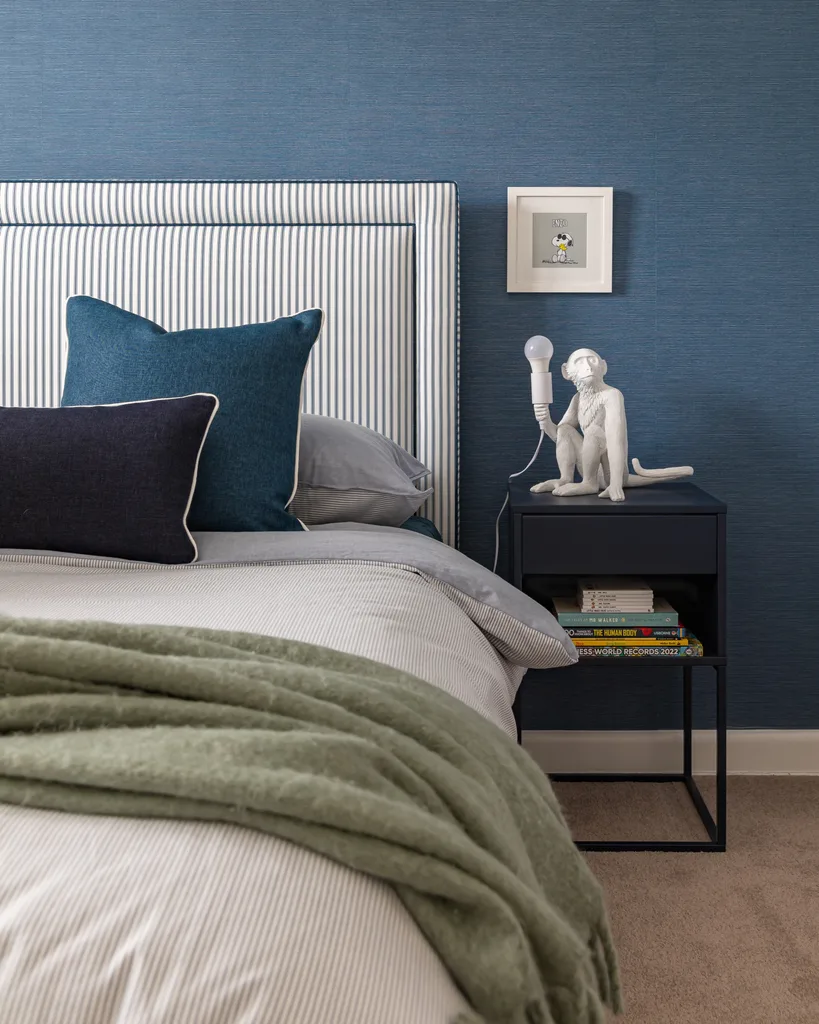
Soft colours such as beige, warm whites, browns, and pale blues, and greens are thought to promote relaxation and balance. Meanwhile, bright reds and other loud tones can activate your energy when you need to relax.
Having said that, there are plenty of shade variations and colours to choose from, and it’s best to pick one you love, that makes you feel safe and calm, but not too stimulated.

9. Don’t hang heavy items above your bed
Shelves, heavy artwork, or hanging decor above the bed can create subconscious pressure and disrupt feelings of safety.
10. Use a symmetrical layout
Feng shui loves balance, and visual symmetry is part of it. Use two bedside tables or lamps to create balanced energy, especially if the bedroom is shared with a partner.
11. Don’t let clutter build up
Clutter blocks energy flow and can subconsciously create stress. Keep your bedroom clean and organised (so long, clothes chair!), particularly around the bed and nightstands.
“Clutter is public enemy number one of feng shui,” Langof tells The Edit. “Clutter creates obstacles and worry and it stops new opportunities from entering your life.” Clearing it will help the energy flow seamlessly through your bedroom.
12. Don’t have a work space in your bedroom
If you can avoid it, keep your desk out of your room. Office equipment and electronics introduce work-related stress into a space meant for rest.
13. Keep your phone away from your bed
Ideally, all electronics should be left outside of your bedroom, Langof says. “Some people sleep with their phones under their pillows and that’s not great,” she adds. “So, we want to make sure that we have low electromagnetic fields and electrical fields around us when we sleep because that’s all energy.”
If you insist on keep your phone on charge in your room, don’t bring it to bed, and keep it on silent across the room.
14. Don’t have your bed facing away from the door
This is going to be an issue if your bed is positioned on the same wall as your door. In feng shui, we don’t like to turn our backs on the door, especially during times of rest. Sleeping on the same wall as the bedroom door can make you feel exposed and less secure. The best place for your bed, is diagonally opposite but not facing the door.
15. Be mindful of what’s on the other side of your wall
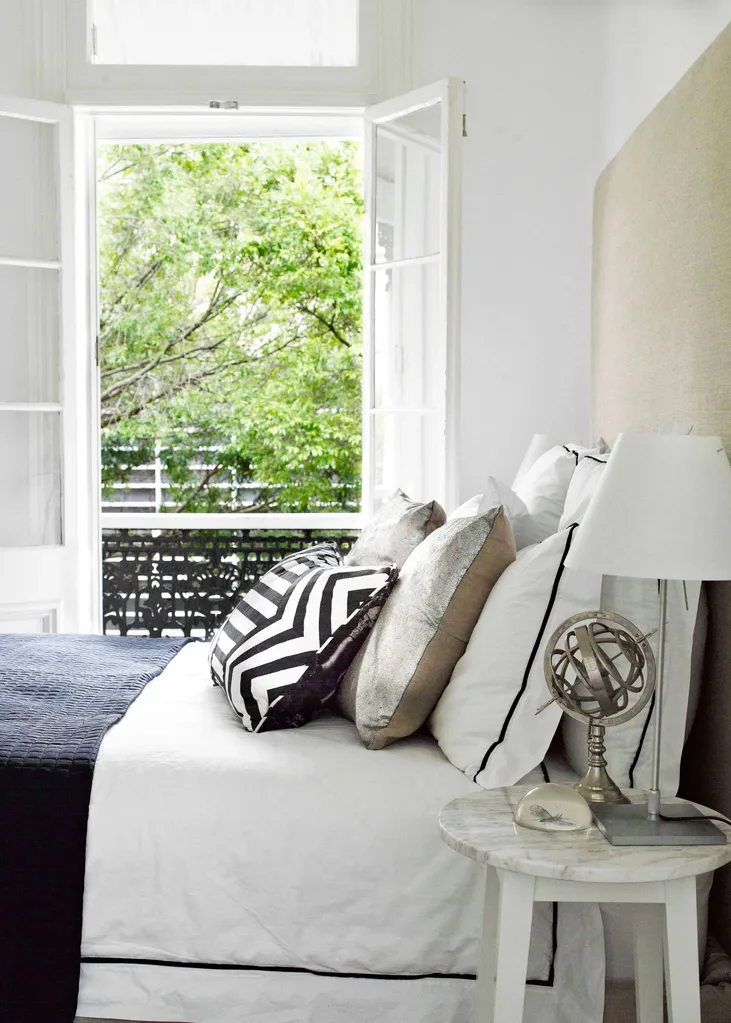
Langof says a lot of old homes in Australia have the electrical mains on the exterior bedroom walls. If you’re going to sleep with the gentle hum of your metre, it may disrupt your sleep. Again, try a thick head board to put additional ‘space’ between you and the electrical box.
I’ve seen multiple clients who’ve told me that they can’t sleep properly, and then we find out what’s on the other side of their bed head wall. It’s the metre box or it’s the fridge or it’s even a fish tank,” Langof elaborates. “You have to be careful about what’s going on in that wall behind your bed head.”
16. Don’t place plants next to the bed
Plants help to purify the air, so you’d be forgiven for thinking they’re great bedside companions. However, in feng shui, plants may be ‘overstimulating’ in a bedroom environment. If you prefer to have them in the room, ideally keep them away from your bed while you sleep.
17. Keep a clear walkway
You will often hear feng shui experts encourage keeping your bed in the centre of a wall, so it’s easily accessible from both sides. This ease-of-access should extend throughout the entire room, where energy — and you! — needs a clear path to walk through. Where possible, keep spaces clear and uncluttered.
18. Trust your instincts
It’s your room, after all, and if there’s only one rule to feng shui, it’s that YOU have to feel good in your space. Try and get a feel for what will help you feel calm and relaxed
Watch Jane Langof on The Edit podcast by Home Beautiful:

