


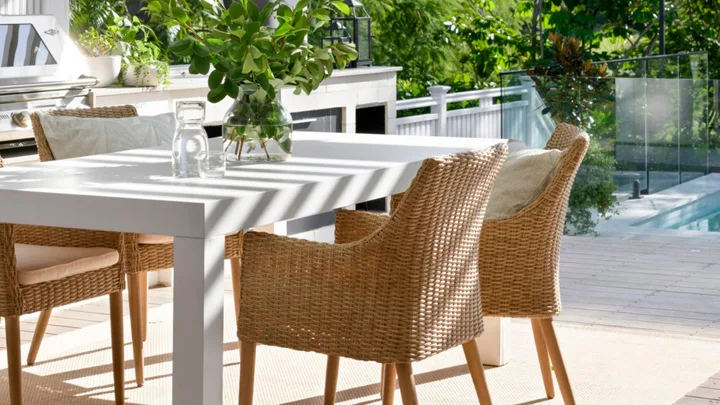
I don’t have an indoor dining room. Is that weird? I thought so, until I learnt that it’s actually becoming somewhat of a trend. Our dining table lives outside, beneath a covered deck overlooking our backyard and swimming pool. Inside, my kitchen has an island bench with stools where we eat quick meals or sit and chat while someone’s cooking.
Was this decision dictated by space? Absolutely. We could have squeezed a dining table inside, but it would have meant sacrificing precious kitchen island space. And when it came down to choosing between a larger, more functional kitchen and a formal dining area, the kitchen won.
But there was another reason, too. We live in Australia. A country where Christmas lunch is often enjoyed outside, summer evenings stretch long into the night, and some of our best memories are made around a backyard table with good food and even better company.
So, rather than trying to accommodate a traditional dining room, we embraced the Australian lifestyle and moved ours outside. And apparently we’re not the only ones.
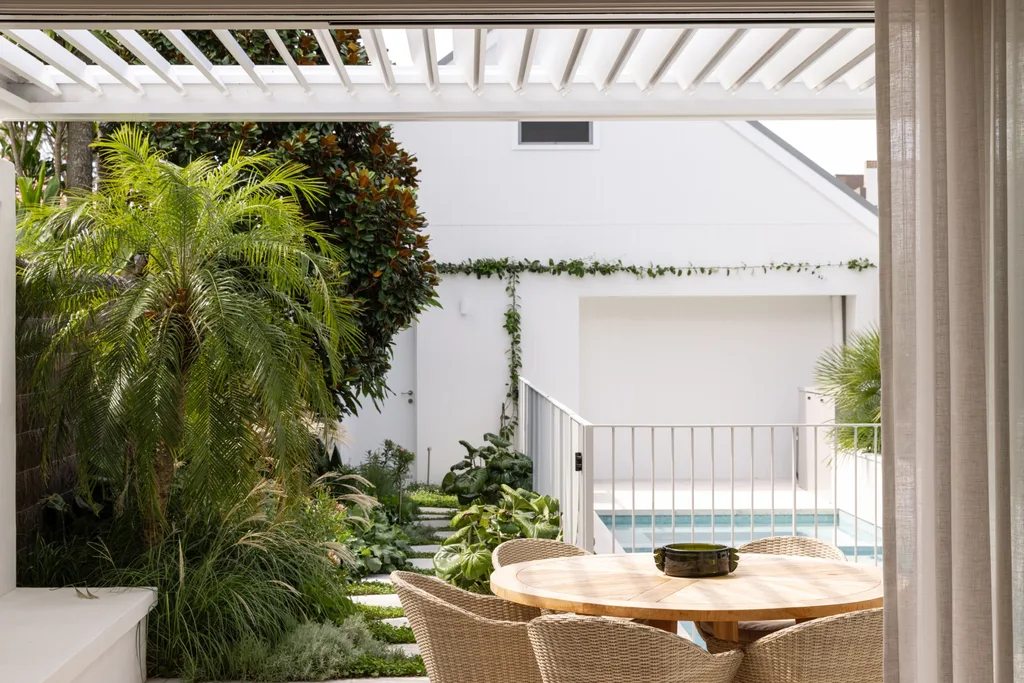
Is the traditional dining room becoming a thing of the past?
The dining room has always been a staple of the Australian family home. It is the place for Sunday roasts, birthday dinners and Christmas celebrations. But often, it can be a separate room entirely. Today our homes look a little different.
Open-plan living transformed the way we design and use our spaces, with kitchens, dining areas and living rooms increasingly flowing into one another. Kitchen islands have become the unofficial gathering place of the home, while outdoor entertaining areas are taking on responsibilities once reserved for the dining room. And when space is at a premium, a room dedicated solely to eating can feel like a luxury.
But according to Australian Outdoor Living, homeowners are increasingly treating their backyards as genuine extensions of their homes, rather than separate spaces reserved for the occasional barbecue.
“The traditional dining room is no longer the only place where families gather around a table,” says Alexandra Hand, Outdoor Living Design Specialist at Australian Outdoor Living.
“Increasingly, we’re seeing that function extend into outdoor spaces, particularly where there’s a seamless connection between the kitchen, living areas and backyard.”
Of course, this doesn’t mean every Australian is abandoning their dining room. There will always be a place for a beautifully styled dining table, particularly in homes where the space allows.

The rise of outdoor dining in Australian homes
There’s something wonderfully Australian about entertaining outside. Maybe it’s our climate, our love of a barbecue, or the fact that gathering around a table feels infinitely more relaxed when you’re surrounded by greenery rather than four walls.
Whatever the reason, outdoor dining is becoming an increasingly considered part of home design. And we’re not just talking about dragging a plastic table onto the lawn and calling it a day.
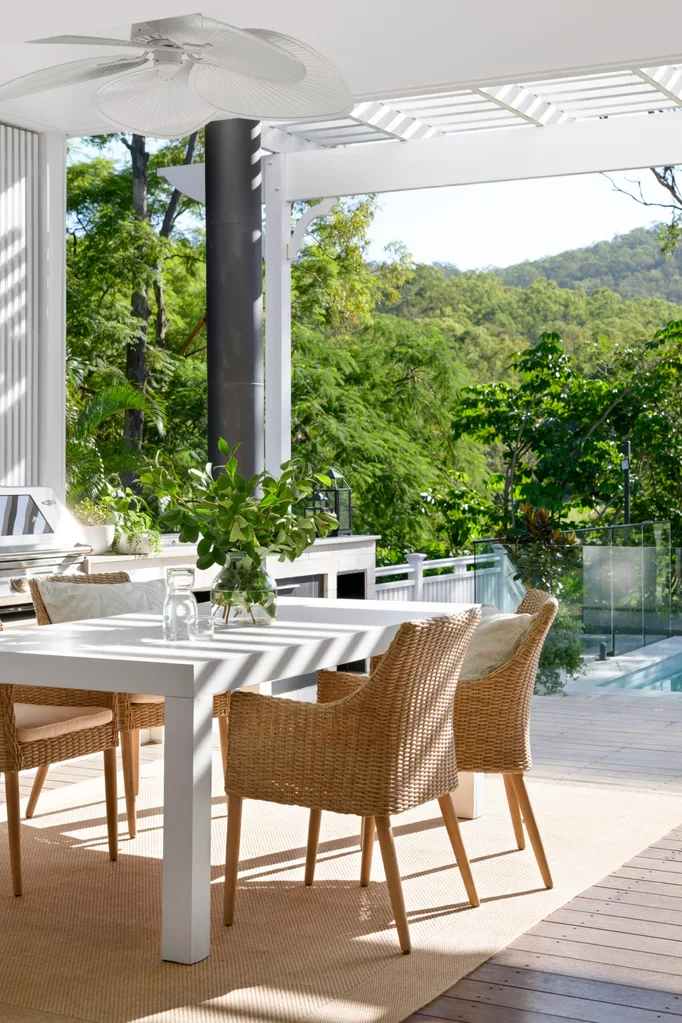
Homeowners are investing in covered decks, pergolas, outdoor kitchens, lighting, weather protection, and comfortable furniture to create spaces that feel every bit as inviting as their interiors. “The most successful designs don’t simply replicate an indoor dining room outside,” Alexandra explains. “They respond to the way Australians naturally live and entertain, creating spaces that are equally suited to everyday family meals and larger social occasions.”
It’s a philosophy that makes perfect sense to me. Our outdoor dining table isn’t reserved for special occasions. It’s where we sit as a family, where friends gather, and where we can enjoy the backyard and pool rather than feeling disconnected from them. The kitchen island handles the quick, everyday moments. The outdoor table handles everything else. And I love that distinction.

One Australian homeowner has embraced the change
For Adelaide homeowner Carolin Oliver, transforming her backyard into an outdoor entertaining area has completely changed the way her family uses their home. Carolin, who lives in the leafy suburb of Belair, has created a covered outdoor space surrounded by lush gardens, complete with a generous dining setting, comfortable lounge furniture, glass balustrades and outdoor blinds.
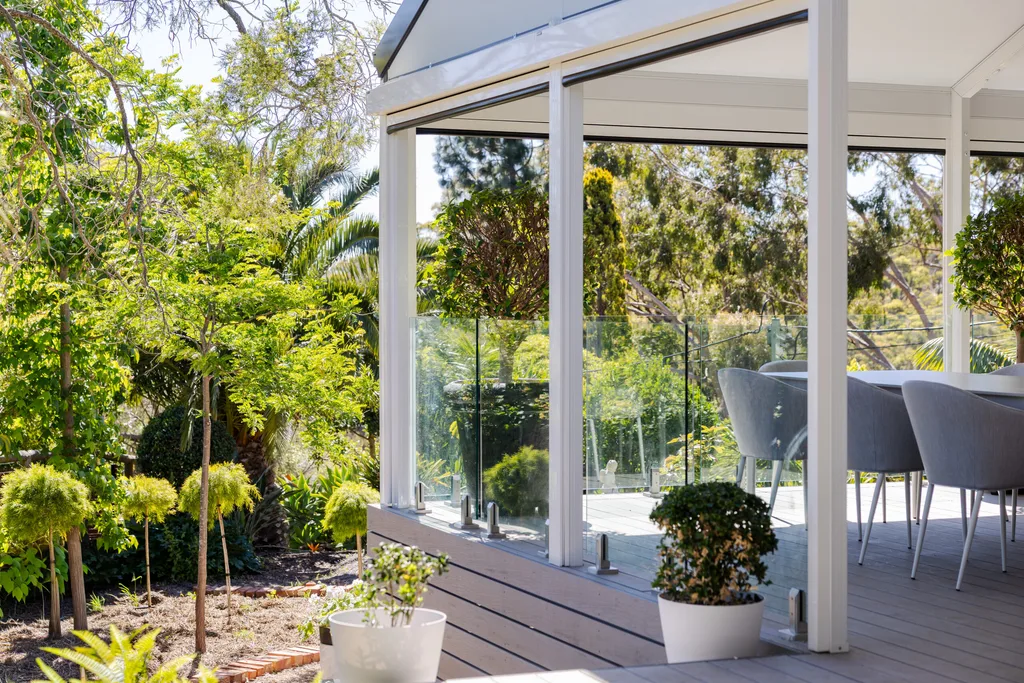
It’s the sort of space that makes you want to invite everyone over for lunch and hope they stay until dinner. But the biggest transformation hasn’t necessarily been aesthetic. It’s been how often the space is actually used.
“We are now entertaining and dining in the backyard at least every other week, compared with once or twice a year before,” Carolin says.
“It’s become a real gathering area for friends and family. We’re using it for casual dining during the week, through to major milestones, including our son’s 50 birthday, our 50-year wedding anniversary and a 70th birthday.”
That’s quite the return on an outdoor renovation. And it demonstrates something I think we sometimes overlook when designing our homes: a space doesn’t have to be traditional to be meaningful.
Why indoor-outdoor living is changing the way we entertain
One of the biggest advantages of outdoor dining is how naturally it can connect with the rest of the home. As we’ve explored in our guide to indoor-outdoor entertaining, creating a seamless transition between your kitchen, living spaces and backyard can make entertaining feel more effortless.
Rather than separating the person preparing food from everyone else, a connected indoor-outdoor layout encourages conversation and movement between spaces. And it’s not just about entertaining guests.
David Wegener, General Manager for South Australia and Victoria at Australian Outdoor Living, says homeowners are increasingly looking for outdoor areas that work just as well on an ordinary Tuesday as they do for a special celebration.
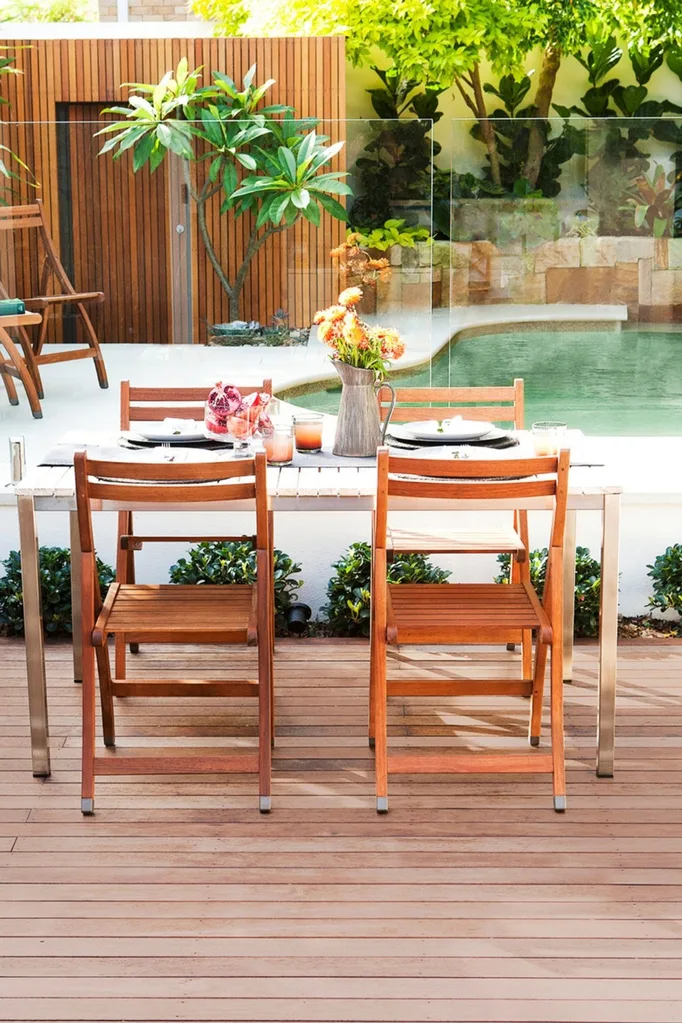
“The dining room has traditionally been the place where people come together over a meal, but that role is now being performed by the backyard,” he says.
“We’re seeing a shift away from simply putting a table beside the barbecue and calling it an outdoor dining area. Homeowners are creating covered, connected spaces where they can prepare food, sit down together and entertain much as they would indoors.”
And that, I think, is the secret to a successful outdoor dining area. It has to be somewhere you genuinely want to spend time, rather than somewhere that simply looks beautiful in photographs.

How to create an outdoor dining area you’ll actually use
Of course, there’s one rather important consideration when moving your dining room outside: the Australian weather. As much as we love our sunshine, we also have scorching summer afternoons, unexpected downpours, chilly winter evenings and the occasional mosquito determined to ruin dinner. Which is why designing an outdoor dining space requires a little more thought than simply choosing a beautiful table.
“Climate responsiveness is fundamental to successful outdoor design in Australia,” Alexandra says. “A beautiful space has limited practical value if it becomes uncomfortable in summer or unusable during periods of wind and rain.” She recommends considering orientation, shade, ventilation and weather protection from the outset, rather than treating them as afterthoughts.
For anyone hoping to create a more functional outdoor dining area, a few elements can make all the difference:
- A covered space: A pergola or roofed deck can provide protection from the sun and light rain, making the area more practical throughout the year.
- Outdoor blinds: Adjustable blinds can help manage glare, wind and privacy while making the space more comfortable in changing conditions.
- Comfortable furniture: Choose an outdoor dining setting that’s generous enough for family meals and made from materials suited to your local climate.
- Good lighting: Consider warm, layered lighting that makes the space feel inviting after sunset.
- Easy kitchen access: The closer your outdoor dining table is to the kitchen, the less time you’ll spend carrying plates, drinks and serving dishes back and forth.
- Greenery and personality: Potted trees, garden beds, cushions and beautiful tableware can make an outdoor space feel just as thoughtfully styled as an indoor room.
“In reality, the success of an outdoor dining area comes down to how well the different elements work together,” Alexandra explains.
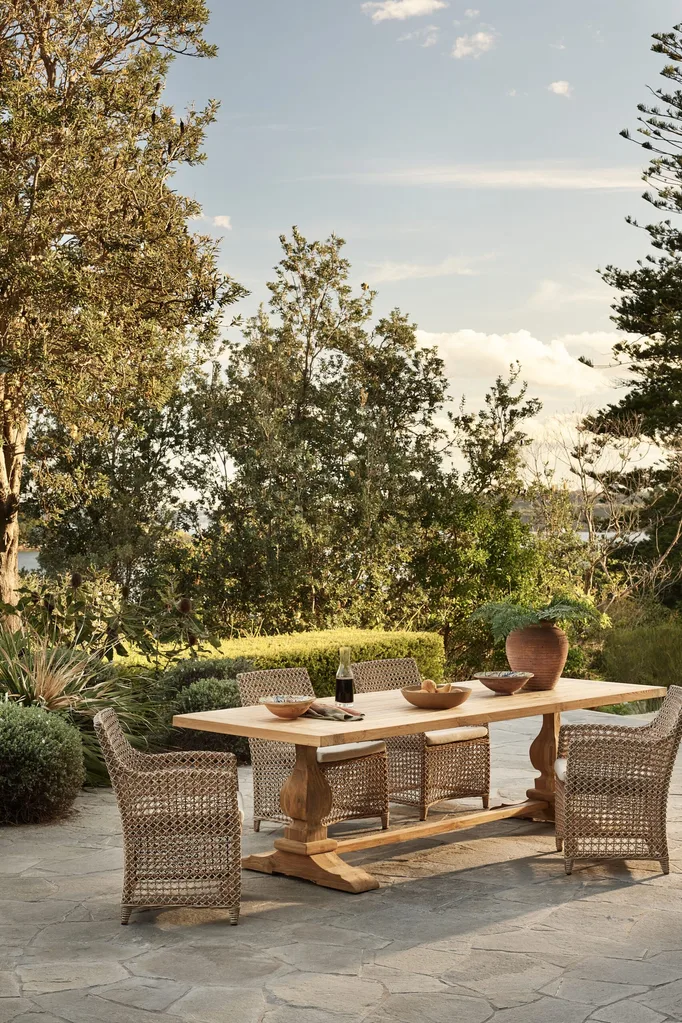
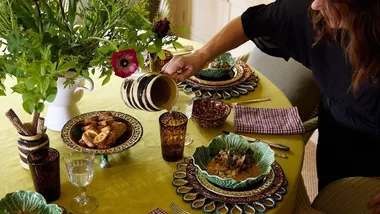
Your outdoor dining space should be just as comfortable as the indoors. (Credit: Coco Republic).
So, is the dining room really dead?
I don’t think the dining room is dead. There will always be space for setting a formal dining table, gathering beneath a beautiful pendant lights and enjoying a meal indoors. There are plenty of Australian homes where a dedicated dining room still makes perfect sense. And if you have the space, obviously, an indoor dining table is absolutely helpful. But I do think our relationship with the dining room is changing.
A kitchen island can become a breakfast table. A covered deck can become a dining room. And a backyard can become the most popular gathering place in the house.
As Alexandra puts it, “It’s less about adding space for the sake of it and more about making the entire property work harder for the people living in it.”
When I think about the home I want to live in, I don’t picture a formal dining room with a table that rarely gets used. I picture our kitchen island covered in the chaos of everyday life, and our outdoor table filled with friends and family on a warm afternoon. I picture the garden, the pool, the fresh air and the kind of long lunch that accidentally turns into dinner.
So, no, I don’t have a dining room. But I certainly haven’t lost the joy of dining. I’ve just moved it outside.



Related stories
Native ad body.

Native ad body.


Native ad body.


