


 Yúlì Kiln
Darkness used to bookend all of Meiling McGregor’s work days. Her job at a law firm was demanding, with hours that crept towards midnight. While she had always been drawn to creative habits, especially drawing and photography, these were relegated to the sidelines of life. The drive to create was still present but only as an oft-neglected whisper in rare, quiet moments.
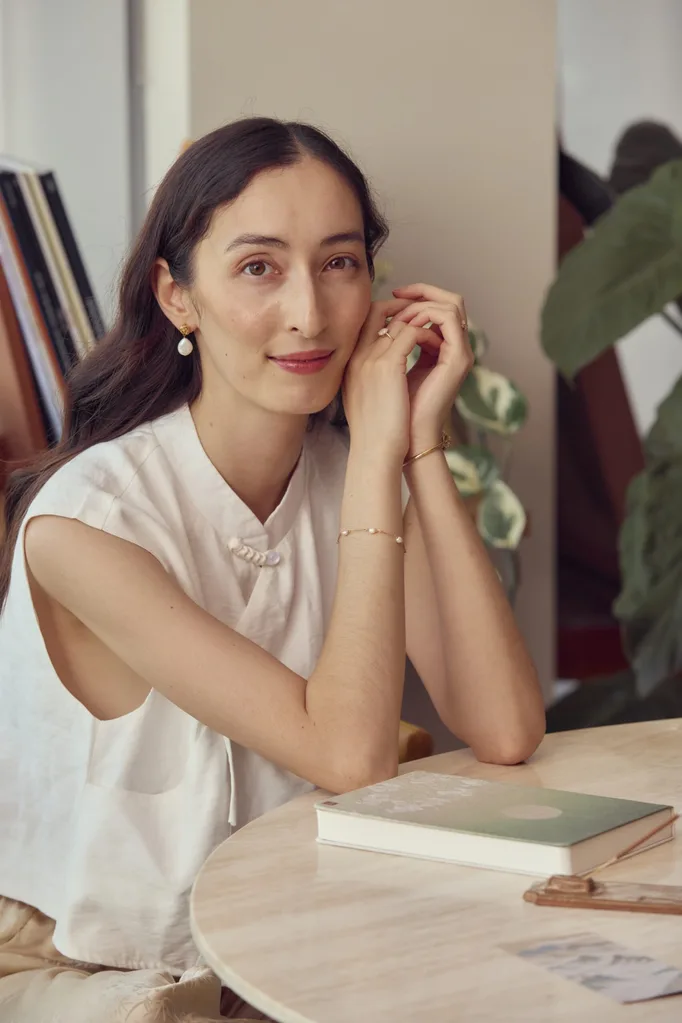
Then in 2017, Meiling (known as Ling to her friends) met Sarah Lee, who was also practising law in Sydney. Although they met at work, they barely spoke about their jobs, finding common ground in art. Friendship blossomed as Ling shared her drawings and Sarah, in turn, her work with resin and, later, pottery.
The question that spurred a career change
Their bond continued, even when Ling left law in 2020 and Sarah moved to London the following year. For both of them, covid had presented an opportunity for reflection on daily habits. If how you spend your days is how you spend your life, what did they want theirs to look like?
At a glance
Who: Ling McGregor, an artist, and Sarah Lee, a ceramicist.
What they do: Co-creators and founders of art, ceramics and homewares brand, Yúlì Kiln.
Where: Ling works from her Western Sydney home, while Sarah works from a community studio in London.
Why they do it: Ling: “This sounds so dramatic but, beyond wanting to, I feel like I have to make something all the time.” Sarah: “It gives me a sense of purpose. It’s a repetitive process. In that repetition, I find peace.”
Visit yuli-kiln.com, @yuli.kiln.
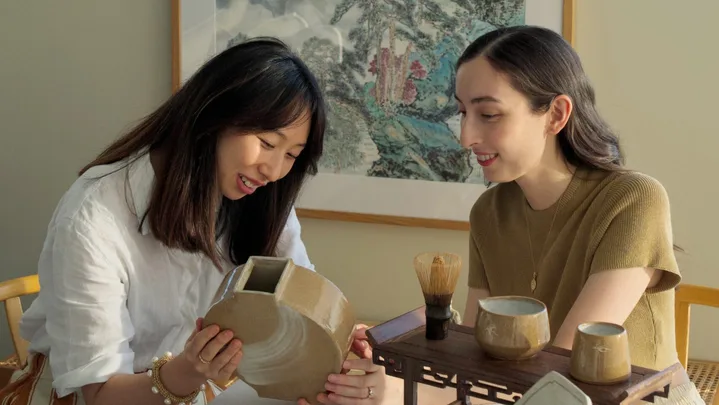
In some ways, a collaboration felt inevitable. “It started not with one seismic action,” says Sarah, but with a culmination of everything they had learnt from each other. More often than not, it was a process of unlearning; questioning what pursuits society deems valid and the role profitability plays in that.
It took Ling a long time to reframe what law had taught her. “Your productivity is measured in such a quantifiable way, where every minute is accounted for and creates money,” she says, “but being able to use my art as something that people emotionally connect with is so much more important.”
Inside the curated collection
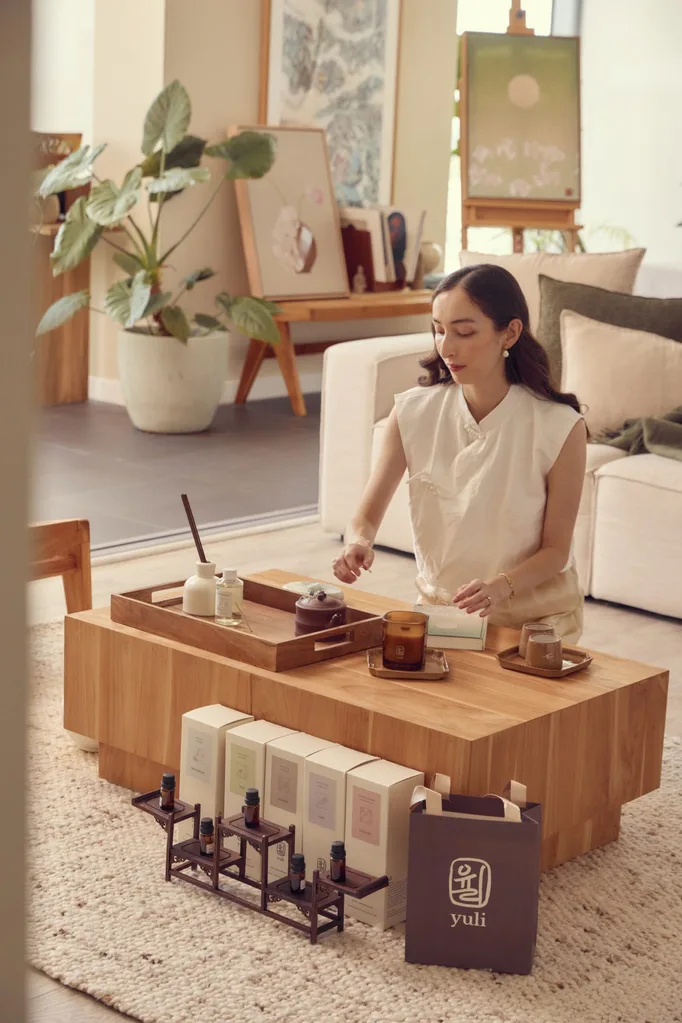
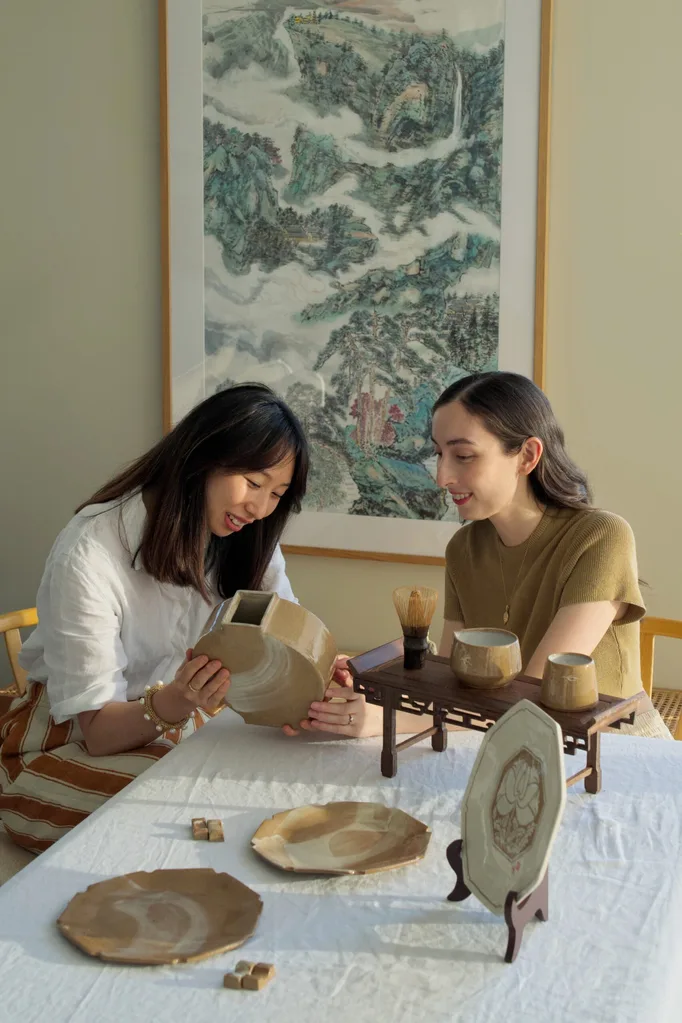
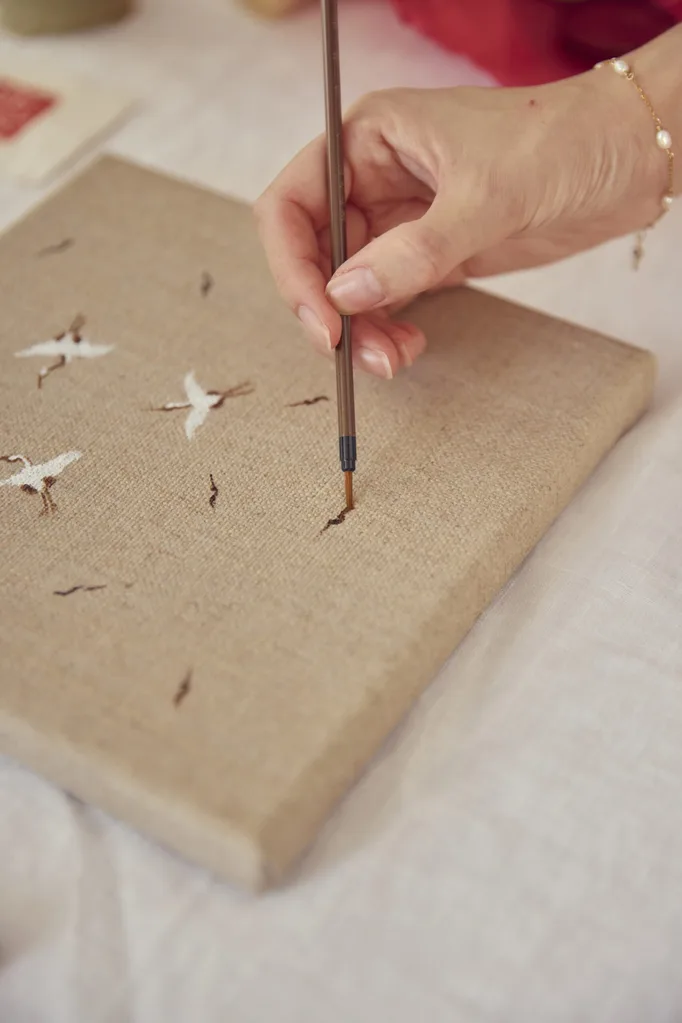
From there, Yúlì Kiln was born. Not deterred by their physical distance, they chose the materiality, form and design of each piece over video calls. Ling painted the artwork that became a notebook cover, while Sarah crafts the stoneware.
There’s a commonality between Yúlì Kiln’s fragrances, teaware and journals. Each item is an invitation to slow down. With every order Ling packs, an intention is revealed. “I see the ritual,” she says, whether it’s a matcha set with incense, or a journal alongside a candle.
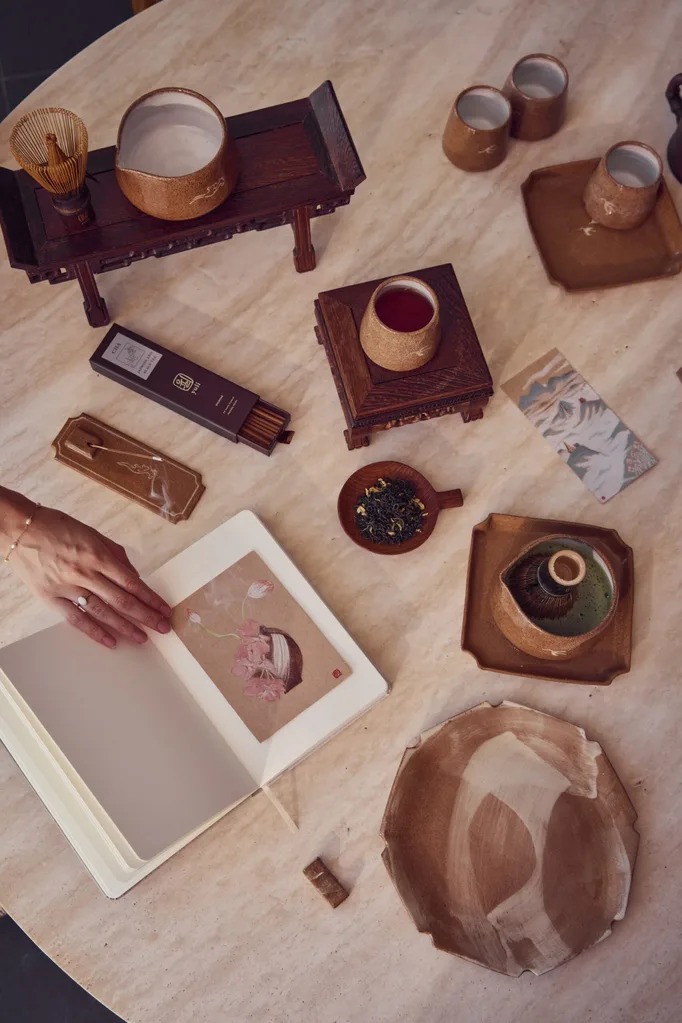
“It’s not just us. People are seeking the calm and reflection that can come in the quiet moments you create. If they feel peaceful, that’s the most important thing” – Ling McGregor
These pieces emerge from the time that Sarah and Ling carve out for themselves, but they also offer people that same daily habit. It stems from a practice, once undervalued, that has been shown the light of day.
The artistic process
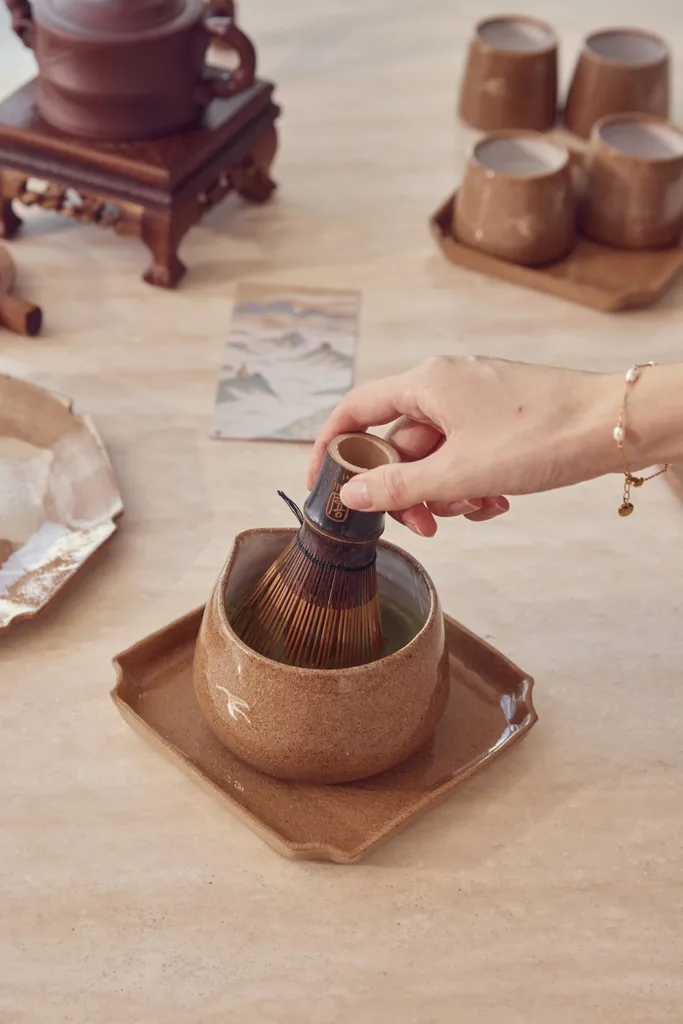
Working from a community studio with shared kiln space has taught Sarah how to surrender to the process. No matter how perfect your method, items can still explode – literally – in the kiln. This can happen if the clay is too wet or because a neighbouring piece exploded and your creation got hit by a shard.
Ling is in awe of Sarah’s ability to persevere in the face of this. As Ling puts it, “I don’t ever run the risk of finishing a painting and it bursts into flames.” For Sarah, the uncertainty is just a part of the creative process and habits. “You have to surrender to the kiln gods. This is the lore of all ceramicists, I think, and it’s part of the reason why I love ceramics.” The realisation that nothing is guaranteed, but you can choose to create anyway and will even benefit from it, has been freeing for both.
“Art should reflect imperfection. It’s a daily expression. Everything I make is different; if my mind’s busy, it shows in the piece” – Sarah Lee
It’s not just the kiln that can impact the process. Even the changing seasons will leave their mark. “You have to be really careful leaving your pieces out for too long when it’s warm, as everything’s drying much quicker,” says Sarah. “Whereas in winter it’s so cold and moist in the UK that it retains wetness and takes way longer to dry.”
Honouring their Chinese and Korean heritage
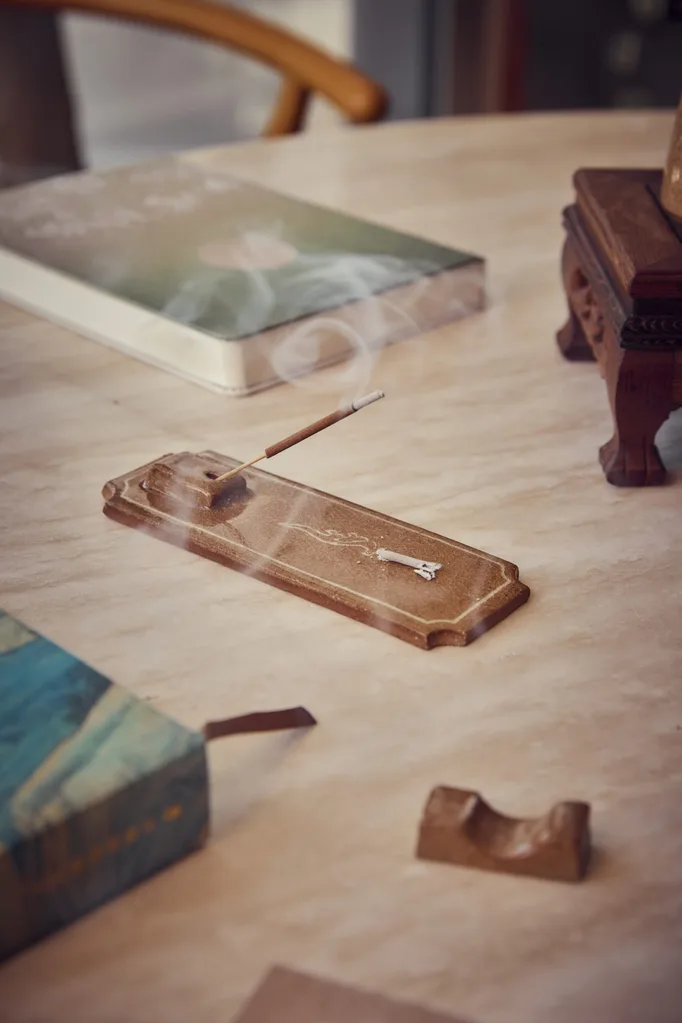
Ling’s Chinese and Sarah’s Korean heritage are significant sources of inspiration. “There’s a lot of symbols and motifs in traditional Chinese and Korean art that have influenced us separately,” says Ling. “But there’s also a lot of art practices that have been shared between the two countries. So I think it made a lot of sense that we were seeking comfort in the same colours and patterns.”
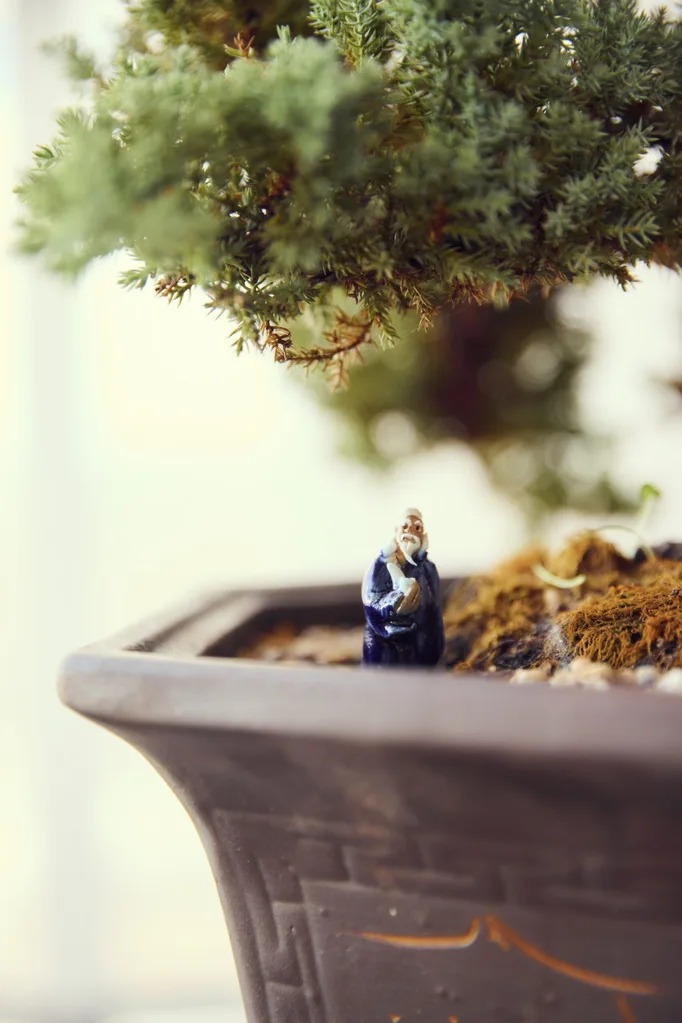
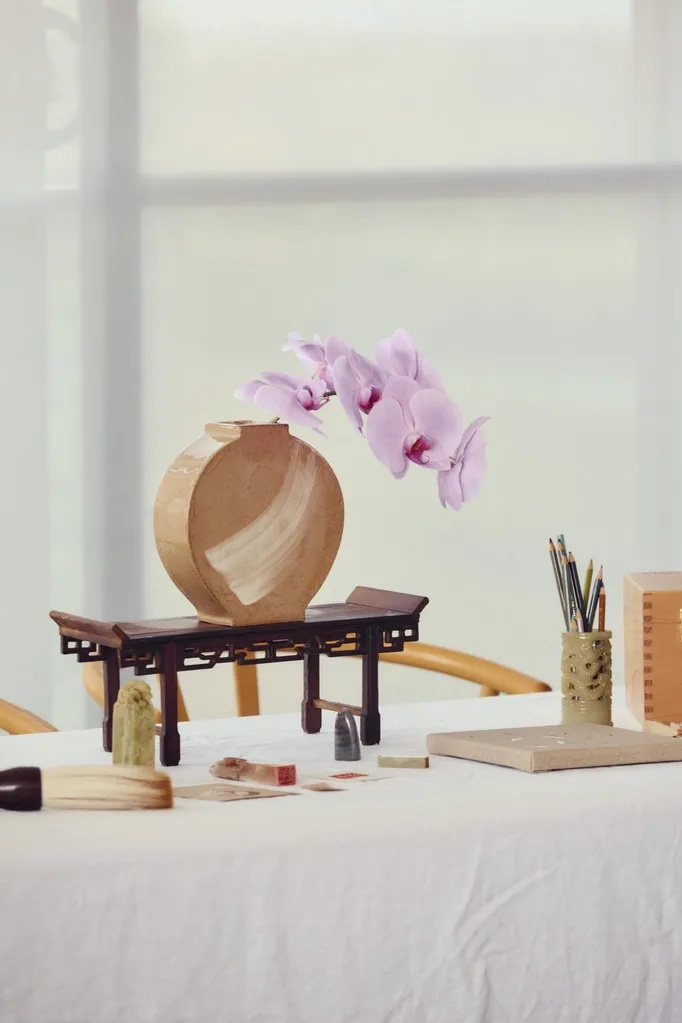
Simple motifs, such as cranes, orchids and the moon offer calming scenes imbued with centuries of meaning. Then there are the objects themselves, such as incense and matcha sets, that reveal ancient habits. For Sarah, this has been another process of discovery and learning. “I was born and grew up in Australia so there’s a big part of me that almost rejected my culture when I was growing up,” admits Sarah. “And now I’m starting to wonder ‘Why did I do that?’ I’m really curious about it.”
Her handmade flat moon vases honour her Korean heritage while also embracing the beauty of imperfection. “There is definitely an imperfect nature about Korean ceramics that I love,” she explains. “A moon jar has a very distinctive shape. The way it’s actually made is two halves that are put together so it can never be this perfectly rounded form and it was never meant to be.” Ling also enjoys the process of creating something in your own way, while learning from artisans who have come before, using these same techniques.
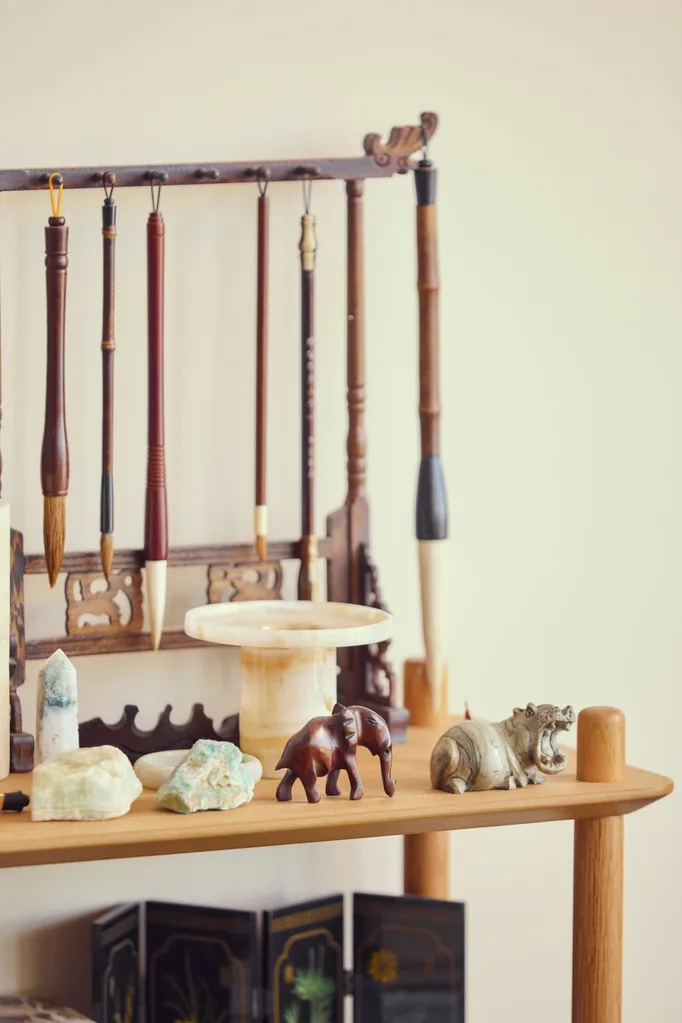
How to make space for art in your home
Ling and Sarah are proof that you can dedicate time to creative pursuits, and even create daily habits of the practice, without having a spacious studio to work from.
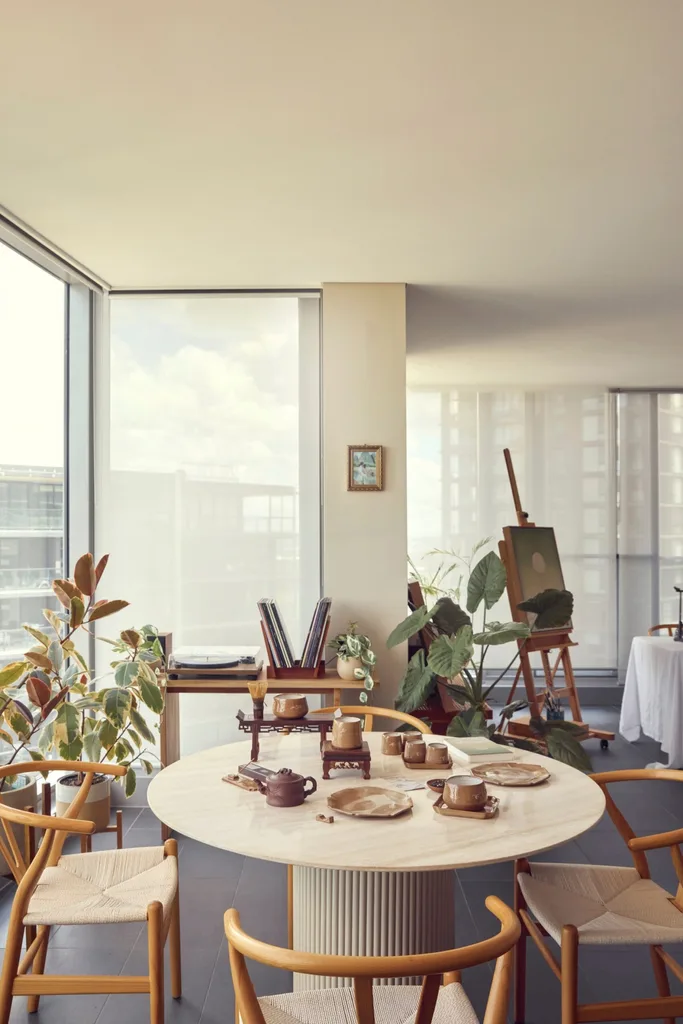
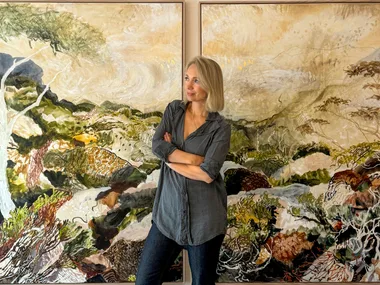
Like many Sydneysiders, Ling lives in an apartment. One open-plan space encompasses the living and dining areas, as well as a corner that Ling uses as her studio. “It’s literally just one table, one easel, one chair and a box of paints. But it’s a very dedicated corner where I can change it to suit what I’m working on,” says Ling. “It’s weird to say but it’s almost as if having the physical space creates the mental space for it.”
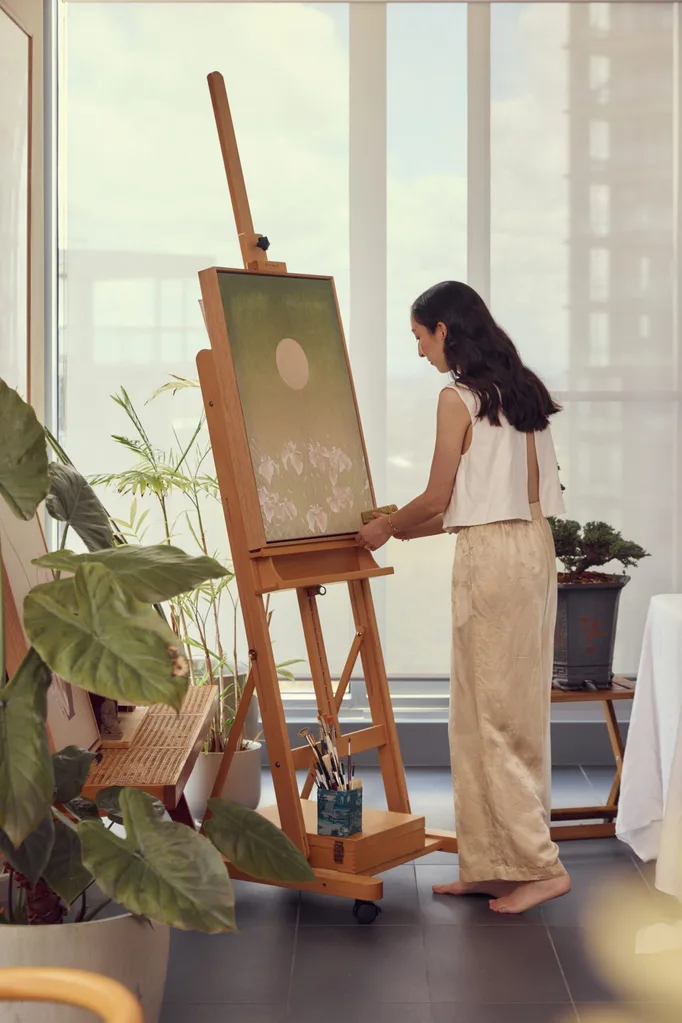
Of course, self-doubt can still hit. For Ling, thinking of her inner child and trying to operate as she did when she was younger helps to quiet the negative inner voice. “I’ve spent a lot of time as an adult trying to figure out what it means to be an artist. It’s easier as a child not to overthink things,” she reveals. “Just spend time making and trying. There’s a lot less expectation that way.”
There are many lessons that Ling and Sarah have learnt since they started prioritising their creative pursuits. But perhaps the most important one is this: If something sets your soul on fire, find the time for it. Reject perfection. Don’t worry about the question of “Why?”. Just do the things you love, without any judgements on the outcome. The enjoyment you find in creating is always worth it in the end.

