 Photography: Alana Landsberry, Styling: Lucy Gough
Living in a building of architectural significance, one is not so much a homeowner as a custodian – but there are few so well-suited to the role as Annette. The CEO of Museums of History NSW, Annette’s work is driven by a passion for the past. This has overflowed into her personal life, as she and her husband Michael are the owners and meticulous caretakers of the Walter Burley Griffin-designed Duncan House in Castlecrag.
Annette and Michael’s love of heritage homes is longstanding, and when the couple moved from Melbourne to Sydney and began house hunting, a period gem was high on their list of must-haves. “We were looking for something that hadn’t realised its full potential, that had architectural significance and heritage value to it. I love a project,” says Annette.
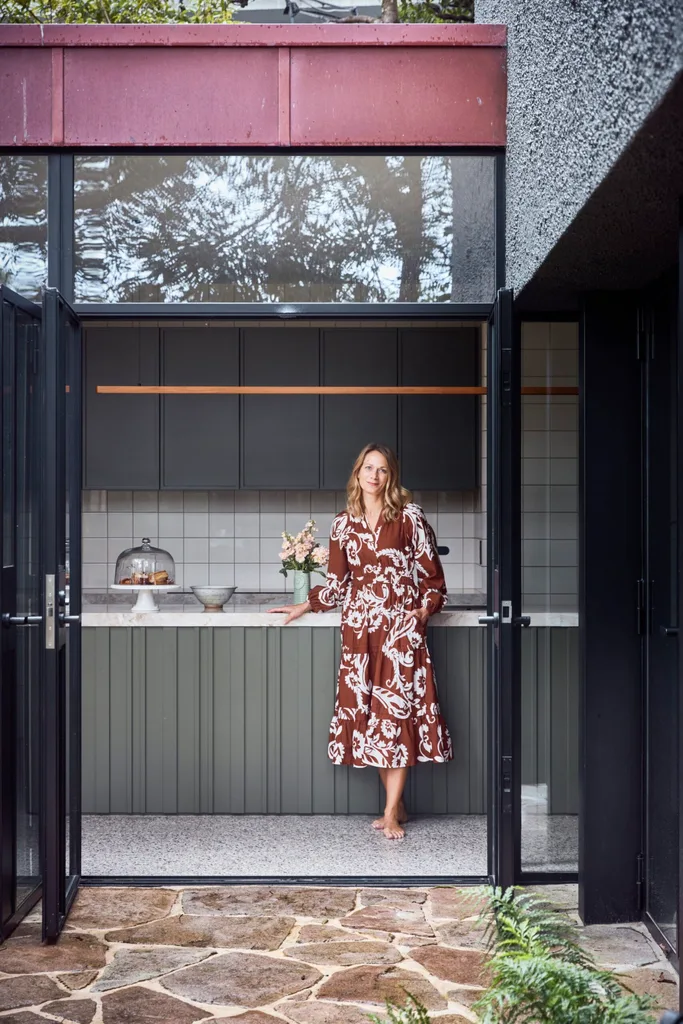
Who lives here?
Annette, CEO of Museums of History NSW; Michael, a finance industry executive; and their two cats, Lexi and Boo.
What do you love most about historical homes? Annette: “Their character and warmth. They display craftsmanship that we could only dream of achieving today and their patina tells stories of the families who lived there before.”
What is the biggest challenge of living in a heritage home? “As a custodian of a heritage home, you have a responsibility to future generations to respectfully conserve its heritage fabric. That’s a lot of pressure!”
And the biggest reward? “Living in a true one-of-a-kind space. I get enormous delight from the quirks of the house – the curved skirting boards, the chevron-shaped windows and the shiny ochre ceilings.”
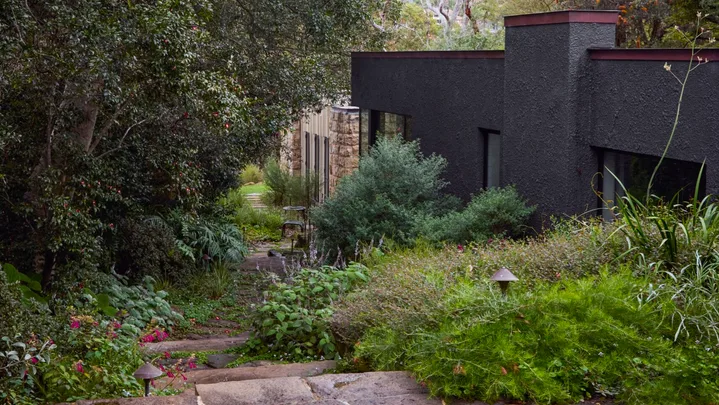
What is your favourite space in or around the home? “The gardens are very important to the house and I love that visitors pass through the garden to enter our home. There are so many lush outdoor spaces to enjoy from all areas of the house.”
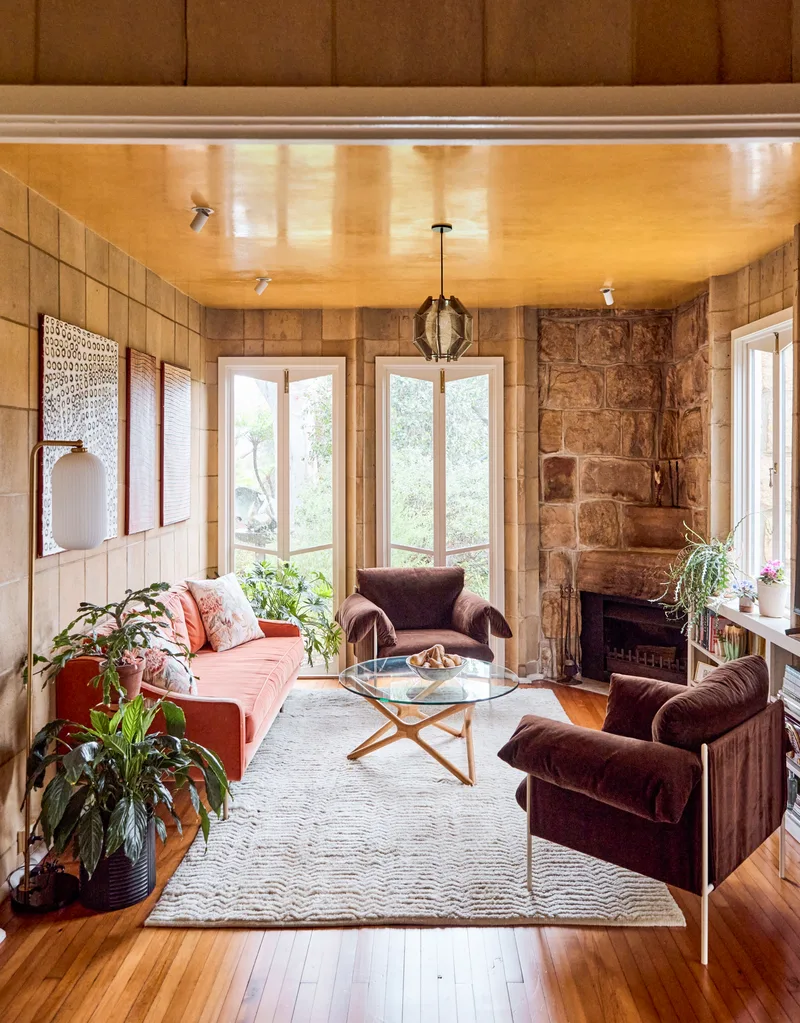
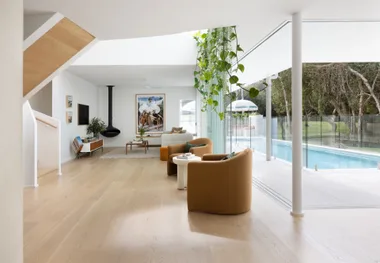
chairs by Ellison Studios and art by Kawayi Nampitjinpa, Kim Napurrula and Rosie Nampitjinpa from Papunya Tula Artists. (Credit: Photography: Alana Landsberry, Styling: Lucy Gough)
The suburb of Castlecrag piqued the couple’s interest – surrounded on three sides by Sydney Harbour, the land was originally developed in the 1920s by Walter Burley Griffin and his wife Marion Mahony Griffin, architects who formed a groundbreaking vision of a community built in sympathy with the natural bush landscape. Duncan House is one of 13 Griffin homes in this unique area.
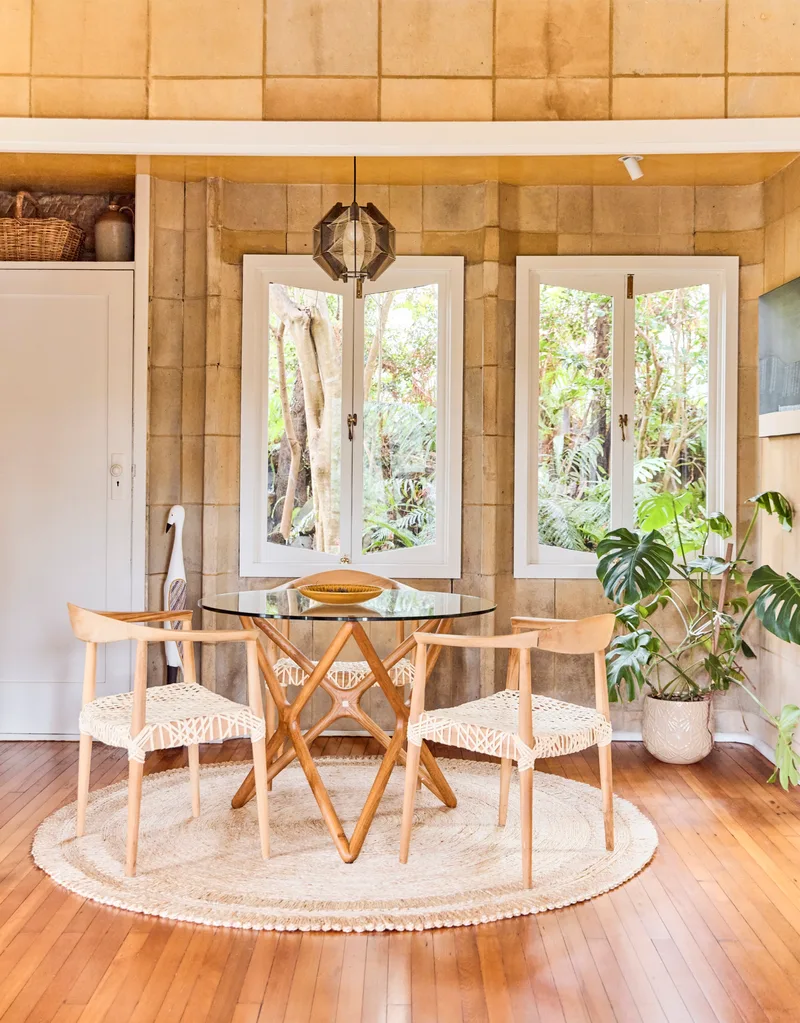
“There aren’t really any square corners in the old part of the house – it’s a subtle nuance.” Annette
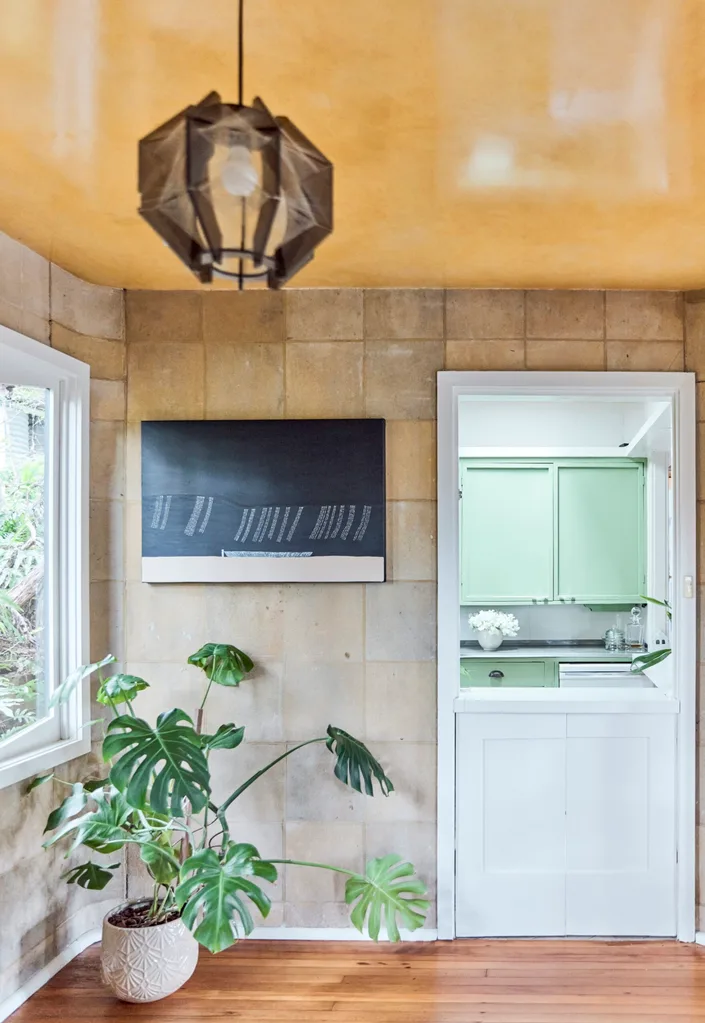
It had been largely preserved, but also bore the scars of questionable design decisions made in recent decades. “The house was in a state of promise. But not a lot of realisation of that promise,” explains Annette.
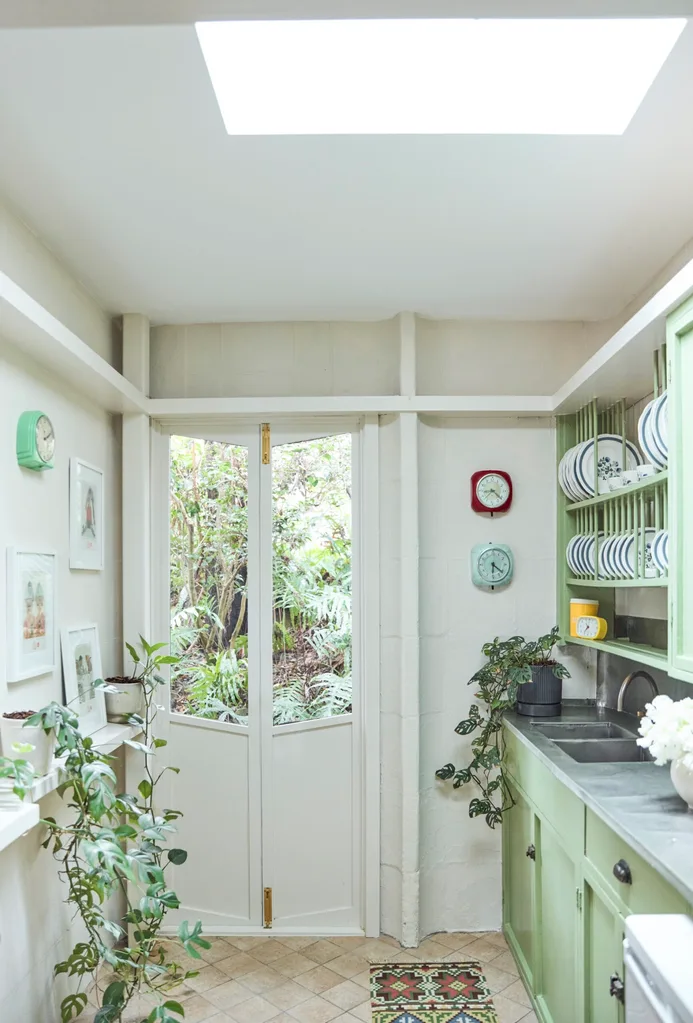
There were two parts to the project: conservation work on the original dwelling, and a larger renovation on an ill-advised ’90s extension. The first tool in the couple’s renovation kit was knowledge. “I spent about six months researching online and found great information through council, the Griffin Society and the Caroline Simpson Library. I learnt so much about the house and came to understand what had been changed over the years,” says Annette.
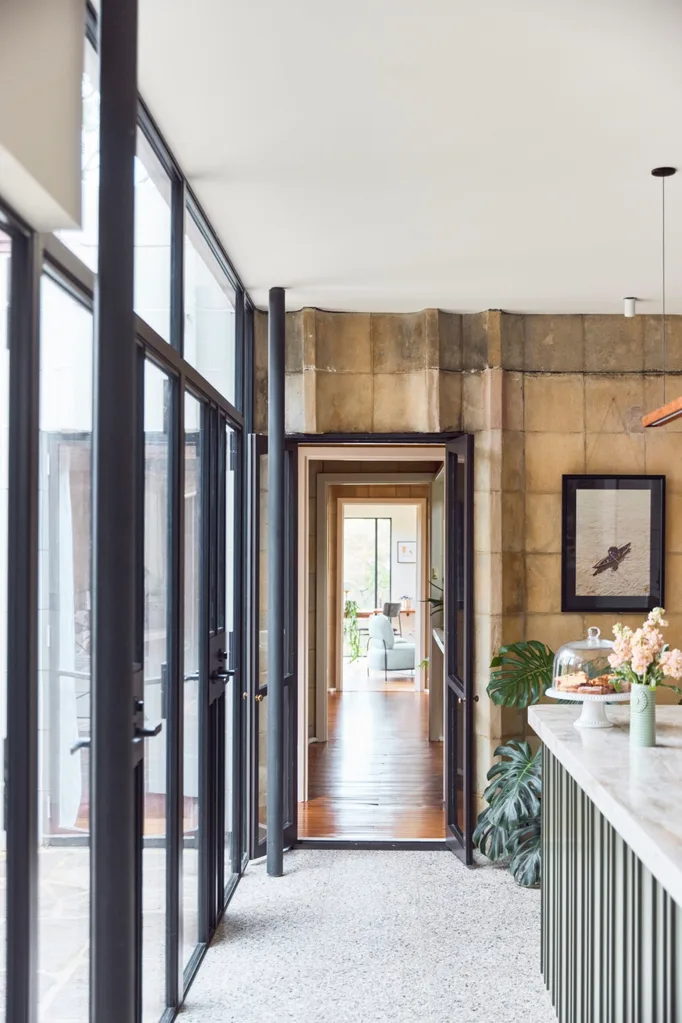
While the conservation work on the cottage, built in 1934, was no small job, the most dramatic transformation has been to the extension, which architect Robert Weir of Weir Phillips Architects was brought in to reinvent. The brief to Robert could be boiled down to two major goals.
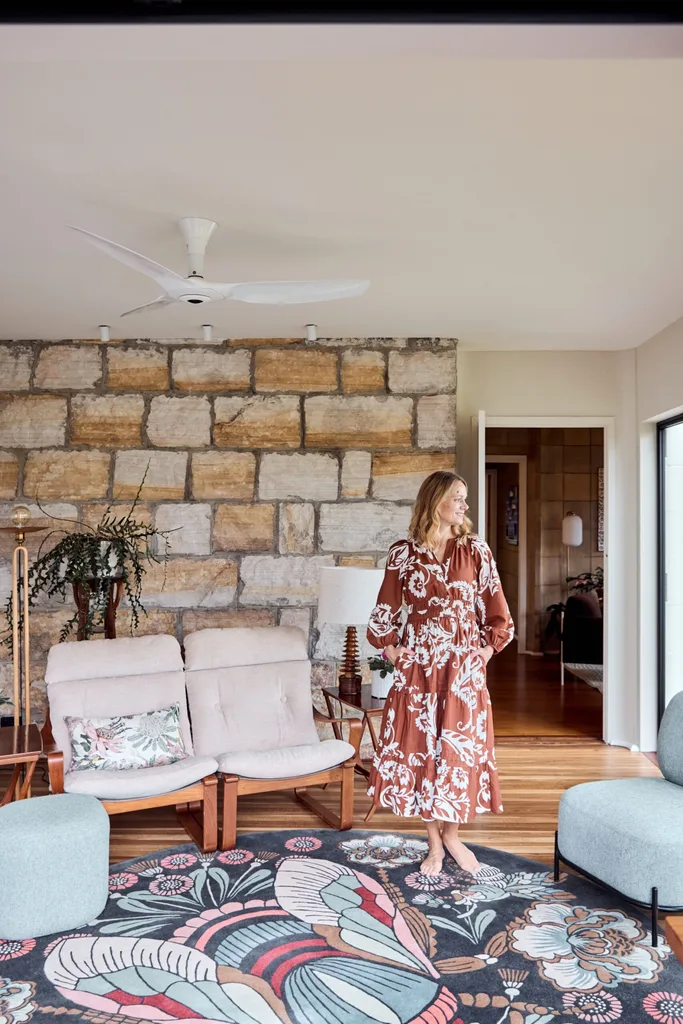
The first was to reconnect the Griffin house with the street – Castlecrag is a must-visit stop for architecture buffs, but this one was cowering behind the ’90s addition and a hulking carport. “The second big move was making the original Griffin building the hero and the extension subservient. We aimed to get a better dialogue between the extensions and the original house,” says Annette.
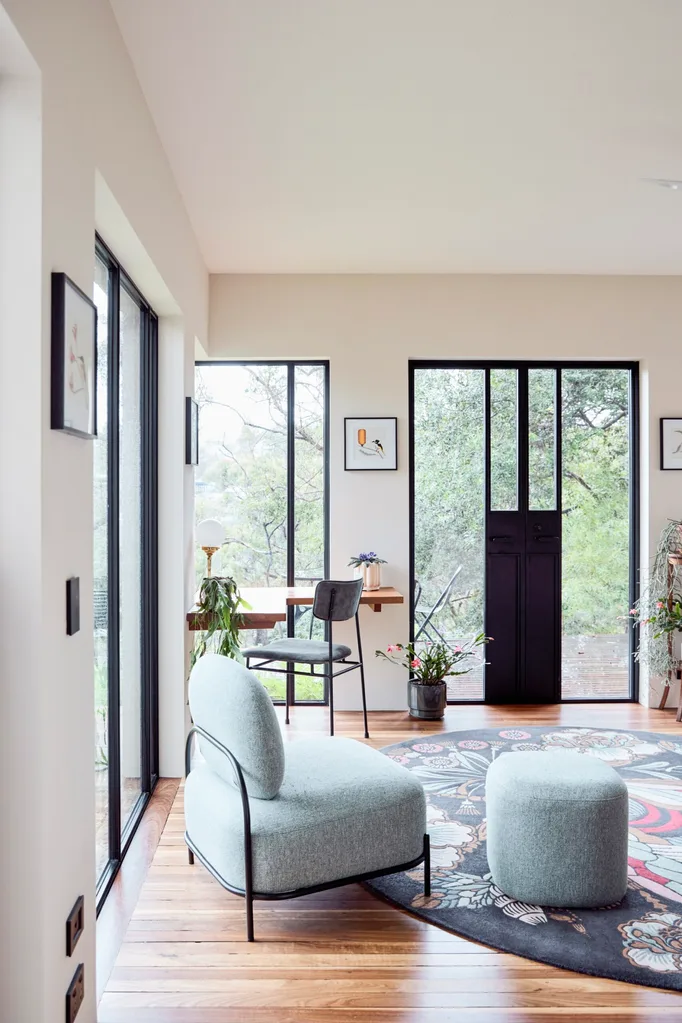
It’s an early example of that prous indoor outdoor living style that is so fashionable now.” Annette
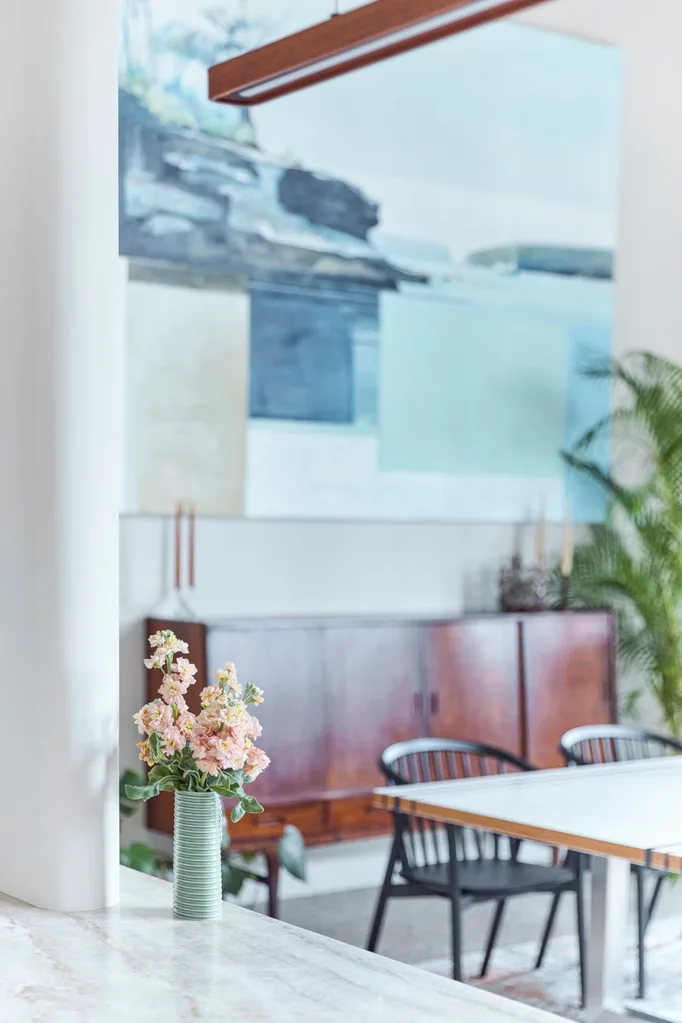
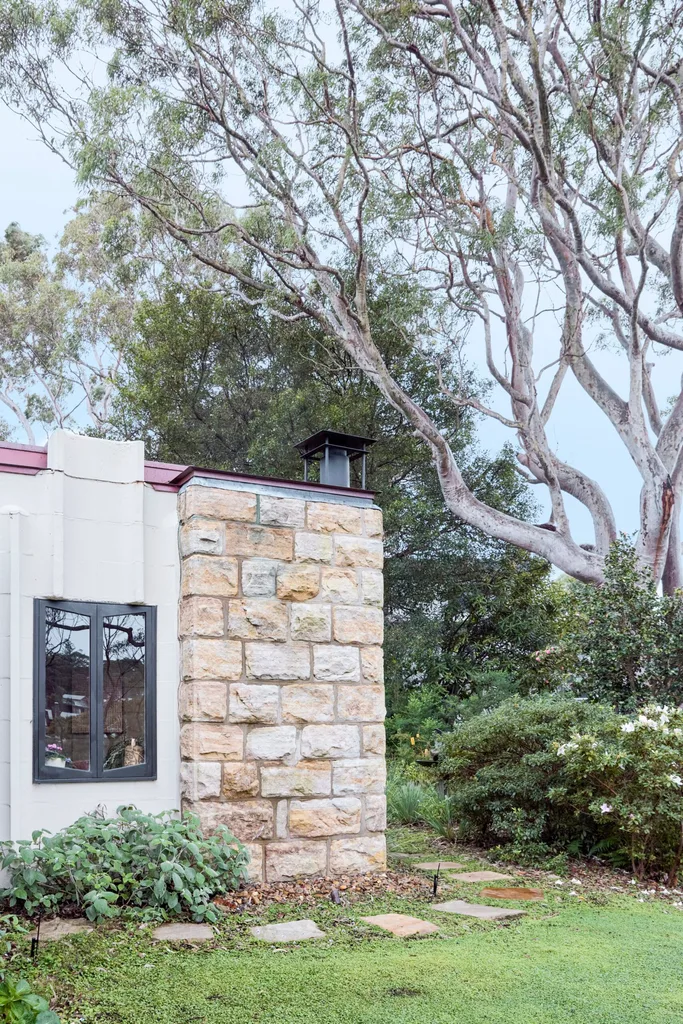
This was a multi-layered process that involved channelling the architectural language of the Griffins and intentionally subverting it. “Burley Griffin stuff is quite muscular, there’s a real depth to the walls,” says Robert, who contrasted this with floating exterior panels and glazed corners, including the dining room corner, which looks onto the heritage home from the extension. “That corner becomes like a giant lantern, like a beacon to the front courtyard,” he says.
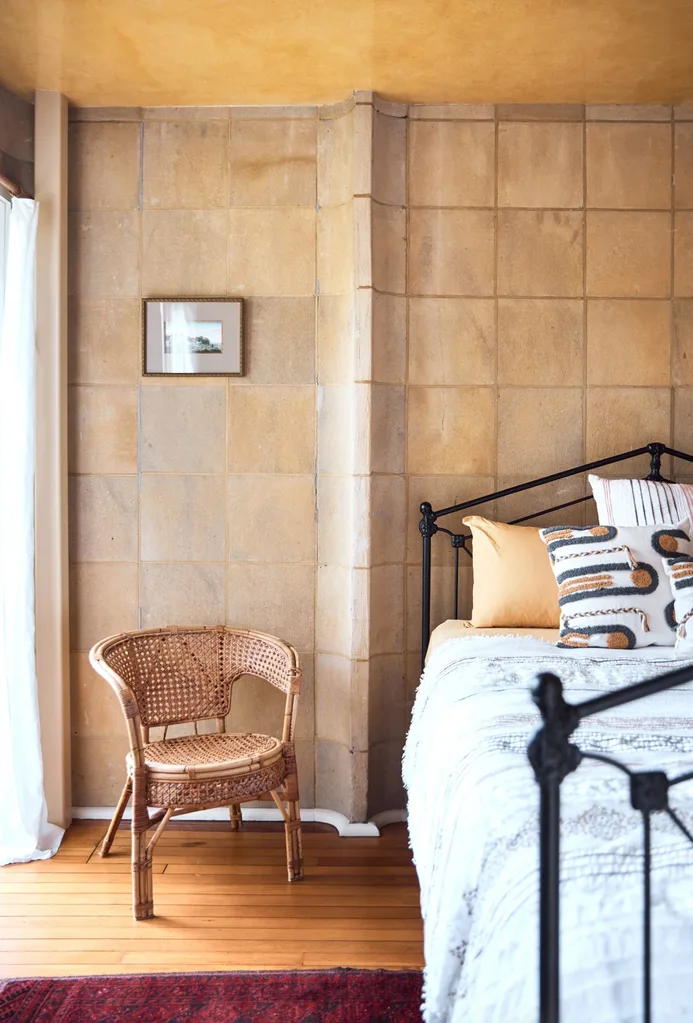
“I get enormous delight from the quirks…the curved skirtings, chevron windows and shiny ochre ceilings.” Annette
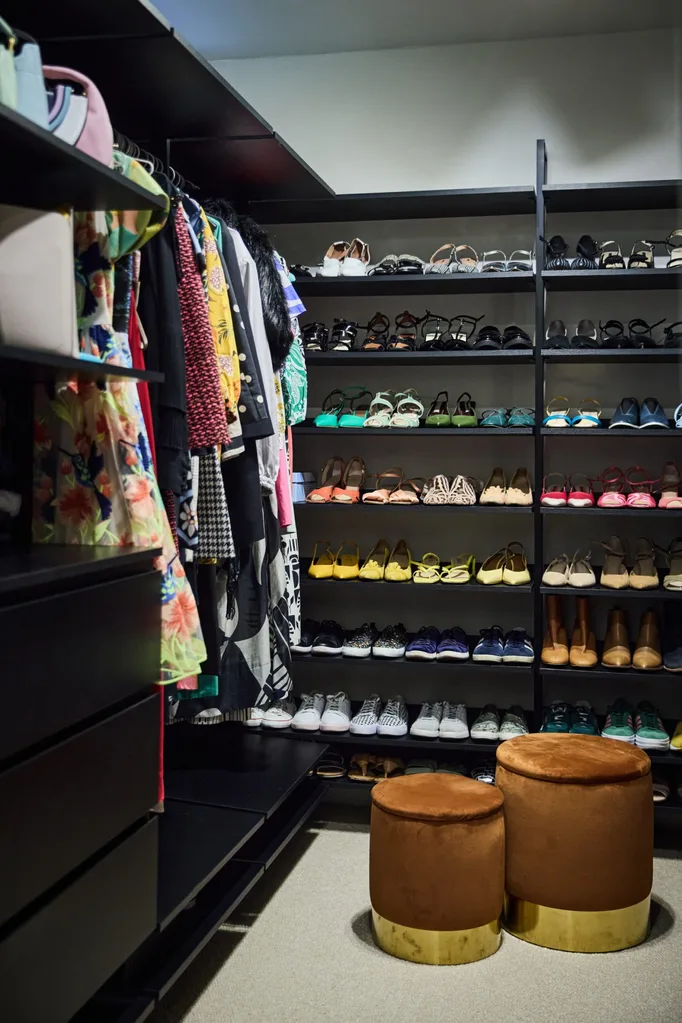
Glazing was a key component of the build, with great banks of glass revealing the Griffin home from within the extension, as well as connecting it with the garden. “We wanted the extensions to have that same permeability [as the old] and that same flow between inside and outside,” says Annette.
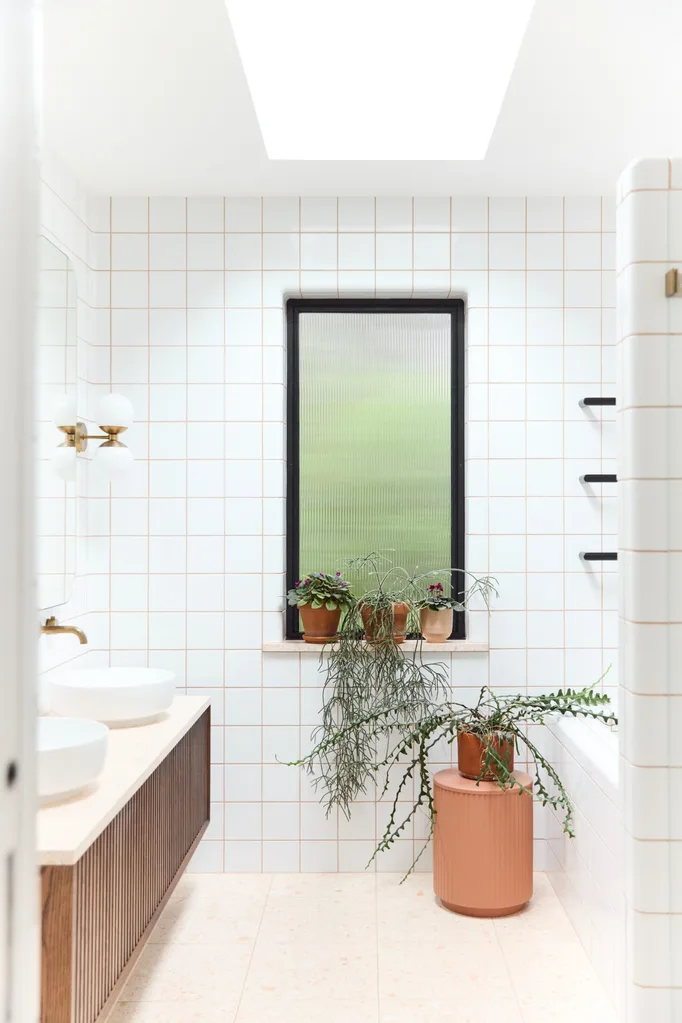
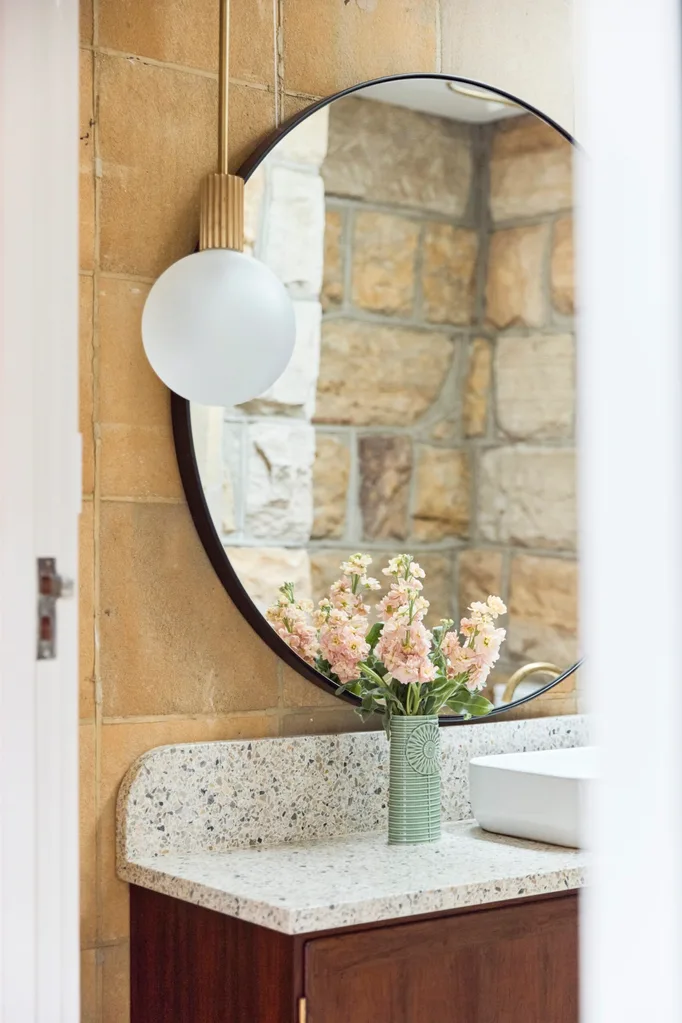
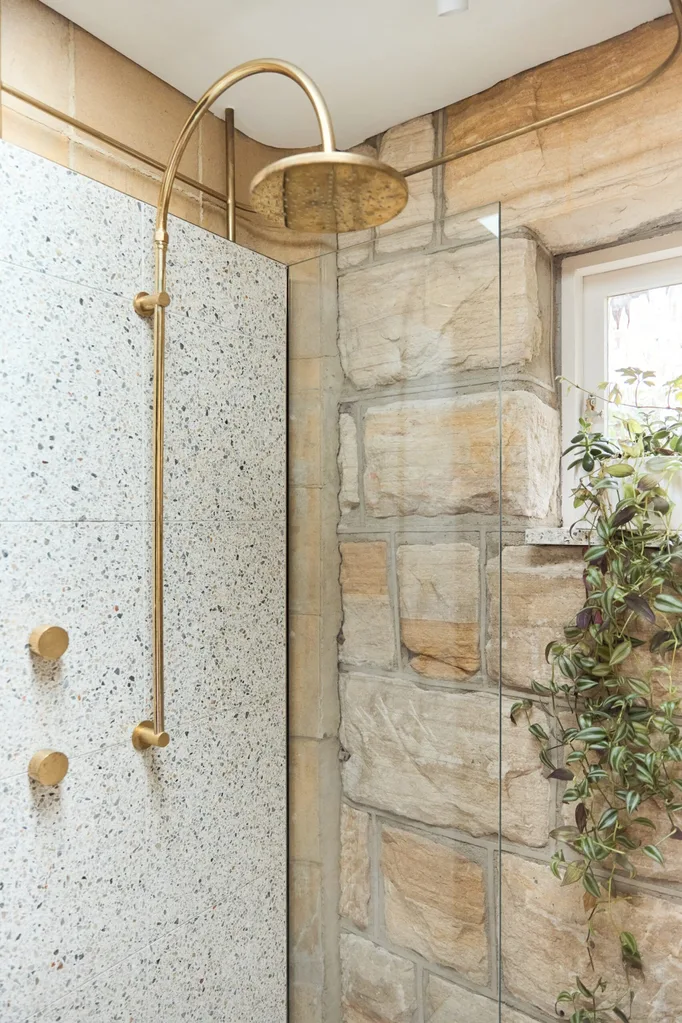
Interior design in a space as singular as this is no easy task, but Annette found ample inspiration in the original home and the surrounding bushland. “I aim to create balance and connection between things,” she says.
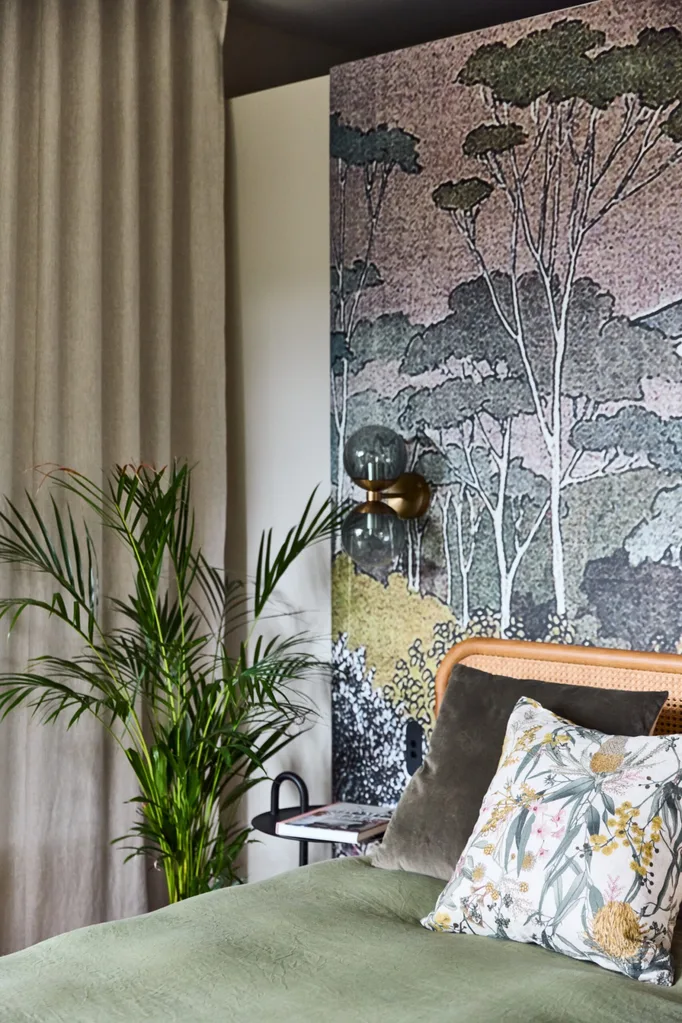
As such, colours and botanical patterns were drawn from nearby nature and subtle curves in everything from tiles to light fittings speak to the rounded corners and contoured crenellations of the original build. Annette jokes that she agonised over every detail, but there’s no doubt the result is worth it. With their eye for the extraordinary, the Griffins would surely approve.
30s Architectural Pioneers
Titans of Australian architecture, landscape design and planning, Walter Burley Griffin and his wife Marion Mahony Griffin (an architect
and artist) came to Australia from America in 1913 after winning the Federal Capital Design Competition to plan the city of Canberra. From
this ambitious work, they went on to design more than 350 buildings and urban projects, including the Sydney suburb of Castlecrag.The Griffins’ style was influenced by their work with architect Frank Lloyd Wright and his Prairie School design ethos, which dictated that buildings should be connected yet subservient to their surrounding natural environments.
This is clearly seen in the porosity of their building design, which contrary to convention, featured living areas at the rear of homes, openings to the landscape and few – if any – fences. The unique planning of Castlecrag was groundbreaking for its time, and the iconic suburb was designed in sympathy with its pristine bushland surrounds. It follows the contours of the land and sweeping curves of theforeshore, marked by a meandering network of roads and walkways, and with buildings designed to be nestled within and minimise the impact on the unspoilt bush.
WE LOVE…a sense of arrival
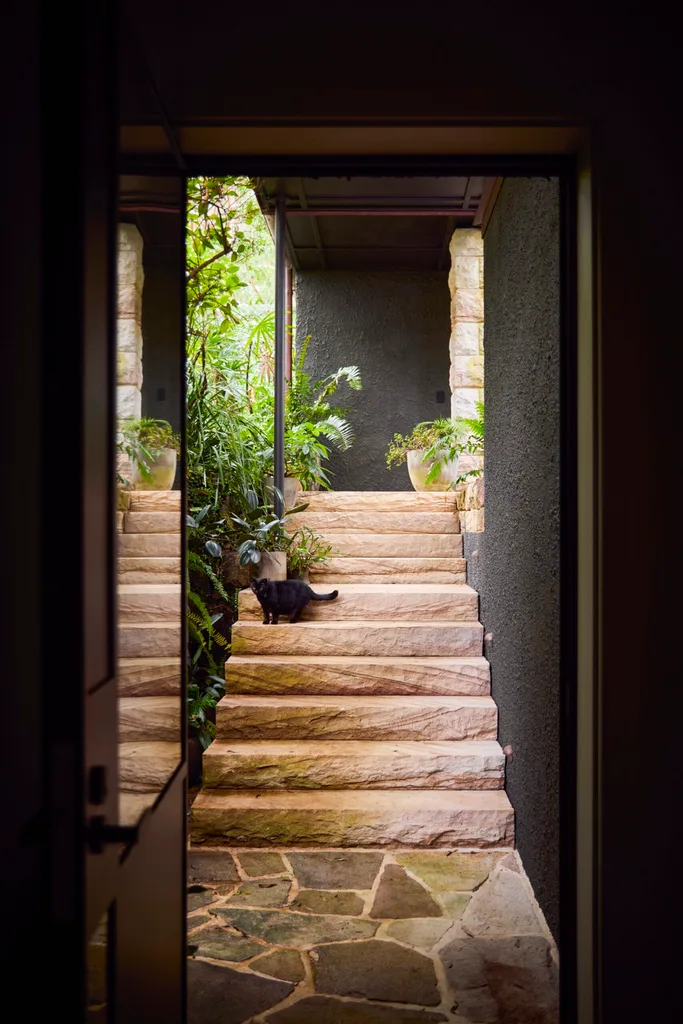
In an architectural sleight of hand, a new landscaped path bypasses the seldom-used front door and guides guests down past the extension, encouraging them to enter at the courtyard junction between old and new. “The idea was to enter the building at the original Burley Griffin piece, so that courtyard is kind of an external lobby. There’s no real, discernible front door, but Burley Griffin didn’t have one, either! You just arrived at the building and there were a whole lot of French doors and you could walk in any one you wanted to.” explains architect Robert Weir.
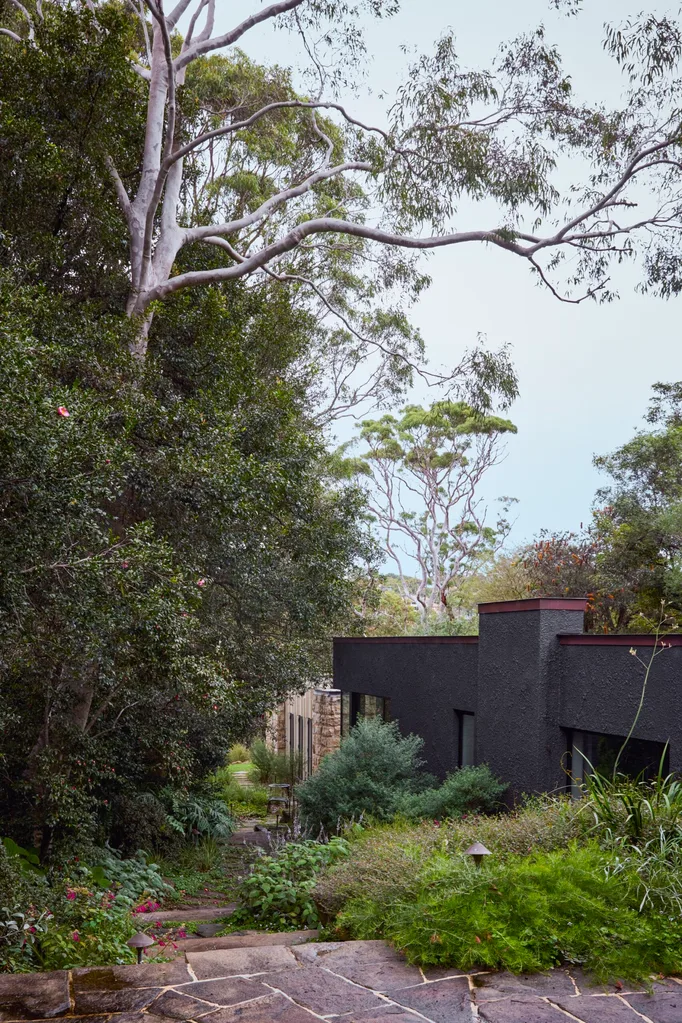
addition and dedicated custodians, which it found in homeowners Michael and Annette. The original home’s exterior, in Resene Akaroa, is almost luminous in comparison to the dark extension in Resene Karaka. Kitchen The
cabinetry colour, Resene Raptor, was chosen to tone with the bushland setting amid a palette of natural materials. (Credit: Photography: Alana Landsberry, Styling: Lucy Gough)
Source book
Architect Weir Phillips Architects, weirphillips.com.au
Builder Watermark Construction Group, watermarkgroup.com.au
Landscape design Melissa Wilson Landscape Architects, melissawilson.com.au

Related stories
Native ad body.
Native ad body.
Native ad body.