


 Photography: Martina Gemmola
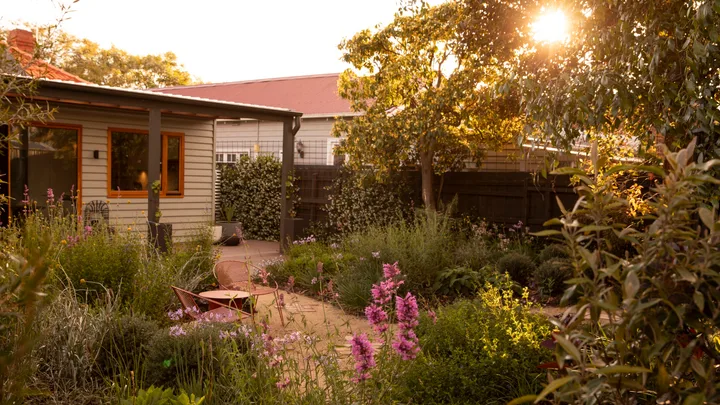
Brick and crushed granite paths wind like streams through this prairie-style collage of grasses, seedheads and flowers. The effect is untamed, elemental and metaphorically miles away from city life – quite an achievement for a small cottage garden in Melbourne’s inner suburbs.
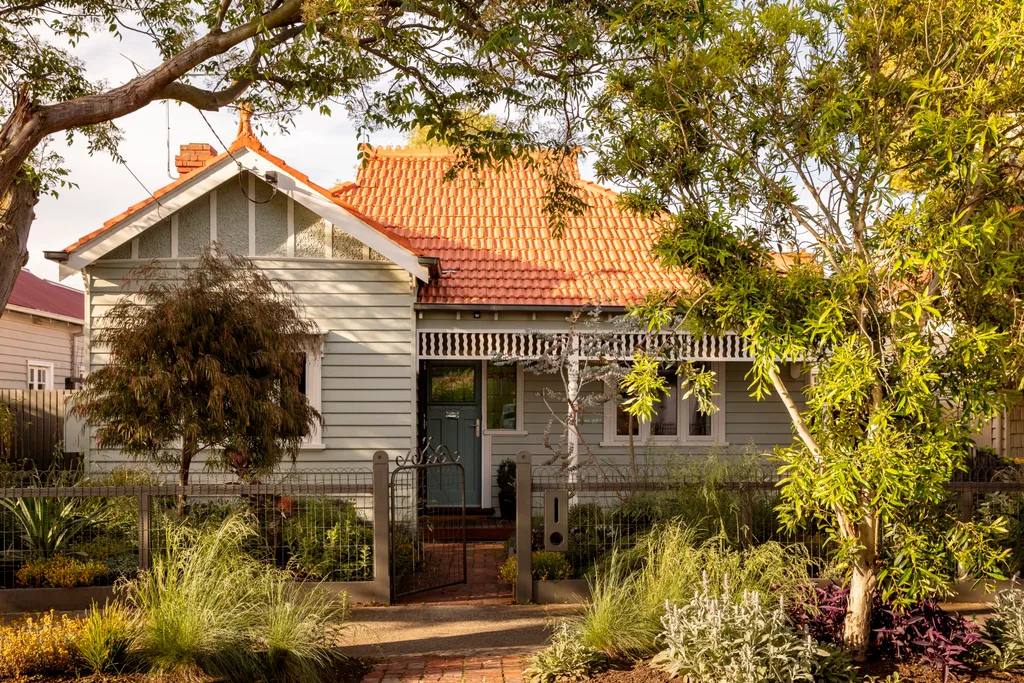
Homeowners Andrew and Rose have lived in and loved this Edwardian cottage for several decades. When they bought the property in 2004, the garden, like the house itself, was a fixer-upper. At the time, a landscape designer created a low-maintenance space for the busy young family of four. Fast forward 20 years, the kids were grown and Andrew and Rose were excitedly planning how their home could carry them into the next life chapter.
In this article
The sustainable, colourful brief
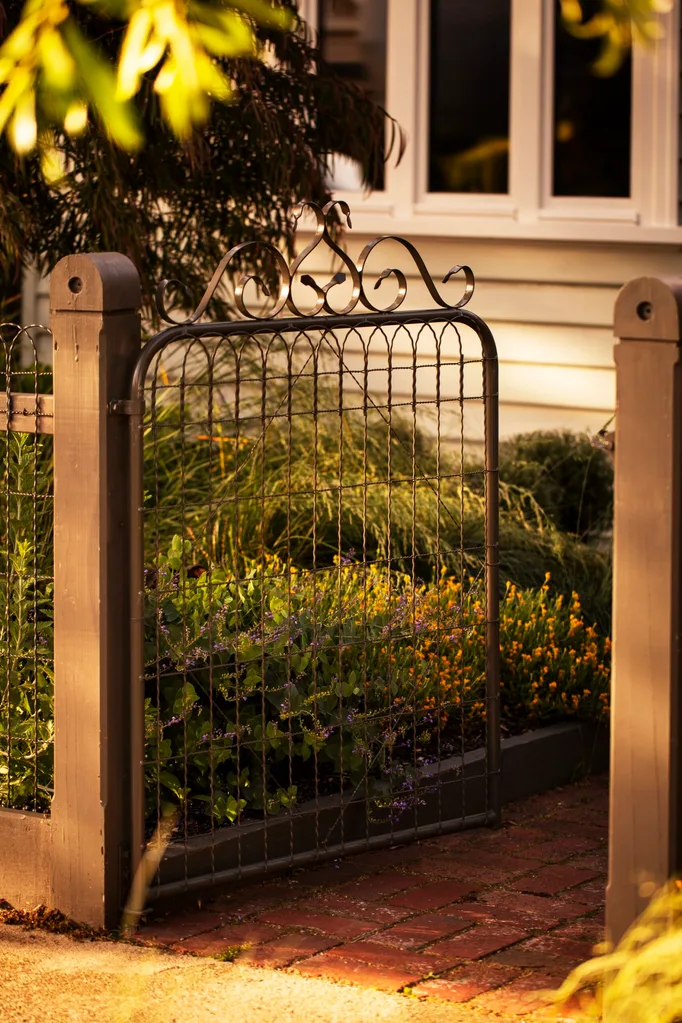
“We wanted the house to be the star and for the planting to frame the entry, like a soft welcome” – Tim Pilgrim, landscape designer
“We renovated the house with a major focus on sustainability,” says Andrew. Having guided their heritage home into an eco-aware modern age, the next step was to achieve a similarly sustainable metamorphosis in the cottage garden.
“We now had more time to look after the garden and to appreciate it more,” says Andrew. Additionally, new water tanks enabled plentiful irrigation. “So we could ask ourselves, ‘What kind of garden would we actually like?’”
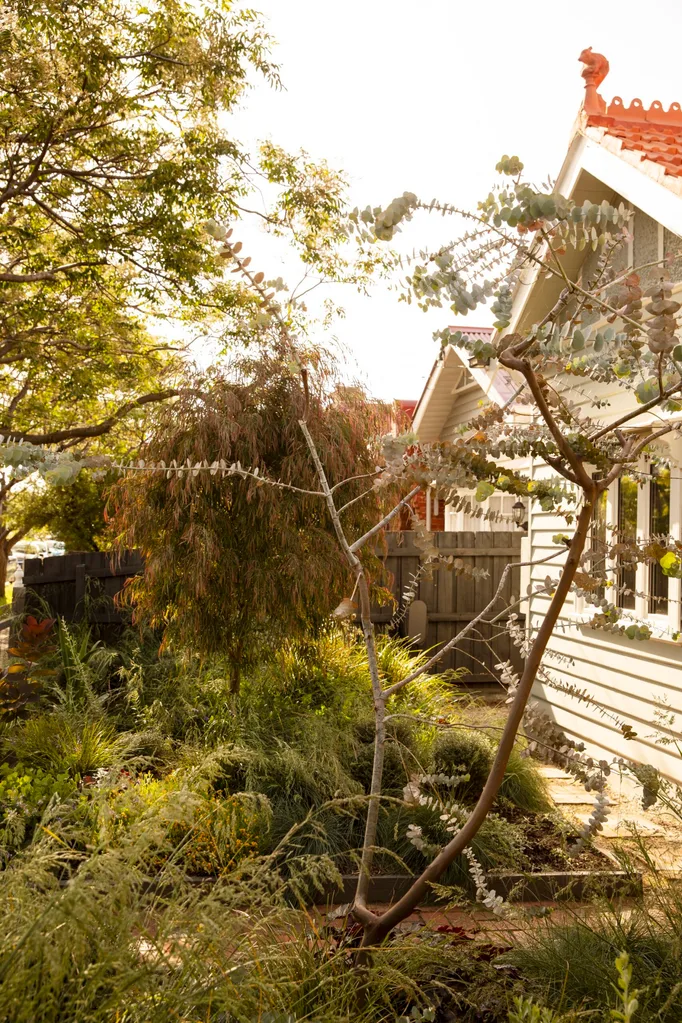
The answer – something with colour, seasonal interest, and a haven for pollinators – led them to landscape designer Tim Pilgrim and his signature naturalistic approach: “I try to look at gardens as a place for every little living thing, as opposed to just a human-centric kind of composition,” says Tim.
“Some of the plants spill onto the footpath a little bit and then as you walk up the path, it starts to envelop you and you’re now fully engaged in the garden” – Andrew, homeowner
Inside the clever cottage garden design
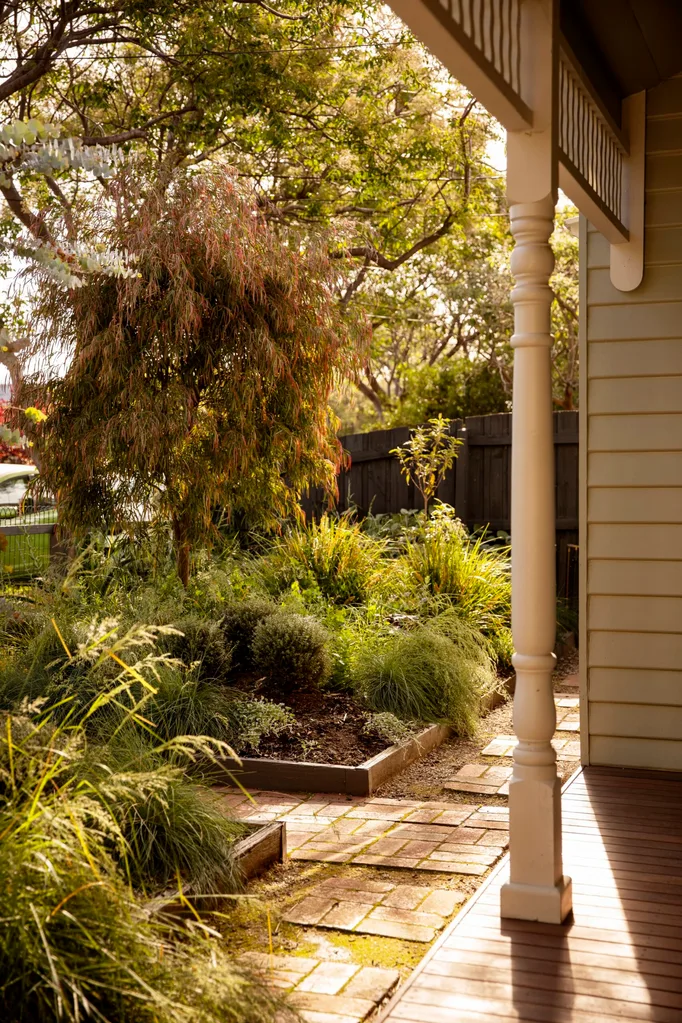
Not quite a blank slate, there was an existing garden shed and a gate to the rear laneway to consider. To access these, Tim designed a series of serpentine paths, inspired by the course of Merri Creek, which runs nearby.
One path widens to allow a small seating area, where one can relax at bee’s-eye view and engage with nature. Tim’s lush beds spill over with a mix of herbaceous specimens, anchored by evergreens, which offer an ever-changing spectacle.
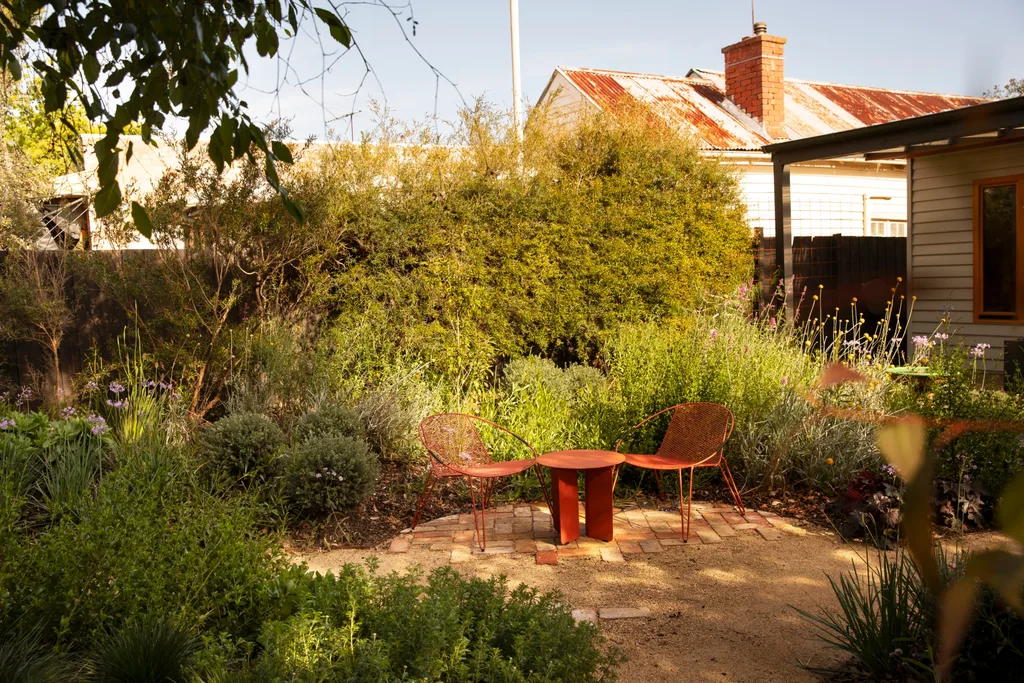
“It was all about a garden that celebrated the seasons and we worked on successional layers,” says Tim. “It’s not just about peak flowering times. We’re working with what it looks like emerging in spring, what happens post-flowering, the autumn foliage and then the winter skeletons – what do they look like, how do they move and what function do they perform?” says Tim.
How to encourage the birds and bees
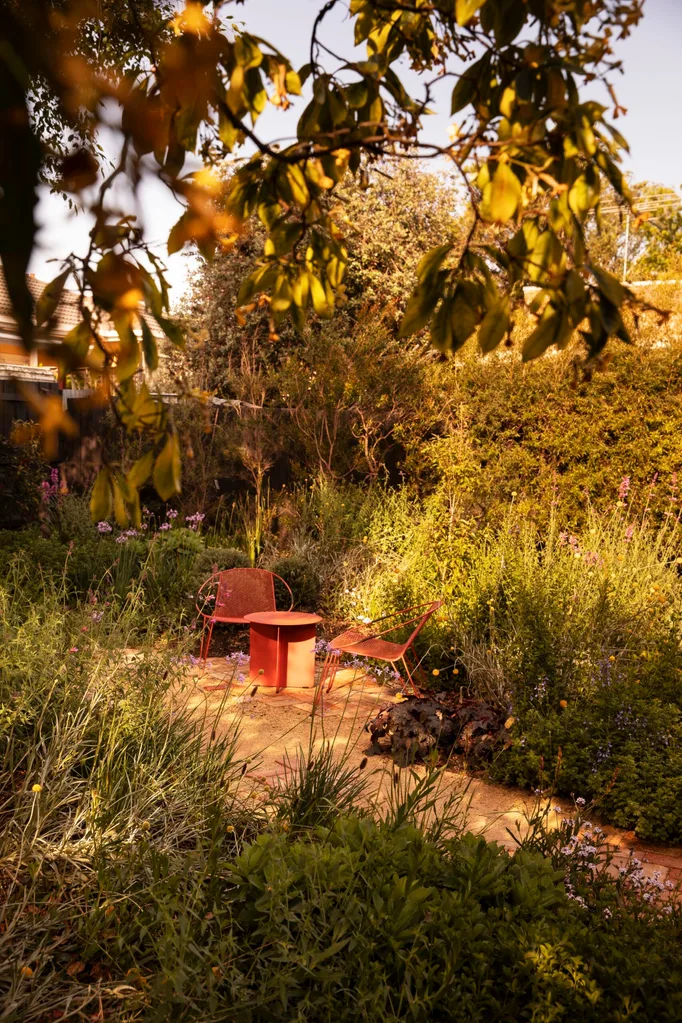
Not only are these floral ‘skeletons’ beautiful, especially when silvered with frost, they also have ecological benefits, with the seeds providing food for birds and the gracefully collapsing shrubbery serving as habitats for wild creatures.
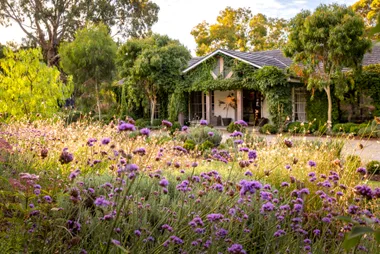
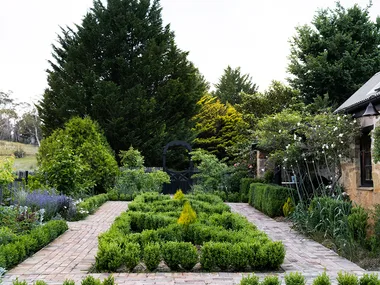
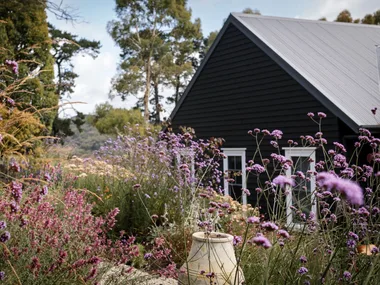
These ecological benefits were a driving force for Andrew and Rose, who wanted to encourage pollinators. Insects, birds and reptiles transit through their garden, stopping for a drink or to seek shelter in the lush beds.
“Gardens shouldn’t be static, but a place for change and evolution” – Tim Pilgrim, landscape designer
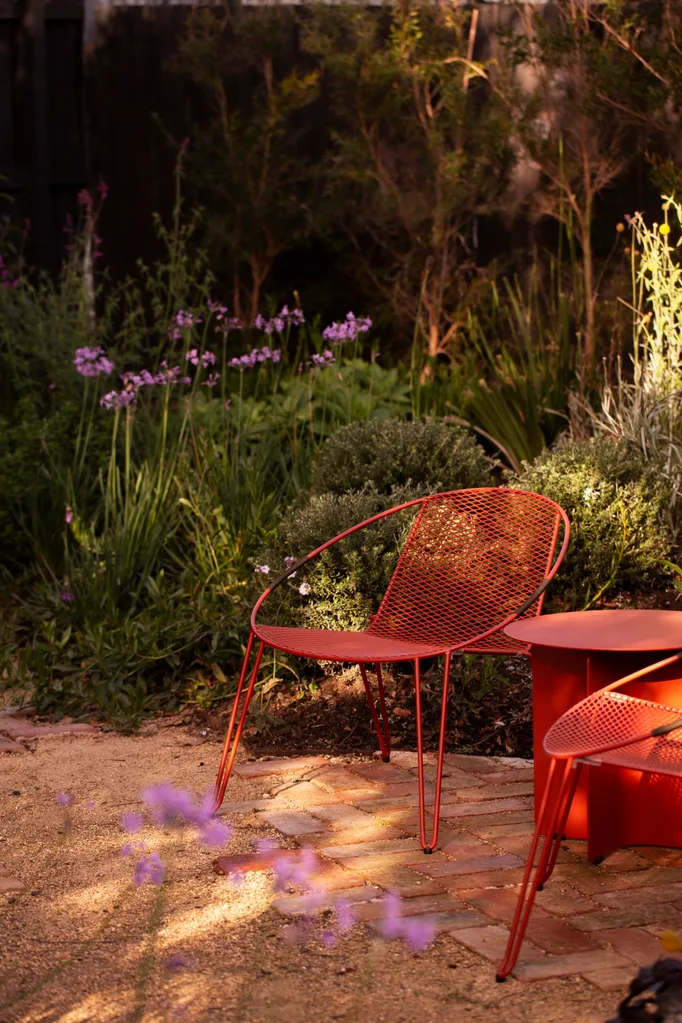
“We get lots of native birds and the bees love the bird bath because they need water to cool down their hives – they take the water back to their hive, then they flutter their wings and it acts like a biological air conditioning system,” says Andrew.
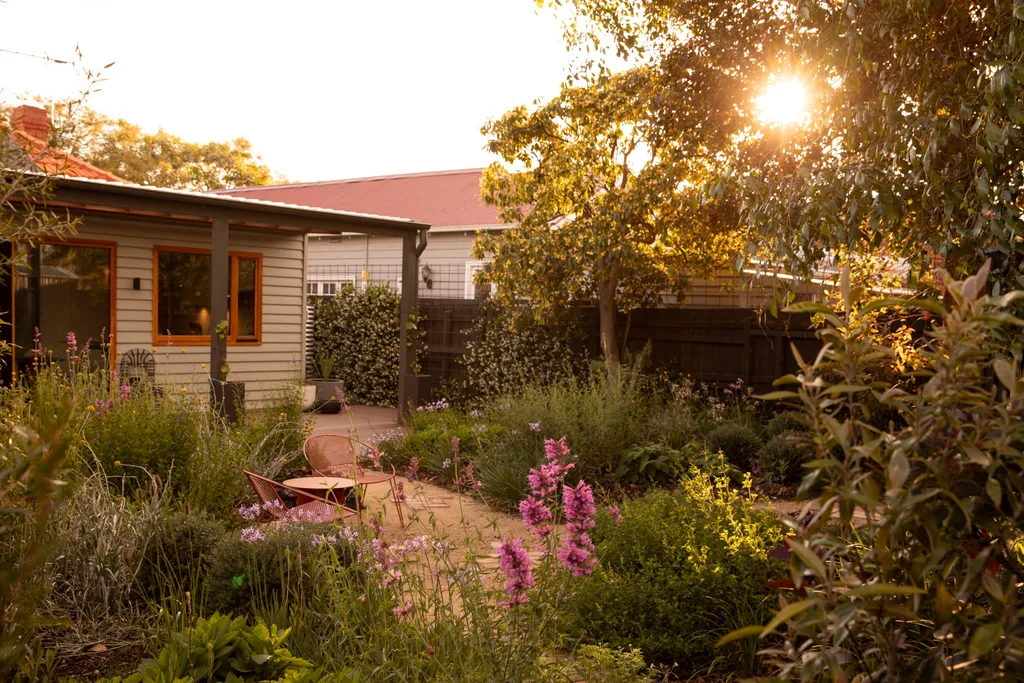
Greeting these garden guests is now a daily joy. Between the buzzing bees, the occasional possum flitting across the space and the evolution of the flora, this small garden is a source of endless fascination.
“It’s not like fireworks all at once, it’s slowly changing. Every week we see something evolving” – Andrew, homeowner
The hero plants and materials in this cottage garden

Agastache ‘Sweet Lili’
A drought-tolerant perennial
Agastache ‘Sweet Lili’ is a favourite perch for pollinators, such as bees.

Verbena rigida ‘Polaris’
A colourful low-growing groundcover
Verbena rigida ‘Polaris’ creates a field of silvery lilac flowers.

Billy buttons
An Australian native perennial
Billy buttons, or Craspedia globosa, feature vibrant spherical yellow blooms amid herbaceous perennials in this inner-city cottage garden.

Lomandra longifolia
A perennial rhizomatous herb native to Australia
Robust grasses in the garden include Lomandra longifolia, which blossoms with spiky yellow flowers in spring.

Tulbaghia violacea
A cottage garden favourite with dainty flowers
The pretty lilac flowers of Tulbaghia violacea reach high above strappy green leaves. This plant is also commonly known as society garlic.

Reclaimed bricks
Hardscaping with sustainable materials
The reclaimed Northcote bricks that comprise the winding paths in this cottage garden are an homage to the home’s location and era.

Yellow buttons
A hardy Australian native perennial groundcover
Yellow buttons, or Chrysocephalum apiculatum, cover the ground with sunny pops of colour.

Cotinus coggygria ‘Grace’
A deciduous shrub
Cotinus coggygria ‘Grace’, a wine-red smoke bush, filters light through cloud-like flower clusters.

A bird bath
A functional water feature
A cottage garden wouldn’t feel right if it didn’t attract pollinators and wildlife. The bird bath encourages native birds to visit, as well as bees, who carry the water back to their hives then flutter it around, like a biological air conditioning system.
Source book
Landscape design: Tim Pilgrim Gardens, tpgardens.com.au.
Landscape construction: Rejuvenate Landscape Design, rejuvenatelandscape.com.au.
How to grow an urban cottage garden
| Grow a small cottage garden in five easy steps | Landscape designer Tim Pilgrim’s top tips |
|---|---|
| Add greenery to everything | “In small city gardens it’s important to look at every space as an opportunity for greenery,” says Tim. Think walls, fences, gravel paths, areas between paving and even your verge. “More is more in a cottage garden, and more plants will give your garden a lived-in cottage feel.” |
| Layer (then layer again) | “Look at layers of plants above and below the soil,” adds Tim. “Pack them in! Bulbs are a great way to extend your seasons of interest and bring more diversity into your planting.” |
| Consider biodiversity | “Include all types of plants,” says Tim, listing bulbs and corms, herbaceous and evergreen perennials, shrubs and trees, climbers, self-sowing annuals and biennials. “Use cottage garden favourites alongside local native species and get creative with new planting combinations.” |
| Think beyond the boundaries of your cottage garden | “Small city cottage gardens can feel much bigger if you consider what’s happening beyond your fence,” reveals Tim. “Trees, architecture and the sky can be brought into the fold of your garden by using the same plants, or plants in similar tones, shapes, or colours.” |
| Add a (small) water feature | “Use something simple like a birdbath, or small water feature, to reflect the sky or a tree,” suggests Tim. “It will give the illusion that your garden is bigger than it is, and invite birds and insects in as well.” |

Be the first to read this story by subscribing to Home Beautiful magazine

