 Photography: Skye McAlpine
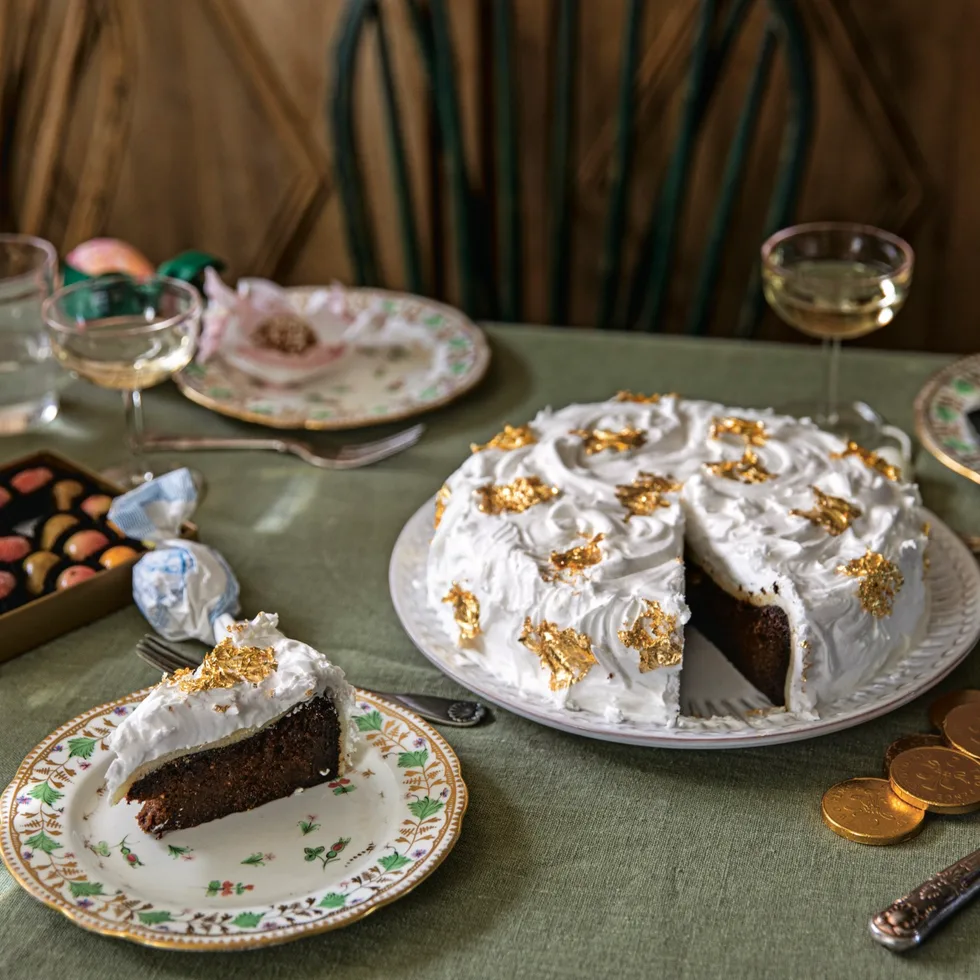
This black and gold cake is delicious. Called black cake because it’s rich and black with rum and dried fruits, it is similar to fruit cake but has a pudding-like texture. The gold comes in the shape of shimmering gold leaf on top. Baking this cake is an exercise in patience and delayed gratification, as to make it properly takes days. While this recipe may not be for someone in a hurry, don’t let this put you off. It’s well worth the wait and it fills the kitchen with smells of sweet, heady alcohol, spices and citrus zest.
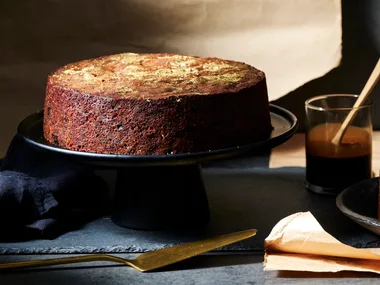
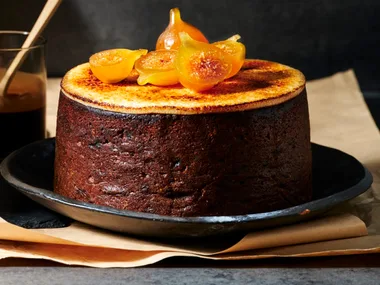
For more Christmas cakes, check out this chocolate and citrus fruit cake or this fig fruit cake.
Ingredients
Method
To make the cake, combine the dried fruit, cherries and peel in a large saucepan, cover with the Marsala and simmer gently over a medium-low heat until all the liquid has been absorbed. Take off the heat, pour over the 300ml rum, then cover and let soak overnight.
Heat the oven to 180˚C (160˚C fan-forced). Butter a 23cm cake tin and line with baking paper.
Tumble the dried fruit into a food processor, along with any boozy juices, and blitz to a paste.
In a large mixing bowl, cream the butter and sugar together until fluffy and paler. Add the treacle, zests and vanilla, then beat until combined. Now add the eggs, one at a time, beating until combined. In a second bowl, sift the flour, baking powder and spices, then fold this into the cake mix in four parts, trying to keep as much air as possible in the batter. Lastly, fold in the macerated fruit paste, adding it in three parts.
Pour the cake batter into the prepared tin and smooth the top. Bake for 60 minutes, then reduce the oven temperature to 160˚C (140˚C fan-forced) and bake for a further 4 hours, until a knife comes out clean when inserted into the middle of the cake.
Once cooked, use a toothpick to make holes all over the top of the cake and use a pastry brush to brush over the 30ml rum. Let cool completely in its tin.
To ice the cake, roll the marzipan out between 2 sheets of baking paper into a 2.5mm-thick disc large enough to cover the top and sides of the cake. Warm the jam together with the measured water in a small saucepan over a gentle heat, until it turns liquid and hot, then use a pastry brush to glaze all over the sides and top of the cake to create a tacky surface. Drape the marzipan disc over the cake and gently press it down to snugly cover the sides, trimming away any excess and patching up gaps as needed (don’t worry, you won’t see this layer, so it doesn’t need to be perfect).
Now make the royal icing: in a spotlessly clean mixing bowl, whisk the egg whites until frothy, then add the icing sugar, a spoonful at a time, whisking all the while. Lastly, whisk in the liquid glucose and lemon juice and whisk until you have a thick, glossy white icing that holds stiff peaks.
Spoon the frosty white icing over the top and sides of the cake, then spread it out evenly all over, making sure every last little corner and crevice is covered. Now use a fork to create a snowy texture in the thick, glossy layer of icing. Let the icing firm up somewhere cool and dry (not the fridge) for 24 hours.
Lastly, use a paint brush to dab a small amount of edible glue on to a small patch of the white icing and gently stick a sheet of edible gold leaf on to it; then press down and even out with the brush. Repeat this process in a haphazard pattern all over the pristine white cake with the remaining sheets of gold.
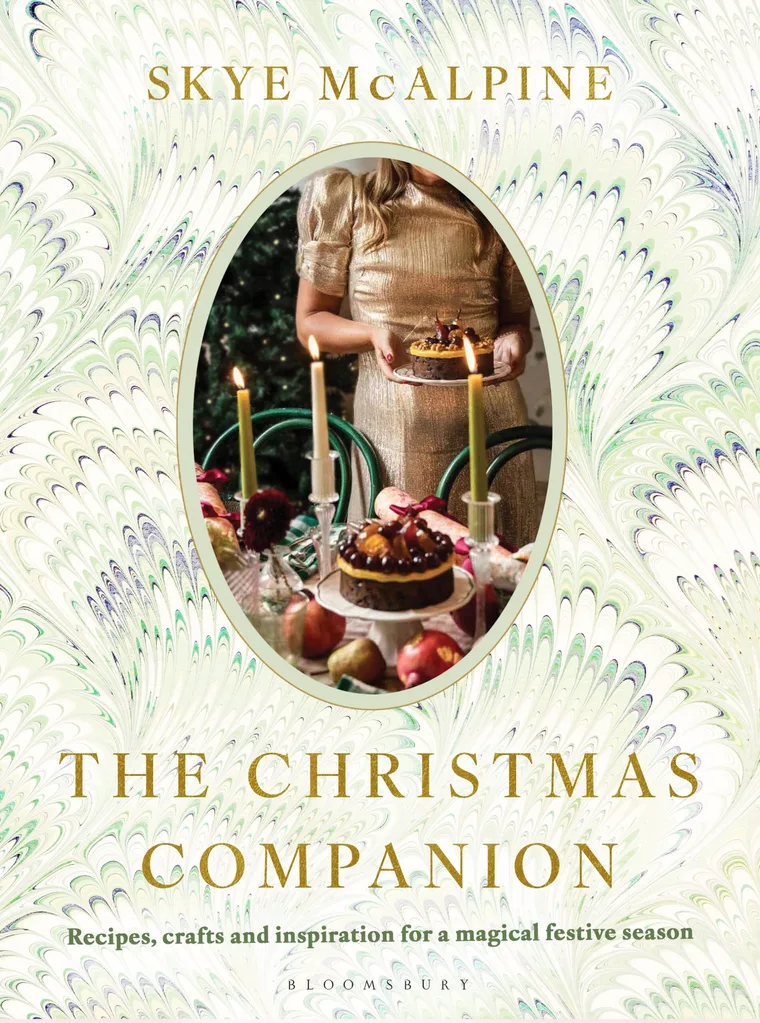
This is an edited extract from ‘The Christmas Companion’ by Skye McAlpine, published by Bloomsbury Publishing, $55.

Be the first to read this story by subscribing to Home Beautiful magazine