 Photography: Luisa Brimble
Mum loves to joke that the fattoush salad of her childhood consisted of no more than four vegetables and relied on what was in season in the garden, or whatever she could find in the fridge. I am completely responsible for the exaggeration of the ingredients here.
Speaking on Home Beautiful‘s podcast, The Edit, Karima shared her tips for making the best fattoush salad.
“Most weekends, I try and make a really big fattoush salad,” she began. “The fattoush that I make has so many seasonal ingredients. I just get really excited when I go to the Lebanese grocer and I see big chunky bunches of arugula rocket and fresh oregano. I go a bit mad and buy everything, and then I’ll make a really big salad.”
Listen to Karima on The Edit podcast:
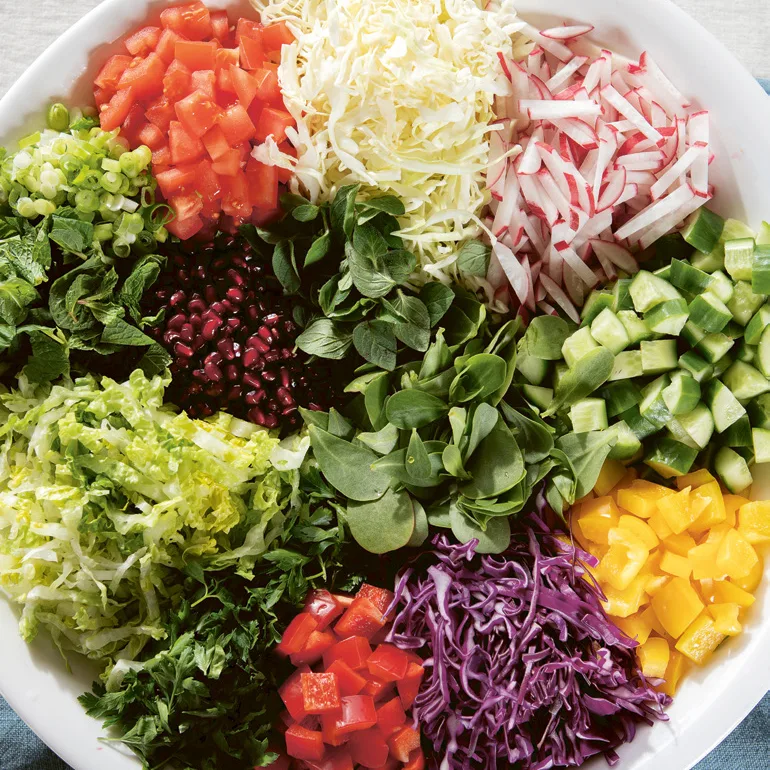
Strictly speaking, a traditional fattoush includes cucumbers, tomatoes, radishes, capsicum and lettuce with crispy, fried Lebanese bread. However, Karima prefers the more authentic style of Lebanese home cooking, whereby you find whatever fresh produce is available – and throw it in! Mint, cabbage, pomegranate, purslane – these are all additions you’re welcome to include (or exclude) from Karima’s Deluxe Fattoush recipe.
Tips for preparing ahead of time:
Karima preps her salad on the weekend to be enjoyed across weeknight dinners. “We will have the salad as part of whatever we’re having for dinner. We’ll have a fattoush basically every night, and then I’ll add different things to it. Like, sometimes I’ll add chicken or sometimes we’ll have it next to a steak,” she told Home Beautiful.
Karima’s one tip for making the salad ahead of time is: Make everything but leave out the tomatoes, and keep the dressing separate.
The tomatoes will spoil, whereas all the other fresh produce ingredients will stay crispy and fresh, if stored correctly. “It’s all tossed. It’s undressed. It’s in an airtight container,” Karima explains, adding that she keeps a jar of the pomegranate molasses, lemon juice and olive oil dressing in the fridge for serving.
When ready to serve, add the tomatoes, the dressing and a sprinkle of sumac – et voila! A delicious, crispy fresh salad.
Ingredients
Method
Wash all the vegetables and fresh herbs and leave them to dry.
I like to remove the leaves from the stems of fresh herbs and keep them whole, that way I can taste each herb in each mouthful. Preparing the fattoush can be done the day before (minus the tomatoes, which I like to dice fresh on the day) and kept in an airtight container in the fridge, along with the dressing in a jar.
Dice the cucumbers, tomatoes, peppers and spring onions to size; keep this a consistent 1cm (½ in). Chop the radishes into discs and then matchsticks, like a julienne. The cos lettuce can also be chopped in 1cm (½ in) lengths. Using a sharp knife, finely slice the cabbages, start from the tip of the wedge and work your way around, keeping the slices thin and consistent.
Pick off the leaves of the mint, parsley, purslane, if using, and oregano and set aside in a bowl. If the mint leaves are large, cut them in half, too.
If you do not want to fry the bread, you can place it in the oven at 180˚C/350˚F (gas 6) and bake it until crisp, then lightly crush with your hands into a bowl to garnish the fattoush. If you are frying the bread as part of the spread, then by all means crush with your hands to garnish at the end.
In a small mixing bowl, combine the dressing ingredients and mix well with a fork.
To assemble, toss half the pomegranate seeds with all the remaining ingredients, except for the bread, with the dressing, and combine using your hands. Scoop the salad into a serving bowl. Scatter the crushed Lebanese bread on top along with the remaining pomegranate seeds and an extra pinch of sumac. Serve immediately.
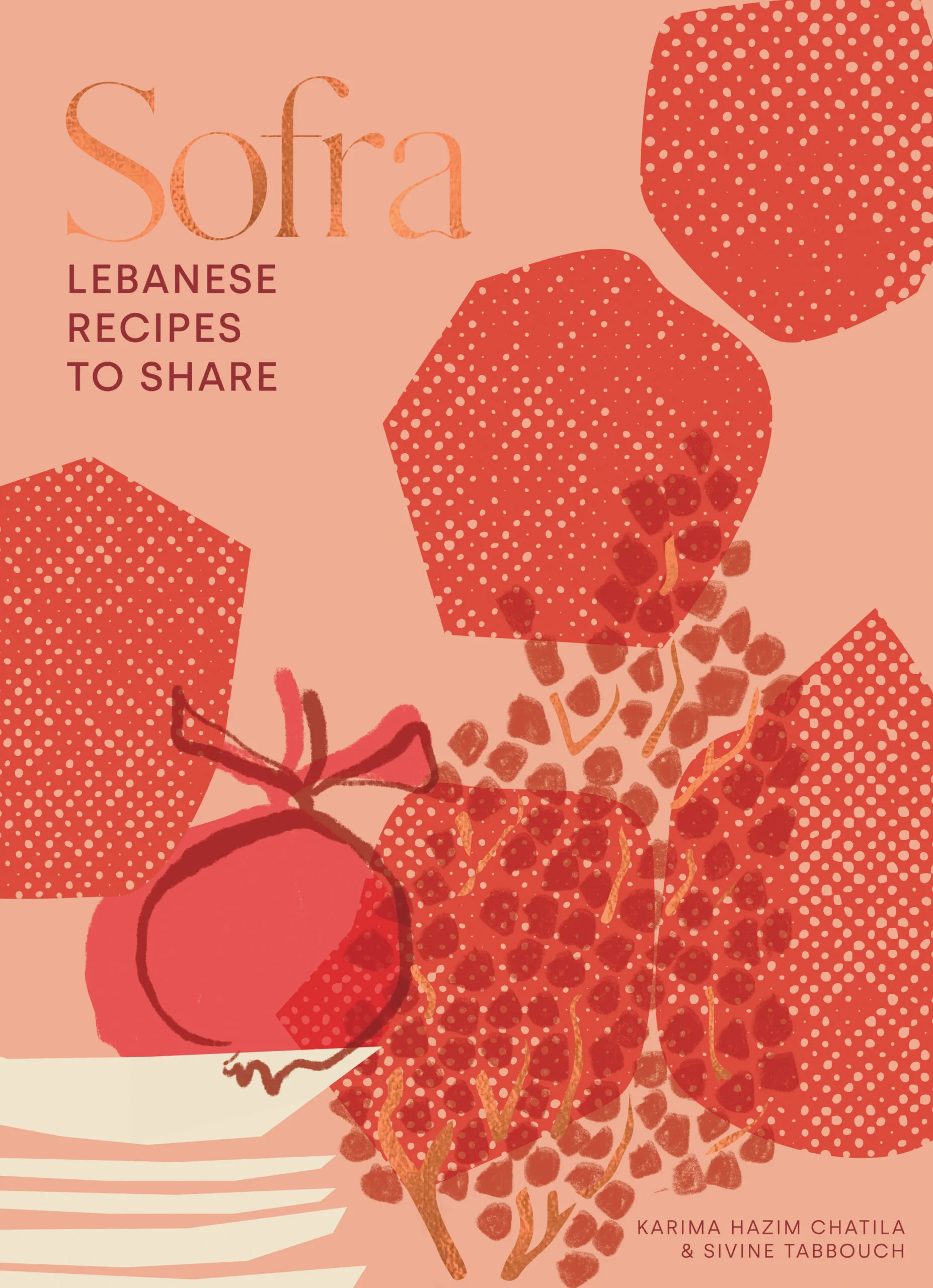
This is an edited extract from Sofra by Karima Hazim Chatila & Siline Tabbouch (Hardback, RRP $50) published by Hardie Grant Books. Available in stores nationally.