 Photography: Dave Brown
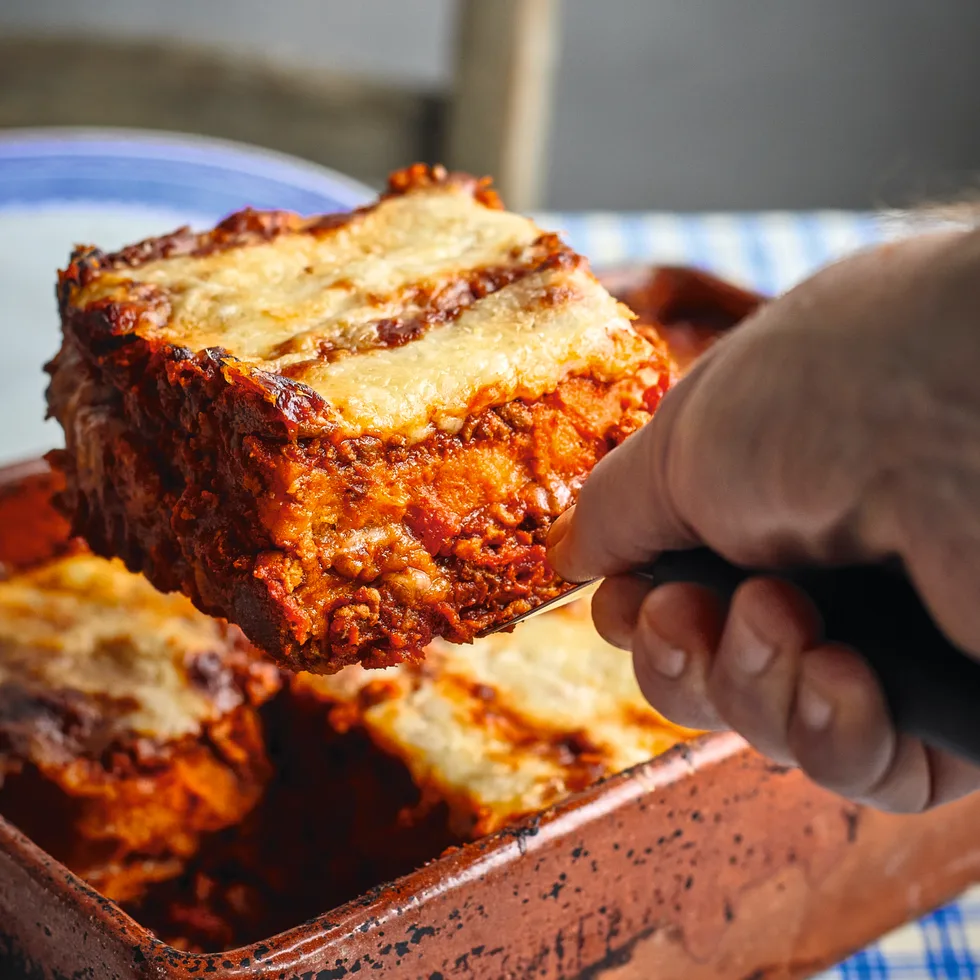
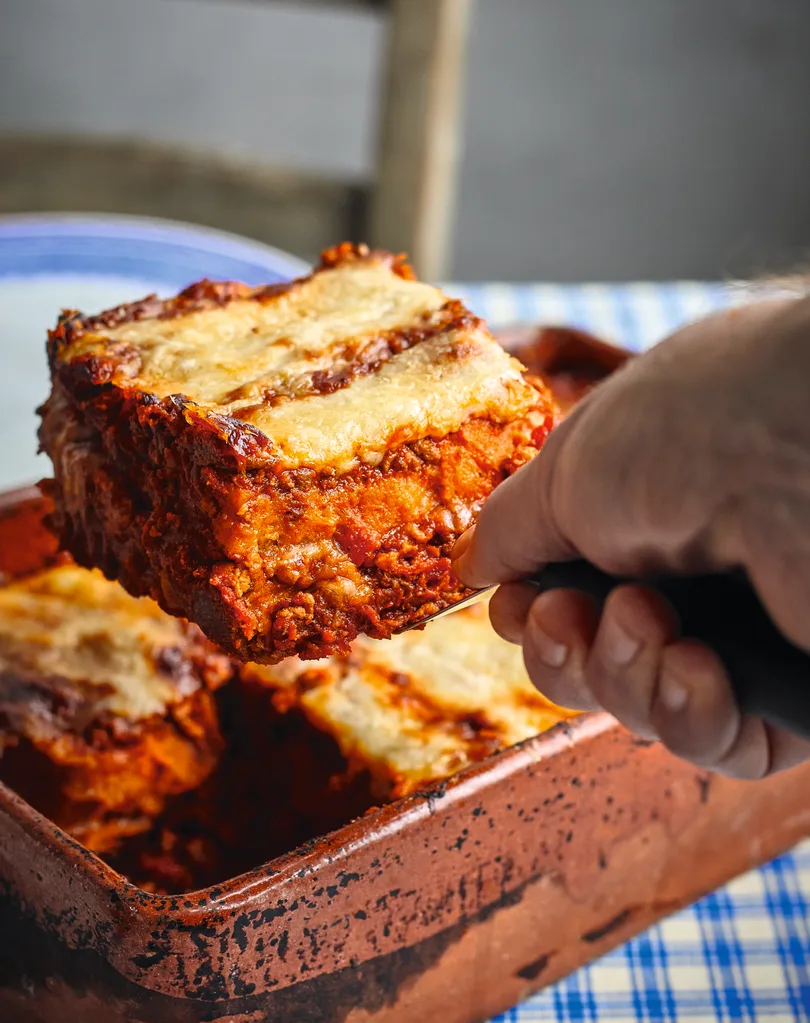
This simple lasagne is a great no-waste recipe. It was invented by peasants as a way of making the most of leftovers, so instead of lasagne sheets, ingredients are layered between slices of stale bread, which is moistened with broth. The use of casizolu, an ancient Sardinian cheese made from cow ’s milk (similar to caciocavallo and provola), also adds richness to the dish. There are a number of different versions of this recipe, but this one with a meat ragu sauce and mixed meat stock is popular.

Ingredients
Method
Preheat oven to 180°C fan-forced. Grease a 30cm x 20cm baking dish with lard, butter or olive oil.
Start by spooning a thin layer of the meat sauce into the bottom of the dish – just enough to cover the whole base. Place half the bread on top to create the first layer. Pour half of the remaining meat sauce on top and spread it out evenly, then layer over half of the sliced cheese and sprinkle over half of the grated cheese.
Cover with the second layer of bread, then spread over the remaining meat sauce. Using a jar or a ladle, pour the stock evenly over the top, then use a fork to poke the lasagne a few times all over to allow the stock to seep down into all the other layers underneath.
Cover with the remaining slices of cheese and sprinkle over the remaining grated cheese.
Bake on the middle shelf of the oven for 30–40 minutes, or until browned all over. Remove from the oven and leave to rest for 10 minutes before serving.
Meat sauce
Serves 10–12
Extra virgin olive oil2 onions, halved and peeled but not trimmed
1 garlic clove, peeled but left whole
500g minced (ground) beef (5–10% fat)
500g minced (ground) pork (5–10% fat)
Fine sea salt
200ml (scant 1 cup) rich, full-bodied red wine, such as Cannonau
2 x 400g tins of good-quality peeled plum tomatoes
1.4kg tomato passata (pureed tomatoes)
700ml (scant 3 cups) vegetable stock
10g basil, leaves picked
1. Place a large casserole dish (Dutch oven) over a low heat and add a generous glug of olive oil.2. Add the onions, flat side down, and the garlic. Cook them for 5 minutes, or until slightly golden, so that the olive oil can absorb all the flavours.
3. Remove them from the pan, discard the garlic and set the onions aside for later. Increase the heat to medium-high and add the minced meat and a generous pinch of salt. Stir continuously for at least 5–10 minutes to cook and break down the meat until it is in small pieces and there are no more pink bits. Make sure the heat is high enough for the meat to fry and brown, rather than just stew.
4. Add the wine and let it cook off for 3–5 minutes. Meanwhile, transfer the peeled plum tomatoes to a bowl and crush them with your hands before adding them to the pan along with the passata and vegetable stock.
5. Stir everything together and add the onions back in. Reduce the heat to low and loosely cover the pan, leaving a slight gap to let the steam escape and to allow the sauce to slowly reduce. Cook for 3 hours until it has thickened, stirring occasionally.
6. After 3 hours, remove the onion, tear and add in the basil leaves and remove the pan from the heat. Cover and leave to rest for 10 minutes before tasting the sauce and adjusting the seasoning. Leave to cool slightly before pouring into warm sterilised jars, leaving a little space at the top, then seal straight away. Leave the jars to cool completely before storing and labelling.
Note The meat sauce will keep for up to 5 days in the refrigerator or 3 months in a freezer-proof container in the freezer.
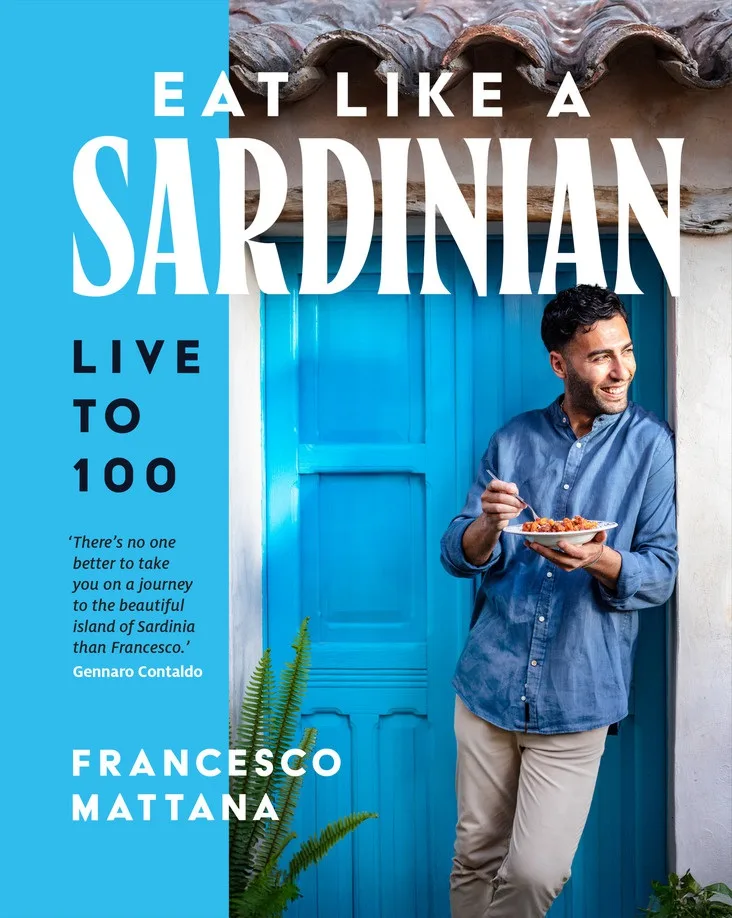
This is an edited extract from ‘Eat Like a Sardinian’ by Francesco Mattana, with photography by Dave Brown, published by Murdoch Books, $45.