


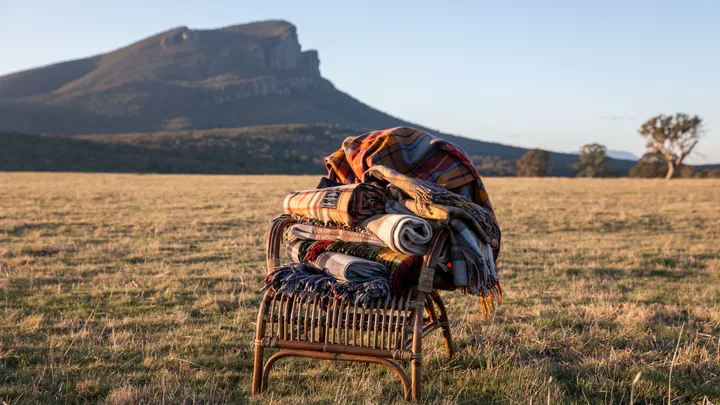
With the arrival of colder nights, I’ve found myself desperately searching for a good wool blanket to keep me warm at night. What I discovered in my search, however, is that discerning good quality from bad is more difficult than I anticipated.
For me, the marker of blanket quality is whether it will help me keep my electricity bills down (i.e. will it actually keep me warm?), and if it will last me a lifetime or more. As I glance at the inherited Onkaparinga throw at the end of my bed (tragically too small for my entire bed), I realise it has lasted more three generations in one family – and, if I’m going to fork out the money for a new blanket, I want it to live up to this standard.
Needless to say, plugging ‘where to buy a quality blanket in Australia’ into Google returned mixed results. It offered a few good options of where to find them (Waverley Mills, Creswick Wool and The Grampians Goods Co. came up a lot – and for good reason), but even within those brands, there are different fabrics, textures and sizes to consider. (Also, what the heck are microns?!)
I have now spent hours poring over “quality” blankets online, comparing said metrics and realising shopping for decent bedding might actually require a university degree and a wool mill apprenticeship. Given a premium price tag isn’t always reflective of premium quality, it’s not always clear at first sight which blankets are genuine quality and which aren’t.
While I don’t have a Bachelor’s Degree in Blanket Shopping, I have now logged some serious hours trying to understand the details of Australian-made blankets, and I’m hoping my tireless research project can help you make a more informed decision. And where I lack that knowledge, I’ve tapped the experts from Waverley Mills to explain.
So, without further ado, here’s where to look for a quality blanket in Australia – and the details you need to know before you buy.
In this article
Where to buy quality wool blankets in Australia, 2026
Australia is blessed with a leading wool industry. Not only do we love supporting Australian-made items, it also happens that these are great first stops in your search for a quality wool blanket.
A well-made wool blanket is one of the few household items that can genuinely last decades. Australian wool is naturally durable, breathable and renewable. When it’s properly spun, woven and finished, it becomes a product that improves with age rather than wearing out quickly.
— Fran Maiale, CEO Waverley Mills
Consider the following brands as a jumping off point.
Waverley Mills
Shop at: Waverley Mills online, David Jones, local boutiques
This Tasmanian wool mill was founded in 1874 – making it the oldest textile mill still operating in Australia. It’s also our last vertical mill, meaning it handles the entire production process from start to finish at the one location in Australia. They offer a colourful range of bed blankets, throws and picnic blankets in merino, alpaca and recycled wools.
Creswick Woollen Mills
Shop at: Creswick online, David Jones
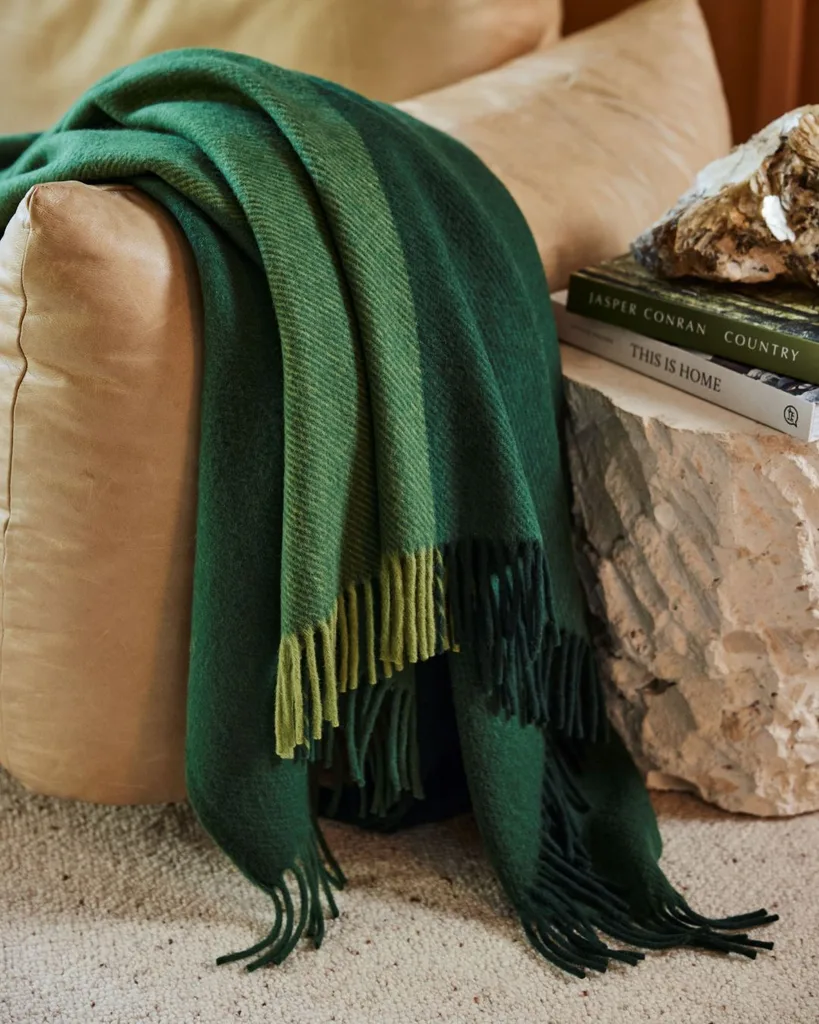
Creswick Woollen Mills is another heritage brand, founded in 1947 just outside of Melbourne. It has a full range of merino and alpaca wool blankets for beds of all sizes, and, while not all blankets are made entirely in Australia, its Premium Australian collection is.
Onkaparinga (second-hand)
Shop at: eBay, Etsy, op shops, vintage stores or markets.
Unfortunately, the original Onkaparinga mill in Lobethal, South Australia closed in 1993. Onkaparinga’s iconic, Australian-made wool blankets are no longer available from the brand itself, which was acquired by bedding brand William A. McNeil & Co in 2013. However, there is still the option to track one down second-hand. Just keep an eye out for the Onkaparinga logo patch stitched to a corner for authenticity.
St Albans
Shop at: St Albans online, Luxe Bedding
Established in 1951, St Albans is a family textiles brand beloved for its colourful mohair and alpaca blankets, throws and scarves. The fibres are sourced from farms certified by the Responsible Mohair Standard (RMS), which upholds ethical standards.
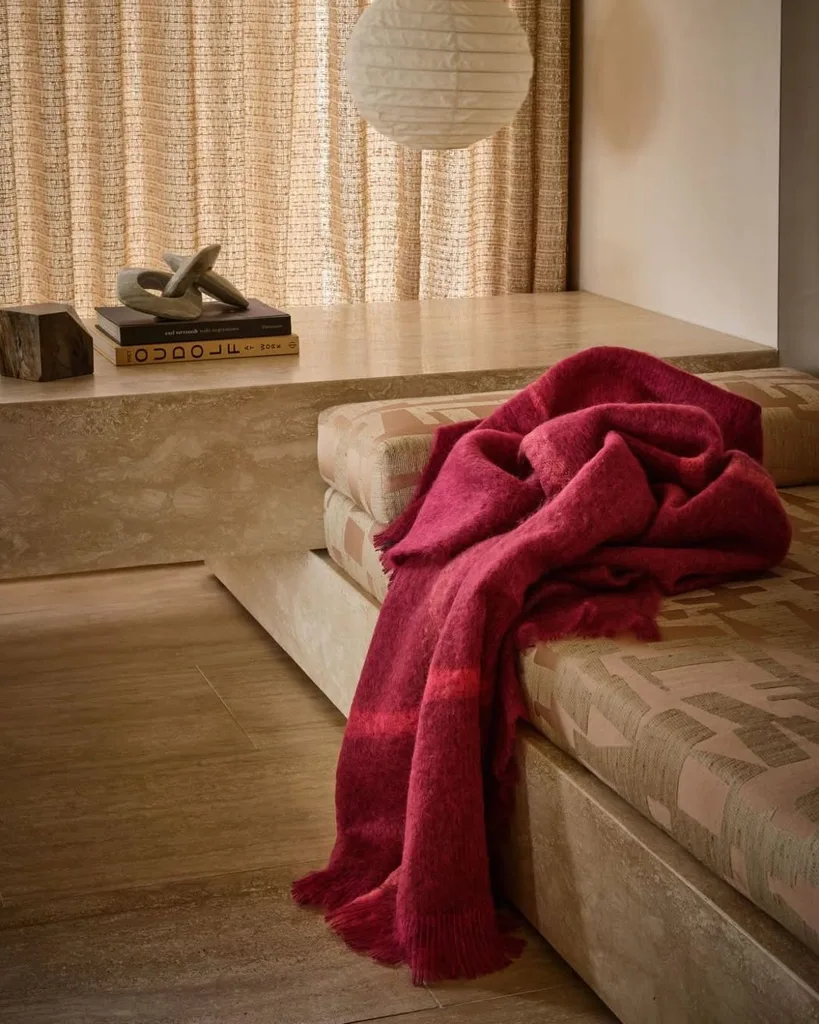
The Grampians Goods Co.
Shop at: The Grampians Goods Co. online
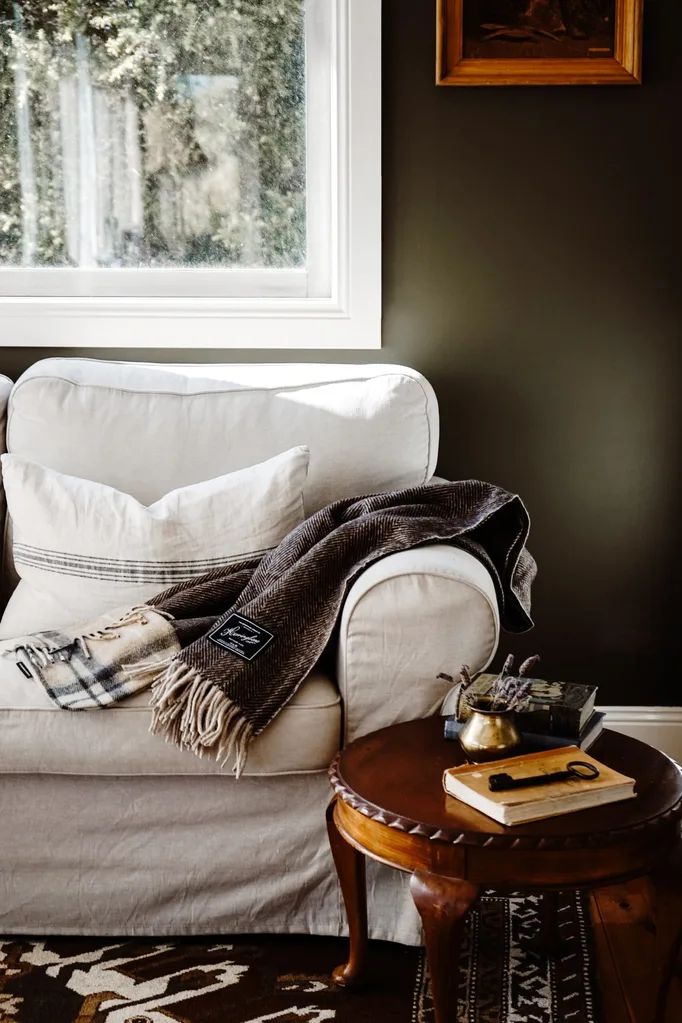
While The Grampians Goods Co. offers an excellent range of gorgeous throws, note that the blankets aren’t quite big enough for a bed that is a double or larger. However, if you’re after a blanket to take into the great outdoors, or throw over yourself on the couch, this is a stylish option. Some collections use 100% Australian merino, woven in Scotland, while the recycled wool (made in India from 75% recycled wool) provides an affordable alternative.
Bemboka
Shop at: Bemboka online, Peter’s of Kensington
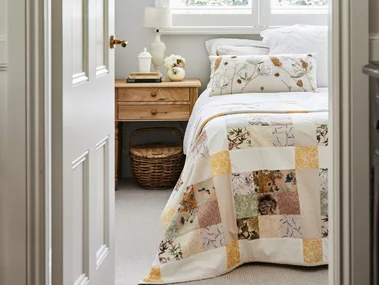
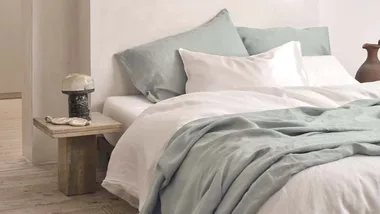
For the softest, fine wool blankets, consider Bemboka. Their collections are made from angora and merino wool, designed in Australia and made in New Zealand. The premium price reflects the artisanal process, with each blanket individually knitted for four hours on Japanese machinery.
Honourable mentions
- Temple & Webster: The online homewares marketplace has some affordable wool blankets, including one Premium Australian wool blanket by Laconia (100% Australian wool).
- Adairs: The homewares company has a great range of blankets and throws made with 100% lambswool, certified by Woolmark, a global authority on wool quality.
- Sheridan: The bedding giant has a small range of Australian wool blankets, made in China from 100% Australian wool.
- David Jones: DJs stocks some quality brands, and it’s worth checking them out to compare prices and see if your favourites from Waverley Mills, Minijumbuk or Bambury are on sale.
- Harris Scarfe: Harris Scarfe’s collection of bed blankets walks the line of quality and affordability, with wool blankets for less than $100-$200.
- Sheet Society: The trendy Australian bedding brand has released a limited collection of wool blankets that are gorgeous. However, they are only 70% wool. The other 30% is bamboo – which is not bad! It helps keep the price down and will still be soft and breathable. It just won’t be as warm as a 100% wool blanket. Also check sizing, as Sheet Society blankets only come in two size options: small (single/double) or large (queen/king).
- Country Road: When shopping for blankets at Country Road, be mindful of sizing. A lot of the 100% wool blankets are only made in throw size. However, if a quality throw is what you’re after, the brand has collaborated with premium suppliers like Waverley Mills.
So, you know where to find them, but how do you compare each blanket in the range? Here’s what to know before you click that buy button!
How to tell if a wool blanket is high quality
A quality wool blanket comes down to its fabrication. Is it a premium, Australian-sourced wool? And is it woven for comfort and warmth? There are other important metrics, like size, GSM and microns, listed on most wool blankets available. (And, if there’s not, this could be your first clue you’re buying a lemon.)
Australia also has one of the most sophisticated wool classification and testing systems in the world, giving makers consistency in fibre quality, micron, strength and performance.
— Fran Maiale, CEO Waverley Mills
The trick to buying the best blanket for you is reading these smaller details, which are a reflection of what should be written on the blanket’s own label. Another trick is understanding what they mean, and how to compare.
Jump to:
Tip: click on your section to section to jump ahead.
What is the best fabric for a quality blanket?
What’s the difference between alpaca versus merino wool? Is recycled wool a quality choice? What kind of fabric composition should I be looking for? These are all questions that arose on my search for a good blanket!
When buying a wool blanket, the first thing you want to look at is the fabric composition. For a quality wool blanket, you’re really looking for something that’s 100% wool! Anything less than 100% should, at least, be reflected in the price. If it’s not, you know to look elsewhere!
Most quality winter blankets in Australia are made from one or more of these three fabrics:
- Merino wool
- Alpaca wool
- Recycled wool
There are more wool fabrics and blends, with many blankets (particularly throws) containing mohair, cashmere, angora, which are often more expensive wool types. But read on for a breakdown and comparison of your main types, as explained by CEO of Waverley Mills, Fran Maiale.
Merino wool
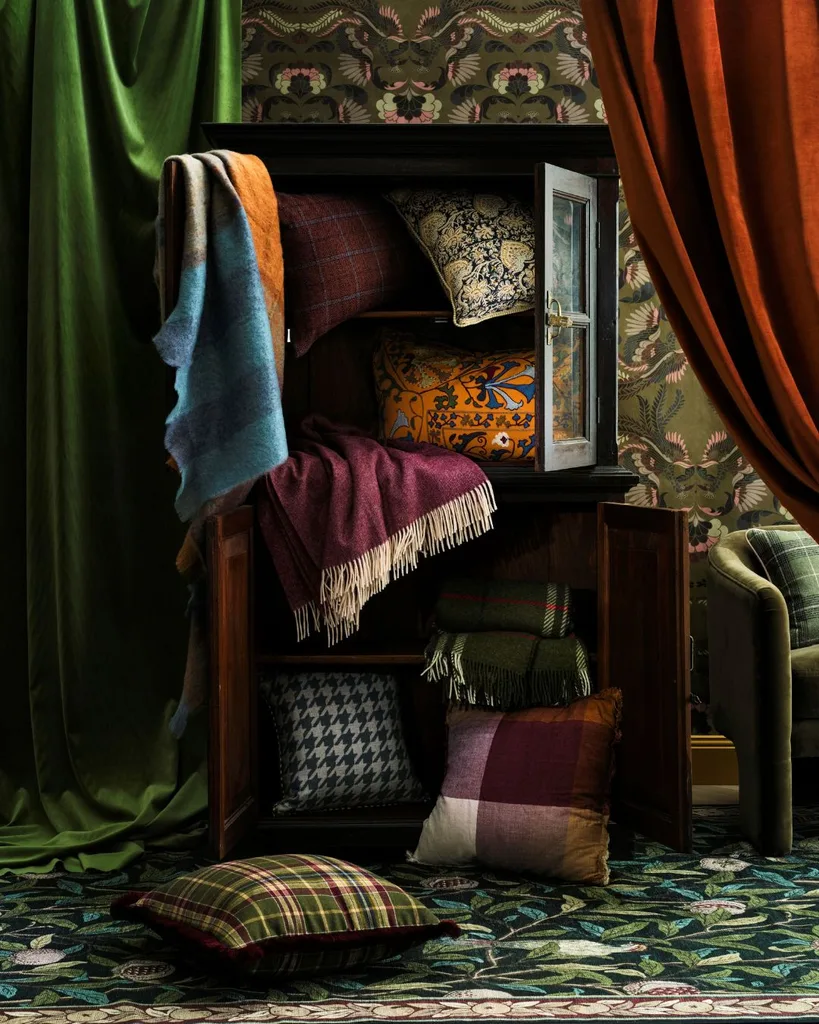
Merino is a fine-fibre wool that is prized for its softness. According to Fran Maiale, Merino wool blankets “feel smooth and comfortable against the skin, while naturally regulating temperature and moisture.”
“Merino is breathable, odour resistant and remarkably adaptable — equally suited to cool nights and heavily heated homes,” she adds.
Alpaca wool
“Alpaca offers a different kind of warmth. It has a loftier, silkier feel with a gentle sheen and an almost cloud-like softness,” Fran explains. “Alpaca fibres trap warmth exceptionally well while remaining surprisingly light, making it ideal for people who love softness without heaviness.”
Recycled wool
An understanding of recycled wool starts with what it is, which is basically offcuts of wool that has been recovered from the process and re-spun into new wool. “At Waverley Mills, this typically begins with offcuts, excess yarn and weaving waste generated during production at our Tasmanian mill. Those fibres are sorted, broken back down and blended with new wool to create fresh yarn with renewed strength and durability,” Fran details. While some recycled wools may add ‘filler’ or synthetic fibres, Waverley Mills confirms that their product is still 100% wool.
As for the look and feel, recycled wool is more textured. “Recycled wool has a more textural feel, with subtle flecking and mottled colour variation created by the recovered fibres themselves. The result is a blanket with depth, character and a slightly denser warmth.”
Blanket sizing: How to choose the right size for your bed?
| Bed / Mattress | Size | Best blanket size* |
| Single | 92x188cm | 160 x 230cm |
| King Single | 107x204cm | 180 x 250cm |
| Double | 138x188cm | 230 x 240cm |
| Queen | 153 x 204cm | 240 x 250cm |
| King | 183 x 204cm | 250 x 270cm |
| Super King | 204 x 204cm | 256x300cm |
*These are the minimum best sizes. Some blankets will be larger to ensure there’s enough fabric to cover all people and sides.
To find the best wool blanket for your needs, you cannot overlook the measurements. The first question is: Are you looking for a bed blanket or a throw?
For a bed blanket, it should measure larger than the width and length of your mattress in terms of centimetres. Some brands will size blankets to appropriately fit their corresponding mattress size, providing a generous amount of fabric for you to to tuck in at the sides. However, some size descriptiors are vague (e.g. large, small), while others are marked for two types of mattress sizes (e.g. Single/Double; Queen/King). Even if you think you’ve selected the right corresponding mattress size, we would still encourage you to measure your bed, and double-check the specific measurements of that particular blanket.
You may also want to size-up for additional length and draping, or to ensure you can still use your blanket if you upsize your base.
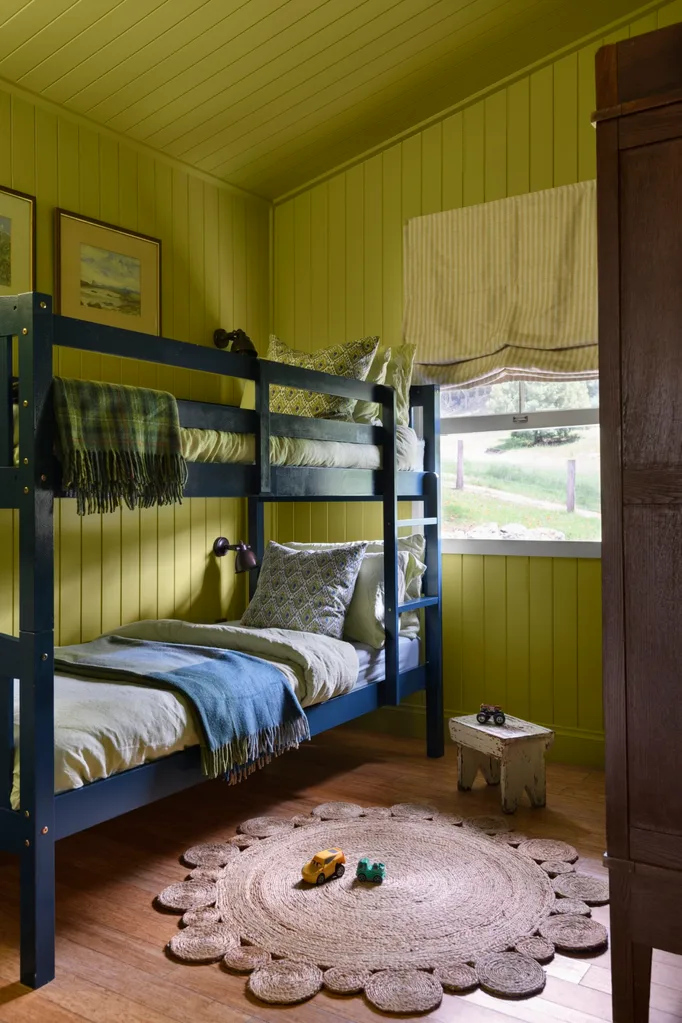
Sizing for throw blankets is different. Throws are typically smaller in size, and are intended to be draped directly over a person, as opposed to tucked in to a bed. They may look pretty on display, but you could find they don’t cover you entirely or provide enough warmth as a proper bed blanket.
Finally, when sizing up your blanket, consider if it has fringe. Most good quality sites will list if the fringe is included in the size measurements, and they’ll list the exact length of the fringe. Factor this in when measuring up your blanket/bed.
The moral of this story? Measure your bed, and check the exact blanket measurements before you click ‘Buy’.
What are wool microns?
On quality wool blanket sites, you’ll often see the word ‘micron’ alongside a number grading. The literal definition of a micron is a micrometre — a unit of measurement used to describe the thickness of wool fibres. But why would you be interested in that? Well, the micron count suggests how soft or how durable your blanket will be. The lower the microns, the finer, and possibly softer, your blanket. The higher the microns, the more coarse and durable it will be.
A higher or lower micron count doesn’t speak directly to “quality”, as different wool types have different microns. For example, a quality merino wool blanket will be between 18-22 microns, whereas a sturdier wool blanket will be more than 24 microns, or even closer to 28-29. Both can be good quality, it just depends on what you want in a blanket.
When assessing the best micron count for you, consider how soft and delicate you want your blanket to be versus how durable and how warm.
What is GSM in wool blankets?
Another blanket quality metric is GSM: Grams per square metre. This speaks to the weight of the blanket, including its density, thickness and insulative quality. A good winter blanket should be at least 400-450 GSM, which guarantees the most warmth. However, note that a high GSM doesn’t necessarily speak to fabric quality! If you’re comparing blankets, they might all have a 400 GSM, but one might be made of Australian wool, and the other cotton or polyester. In this case, the wool blanket is likely to be the better quality, boasting all the benefits of wool.
Why wool? The Benefits of a wool blanket
We’ve spoken about how to identify the best quality wool blanket, but we may have skipped one vital question: Why get a wool blanket at all? What’s so great about it, anyway?
On top of being a great Australian resource, wool has many practical benefits. The fabric offers some of the best insulation, and, as it’s breathable, won’t leave you feeling like you’re trapped under a plastic tarp! Quality wool also offers the added bonus of being fire retardant, moisture-wicking, hypoallergenic and antimicrobial.
As Fran from Waverley Mills reminds, there’s also an environmental benefit to buying genuine wool. “Wool is biodegradable, renewable and naturally long wearing,” she notes. “A quality wool blanket used for decades is fundamentally different to disposable synthetic bedding that may only last a few seasons before entering landfill.”
And on that note, the primary benefit of a quality wool blanket is its durability. As many Australian families will attest, a good wool blanket can survive generations.
Is Australian wool better?
Australia is a leading producer of wool, and offers some of the highest quality wool in the world.
“Australian wool is regarded among the finest in the world because of the unique conditions it’s grown in — vast grazing landscapes, a variable climate and generations of careful breeding, particularly of Merino sheep,” Fran explains. “The result is a fibre that is naturally finer, longer and more resilient, with exceptional softness, breathability and temperature regulation. Good wool doesn’t just feel warm. It helps regulate heat and moisture, which is why it remains comfortable across changing conditions.”
There is also a transparency that comes with local production. We know where our wool comes from. We spin it ourselves. We weave and finish it onsite in Tasmania. That level of control matters.
— Fran Maiale, CEO Waverley Mills
“Australia also has one of the most sophisticated wool classification and testing systems in the world, giving makers consistency in fibre quality, micron, strength and performance.”
As the CEO of the last mill in Australia, Fran can attest that the quality of the wool matters in the final product. “We see firsthand the difference quality fibre makes to the final product,” she tells home beautiful. “Better wool creates better warmth, better durability and a blanket that will last for decades, not seasons.”
So, with all factors considered, your next wool blanket investment should be one that will be with you for a lifetime.

