 Photography: Alana Landsberry
When I moved in with my husband (then fiancé), I knew what I was getting myself into… sort of. He’s a tradie, so some dirt, dust and debris come with the territory. What I didn’t expect, however, were the piles. Piles of invoices from Bunnings, dirty pens and builder’s pencils, blades and knives, shoes, puffer jackets (why the man needs multiple I will never know), belts, keys that didn’t quite didn’t make it to the bowl, miscellaneous screws — oh, the screws! Now, with an 18-month-old whose favourite activity is upending the Tupperware drawer thrown into the mix, it’s starting to feel impossible to ignore.
Let me be clear: I love him, of course, and it is a comfort to know that this is not by any means a unique experience. Speaking to Elle Lovelock on The Edit podcast, magazine editor-turned-best-selling-author Samera Kamaleddine confessed that she now pretends her dining table doesn’t exist. “I try to ignore the dining table that’s now no longer a dining table, ’cause it’s just got a belt on it, and a sponge to wash a car, and three baseball caps, and a hi-vis shirt, and an invoice book,” she says.
“I’m like, ‘What is my life now?’. I’m still trying to work out what I do about this.”
Samera Kamaleddine, author
It’s reassuring to know others share my dilemma, but still I’m left with a series of seemingly impossible questions: what do you do when your idea of ‘tidy’ clashes with that of the person you share a home with? What systems can you put in place to make your life make sense again? And, ultimately, how can you live with a messy partner? To help find the answers, I spoke to celebrity interior designer and former family and couples counsellor Claudia Lambert, who says that, just maybe, all is not as it appears.



Managing expectations
The explanation starts with a cliché: as with so many psychological patterns, our childhood experiences shape our standards of tidiness.
“We grow up absorbing ideas about what a home should look and feel like,” Claudia says. “Some people were raised in incredibly ordered environments where everything had its place. Others grew up in homes that were more relaxed, creative or chaotic.” While some of us replicate what we had, others reject it. But in any case, there is no denying that our physical environment can influence how safe, calm or in control we feel.
So, where to from here? It may shock you to learn that, according to Claudia, it’s rarely actually about the mess. At first, I bristled at this. Of course it’s about the work boots left on the floor that I tripped on. Or is it?
“We all have different thresholds for what feels comfortable in our environment. For some people, a clear kitchen bench creates an immediate sense of calm. For others, a pile of books, shoes by the door or a jacket thrown over a chair barely registers,” Claudia explains.
“The important thing is to recognise that neither person is necessarily right or wrong. You’re simply experiencing the same space differently.”
Claudia Lambert, interior designer
So, essentially, mess is just mess. The key to managing expectations is understanding and giving a name to what it represents, whether that be visual overstimulation, unequal mental load, or simply one person noticing more than the other. “Once you understand that, you can start finding solutions rather than getting caught in the endless cycle of asking someone to pick up their things,” says Claudia.
Solution one: communication
Communication is key. Start by talking openly about mess and tidiness, without resorting to criticism.
“There’s a big difference between saying, ‘You’re so messy, you never put anything away,’ and saying, ‘I find it really difficult to relax when the living room is cluttered. Can we find a solution that works for both of us?’ The first invites defensiveness. The second invites collaboration,” says Claudia.
Solution two: storage
Samera confesses her attempt to implement a basket system to tame her partner’s messy habits. But did it work?
“All the remotes and everything were kind of just scattered around. And so I bought this basket, and I put them all in there, and I thought he would get the hint, but then I still find remotes everywhere else. [So] I do it in front of him. I get the remote, and I’m like, ‘See this? It goes here.’ It just doesn’t register.”
“It’s been a challenge… I’ve lost my single girl aesthetic.”
Samera Kamaleddine, author
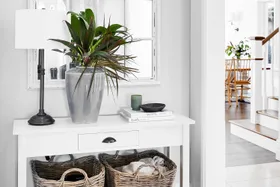
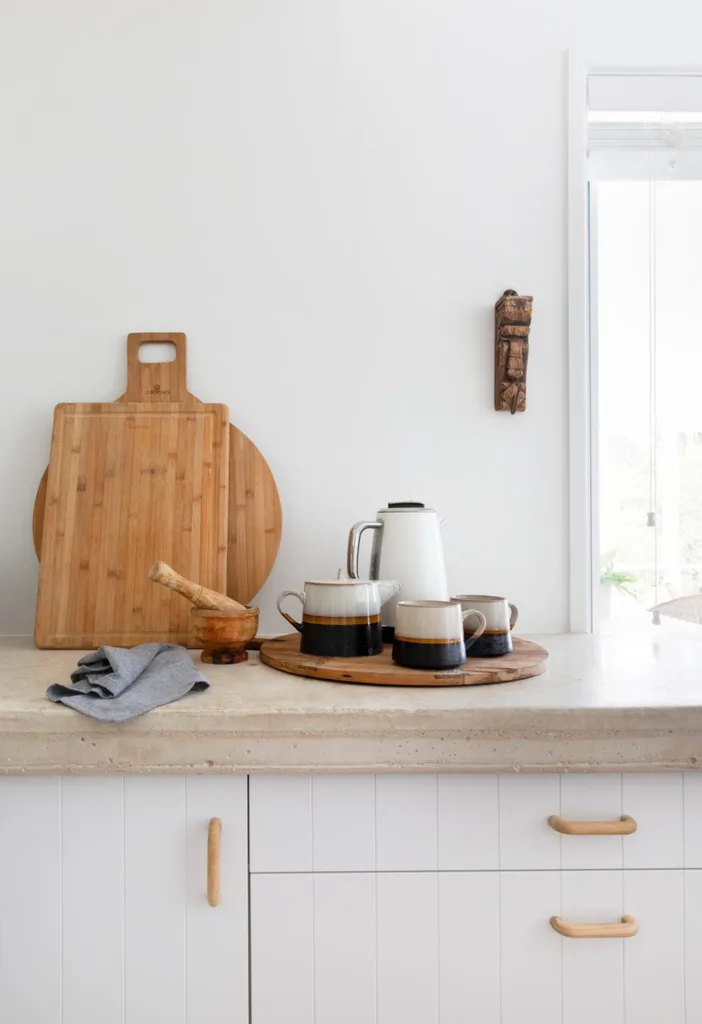
While a fan of the basket system for things like toys, throws and magazines, to ensure successful storage, Claudia recommends observing where clutter is naturally collecting.
“If shoes always end up at the front door, perhaps that’s where the shoe storage belongs. If bags and jackets are constantly thrown over dining chairs, create somewhere convenient to put them.” Whatever your system, it should be low touch, easy and effortless to use, even if that means an “everything” drawer rather than a meticulously compartmentalised cupboard.
Solution three: zones
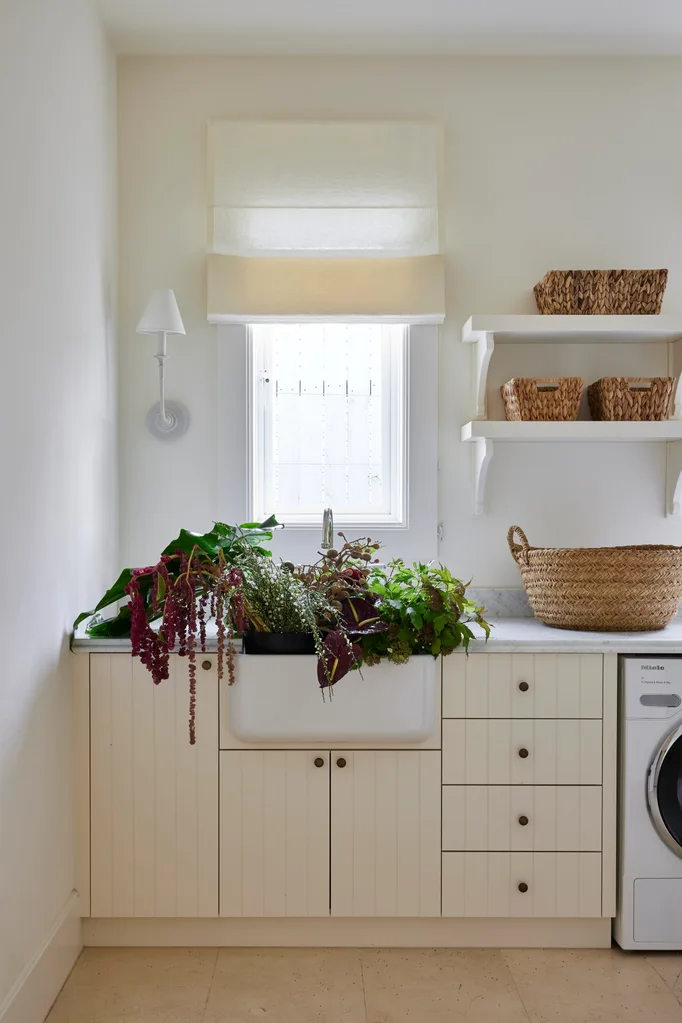
Another potential fix is establishing zones. Designating areas where mess is allowed can ease tension and take the pressure off, while still maintaining boundaries.
“Perhaps the living room and kitchen are communal spaces that everyone agrees to keep reasonably tidy, while a home office, bedroom or personal area can be a little more relaxed,” explains Claudia. The condition is that any system needs to remain a shared responsibility. “One person shouldn’t automatically become the household manager simply because they have a lower tolerance for mess.”
Solution four: aesthetic innovation
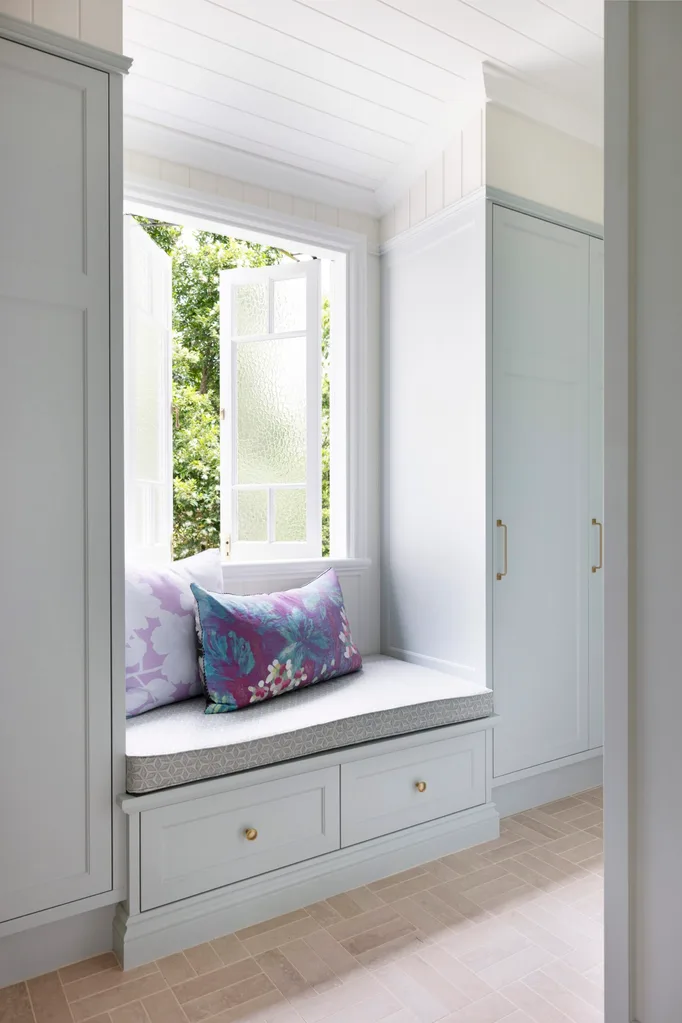
Clever interior design, meet mess. A self-confessed fan of concealed storage, Claudia says you can hide an “extraordinary” amount of clutter behind joinery. Out of sight, out of mind. “I love incorporating vintage cabinets, interesting sideboards and freestanding furniture that provide storage without making a room feel overly functional.”
She also points out that existing clutter — even much-loved homewares — can influence how we perceive mess. “If every surface is covered in small decorative objects, even a relatively tidy room can feel visually busy,” Claudia explains. “That doesn’t mean you need to embrace minimalism. My own design philosophy is very much about personality, colour, art and collected objects. But there’s a difference between intentional layering and accidental clutter.”
“A home doesn’t need to be minimal to feel calm. It just needs to feel considered.”
Claudia Lambert, interior designer
Approaches to avoid
Throughout the tidiness negotiation process, Claudia warns against approaching your other half with nags and shame, treating them like a child, or labelling what their messiness says about them as a person. What you want to avoid is one of you becoming the parent, and the other the rebellious teen. “It’s not a particularly romantic dynamic, and it rarely produces the outcome either person wants.”
“I think the goal is to move away from deciding who’s right and towards understanding what each person needs to feel comfortable at home.”
Claudia Lambert, interior designer
The takeaway
So, while living happily with a messy partner is possible, perhaps the real takeaway is that we all need to loosen up a little. And maybe, just maybe, there’s an element of loveliness in the mess.
“We can’t expect another person to experience the world exactly as we do,” says Claudia. “Not every cushion will be perfectly positioned, not every surface will be clear, and occasionally there will be shoes in places you’d rather there weren’t. The question is whether those things are genuinely affecting your wellbeing or whether they’re simply different from how you would choose to live.”
“A beautiful home should accommodate real life, and real life is sometimes a little messy.”
Claudia Lambert, interior designer
Do I now see my husband’s assemblage as misguided acts of love? No. But am I humbled? Maybe just a bit.

Related stories
Native ad body.
Native ad body.
Native ad body.