 Photography: Alana Landsberry, Styling: Nonci Nyoni
Over the past 100 years, Home Beautiful has seen an immeasurable amount of change. As society progressed, our abodes evolved and reflected our shifting priorities and lifestyles. From the trends we try to forget about to the styles that transport us back to our childhood homes, these are the design directions that defined each decade.
Australian homes in the 1920s
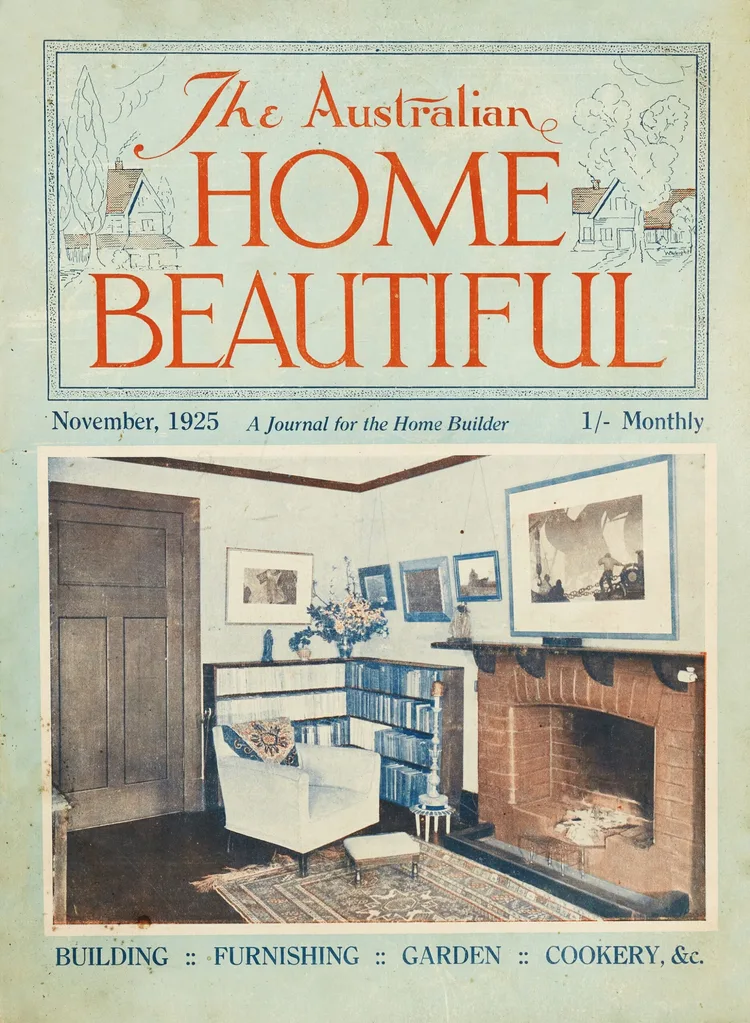
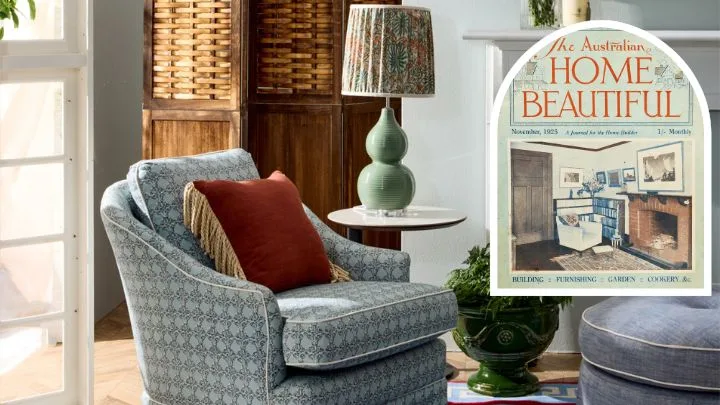
The Australian Home Beautiful launched in 1925, celebrating our uniquely antipodean ways of life. An interwar housing boom meant that thousands of new homes were built and they needed decorating, pronto. With the buttoned-up Victorian era long gone, the Jazz Age saw Aussies shirking formal interiors for cosy living spaces. Plush armchairs and footstools with skirted upholstery offered respite for weary workers – usually the man of the house – or a serene spot to sit and read works by F Scott Fitzgerald or Miles Franklin.
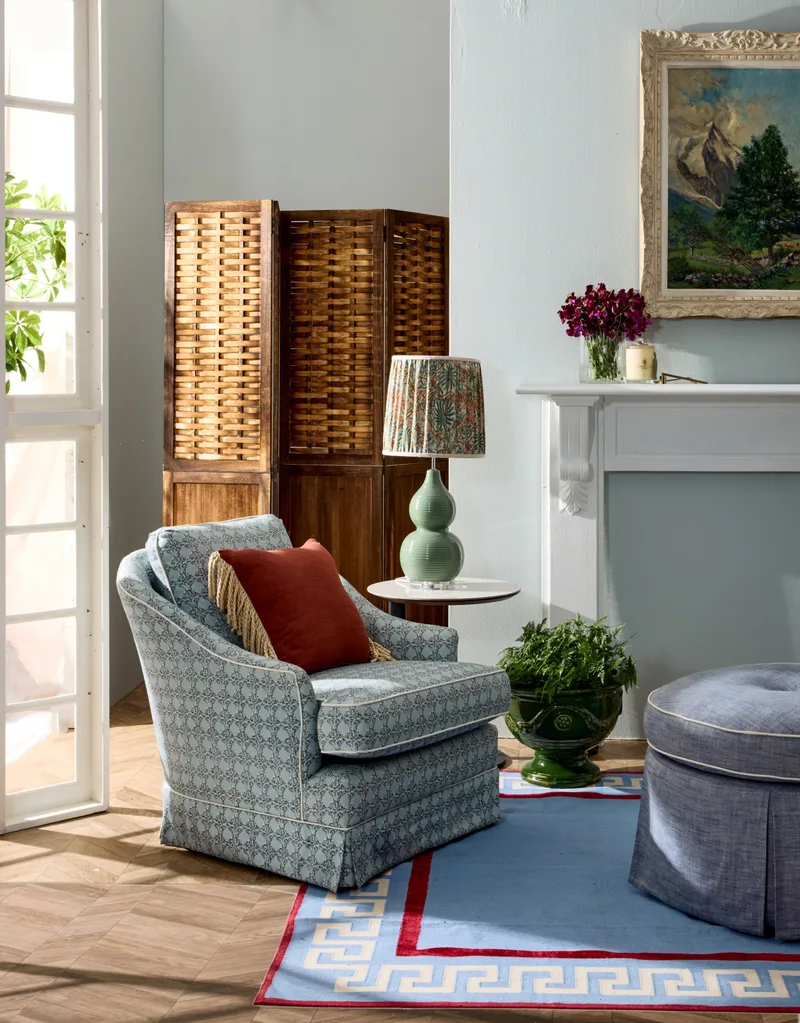
Folding privacy screens made their way here from Asia, while geometric patterns, as seen in the rug and armchair, were a key trend. Touches of opulence emerged in tassels, chintz and house plants. Roaring fires warmed ’20s hearths, as families were oblivious to the economic curveball yet to come.
Australian homes in the 1930s
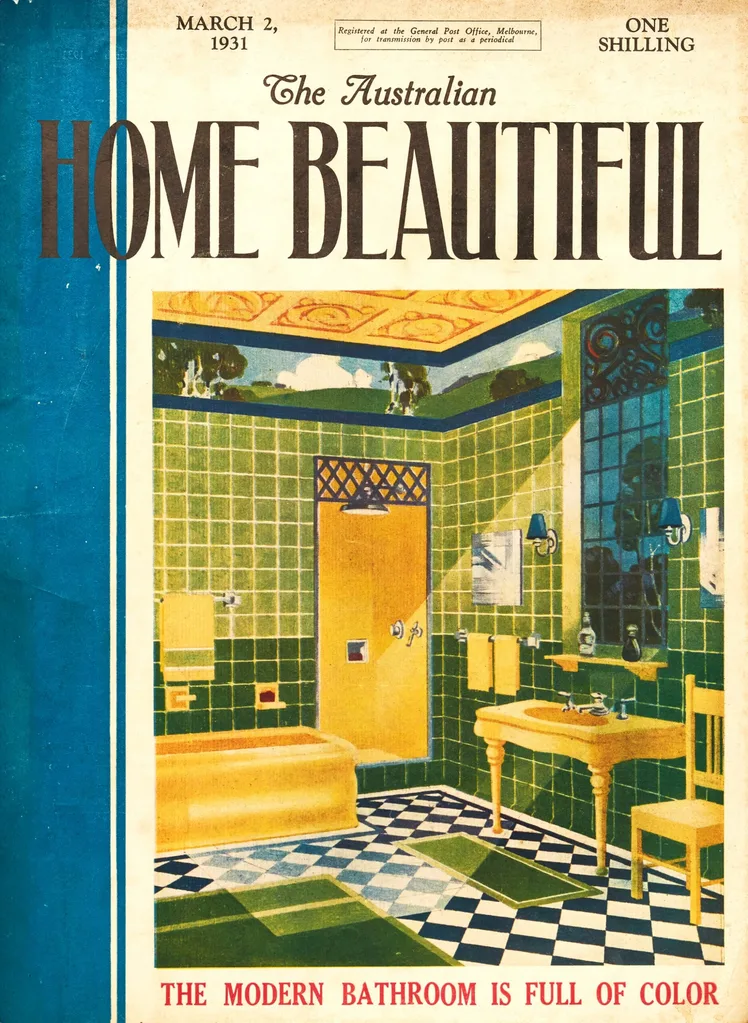
Curves, colour and class marked ’30s Art Deco design, particularly in unexpected places, such as the bathroom – the star of this 1931 issue of The Australian Home Beautiful. In the cover story, EV Lavater writes, “There has been in recent years a remarkable advance towards new standards of beauty and convenience in bathrooms. The trend towards the use of harmonising or pleasing contrast of colors [sic]
in porcelain fixtures, floor and wall tile has revolutionised this once despised adjunct to a home”.
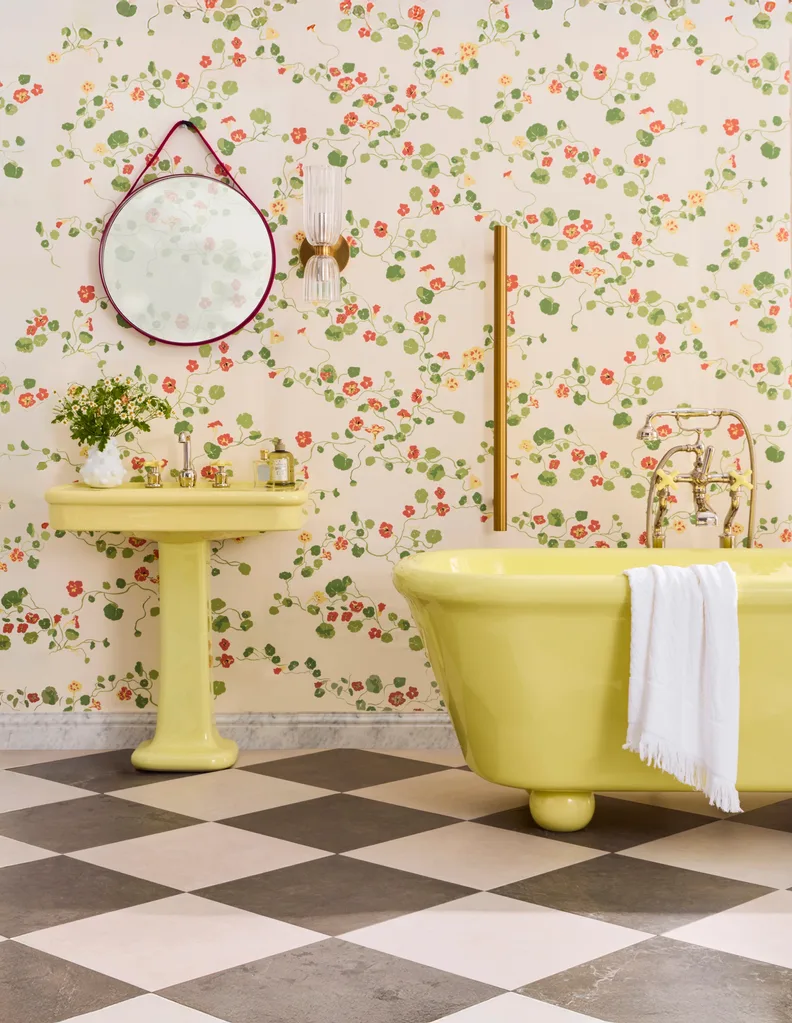
By this time, many homeowners were elevating their interiors with bold, sunny hues and whimsical wallpapers. Jewel-esque lighting and chequerboard flooring – often made of rubber or linoleum, believe it or not – also made their mark. But the Wall Street crash triggered the Great Depression in Australia, at its worst in 1932, eliciting more austere and restrained schemes. Aussie battlers got creative, using affordable materials such as Bakelite, concrete and plywood to craft and curate their homes.
Australian homes in the 1940s
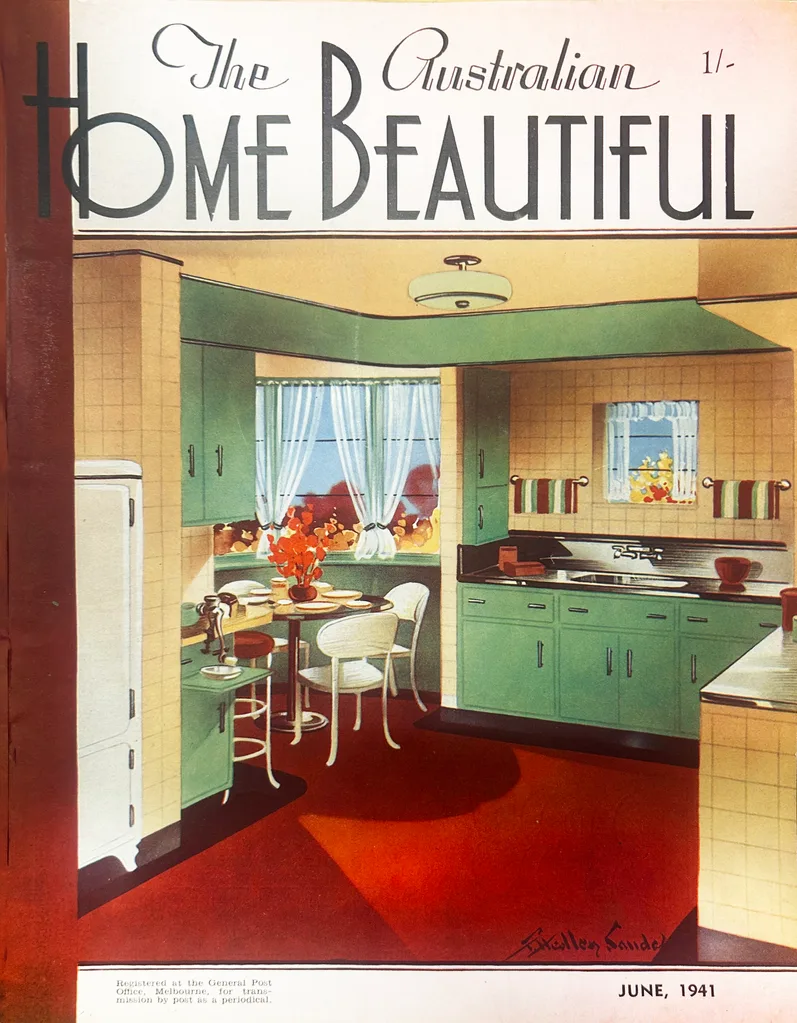
The country was still reeling from economic collapse when World War II began. As such, supplies were scarce, meaning Home Beautiful readers had to embrace DIY throughout the 1940s, poring over gardening articles to flex their green thumbs and relishing recipes that helped them stretch out rations.
Those with enough space even learnt how to reimagine an air-raid shelter as a chic apartment. The more industrious readers ordered Patterncraft furniture patterns from the magazine to build their own
bookshelves, chairs, tables and divans (now known as daybeds). Formal dining rooms collected dust as families gathered in breakfast nooks on banquettes or their dine-in kitchens, enjoying
steak dinners on resplendent Laminex tabletops.
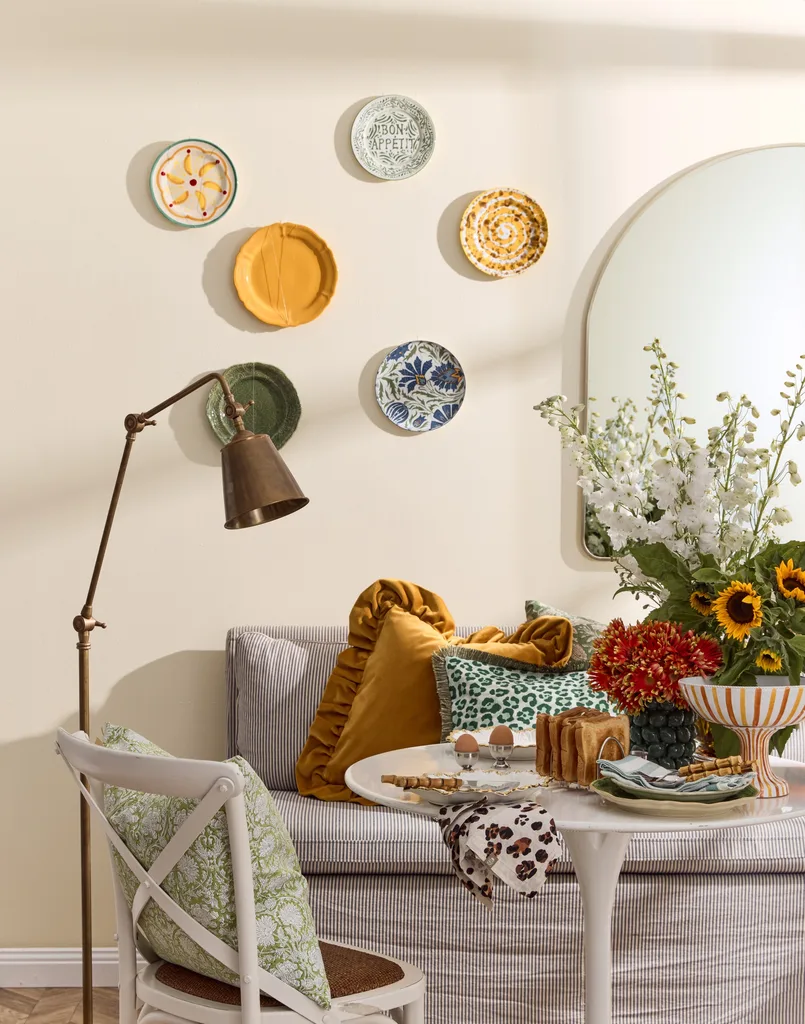
By the end of this tumultuous decade, most homes had electricity and kitchen appliances – or ‘electric servants’ as they were called. Australian households were finally hurtling towards a brighter, more prosperous future marked by a baby boom and the advent of a wondrous invention called television.
Australian homes in the 1950s
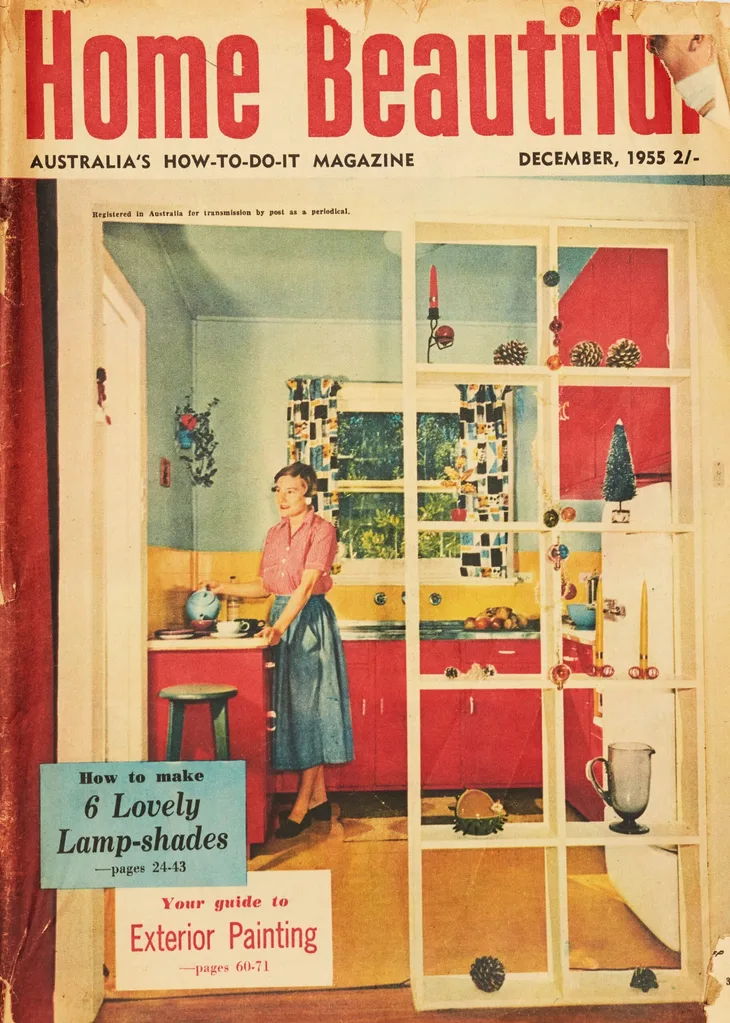
This groundbreaking design decade saw Modernist style transform homes with swathes of primary colours brightening every housewife’s day. Any and all mood boosters were welcome, as the average homemaker did more than 77 hours of domestic work per week.
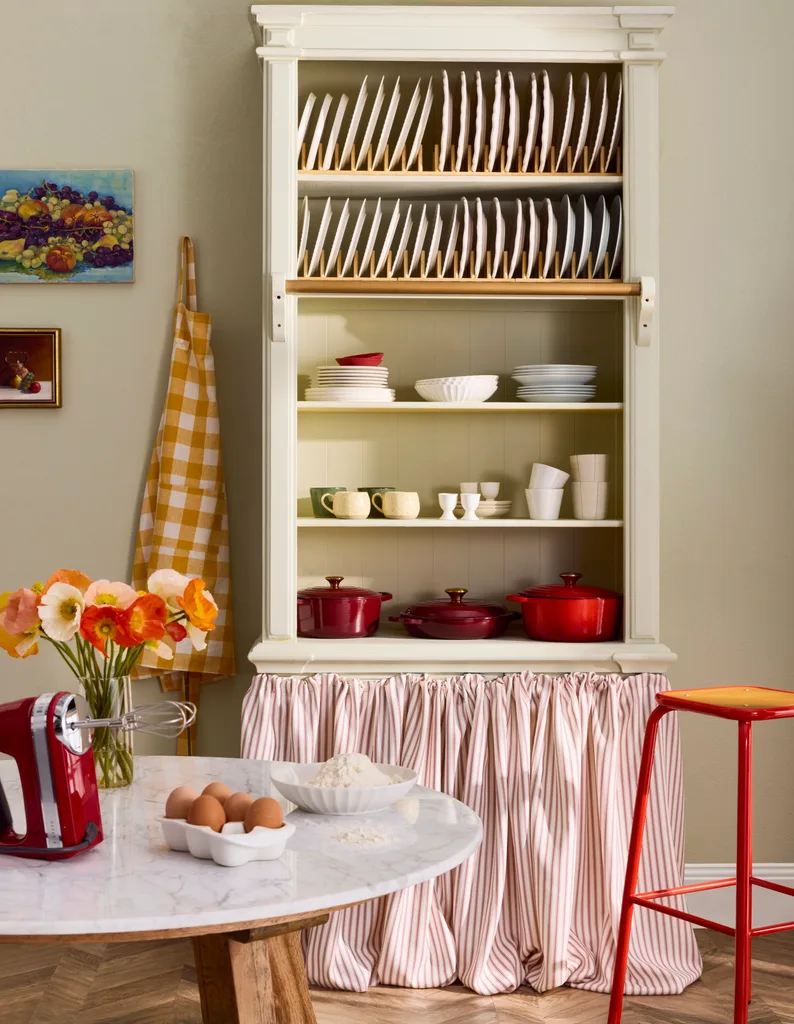
Clean, straight lines inspired by Scandinavian design, as well as organic shapes – as seen in kidneyshaped coffee tables and iconic Eames lounge chairs – were in. Unnecessary embellishments were out, although a patterned curtain didn’t go astray. Our old hardwood floors were covered by carpets, and chrome was king.
Architects such as Harry Seidler and Robin Boyd dared to let the sunshine in with floor-to-ceiling windows. Meanwhile, Home Beautiful campaigned for a Small Homes Service, to help offer average income earners low-cost house plans.
Australian homes in the 1960s
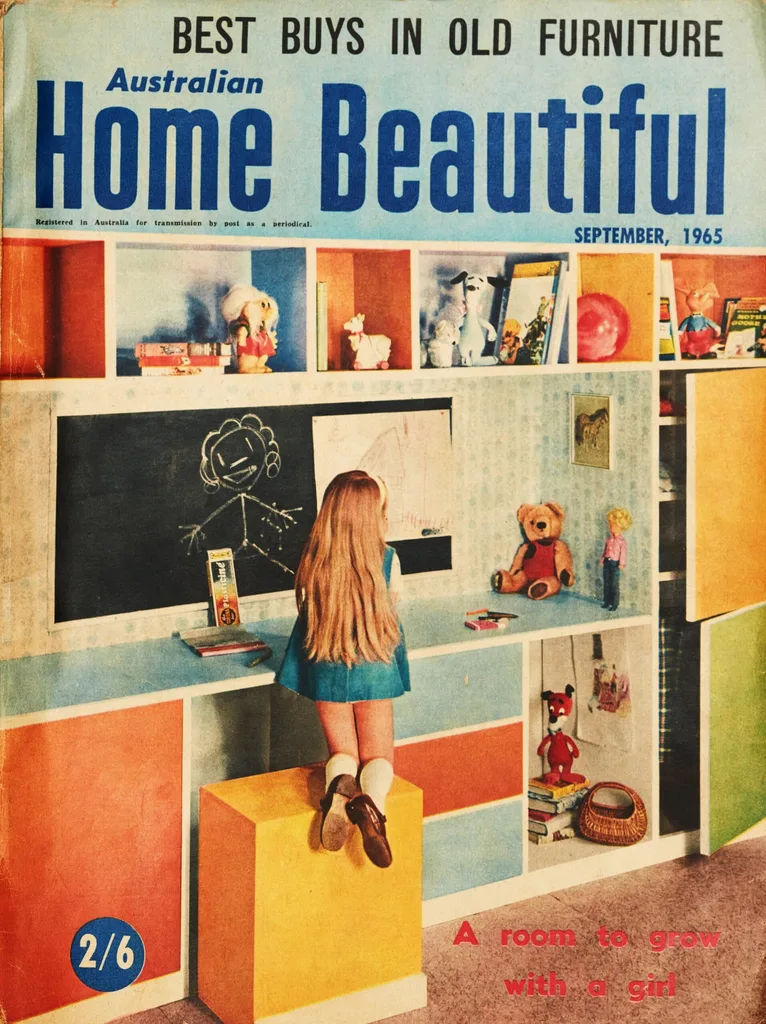
Walls came down in the 1960s – literally and figuratively. A sweeping cultural revolution was afoot outside, while inside, open-plan living created space and connection for families. Kitchens overlooked tulip-shaped dining tables or more casual living zones and the resident cook (usually Mum) was no longer cut off from the rest of the house.
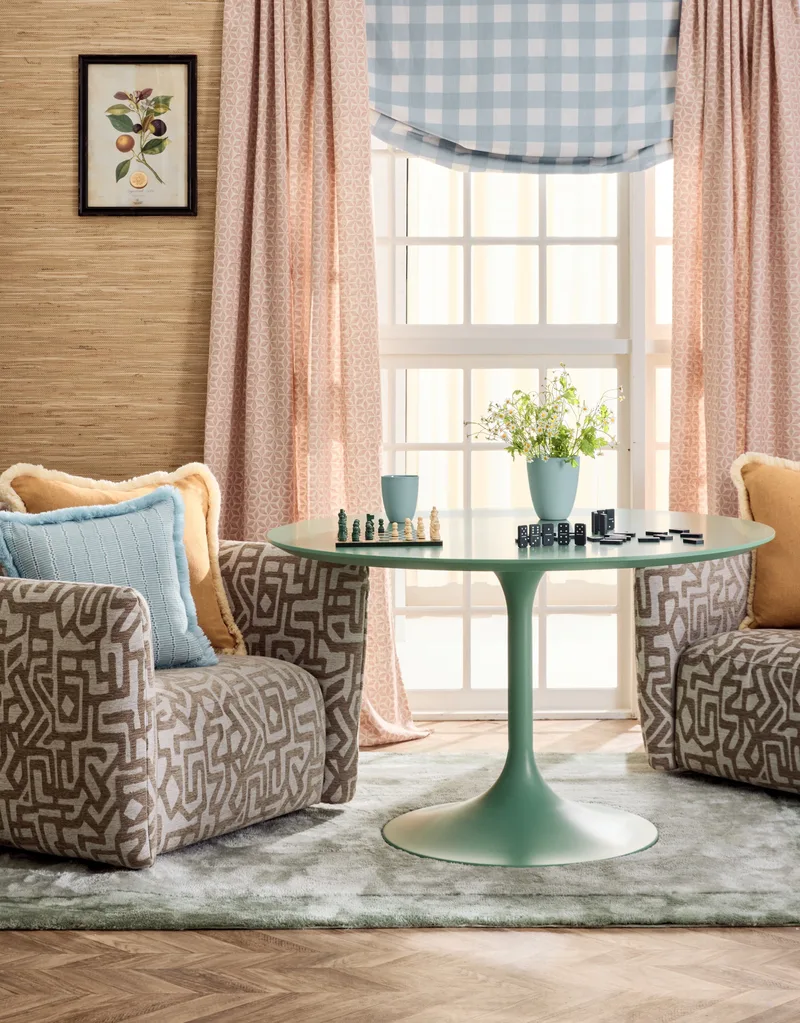
Since television had been introduced to Australia in 1956 – colour TV became available almost 10 years later – the lounge room became suddenly centred around ‘the box’. Perched in anticipation on mid -century furniture often bearing burnt orange, cerulean or saffron hues, families watched everything from the first landing on the moon to Skippy the Bush Kangaroo in the late 1960s. Space was all the rage in interiors, with futuristic lamps and ‘Sputnik’ chandeliers illuminating homes. Kids were often relegated to rumpus rooms, out of sight and mind, where they could play Dominoes and Twister or craft to their little hearts’ content (until dinner time, of course).
Australian homes in the 1970s
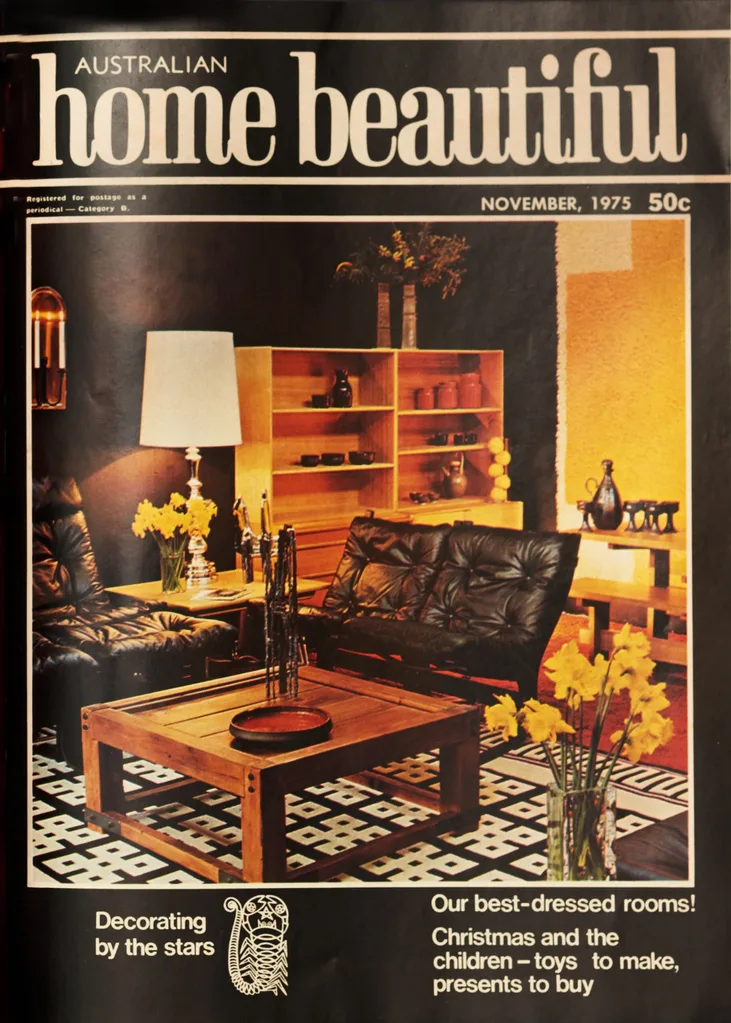
This bohemian yet glamorous design era was characterised by ‘warm and woody’ elements. The carpets got shaggier, colour palettes earthier, and patterns more psychedelic. Sunken lounges promoted less TV and more conversation. Lush houseplants and cut flowers turned our homes into veritable greenhouses, while floral motifs popped up on every surface, from bedlinen to tiles. Plasterwork was peeled back to reveal brick walls, and arches added more curves to our increasingly sensual homes.
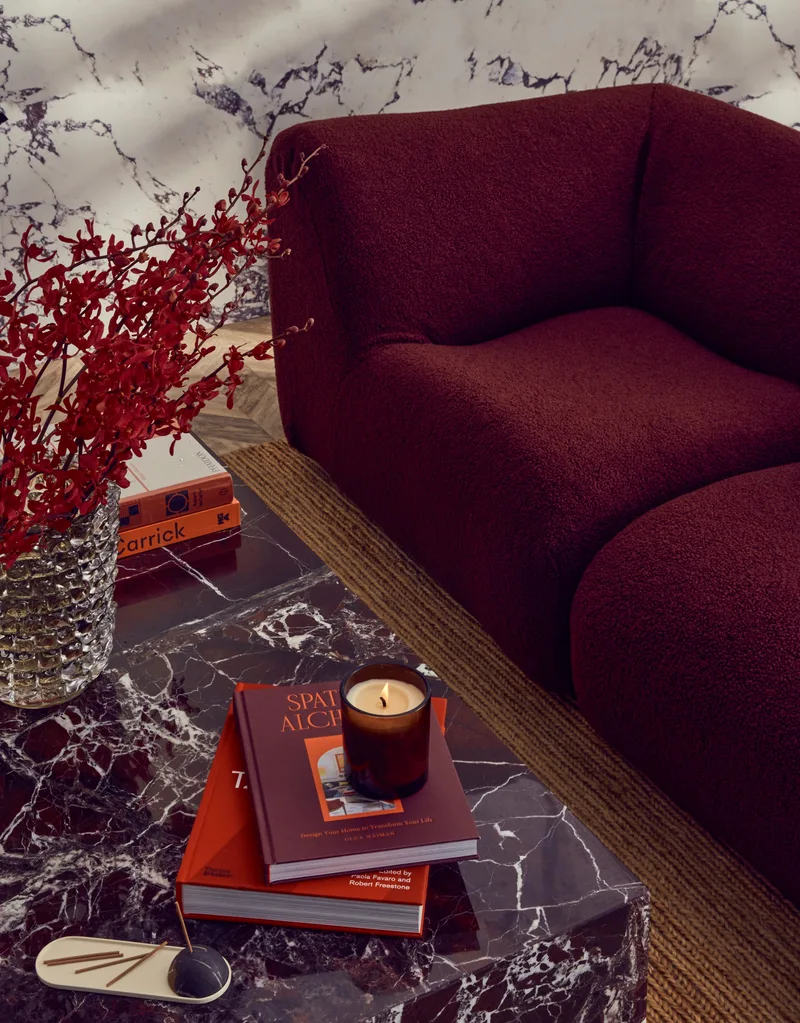
Influenced by gourmands such as Margaret Fulton and Julia Child, housewives did not just cook, they entertained, planning menus of salmon mousse, devilled eggs, prawn cocktails and jellied everything.
Swedish retailer Ikea opened its first Australian store in 1975 and two years later, David King and his mother, Gwen, started hand-crafting foam furniture at home and selling it at Paddy’s Markets in Sydney,
before launching the legendary brand, King Living. The 1977 Sofa is a modern reimagining of their original design.
Australian homes in the 1980s
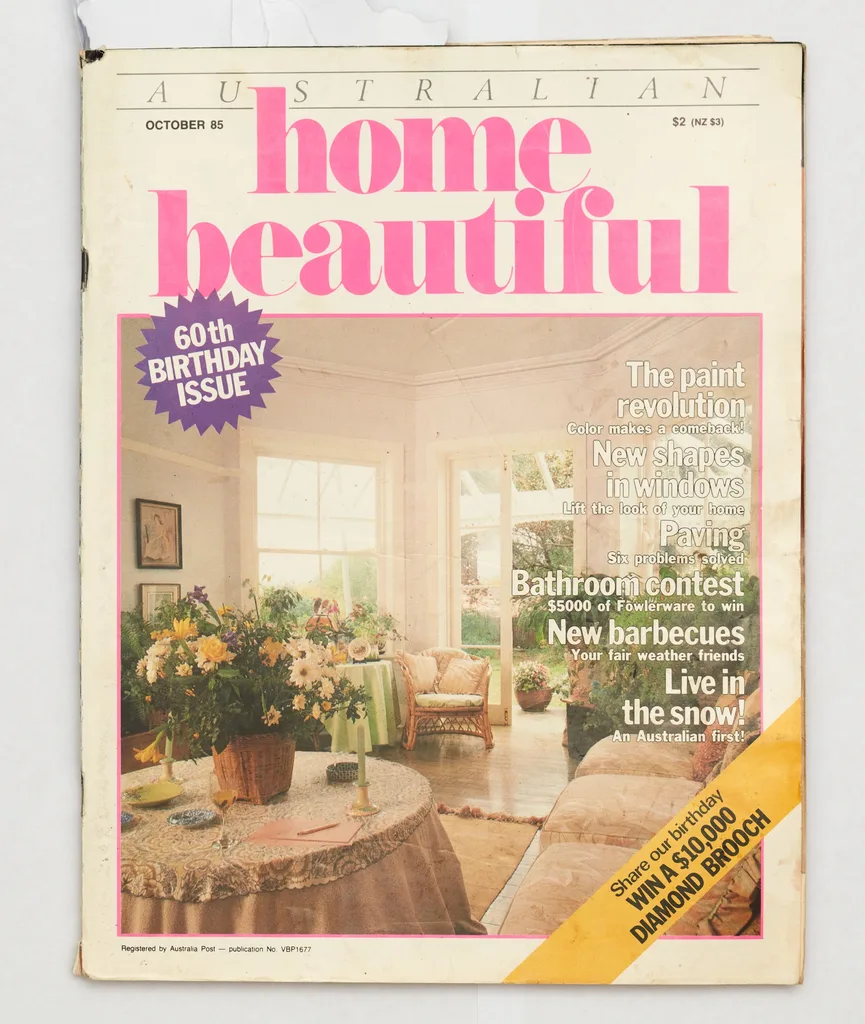
Designers and architects turned up the lights in the ’80s, an era full of contrasts. Colourful Memphis style, hailing from Milan, emerged early in the decade. By the mid-1980s, white-, pastel- and peach-painted
walls reigned over garish tones and wallpaper. Glass bricks, skylights, latticework and Venetian blinds made interiors brighter, while ruffles and lace, floral patterns and cane furniture added romance, as seen
in Home Beautiful’s 60th birthday issue.
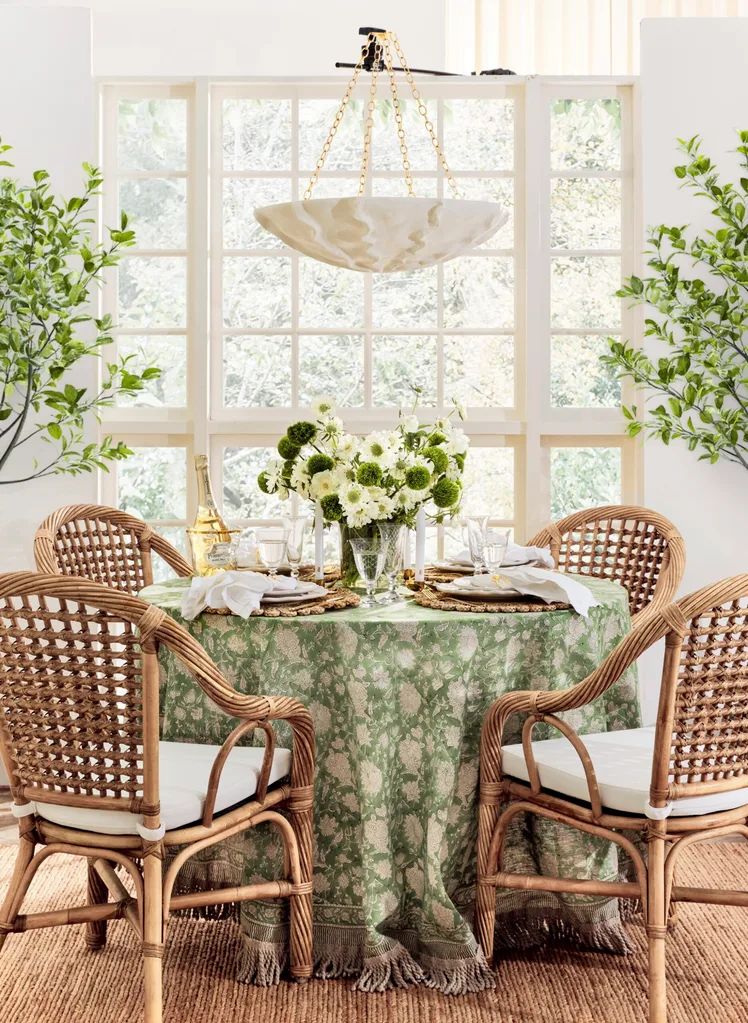
Homeowners gained affluence, and technology skyrocketed. Hi-fi sound systems, air-conditioning and intercoms entered houses, and renovations saw Victorian- and Edwardian-era homes trending once
again. As Neighbours became good friends and kids watched Crocodile Dundee on VHS – stuck to leather couches – suburban homes felt uniquely Aussie.
Australian homes in the 1990s
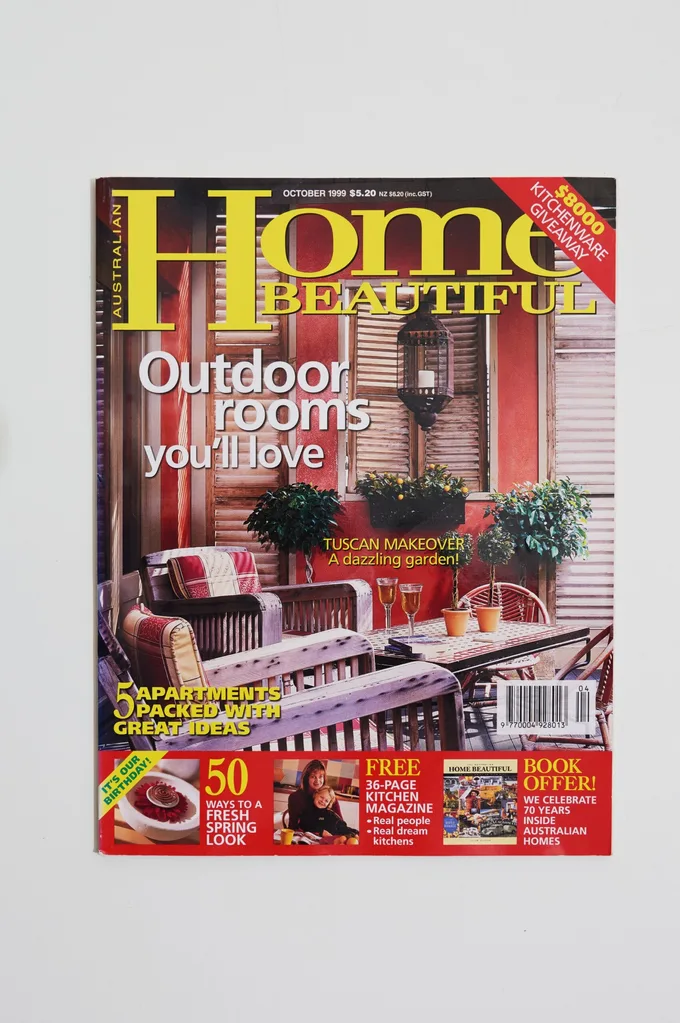
Everything old was new again in the ’90s, as Home Beautiful readers embraced rustic furniture and shutters, tartan and striped fabrics and Tuscan style. Terracotta was de rigueur. We pined for pine and granite kitchens, wrought-iron decor and country-style reproduction furniture. The idea of the ‘outside room’ became a thing. But thanks to “the recession we had to have” – Australia’s worst since
the Depression – decorators didn’t necessarily have deep pockets.
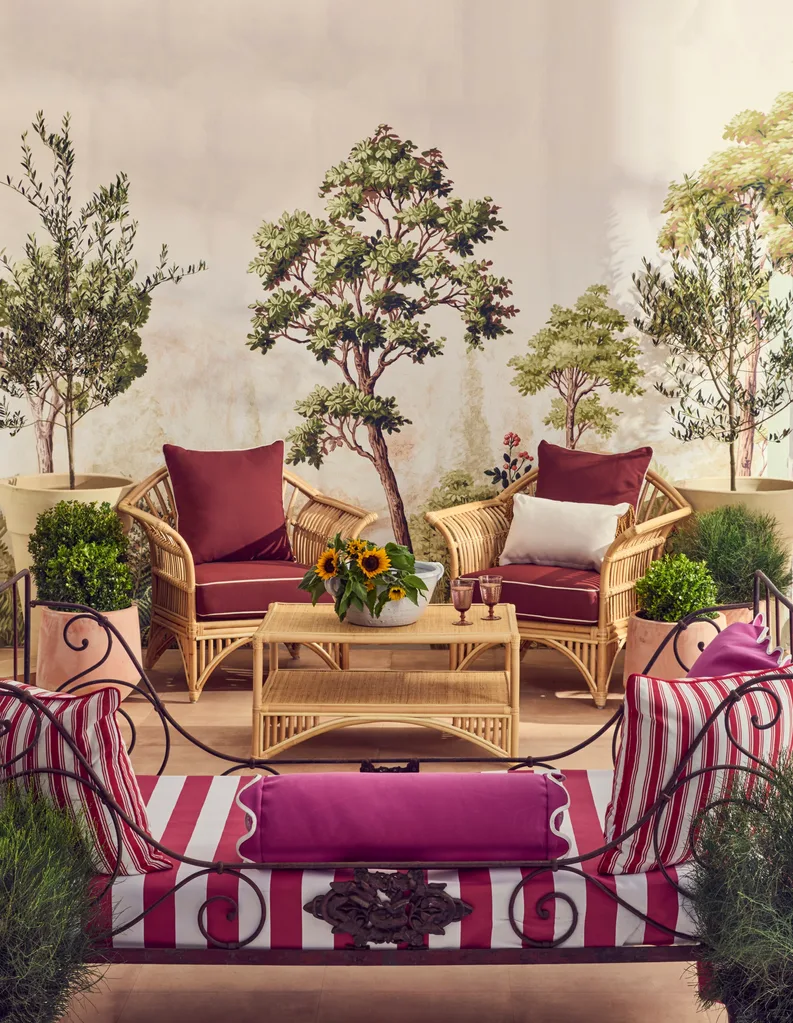
American icon Martha Stewart came to the rescue, showing homemakers all over the world how to handmake doilies and create Christmas centrepieces. Paint updated rooms on a budget with stencilled and sponged effects. Young homeowners looked to Friends’ maximalist, purple-bathed set for inspiration. And many teenagers – who enjoyed more agency over their bedroom decor than previous generations – pinned up grungy band posters, much to their baby boomer parents’ chagrin, who typically preferred the bright graphics of Ken Done.
Australian homes in the 2000s
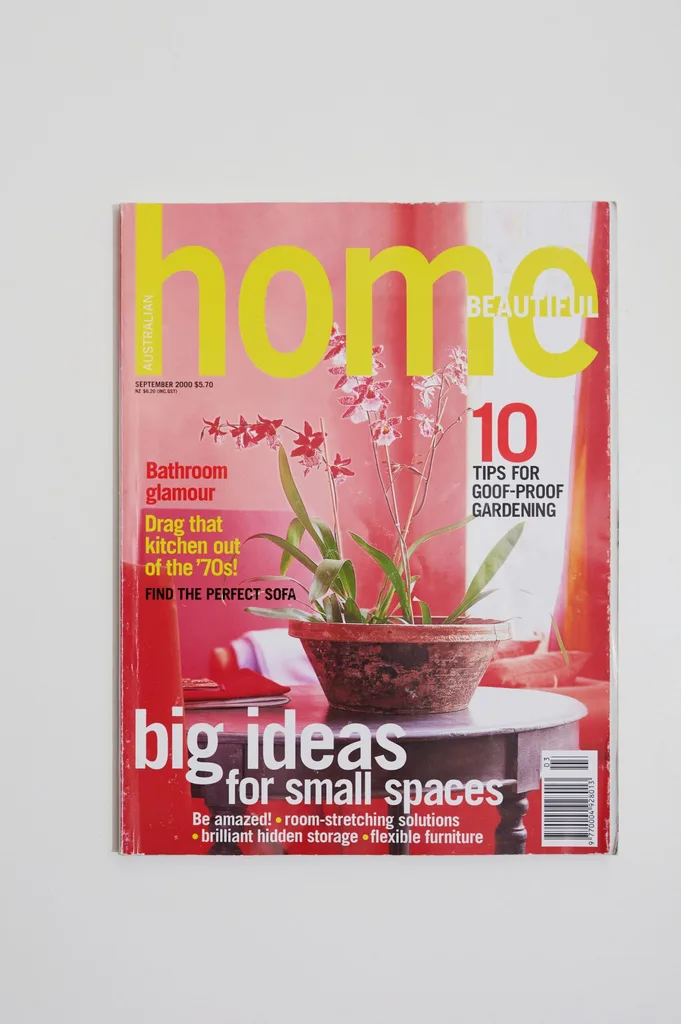
Towards the end of the millennium, Home Beautiful marked 80 magical years in print and dived into the digital age. Our loyal readers came along for the ride and embraced Y2K style, minimalist design and industrial chic. Colourful kitchens and timber joinery, which had persisted for decades, were subbed out at the turn of the century for glossy white kitchens and steely benchtops.
Exteriors of older homes painted in Mission Brown were refreshed with 50 shades of grey. Not to worry. Feature walls and karatechopped cushions were often saturated in red and fuchsia, while dark wenge furniture and Singapore orchids gave a nod to nature.
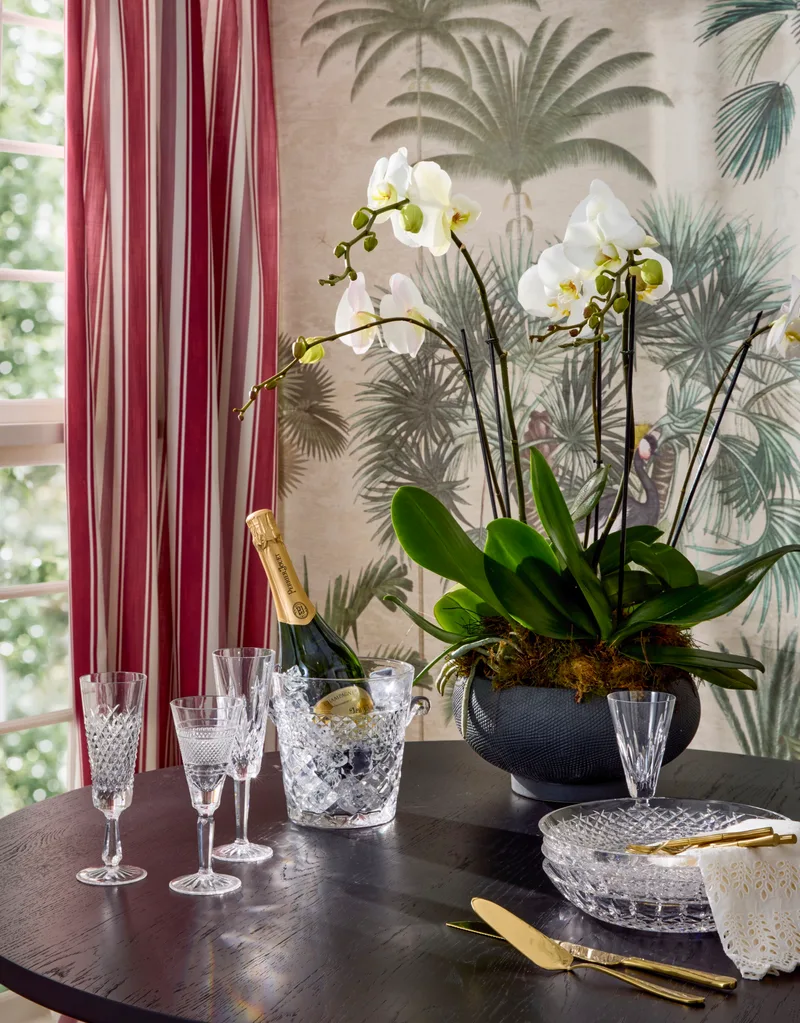
The new millennium supersized houses, with suburban McMansions sporting soaring ceilings, media rooms and home gyms, and industrial, inner-city warehouses were converted into fashionable, open-plan
abodes or pieds-à-terre. Regardless of where and how you lived, a bar or buffet was key for ringing in the 21st century with a glass of bubbles in hand, while Michael Bublé hummed from the CD stacker.
Australian homes in the 2010s
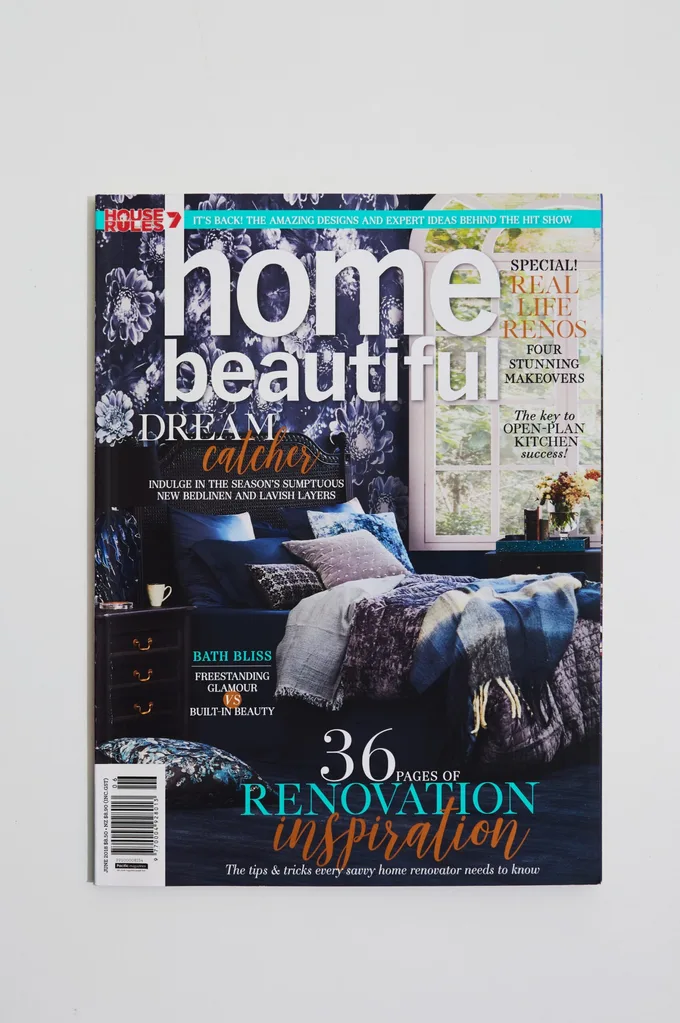
With fresh decor a click away and social media oozing inspiration, this decade witnessed a carousel of interior styles. You really could choose your own adventure, especially if it involved Millennial Pink.
The coastal Hamptons aesthetic, drawing from Nancy Meyers’ layered, hydrangea-filled film sets, was a perennial favourite for Home Beautiful readers.
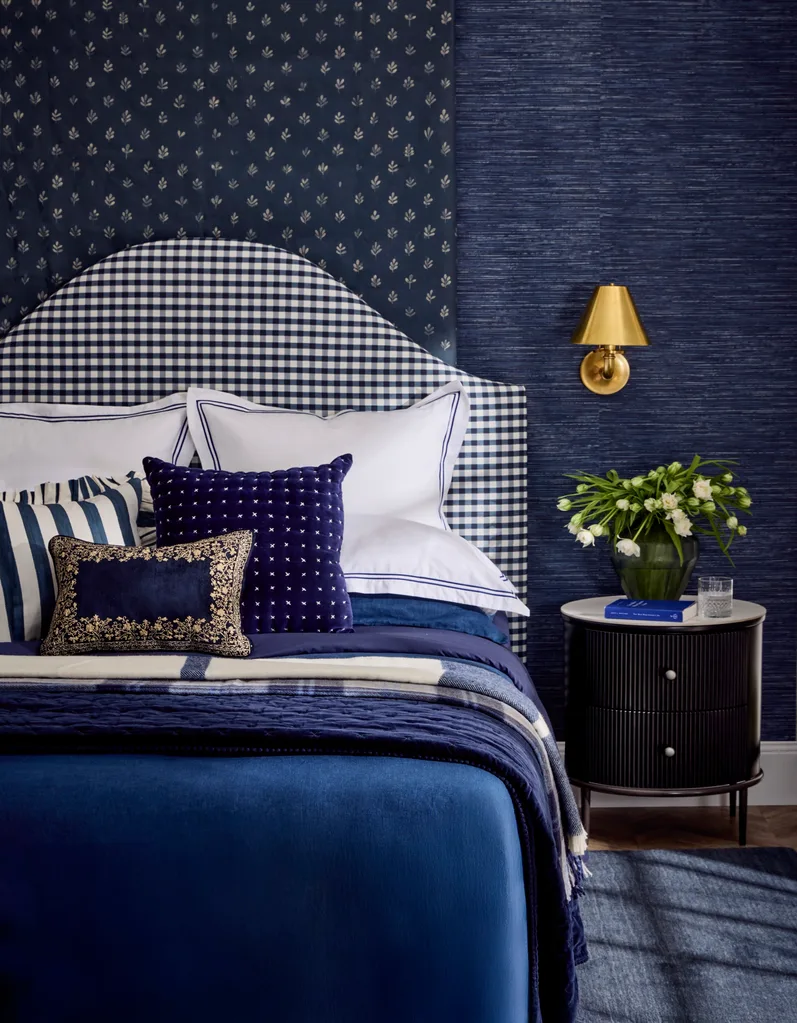
Modern farmhouse style gave us VJ-panelled walls, exposed beams and matte black accents. Hollywood Regency influences provided a high-end hotel feel with jewel tones and brass hardware. Conversely, we
also saw ’70s-inspired Boho, characterised by woven, shabby chic furniture, and Scandinavian homes clad in blonde timber. From glam to agrarian, beachy to biophilic, we craved cosiness and sustainability. We wanted our homes to feel like a big hug… and still do.

Related stories
Native ad body.
Native ad body.
Native ad body.