 Netflix
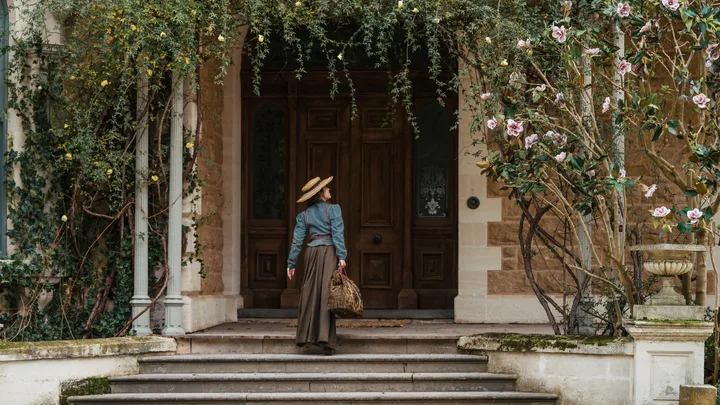
It may be without the over-the-top dramatics of Bridgerton, but Netflix’s My Brilliant Career is satisfying the itch for period drama that has taken audiences by their petticoats since the dawn of Downton Abbey. For those yet to indulge, the mini-series, based on the 1901 classic by Miles Franklin (Stella Maria Sarah Miles Franklin — a woman, FYI), follows Sybylla Melven, who dreams of freeing herself of the shackles of imposed marriage and instead becoming a writer. She wants to create, not procreate, as she says in the series. She’s headstrong and independent, and exactly the kind of heroine we love to see on screen.
Aside from Sybylla’s sharp wit, the show’s big drawcard, as far as we are concerned, is the set. Showing all facets of life in the early 1900s, we watch the characters move between sitting rooms with royal blue silken walls, quintessential South Australian stone abodes, and simple slab-hut bush dwellings with bark roofs. Its a true representation of the uniqueness and diversity of Australian design, in what production designer Felicity Abbott calls an “arc of the architecture”.
Listen to Felicity Abbott on The Edit podcast:
My Brilliant Career is a visual feast of design elements that hold up even after 100-or-so years, and although not all of us are blessed with a Victorian-era home, many of them are applicable to a range of styles. Read on as we divulge the design lessons we’re picking up from a century ago, and how they can help to create a space that feels unmistakeably your own.
Colour is (always) everything
One look at the dreamy, saturated spaces in My Brilliant Career, and it won’t surprise you to know that colour is Felicity’s “first language”.
“I work with not so much a primary palette, you know? It’s more the secondary and tertiary tones…sort of the subtle extrapolations of colour.”
— Felicity Abbott, production designer
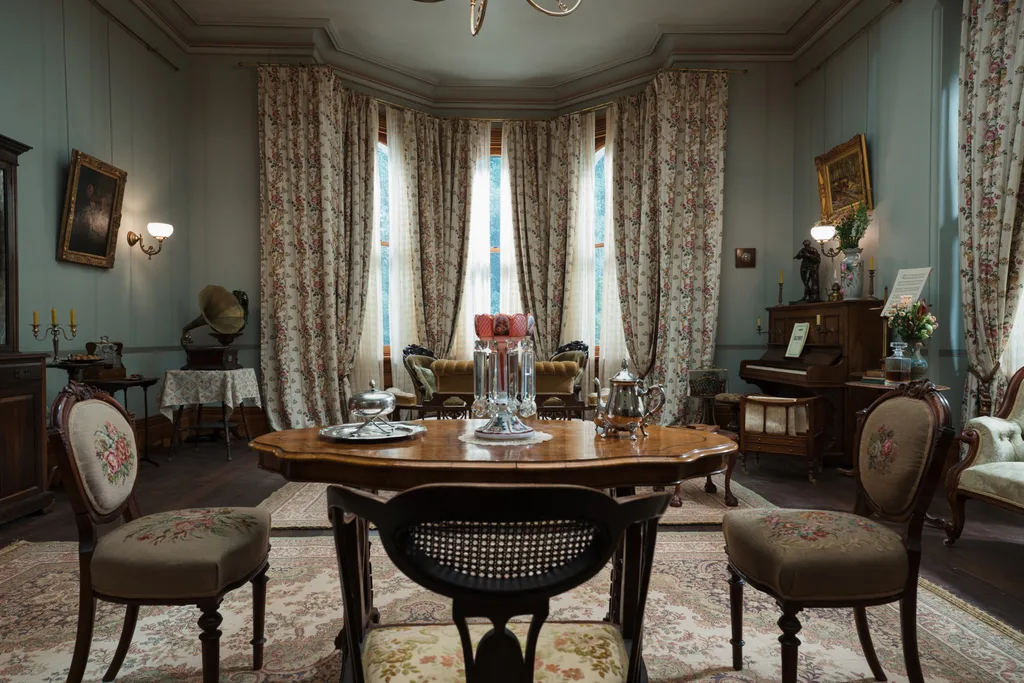
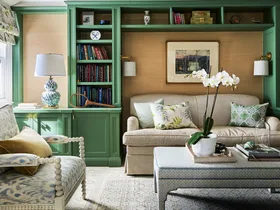
As it turns out, colour drenching is not just a thing of the present — our Victorian forefathers were once boldly splashing their ceilings, walls and floors, perhaps with even more gusto than we do today. While you may not be down for painting your trims gold or hanging a silk feature wall, the blue-on-blue tones, powder pinks, deep reds, and dirty, earthy yellows and oranges form a scheme worth interpreting in our homes. In wallpapers or hand-painted details, in textured tapestries and woven onto cushions, in the patterns of a big, cosy rug. As Felicity suggests, zone in on the primary hues that speak to you, then explore their subtle relatives.
Sorry, Pantone Cloud Dancer, the time for colour is still now.
Objects create character
Felicity says that the magic of her work lies in filling the scenes with unscripted details, not just props. That is, objects that actors are not specifically directed to touch, look at or otherwise interact with.
“It really helps the work become more authentic, more believable that the person actually lives there. And you do notice when it’s missing. I certainly do.”
— Felicity Abbott, production designer
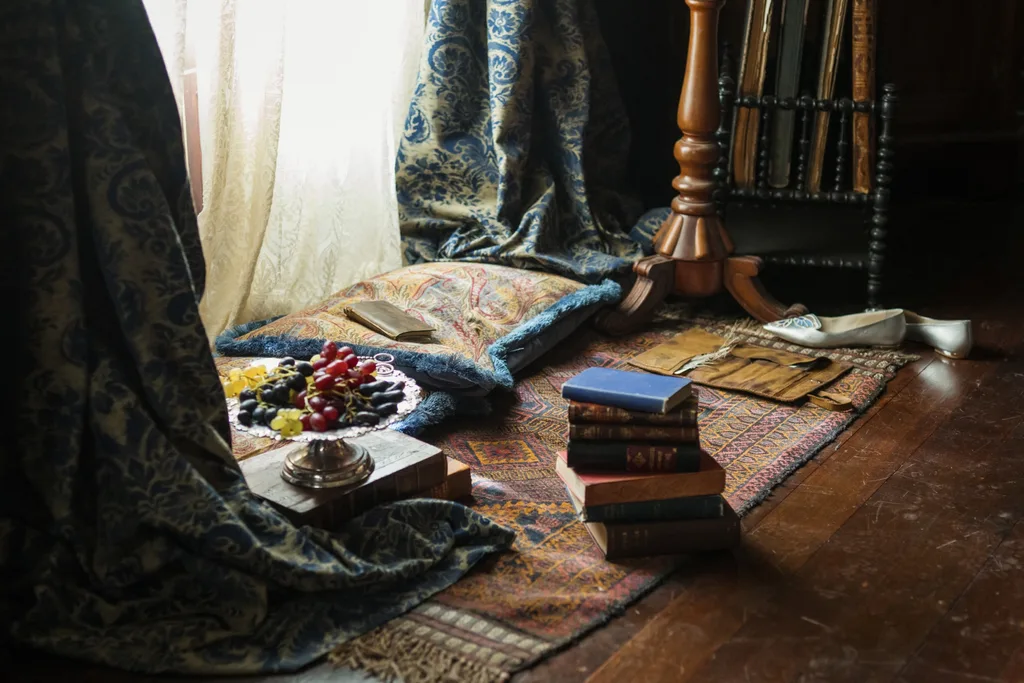
The same rhetoric can be applied to our own homes and is the key to creating a space that feels comfortable, approachable and lived-in. Think beyond the musts and begin collecting: little trinkets while you’re travelling, pieces of art, ceramics, a beautiful set of cutlery, lots of books out on display, and candles (and for goodness sake, light them). If you’re lucky enough to own a period or architecturally significant home, lean into its personality. Layers are key, and remember, old can sit beside new — in fact, that’s the perfect way to integrate vintage pieces into contemporary homes.
Like the homes in My Brilliant Career tell the stories of their characters, so too should your own.
Art is the starting point
When Felicity responds to a brief, she doesn’t hit the books. Approaching design like a storyteller, she feels for an emotional response, and, with it firmly in hand, finds several reference points in art.
According to Felicity, there’s a lot that art can tell us. So, if we are feeling lost in the design direction for our own homes, we can take a leaf from Felicity’s book and treat emotion, then art as the starting point. Whether it’s a collection of mid-century magazines or grand Georgian paintings, Pinterest aside, these works can be the earliest forms of an interior mood board. Look for motifs and symbols, common colour threads, textures and materials, and, depending on the artwork, even homewares and decorative objects.
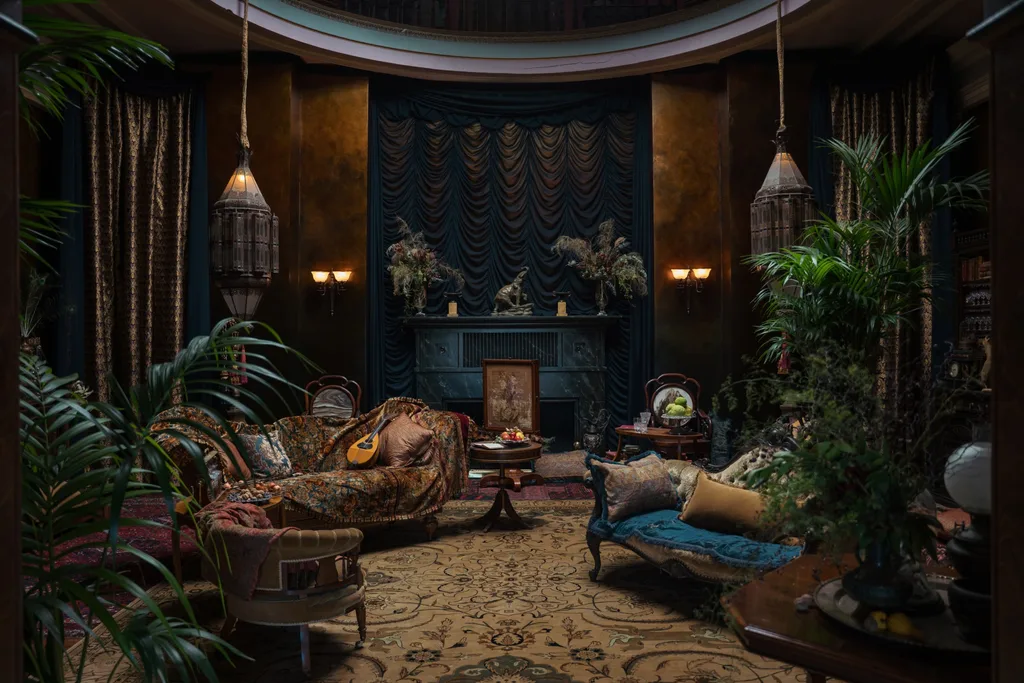
They say life imitates art, and given these easily adapted design lessons from My Brilliant Career, that can absolutely be considered the case.
Catch up on The Edit and watch the vodcast interview for Home Beautiful:

Related stories
Native ad body.
Native ad body.
Native ad body.