


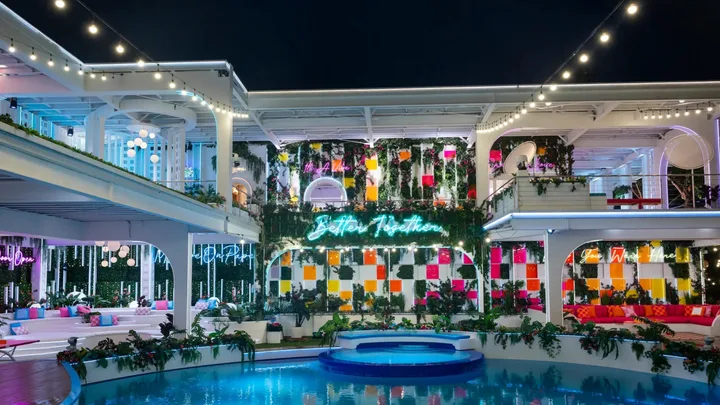
 Ben Symons / ITV / Peacock
For millions of people around the world, the months of June-July and (for Australians) October-November are spent clocking in for a time-consuming and emotionally draining second job. That is, tuning in to the reality TV show Love Island.
For at least one hour every night, we watch conventionally attractive singles in their early 20s try to find love (or major brand deals). Across the global iterations of Love Island, there have been more than 100 seasons of this show. Love it or hate it, Love Island is one of the biggest reality TV franchises ever.
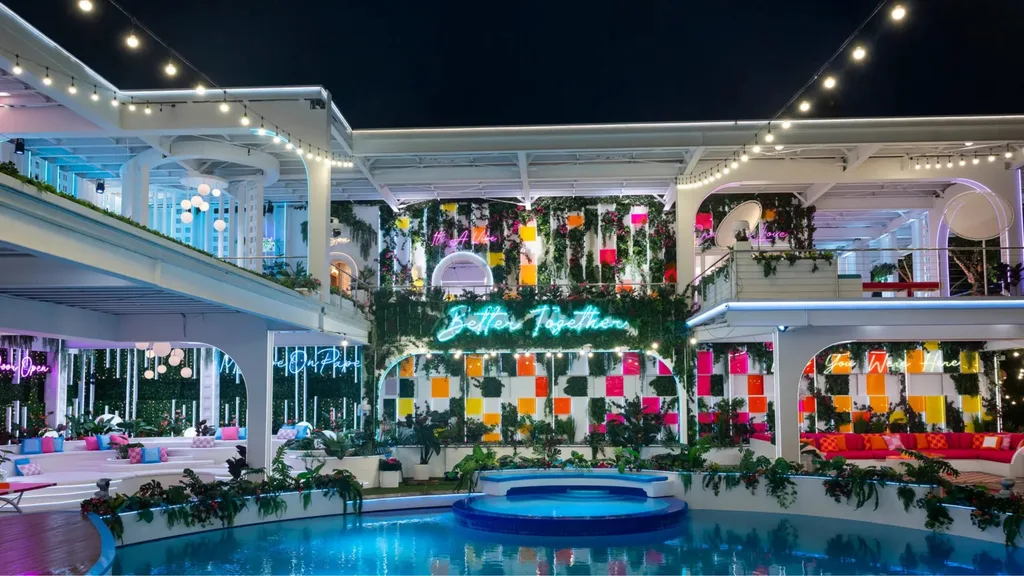
But what makes it so addictive? And how does the villa influence the passionate behaviour we’ve come to expect from contestants?
NEED TO KNOW
- Love Island Australia’s new twist
- The shared bedroom acts as an aphrodisiac
- Clever design tricks ensure contestants can’t hide
- How the villa design subtly influences behaviour
- 9 insider secrets of Love Island filming revealed
Love Island Australia‘s exciting new twist
Love Island Australia has just announced an exciting new twist for their upcoming eight season, which will premiere on the 26th of October, on 9now. The contestants, along with beloved Australian icon and host of the show, Sophie Monk, are taking over the US villa.
In previous seasons, the show has been filmed in Mallorca, Spain, in a significantly smaller villa. For Australian fans of the show, this news is undoubtedly exciting. Not only is the villa for the American franchise much bigger, but it has been designed specifically as an aphrodisiac for contestants. Don’t believe me? Read on for the expert opinions about the psychology of the villa.
How does Love Island work?
Contestants, or islanders as they are called in the show, move into a villa. They live there for 8 weeks (in the UK series) or 6 weeks (in the USA series). They are completely immersed in the show with no outside contact (even producer interactions are kept to a minimum). Islanders only get to leave the villa for dates and challenges and have no access to the outside world. They’re not allowed to read books or watch TV. There is literally nothing to do except talk to your fellow islanders, sunbathe and, ahem, get physical.
In such a claustrophobic environment, every emotion is heightened (including sensations of love and connection). If you have a problem with someone, it’s hard to keep those feelings buried.
That’s not just because of how the show has been created. It’s also thanks to the clever psychology underpinning the design of the Love Island villa.
How is Love Island filmed?
I’ve always been desperate to know just how the villa is designed to capture, and at times create, this drama. According to Reeves Connelly, design content creator and commentator, there are a few different types of tech at work.
“The cameras that are affixed to the walls and ceilings in the villa are pan-tilt-zoom cameras,” Reeves explains. He adds that these capture the everyday happenings in the villa, such as the girls getting ready in the glam room and the boys preparing breakfast in the kitchen. The other main type of recording device is “high-fidelity cameras”. These capture challenges as well as slow-motion shots of a bombshell entering the villa or Love Island USA host Ariana Madix making her way down the ‘Loves Me Not’ walkway.

Unlike other reality TV shows, such as The Bachelor, contestants are almost always monitored.
Even in bed, night-vision cameras capture bedroom activity and hidden microphones in the headboards guarantee that every whisper is documented.
But again, unlike The Bachelor, these cameras are largely operated remotely. As such, contestants don’t experience the jarring sensation of someone holding a camera a few metres away. So while they are constantly surveilled, it’s a subtler surveillance that is quickly normalised in contestants’ minds. It doesn’t cause them to feel self-conscious. Instead, they’re lulled into a sense of comfort.
How the shared bedroom acts as an aphrodisiac
Love Island contestants kiss frequently during the day, but it’s at nighttime that the action really kicks off. All islanders sleep in one giant bedroom, where more than half a dozen beds are positioned close to each other. Couples have to share a bed (and if you want to sleep with someone you’re not coupled up with, you have to sleep elsewhere).
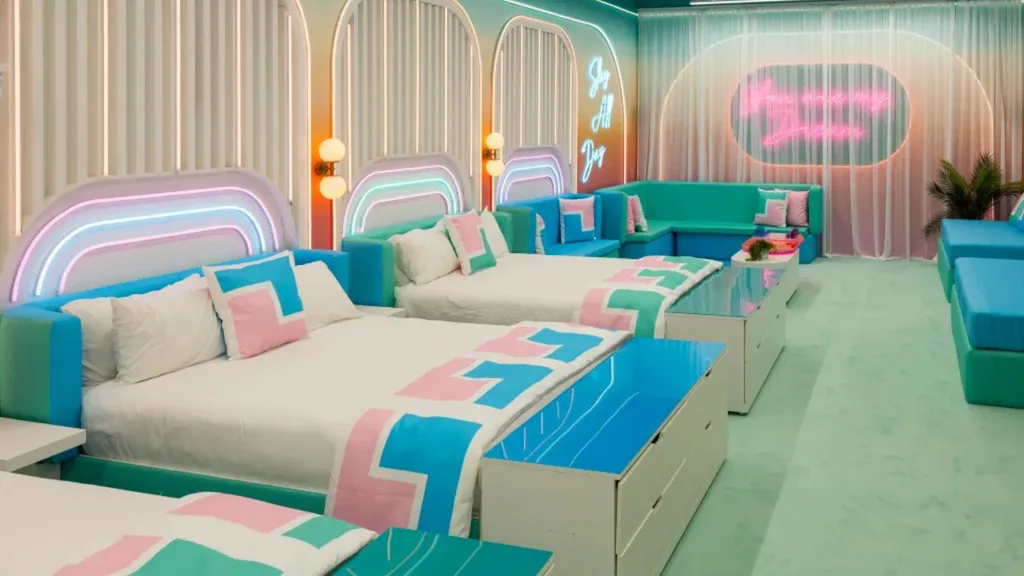
Viewers often take to social media to decry what must be a pretty gross sleeping arrangement (contestants often chat in the morning about the explicit activities they heard other couples partaking in).
But Love Island proves that when more than a dozen people share one bedroom, desire becomes contagious.
Couples therapist and sexologist Isiah McKimmie points to the fact that, for most of history, regular working-class couples did not necessarily have separate bedrooms. Under the cloak of darkness, people have always found a way to enjoy deep sleep and also connect, whether alone or not. “Communal living and sleeping brings people together, creating a sense of connection and community that we really don’t get in the outside world anymore,” she explains.

It’s not just that this scenario has a basis in human history. The shared bedroom forces contestants to sneak around and stifle sounds, which in turn is a very strong aphrodisiac. As Isiah explains, “The shared bedrooms absolutely create a kind of intimacy. Couples are also forced to try to create their privacy together, which can make it feel like a shared secret – something that builds excitement and bonding.”
The clever tricks that ensure contestants can’t hide
“The creators of Love Island really have to perform a balancing act when it comes to decorating the villa,” says Reeves. “On one hand, they want the villa to be inviting and familiar, because the contestants need to feel comfortable and immersed in the space. But on the other hand, they also need to ensure that the space is suitable for filming, which requires the crew to be a bit more mindful in how they design the space.”
This means every aspect of the villa needs to function without intervention from the production crew. For example, the pantry has two doors. The contestants use one, and the crew uses another to keep the pantry stocked without actually entering the villa.
Another important decorating concern involves sightlines. Floor lamps are rarely used because they could block the action of a dramatic scene. The creators also need to ensure there are no places to hide. As Reeves explains, “The beds in the villa are bolted to the floor and are purposely designed so that there is no space under the bed that could potentially be used by the contestants to hide from the cameras.”
How the design of the villa subtly influences behaviour
The exterior of the UK villa is open-plan, with most areas visible from any part of the garden. This encourages contestants to go to the terrace for privacy, which in turn elicits jealousy from love rivals and a sense of danger and excitement for the contestants who are hiding away.
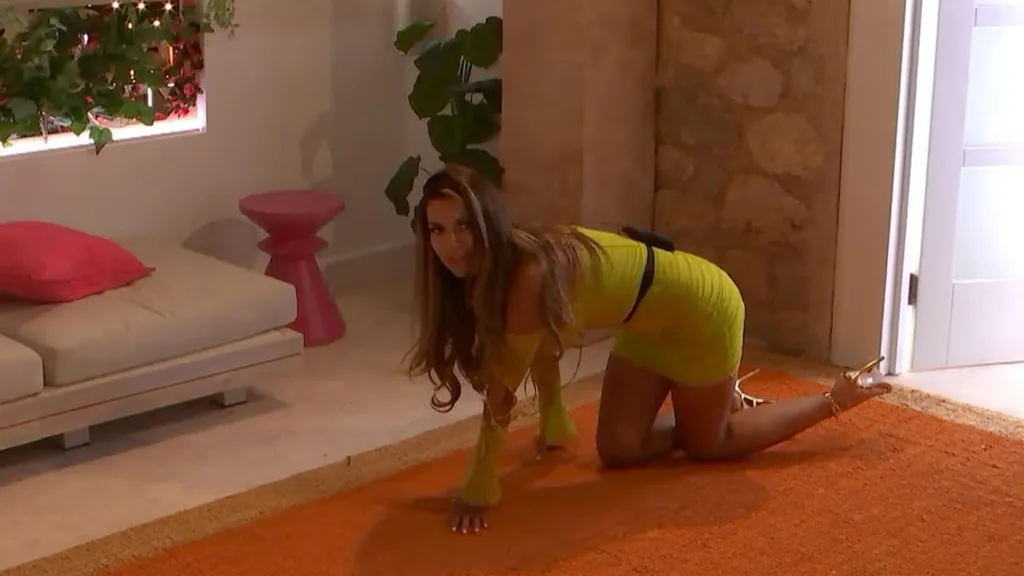
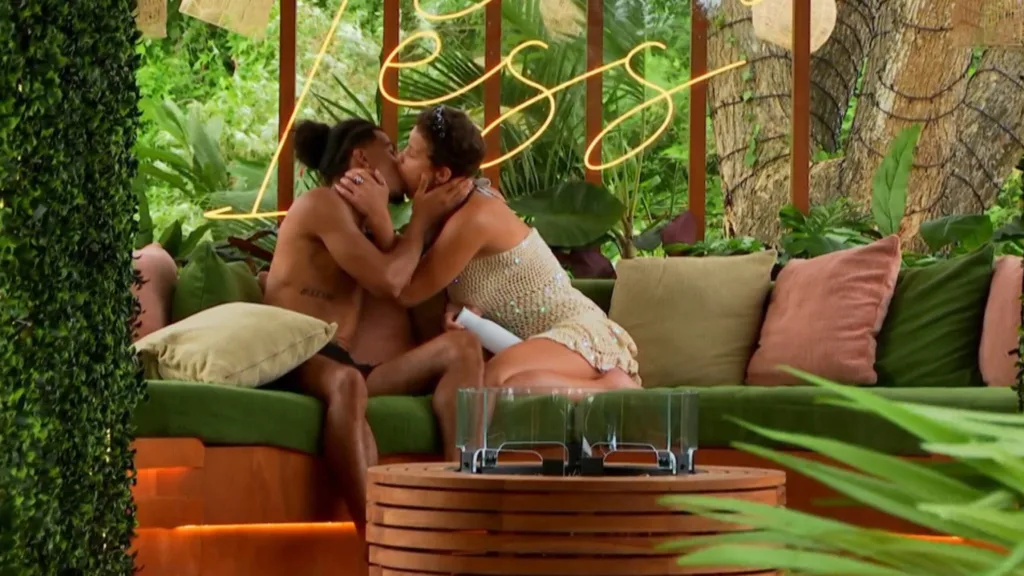
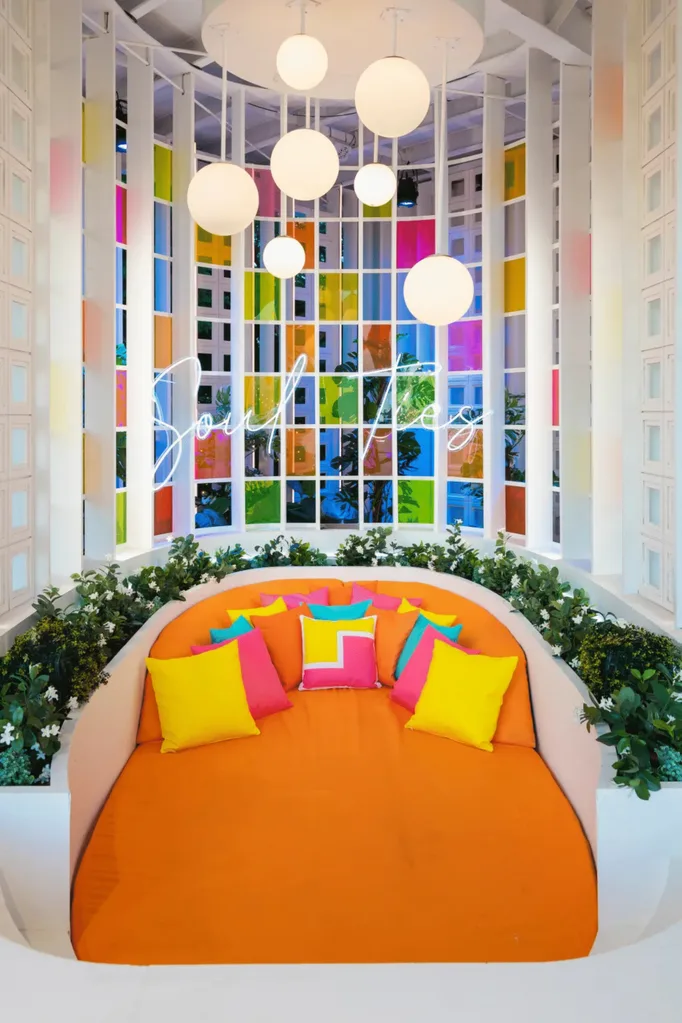
In the Love Island USA villa, this type of behaviour is prompted in the ‘Soul Ties’ area, a secluded daybed. “It’s really the only part of the villa that offers contestants the same level of intimacy that is afforded to them by sleeping in the same bed,” says Reeves.
“If that space didn’t exist, it would be a lot harder for contestants to explore beyond their couplings, which is what drives most of the drama or conflict in the show.” – Reeves Connelly
Another key design theme is curves. Most of the furniture, especially the daybeds, is round. This encourages contestants to gravitate towards the middle, where the bed is longest. It’s a simple way to encourage physical closeness.
The firepit is another clever use of circular design. This is the location for recoupling ceremonies and needs to simultaneously capture and create drama. As Reeves explains, the circular shape of the firepit ensures contestants are facing each other, “which makes it easier for the production to capture multiple reactions in a single shot.”

Additionally, he adds, “the only way to avoid eye contact is to look up or down; two universally recognised body language cues that signal discomfort or avoidance. In a circle, no one is really shielded from the conflict; they’re all equally exposed to it, and that pressure often forces contestants (that weren’t involved in the conflict to begin with) to get involved, to mediate, or to choose a side.”
George Orwell, the panopticon effect and Love Island
“The most prevalent symbol throughout the villa is the circle, which is a huge design motif when it comes to symbolising surveillance,” explains Reeves. “Think of novels like 1984 by George Orwell, where people are constantly monitored by a circular screen.” The Orwellian decor is heightened in Casa Amor (where one gender is sent to live with new contestants of another gender, in a test to see whether they will stray from their couple).
“There was a circular neon sign in the season seven Casa Amor villa that said “all eyes on me”, which is a pretty explicit example when it comes to the use of the circle as a symbol of surveillance,” says Reeves, who adds that this elicits a performative response from the islanders. The subconscious messaging says, “You’re on TV, this isn’t the time to be boring.”
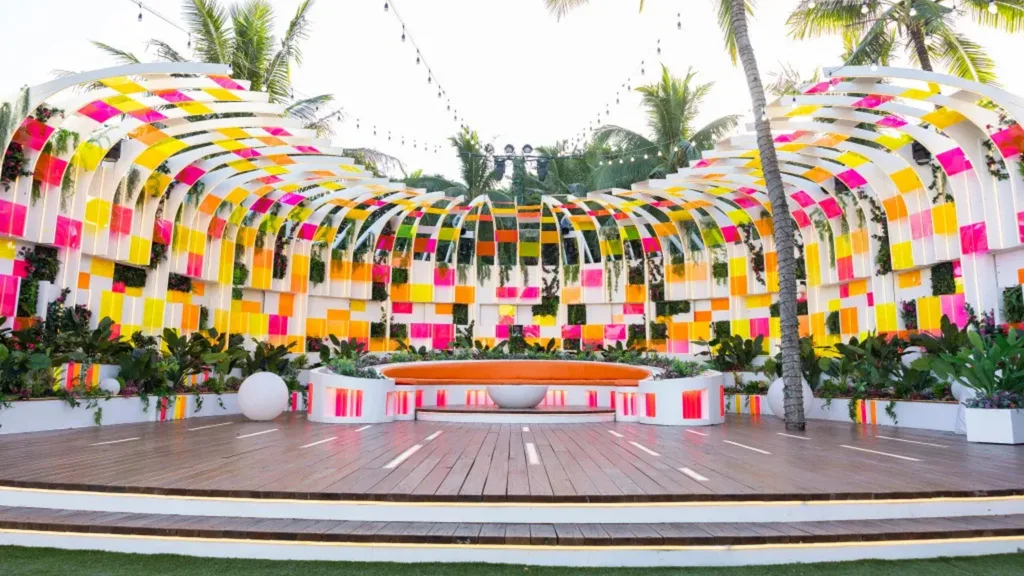
In this way, the villa becomes one giant panopticon. This was a design concept that originated with philosopher Jeremy Bentham. In a panopticon, inmates are imprisoned in cells surrounding a central observation tower. The inmates are always visible, but they can’t see the guards in the tower. Therefore, they never know when they’re being watched yet always feel that they are.
Similarly, Love Island contestants know they are always watched but have no idea whether the footage will make it into an episode. Remember, 23 hours of content is left on the cutting room floor each day.
How can the camera warp our perception of a room?
It can be difficult to design a set that looks good on TV and that people can comfortably live in. This challenge is one that Melissa Heath, associate interior designer on Foxtel’s Selling Houses Australia, knows too well. “Depending on the lens being used, rooms can appear much larger or smaller than they actually are, and wide-angle lenses can exaggerate perspective and distort proportions,” Melissa explains. “While that isn’t always true to life, it can create a greater sense of drama and make the spaces feel more dynamic on screen.”
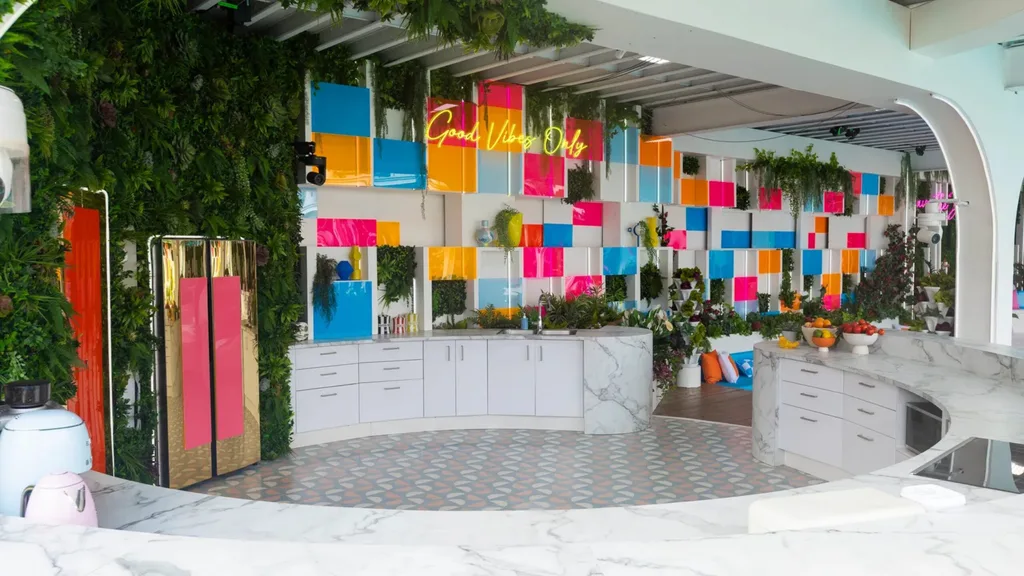
There are a few tricks Melissa relies on to ensure a space looks engaging on screen and comfortable in person. “Bold colours, layered patterns, textured finishes and lush planting create depth and ensure there’s something engaging in the background of every shot,” she says, adding that this is something the designers of the Love Island villas have also clearly considered. “Combined with clever camera angles and lighting, these design choices make the villa feel more vibrant, luxurious and visually exciting.”
The colour psychology behind the highly saturated scheme
A hallmark of every Love Island villa is the bright and bold colour scheme. “The villas are filled with bright, saturated hues, playful prints and vibrant furnishings that immediately create an upbeat, energetic atmosphere,” says Melissa. “Visually, it makes every scene feel warm, fun and optimistic, which is exactly the emotional tone a dating show wants to create.”
But the colour psychology goes beyond a sense of playfulness.
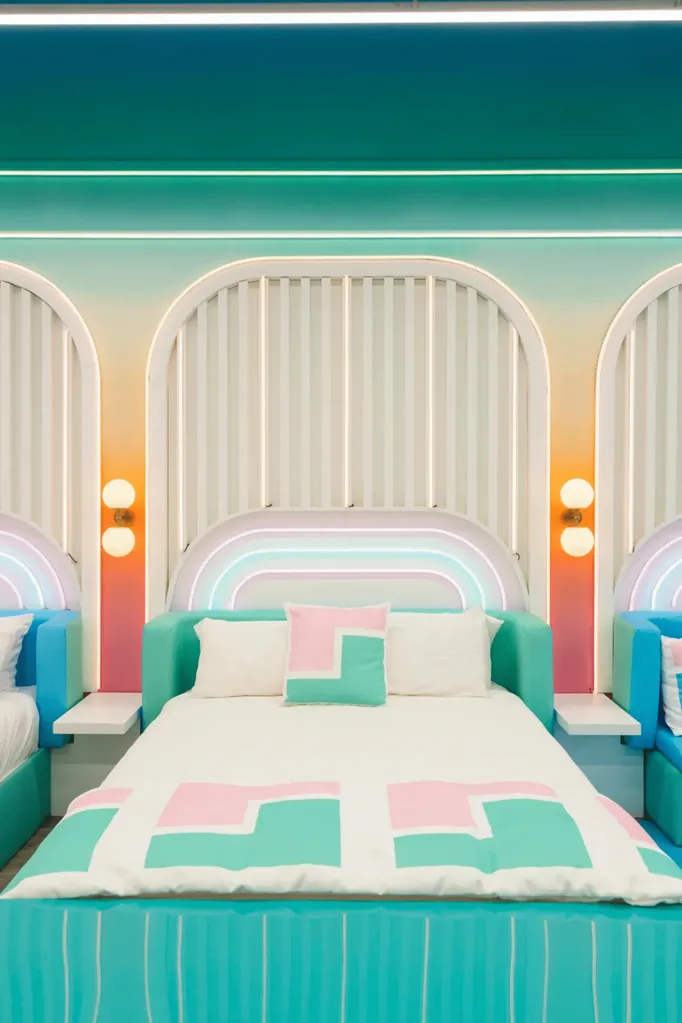
Social media users have described the colour scheme as a “fever dream” that encourages contestants to feel like they’re in an alternate reality. Reeves agrees.
“The almost kitschy and over-the-top scheme has essentially become synonymous with the show. And in a lot of ways, the villa’s look is so visually distinct, that you couldn’t really see yourself occupying that space for a prolonged period of time. I think that lends well to the idea that the contestant might act or move in their relationships, at a quicker pace than they normally would.”
Reeves adds that the villa feels almost like a theme park, or Las Vegas. It has an unreal yet thematic quality that subtly communicates to contestants that this isn’t real life and they don’t need to behave as they normally would.
Can you actually find love on Love Island?
In a villa designed for drama, heightened emotion and passion, is it possible to find true, lasting love? There are a few ex-islanders who are still together, some are even married with children. Yet the vast majority of couples do break up.

The villa creates a hot and heavy kind of love that doesn’t always translate to the outside world. As Isiah says, “The intense and secluded atmosphere of the villa creates bonds that form more quickly than they would in the outside world. That kind of shared, intense experience can help people feel very connected very quickly.”
Yet that feeling can be short-lived. She adds, “The conditions being so different to the real world mean that it’s hard for couples to really work out if they are a good long-term fit for each other.”
What can real couples learn from Love Island?
The Love Island villa might be a hotbed of passion, but it’s not necessarily where healthy relationships form. However, Isiah says there are still plenty of Love Island tricks that couples can steal to strengthen their own connections.
“Having quality time together, reducing stress and distractions, and socialising together all help couples create strong bonds,” she says. “Being playful and having fun together – for example through playing games – is also a great way to enhance a sense of connection.”
Everything you’ve always wanted to know about Love Island
| 8 things you’ve always wanted to know about Love Island | Insider secrets revealed |
|---|---|
| Where is Love Island UK filmed? | The Love Island UK villa is a rural property in Sant Llorenç des Cardassar, near Mallorca in Spain. |
| Where is Love Island USA filmed? | Most versions of the USA franchise are filmed in the Mamanuca Islands of Fiji. |
| Is the Love Island villa available to rent? | You can rent the villa where season one of Love Island USA was filmed (click here). The exact location of the current villa is kept tightly under wraps, but the UK villa, named ‘Sa Vinyassa’, is available to rent when Love Island hasn’t booked it out (click here). |
| Is the bold decor permanent? | No, the UK crew remove the cameras and decor from the villa when they are done. |
| How long are Love Island contestants in the villa? | Love Island contestants are isolated for 10-14 days before filming, and the show lasts an additional eight weeks on top of that. For Love Island USA contestants, lockdown and filming lasts eight weeks. |
| Can Love Island contestants leave the villa? | No. The only exceptions are dates, challenges, and going to other villas such as Casa Amor. Islanders can self-evict, and producers can also remove contestants, including for safety reasons and due to rule breaking. |
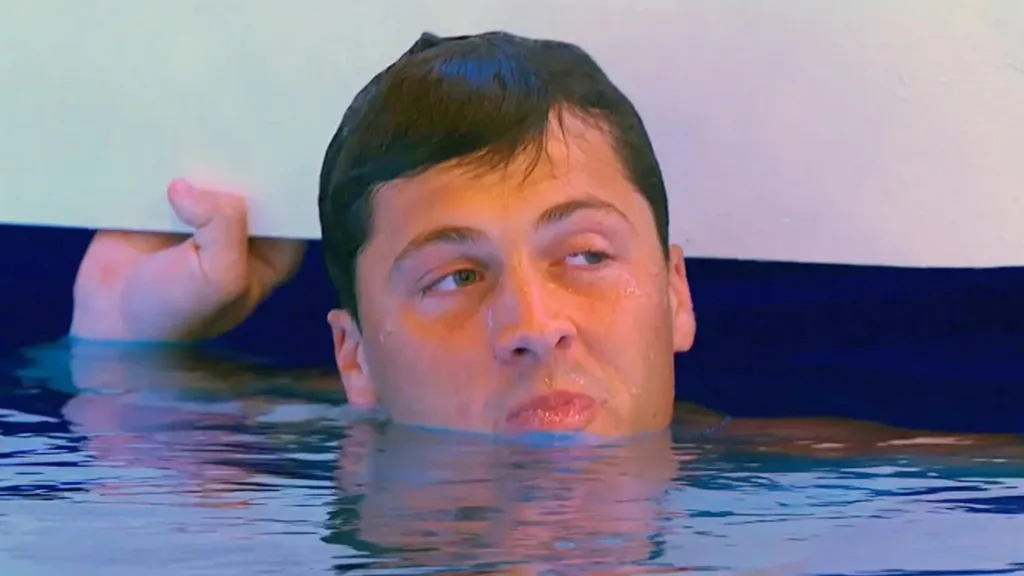
| Why don’t the islanders use the pool? | The microphones that contestants wear do not work in the pool. As such, pool time needs to be limited for the sake of filming. |
| Do the islanders ever get breaks from filming? | All islanders get daily lunch breaks and one day off from filming per week. The islanders are separated by gender so that no romantic connections develop off-camera. |

