If you thought crazy paving was simply another passing landscaping trend, think again. The irregular stone style has been making its way back into Australian gardens for several years – and in 2026, it’s evolving rather than disappearing.
The latest take on crazy paving is a little less, well, crazy. Instead of highly contrasting stones and busy patterns, landscape designers are leaning towards warm, earthy stone, subtle tonal variation and more considered layouts. The result still has the organic character that makes crazy paving so appealing, but feels calmer and more contemporary.
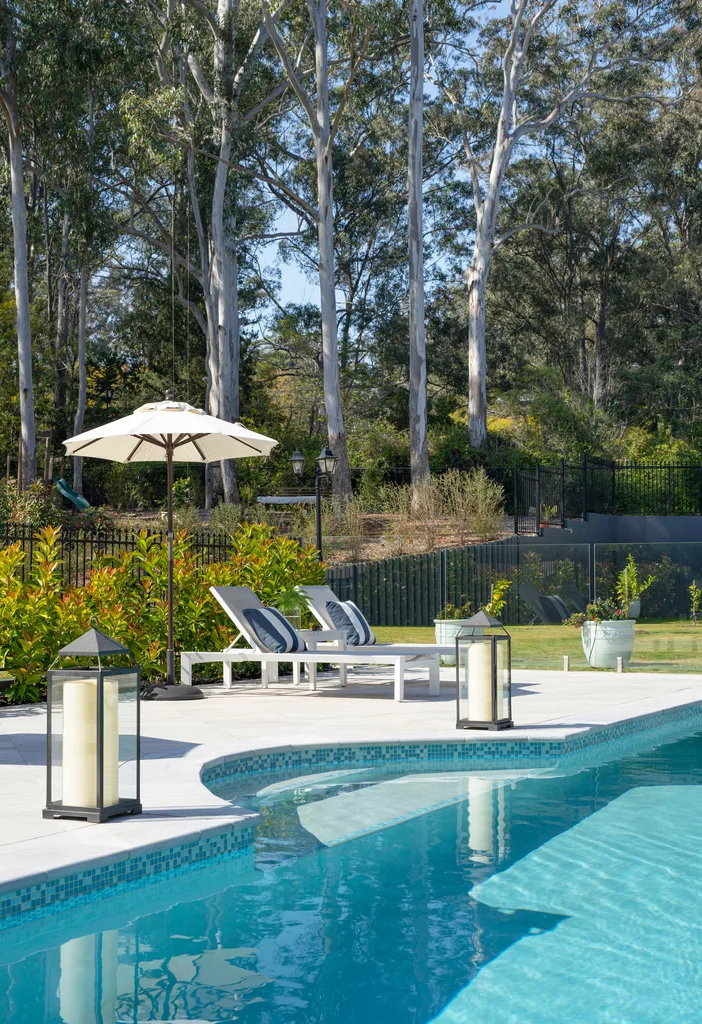
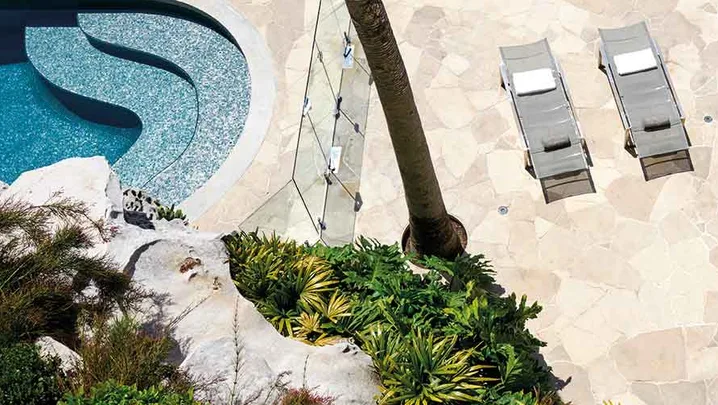
The basalt flagstone crazy pavers are from Brisbane’s The Pool Tile Company.
From Mediterranean-inspired courtyards and garden paths to pool surrounds and statement entrances, crazy paving remains one of the easiest ways to introduce texture and natural character outdoors. Better yet, it can work with everything from a lovingly restored mid-century home to a sleek new build.
So, why has crazy paving proved to have such staying power – and how do you make it look current rather than dated? Here’s what to know
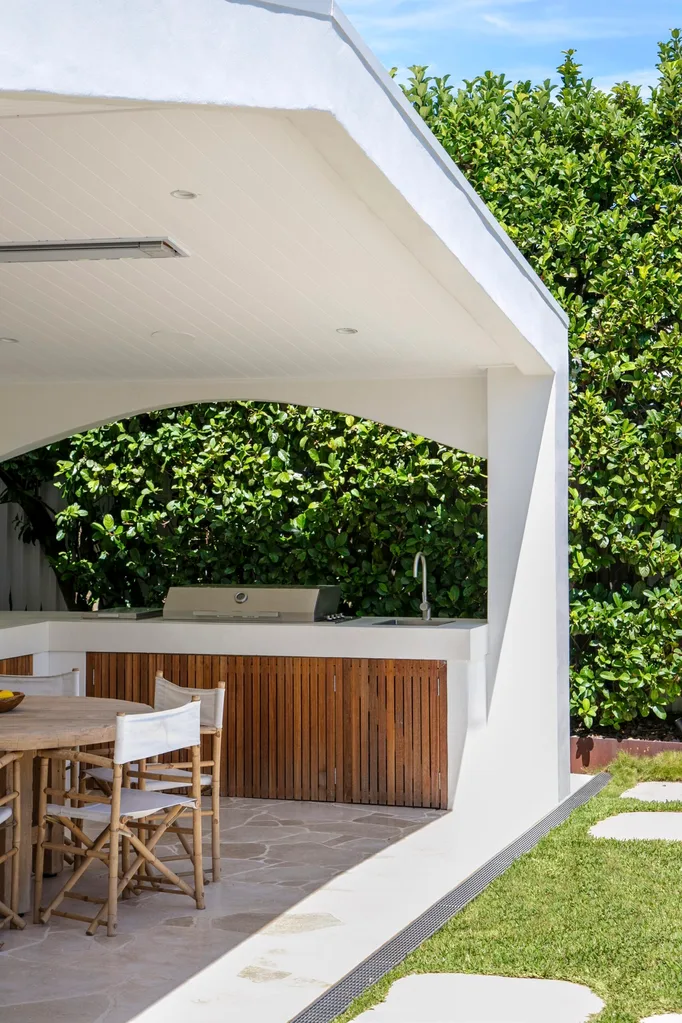
What does crazy paving look like in 2026?
While the irregular shapes haven’t changed, the way designers are using crazy paving has. The latest look is noticeably more refined, with a focus on natural stone, tonal colour palettes and layouts that feel organic without becoming visually overwhelming. Warm neutrals are particularly strong outdoors in 2026, with limestone, travertine, sand and greige tones replacing some of the cooler greys we’ve seen in previous years. Crazy paving is following suit, with designers increasingly sticking to one stone type and allowing its natural variations in colour and texture to create interest.
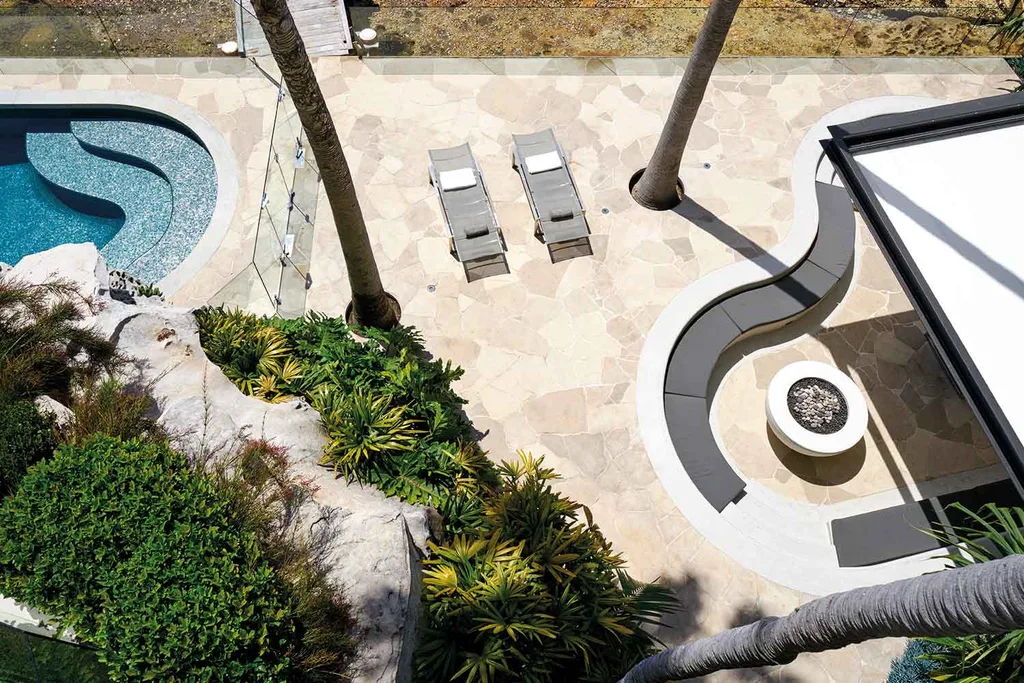
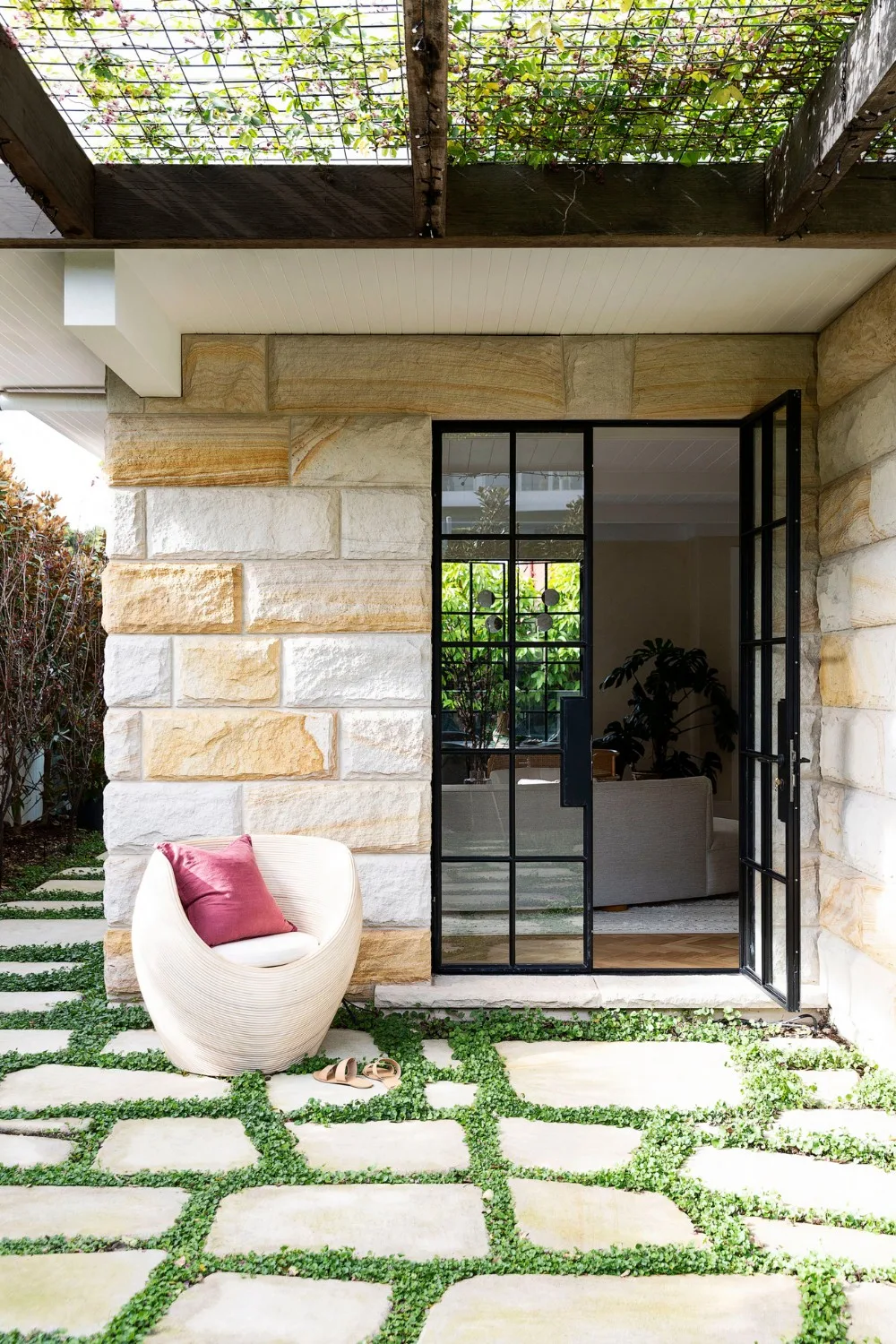
Joint width and colour can make a surprisingly big difference, too. More consistent spacing creates a calmer finish, while grout that closely complements the stone allows individual pieces to visually blend into one beautiful, textured surface.
The other shift? You don’t necessarily need to crazy pave everything. Using it as a feature around an entrance, courtyard, garden path or pool can give the stone greater impact while allowing simpler materials to provide some visual breathing room.
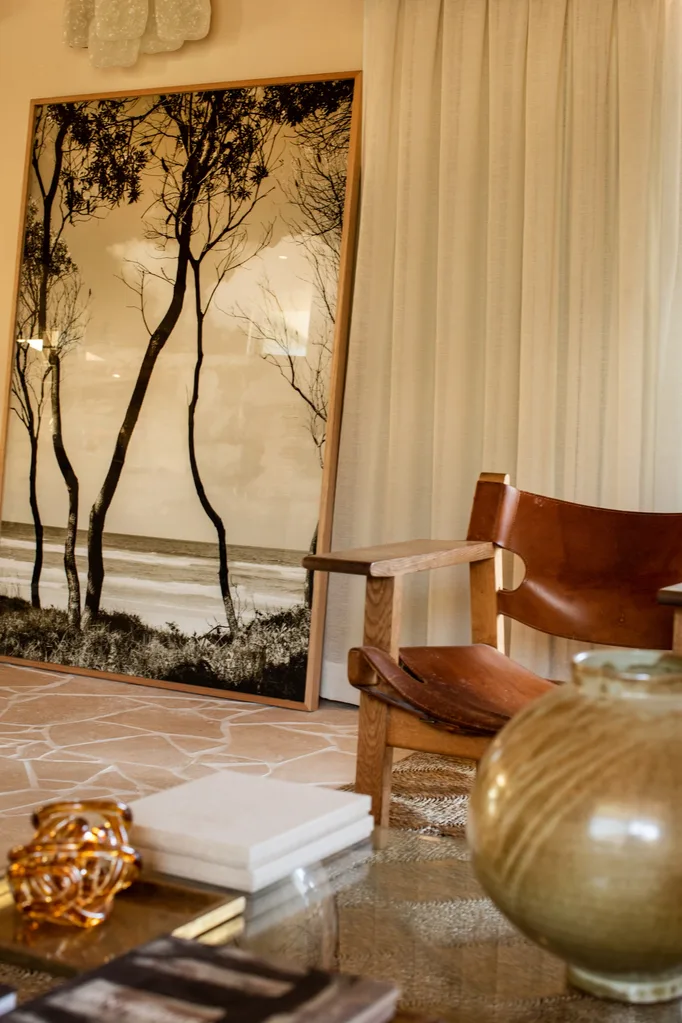
What makes crazy paving so popular?
“The natural texture as well as the colour and size variations make crazy paving an extremely versatile flooring option that is suitable for almost any application,” says Eco Outdoor marketing manager Rebecca Fox. “The format allows for movement in a flooring aesthetic that is also a perfect means to break open a space visually. It can be used throughout the external and internal spaces of a home.” You can even find packs of affordable crazy paving tiles from big retailers like Target to effect make the job even simpler.

How does it work?
Also called flag stone, the concept of crazy pave was born out of using up otherwise wasted off-cuts or broken pieces during the installation of larger cut stone and outdoor pavers but it’s a trend that looks here to stay. From a simple tidy up in a small courtyard to a full-scale landscaping brief, this method of laying stone is super effective and makes an affordable alternative for formal paving.
“I love crazy paving,” says award-winning landscape and interior designer Adam Robinson. “To me, it provides a more organic approach to paving. I find it works especially well in areas where we don’t have a lot of room for planting and softness, but you still want an organic garden feel.”
How much does crazy paving cost?
If you’re using a professional landscaper, your crazy pavers would be sourced the same way as standard pavers but it’s generally a more affordable choice. If you’re looking to DIY it can be a more forgiving way to lay pavers yourself – particularly when your landscaping budget is already stretched. And speaking of stretching, try planting ground cover in between your paving as part of the design to make your stone go further.
Ground cover plants that suit crazy paving
- mondo grass
- dichondra
- babies tears
- blue star creeper
- thyme
- sedum
What sort of architecture does crazy paving suit?
With the rise in popularity of mid-century and 1970s home renovations, homeowners are embracing existing crazy pave patterns and restoring them with love, resulting in a combination of retro charm and good financial sense. “If you’ve got a mid-century home, you could absolutely use crazy paving to be sympathetic to the period of architecture, but it also works beautifully in a contemporary space,” says Adam.
The final result doesn’t have to reflect the 1970s either – outdoor pavers in this style, “Can create a seamless, organic flooring surface that wonderfully complements contemporary, architecture,” says Rebecca.
Where can you use it?
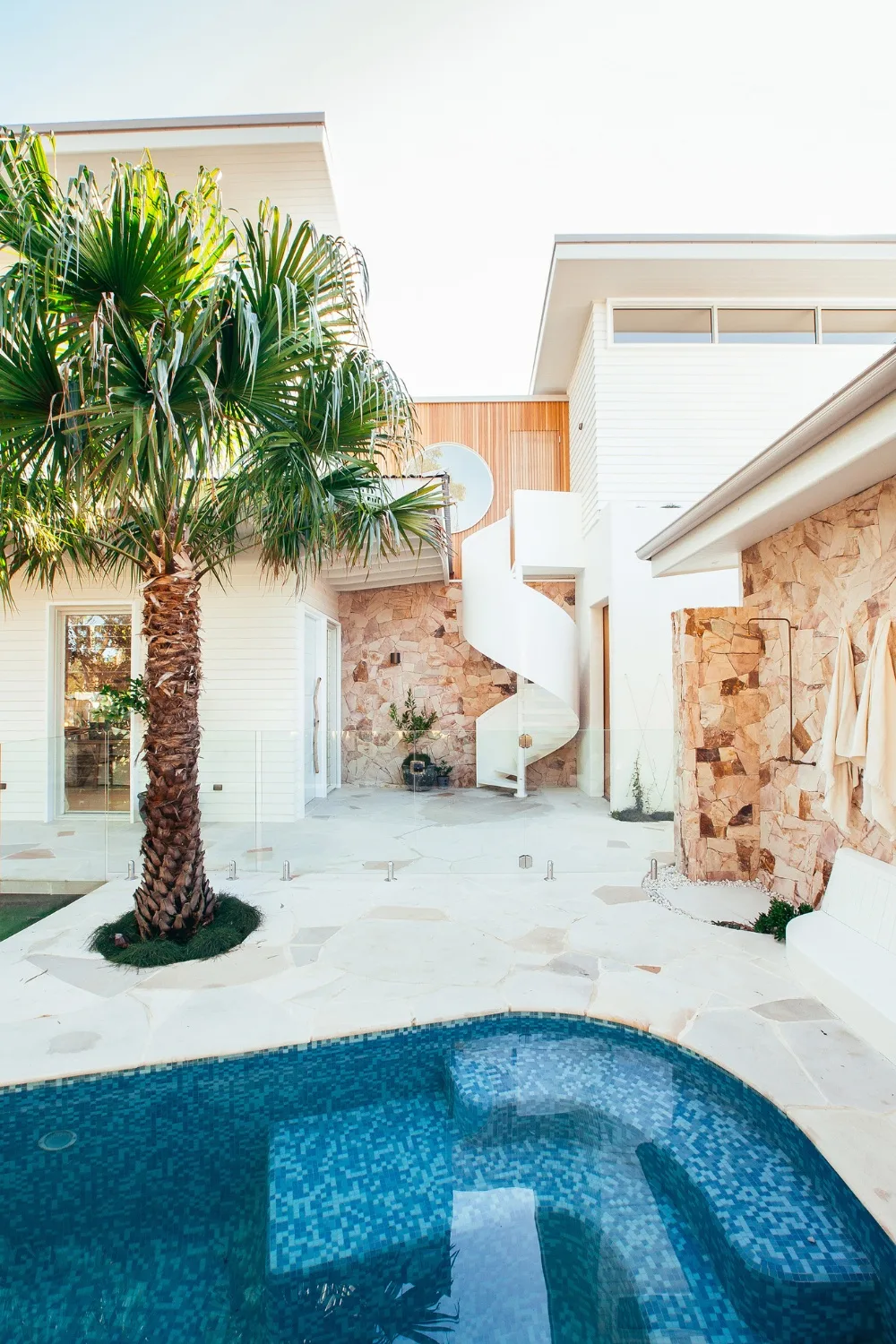
Because it’s laid in a random pattern, crazy pavers lend themselves to irregular shapes and pathways just as easily as more formal styles of outdoor paving. It can be used anywhere you’d usually pave an area, including pool surrounds, driveways, courtyards, garden paths and fireplaces. “Crazy paving is an ideal choice to bring texture and interest to a project,” says Rebecca. “We’re seeing it used to create a statement around a swimming pool or at the entrance to a home.”

Related stories
Native ad body.
Native ad body.
Native ad body.