


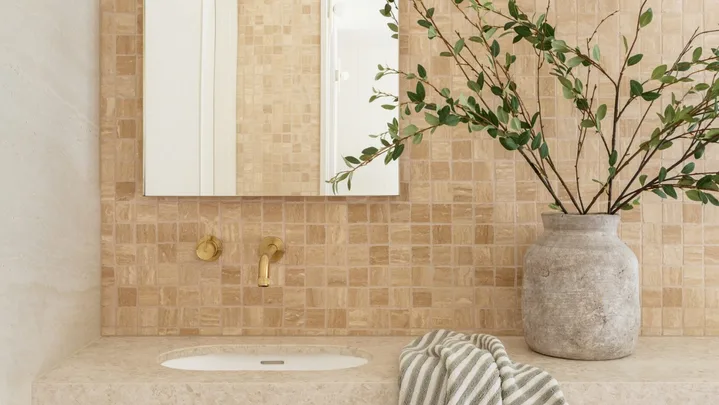
With limitless inspiration at myriad price points, it’s never been easier to make your bathroom look as beautiful as it is functional. Whether you’re upgrading to sell or enjoy, for family functionality or deluxe indulgence, the first step to translating the look you love into a practical solution is to firm up your tiling palette – the foundation of the room’s scheme.
In this article
- Planning tile choices to your budget
- Placing your tiles for best service and visual effect
- Choosing bathroom tile design
- Tile trends for 2026
- How to choose tiles for enduring style
There is plenty of advice out there on bathroom design, and there’s no doubt that this small space requires big decisions. There are those who want their bathroom design to go all out with bright colour and va-va-voom. Others prefer a simple look, think spa-like tranquillity. Read on for the need-to-know of tile shopping, with plenty of bathroom tile design ideas.
Planning your bathroom tiles within budget
Budgeting is key. Factor in the supply cost of tiles and the labour. “Anything above a standard ‘bond’ lay of 300mm x 600mm tiles adds to the laying costs,” explains Vanessa Cook of Smarter Bathrooms. Small tiles in sheets can be time-consuming to lay, while large formats may need two tilers on site due to their weight. Extra-large tiles are on trend, but are especially tricky as they need flat walls and floors – and if you are revamping an old house, you may need to resurface your room, adding to the cost.
According to ABI Interiors, the biggest mistake in buying bathroom tiles is underestimating how much tile to order from a single batch. “We recommend 10% extra to cover cuts, breakages and future repairs, as a later batch can vary in tone,” says ABI Interiors. Failing to prepare and install tiles with the long term in mind can also work against you. “With natural stone like travertine, skipping the sealer is another costly oversight,” says ABI Interiors. “We recommend sealing all natural stone tiles with a high-quality penetrating sealer, such as Aqua Mix Sealer’s Choice Gold, and resealing every three years in high-use areas and every five years in low-use areas. A little care at the outset costs far less than replacing tiles down the track.”
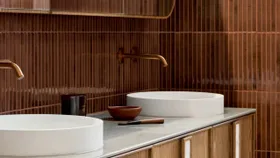
“We recommend sealing all natural stone tiles with a high-quality penetrating sealer… a little care at the outset costs far less than replacing tiles down the track.”
ABI Interiors
Budget tiles can look amazing arranged in an unusual way, but be warned: “Laying a herringbone or a chevron pattern is complex, as the pattern must line up,” says Vanessa, who advises checking with a tiler if a pattern lay is feasible with your chosen tile before ordering. Balancing higher labour cost areas with a simple tile and lay in non-feature spaces can help. How you lay bathroom tiles has a big impact on the overall look, so do your research and decide what look you’re going for.
Feature tiles help direct attention towards the prettier parts of the room, so put them to work behind a hero item – not the loo! – and keep the remaining walls simple.
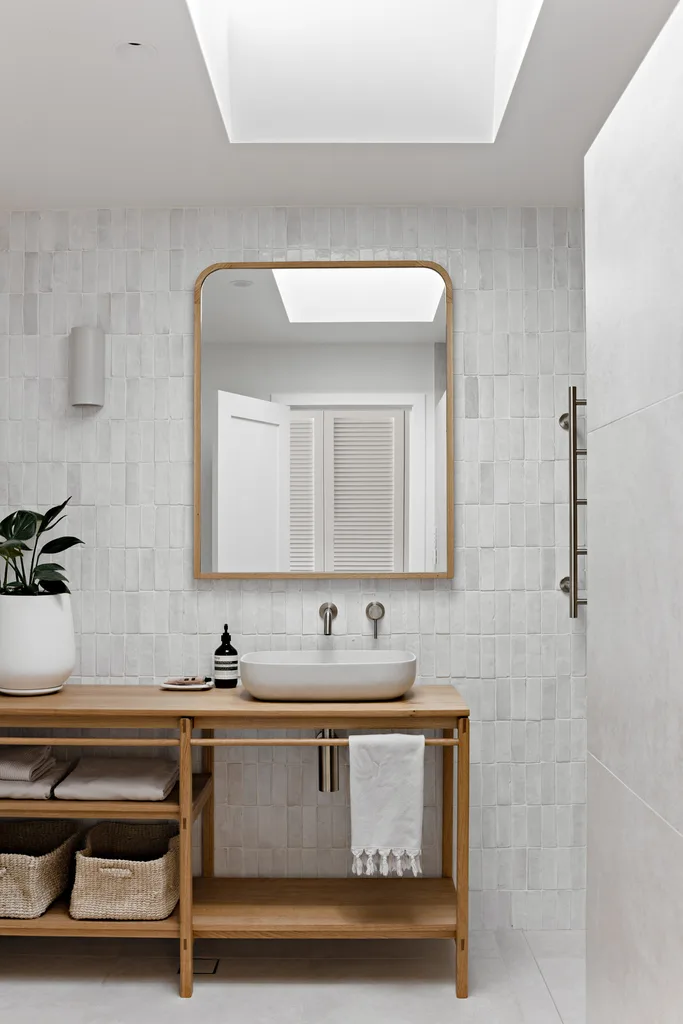
Where to place tiles in your bathroom
A uniform scheme of the same tile on floor and walls will help visually enlarge a small space, with grout lines matched to flow flawlessly between the surfaces. Conversely, a contrasting floor tile helps define the room. “Subtle variation within a floor tile will be more forgiving than a solid colour, which can appear flat and a little dated,” suggests interior designer Naomi Nimmo of Nimmo Nielsen Collective. “Where budget permits, feature tiles work best on a decent scale such as an entire wall, not just a small niche,” adds Naomi. Running an attractive floor tile up one wall is another option, and this creates the illusion of a longer room, while contrasting grout can help make a feature of a plain tile. However, make sure the grout is sealed to help prevent it discolouring in patches.
“Gone are the days of selecting dark grout on the floor to avoid unseemly staining – you can now use lighter grout colours, which will not change over time.”
Vanessa Cook
Nailing your bathroom tile design
With so many tiles available in all shapes, sizes, styles and textures, pinning down a favourite can be tricky. The look of the rest of your home can be a useful guide – brick-laid subways in misty grey, blue and white have a Hamptons vibe, for example – but don’t feel bookmarked. Blurring the lines between styles helps you stay faithful to your own taste. Creating a mood board of images gathered from magazines and websites will assist with narrowing down your preferences, and handy helpers, such as Home Beautiful’s New Build Checklist, can provide inspiration and help tailor mood boards for your entire home.
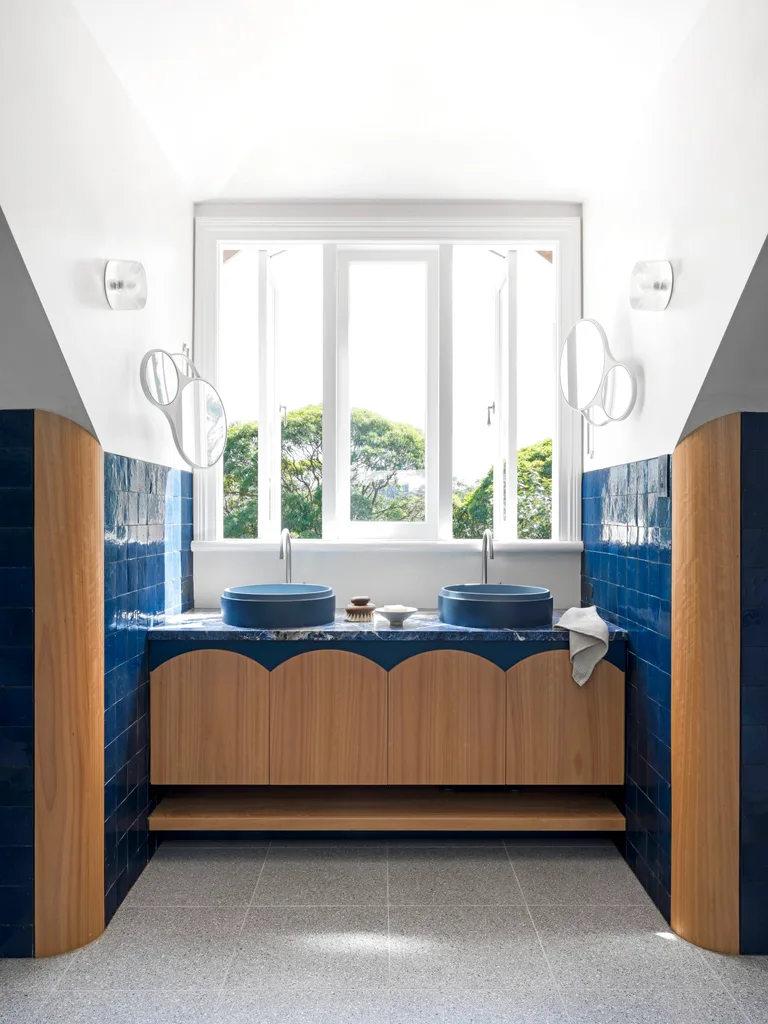
Tile trends for 2026
While we’re always on the lookout for what’s new on the tile front, it’s a fixed finish, so longevity is important. Steer clear of short-lived trends and aim for a simple design. “This year is about warmth and touch,” says the team at ABI Interiors. “Homeowners are moving away from cool, flat surfaces towards natural stone looks, especially travertine, along with honed and matte finishes and tiles with real dimension.”
Natural stone & mosaic tiles
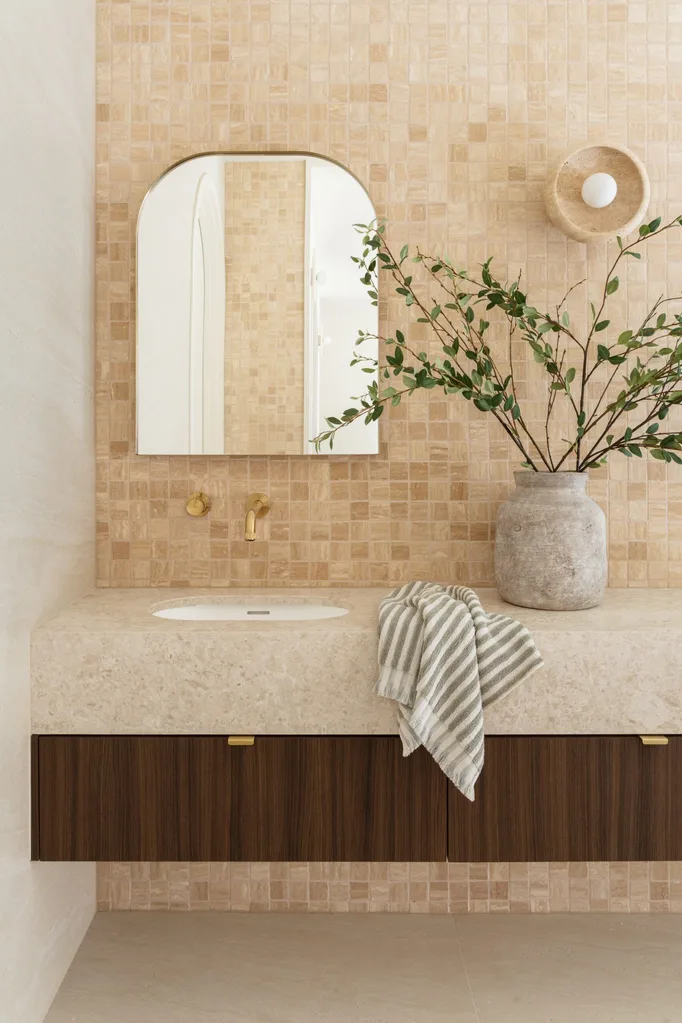
Natural stone is back in a big way, along with small format tiles such as finger mosaics and fluted profiles. Mosaics have evolved to include a larger format lending a luxe look on splashbacks and shower surrounds. Products like ABI Interiors’ boutique tile collection celebrates handmade artistry going back to 10th-century Moroccan methods – think Zellige and terracotta from natural clay, plus mosaic in glass, stone and travertine for a bespoke look, with each piece uniquely imperfect, one of a kind. “They come in three profiles: Rounded Finger for a soft, sculptural texture; Inverted Finger for deeper play of light and shadow; and Square for a more classic, grid-like rhythm. All three are made from natural beige travertine that pairs well with brushed brass and warm timbers,” says ABI Interiors.
If you’re planning for the long haul, use feature tiles sparingly, as highlights rather than in swathes. For maximum impact, ABI Interiors suggests a feature wall or niche, paired with a simpler large-format floor tile. “Sheet-mounted mosaics can follow curves, niches and rounded vanity walls that a rigid large tile simply can’t.”
“Small formats are back in a big way. Finger mosaics, fluted profiles and handmade-look tiles add rhythm and shadow that a plain wall can’t.”
ABI Interiors
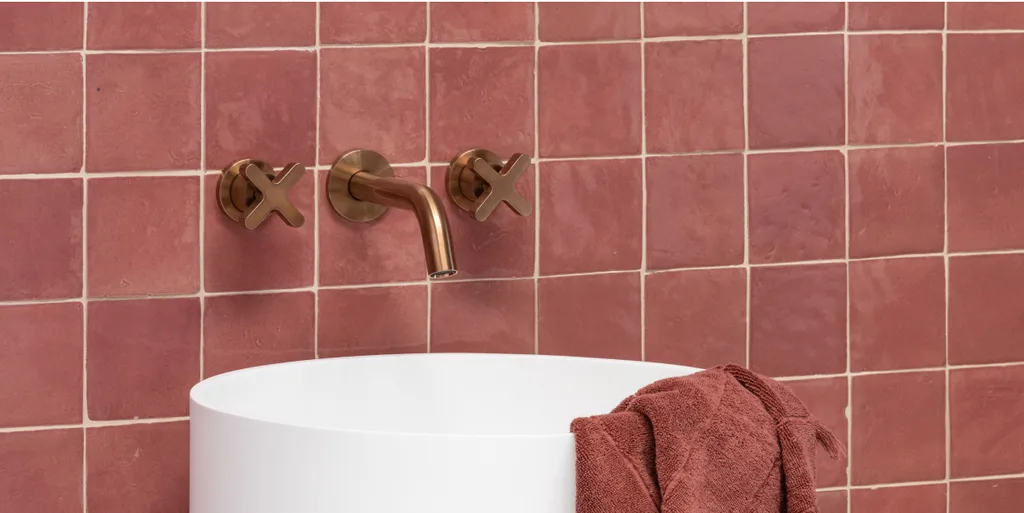
Precision tile manufacturing
Despite being a centuries-old craft, tile manufacturing advancements continually change what’s possible for bathrooms in the 21st century – and it’s all in the details. “Precision has changed everything,” says ABI Interiors. “Rectified edges allow for remarkably fine grout lines, so large-format porcelain can envelop a small room, creating a seamless effect that makes the space feel larger.”
Porcelain bathroom tiles
Porcelain stone-look tiles have also come into their own. “Advances in digital printing now capture the veining, tonal depth and subtle variation of marble, travertine and terrazzo with striking realism,” says ABI Interiors. And the benefits of porcelain don’t stop there. “Because porcelain is dense and non-porous, it needs no sealing and resists staining and moisture, so you get the beauty of natural stone without the upkeep,” says ABI Interiors.
Coloured tile grout
Grout has come a long way. “Epoxy and urethane grouts are highly stain-resistant and water-resistant and don’t need ongoing sealing, making them ideal for showers,” says ABI Interiors. “Ready-mixed grouts give consistent colour without the batch-to-batch variation of on-site mixing, and many now include mould-inhibiting additives.”
The colour palette has broadened too, so grout can either recede into the tile or become a deliberate design detail. “With mosaics, we often recommend a tonal grout that matches the tile, so the eye is drawn to the surface texture rather than the grid,” says ABI Interiors.
How to choose tiles for enduring style
“We’re seeing more people choose durability over disposability,” says ABI Interiors. “The most sustainable bathroom is one you don’t have to rip out in eight years. Natural materials like travertine age gracefully and suit a timeless look rather than a fleeting trend.”
“Homeowners are asking more about where a tile is made, what’s in it, and how long it will last, and they’re choosing tiles with recycled content or longer lifespans.”
ABI Interiors
On the way out are the all-white, high-gloss bathroom and standard flat subway tile in a straight stack. “They’ve been replaced by earthier palettes and more considered layouts, like vertical stacks, herringbone and mixed formats,” says ABI Interiors. If you’re sticking to classic white, there are lots of subtle finishes and inviting shapes that give the monochrome look interest. “Marble is a timeless stone which will never date and it’s being used more broadly,” says Naomi Nimmo, referring to emerging colourways such as dusty pink and spearmint.

Related stories
Native ad body.
Native ad body.


Native ad body.


