


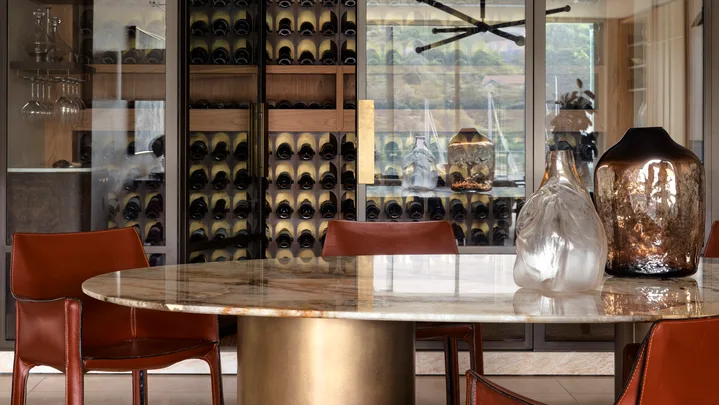
 Photography: Anson Smart / Styling: Atelier Lab
Dedicating an entire room in your home’s floor plan to wine storage can feel luxurious, maybe even frivolous. Many homeowners believe they simply don’t have the space, but there’s a strong case to be made in defence of cellars and wine rooms. After all, what other type of room doesn’t just make use of, but actually benefits from, being resigned to a small, dark corner?
For some, cellars are a lofty dream that feels out of reach while for others, they offer a way to maximise an awkward, unused space. When designed well, a custom wine cellar doesn’t only elevate your home’s aesthetic but also ensures your wine collection is perfectly preserved. You could create a large cocktail bar that’s used for entertaining as well as beverage storage. Or you could keep it simple and size-conscious with basic shelving.
Either way, we have the expert advice to help you create the ultimate wine room. All that’s left to do? Toast to your fabulous new space.
What temperature is best for storing wine?
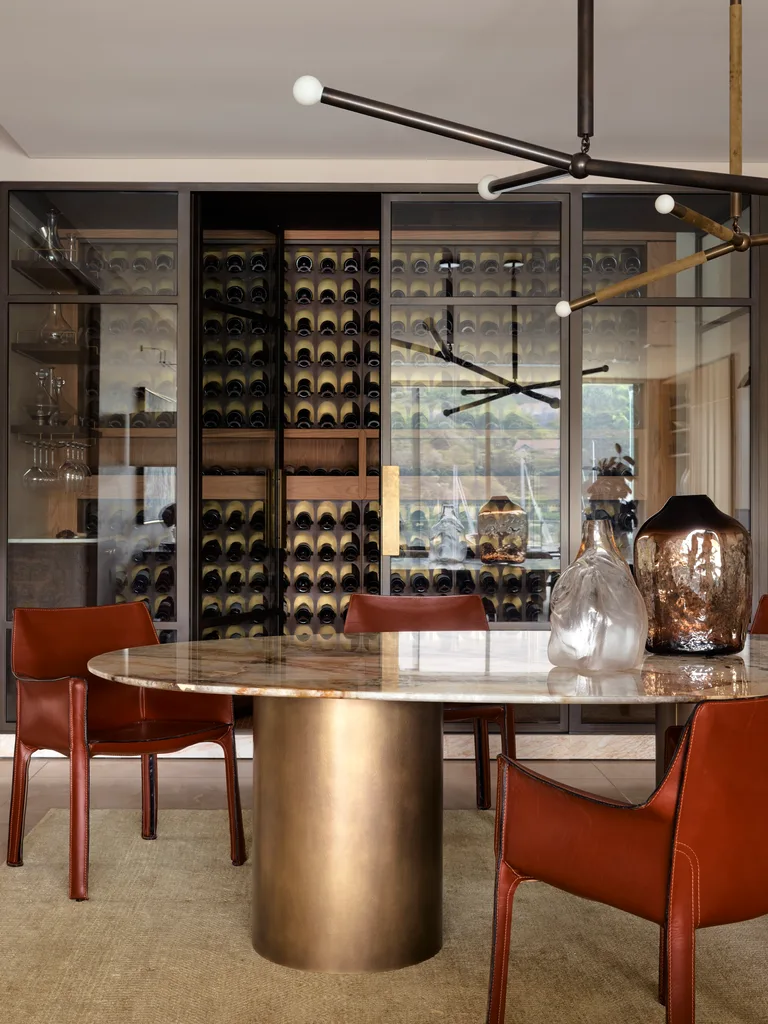
Traditional cellars rely on the natural insulation provided by underground spaces to create a cool, consistent temperature. Designing a contemporary, above-ground cellar means creating a climate-controlled environment yourself. David Flack, founder of Flack Studio, works with cellar experts and designs “with humidified control systems… to ensure the temperature and air quality is contained”.
Peter Dillon, chief winemaker at Handpicked Wines, says 13 degrees Celsius is the ideal temperature to store wine. “The wines will evolve in a gradual and consistent manner,” he says, adding that this is handy when cellaring for a long period of time, but is also the perfect temperature to serve chardonnay. And for sparkling, rosé, red and white wine, always shield your precious drops from direct sunlight.
What materials should I avoid using in a wine cellar?
While a little luxury goes a long way, try to avoid materials that a red wine stain (or two) will live on forever more. Basically, that means use natural stone with caution.
Do cellar shelves need to be installed on an angle?
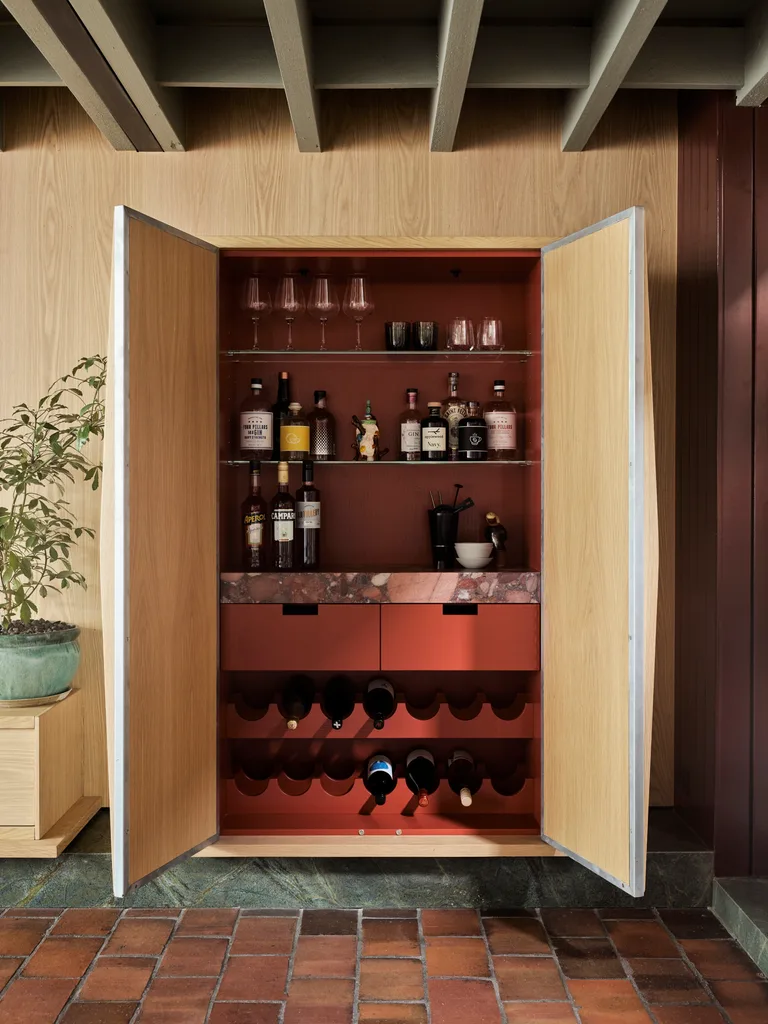
Shelving is one of the most crucial aspects of cellar design. “Traditionally, you would lie the bottle down to keep the cork wet and ensure it did not dry out and leak,” explains Peter. “With the increasing use of screw caps, angle is less of a concern.” While you can store screw-cap bottles standing up, it’s not the most efficient use of space – horizontal storage is.
The question then becomes whether or not to install sloping racks. “Straight shelving is preferred as you can gain more storage,” says David. However, angled shelving lets you effortlessly read labels at a glance. For increased visibility and an ambient glow, conceal LED strip lighting beneath your shelves or joinery.
The secret to creating a stylish at-home bar
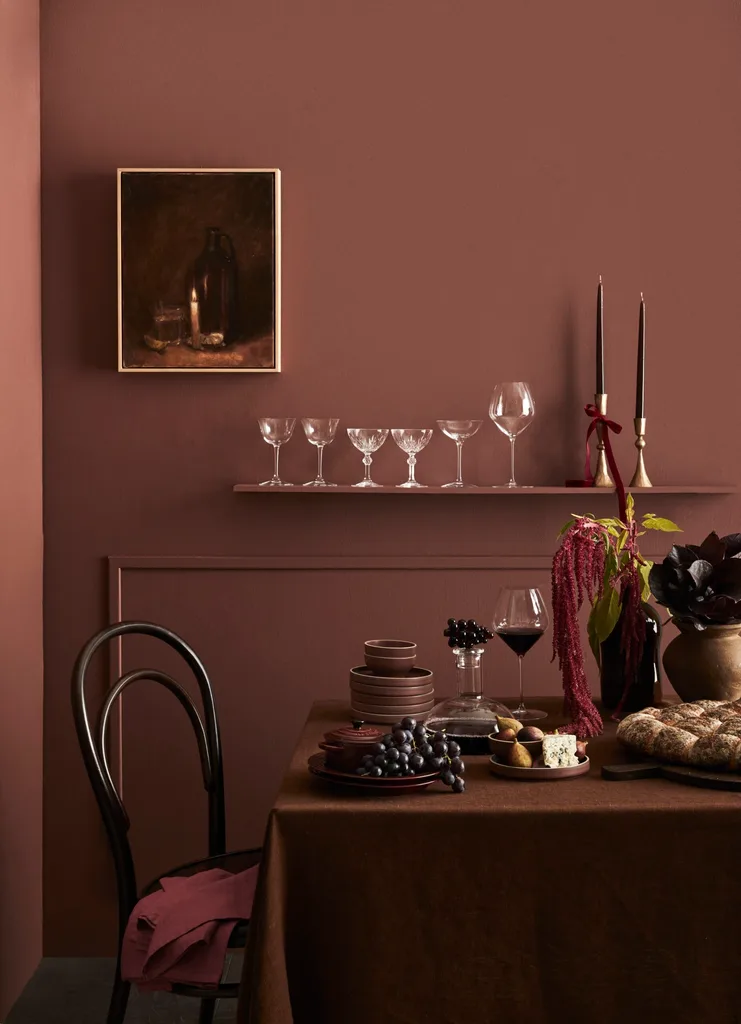
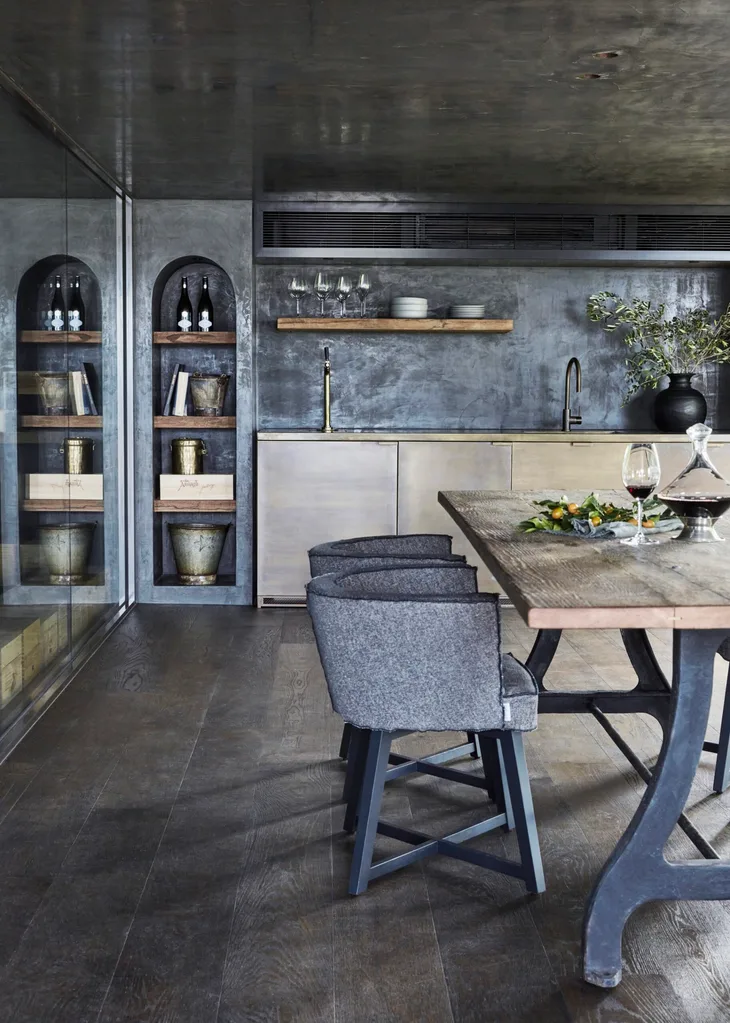
If space allows, why not elevate your wine room into a multi-functional space? With a few key pieces of furniture you can create a tasting room or a cocktail bar. “We love to design a high table with stools or, if there is more room, a small table with chairs,” says David. If you want to make this space your primary entertaining zone, consider adding luxe benchtops, joinery, a sink and even a dishwasher.
The materials used in your kitchen will be suitable in this area, too. David opts for “earthy, natural materials to evoke the robust nature of wine making”. Think well-sealed marble or travertine, warm timbers and metal, especially bronze, blackened steel or aged brass. After all, wine cellars present an opportunity to create a cocooning, moody feel with dark and rich tones.
How to avoid condensation in your cellar
Fail to prepare and you prepare to fail, as the saying goes, which is especially true when it comes to cellar design. If you’re creating a climate-controlled, walk-in storage space with glass walls, use thermal glass to avoid condensation.
What are the most popular types of wine fridges?
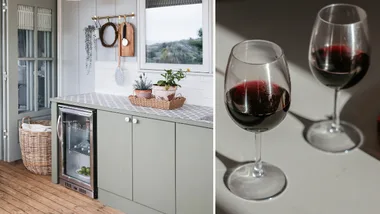
Whether you’re designing a dedicated cocktail lounge with an integrated wine fridge or adding one as the first step in your wine storage journey, there’s a model for every home. “Underbench wine cabinets are the most common,” shares Daniel Lam, product expert at Winnings, who says full-height units and integrated cabinets are also popular.
The benefits? Regulated humidity levels, stable temperatures, UV protection and good airflow for your treasured tipples. For varied wine collections, try dual-, triple- or multi-zone units. “They feature separate temperature zones, so you can store red, white and sparkling wines at their ideal serving or ageing temperatures,” explains Daniel.
6 luxurious wine cellar ideas to use in your home
Whether you’re dreaming of a secret underground cellar or hoping to fit one into an existing space, you’re guaranteed to find inspiration in these impressive wine cellars.
A wine cellar with a compact prep zone
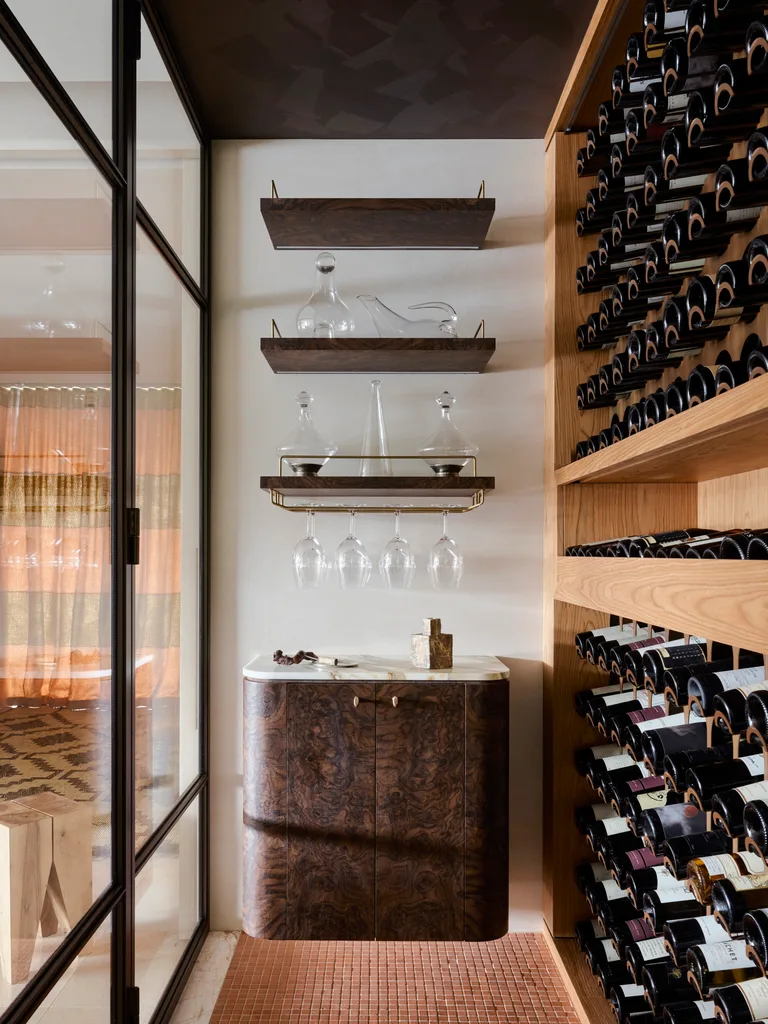
Even cellars used for storage can include prep zones. This climate-controlled space by Arent & Pyke has compact, wall-hung joinery with open shelving above, providing the perfect place to uncork and aerate wine, while the shelves stylishly display sculptural decanters and wine glasses. Practical and yet oh-so chic.
A wine cellar tucked under the stairs

(Credit: Photographer: Alana Landsberry)
In this Federation-style home on Sydney’s Lower North Shore, a wine cellar cleverly makes use of the empty space beneath the stairs. Framed by a timber border, the space is beautifully wallpapered with a romantic floral print. It’s also protected with a glass window and door.
A wine cellar behind the bar
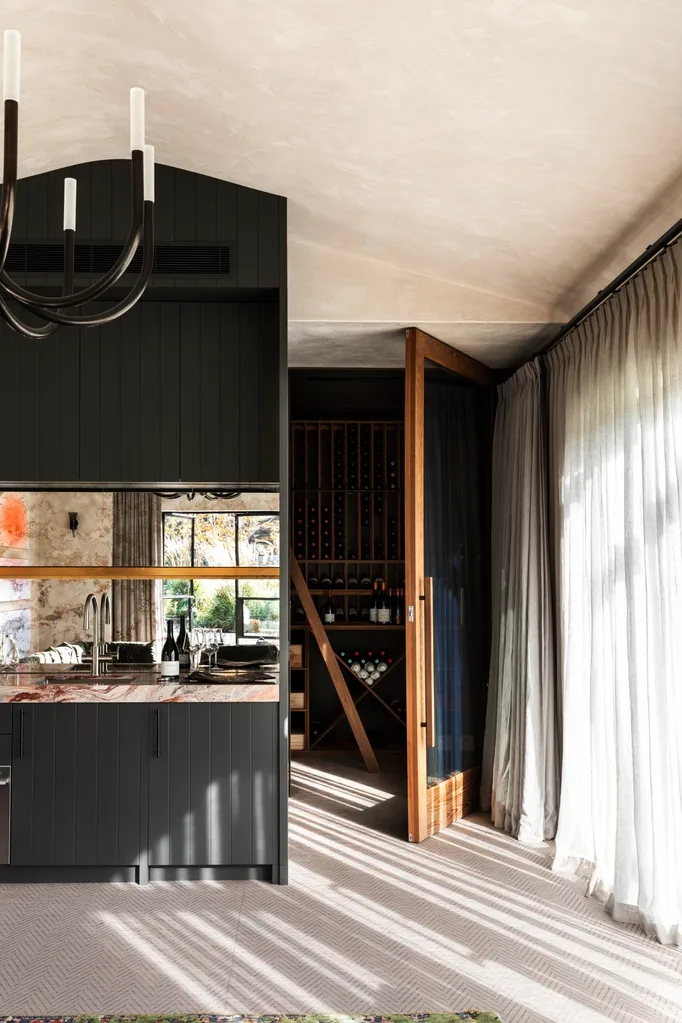
This Mornington Peninsula home features a hidden wine cellar in the outdoor pavillion, which looks over the tennis court. Subtly tucked behind the bar, the wine cellar is protected by a large glass door with a timber frame.
A wall-papered wine cellar
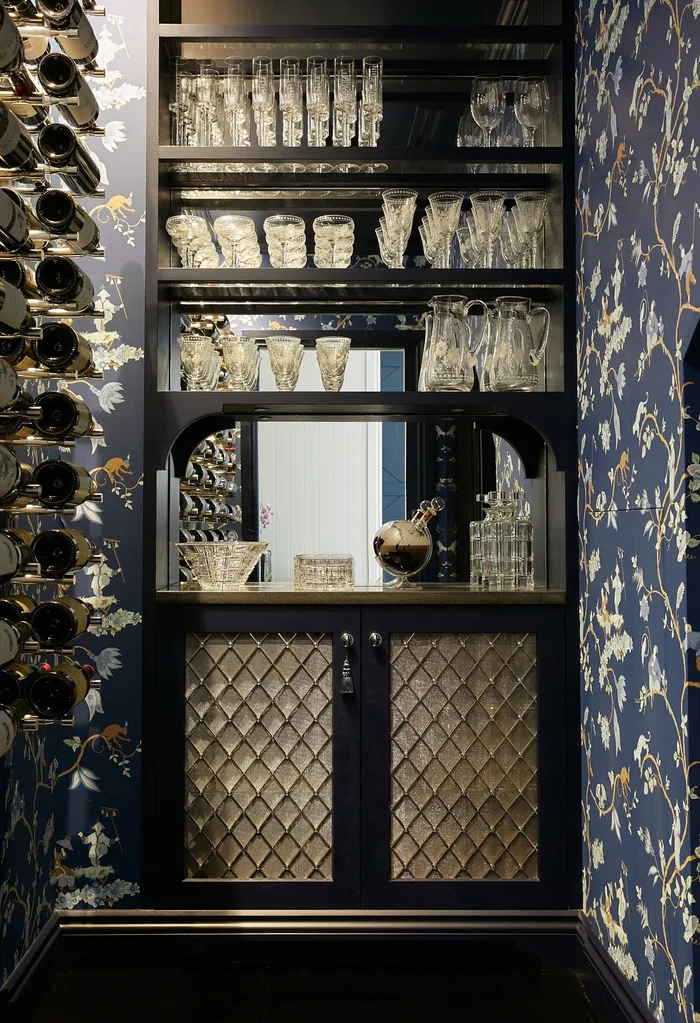
Taking inspiration from their time in the States, the owners of this property embraced classic American style in their interiors. The wine cellar features floor-to-ceiling wine racks, Vintec wine fridges, honed granite benchtop as well as walls papered with Stroheim ‘Cathay Pastora’ in Indigo.
A wine room with glass steel doors
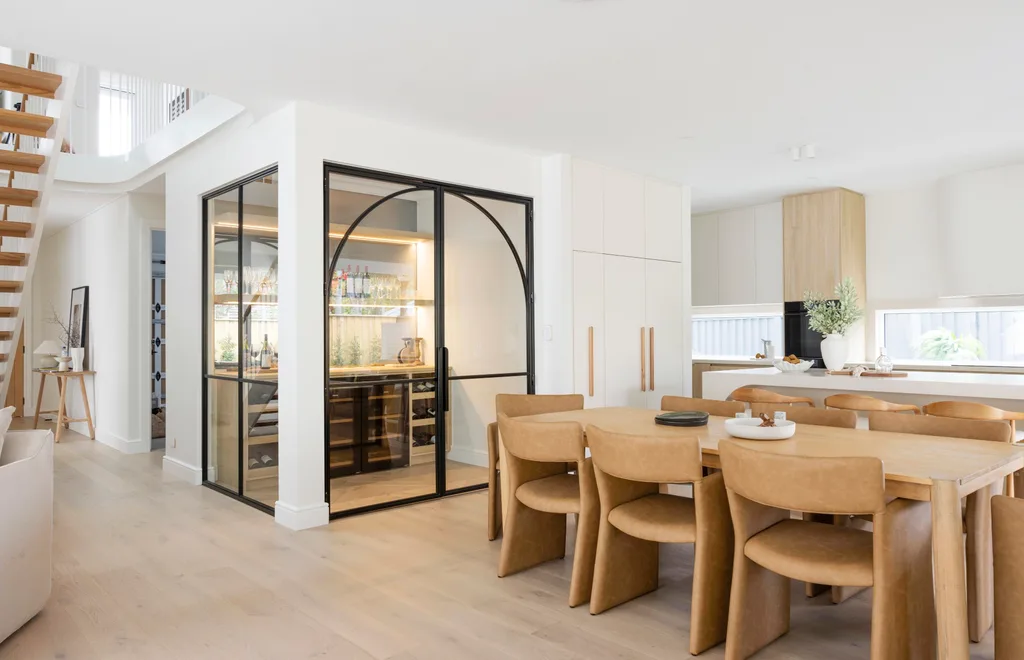
This Oak and Orange new build features a wine room in the centre of the ground floor. The custom double arch glass doors from Camden Steel Doors and Vintech wine cabinet make it a luxurious feature.
A wine cellar with mesh cabinetry
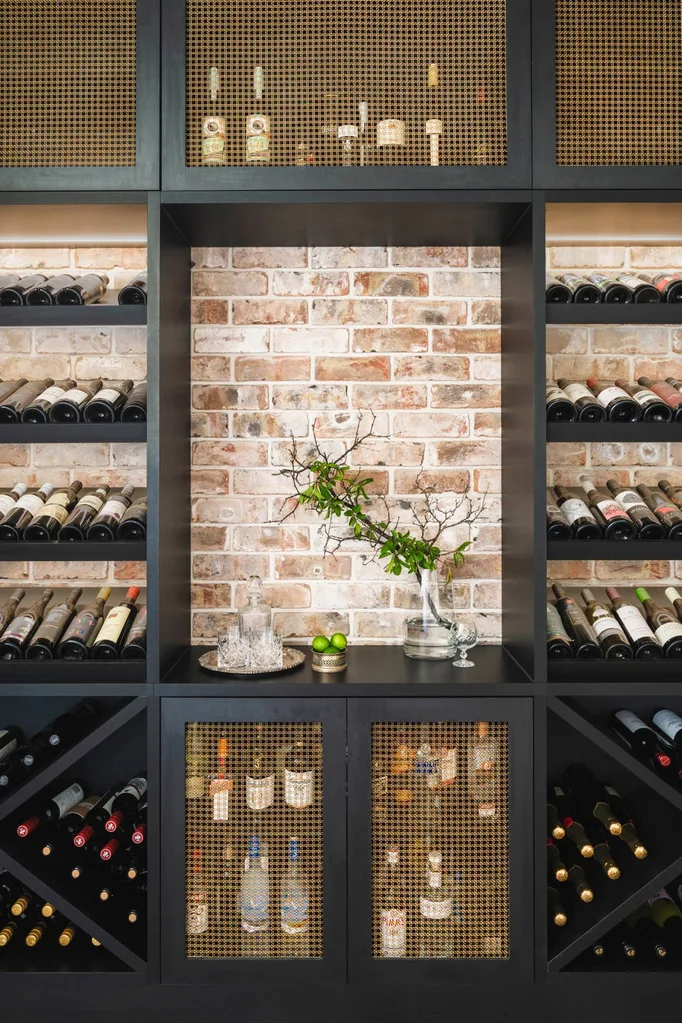
Finally, this wine cellar is located in an alcove near the living room, the wine cellar was designed using Polytec Black Woodmatt for the joinery, paired with woven mesh inserts, and the same brick as the exterior for the backdrop. “The cellar is probably a little self-indulgent, but it’s another strong feature in the house,” says home owner, Rob.


