


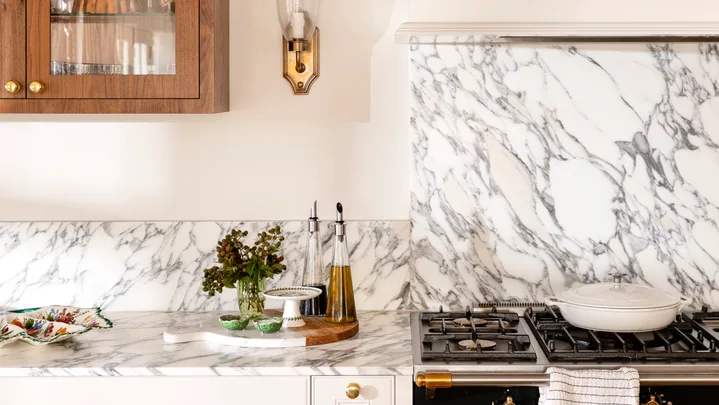
 Photography: Martina Gemmola / Interior design & styling: Amy Spargo, Maine House Interiors
Lemon and marble benchtops are natural enemies in the kitchen. The acidic fruit, along with limes, oranges, and other members of the citrus family, can cause “etching” on marble surfaces – effectively damaging the natural stone and leaving you with unsightly marks and grooves on your counter tops.
It’s the bane of many homeowner’s existence, with reality star Matty J recently lamenting to Home Beautiful that it’s just “not fair” what lemon juice does to marble.
Listen to Matty J on The Edit podcast:
Costa Voulgarakis, Director of luxury marble furniture brand Elsa Home & Beauty, spoke with Home Beautiful about what happens when lemon meets marble – and what you can do to clean it up.
In this article
Does lemon damage marble?
“When lemon comes into contact with marble, the acid of it ‘etches’ into the stone leaving a white halo effect on the surface of the marble,” explains Costa.
Etching and staining is caused by a chemical reaction between the citric acid and the calcium carbonate that’s present in marble. It’s difficult to prevent and hard to reverse once it happens. However, it’s not entirely a lost cause.

What to do immediately after lemon gets on your marble surface
The best thing to do is wipe it down straight away with a bit of warm water and a dry cloth, Costa says. Try to minimise the area where the lemon has touched (i.e. don’t wipe the lemon juice across the surface during the clean-up), and don’t rub it further into stone. Blot it clean and then wipe it over with a fresh, damp cloth. Soft cloths, like shamois or microfibre, are best for cleaning marble, as opposed to abrasive sponges or scourers which should be avoided.
Can you get rid of lemon stains on marble?
Unfortunately, there’s not a lot you can do about lemon stains without sanding down the surface of your marble benchtops. And for that, you’ll do best to call a professional. “The only way to repair or remove the etching marks caused by lemons or anything acidic is to re-hone the benchtop with sandpaper to bring it back to its factory condition,” Costa says. “There is currently nothing on the market in the way of cleaning products that will remove the etching marks. As such, we recommend this to be undertaken by a professional.”
You will read dozens of tips online about DIY methods of sanding and polishing, however, there’s an even greater risk you’ll damage the benchtop.
“The only way to repair or remove the etching marks caused by lemons or anything acidic is to re-hone the benchtop with sandpaper to bring it back to its factory condition.”
— Costa Voulgarakis, Elsa Home & Beauty
Is there a way to prevent etching on marble?
Etching caused by lemon or other acidic products can’t really be prevented except to say ‘just be careful’. No amount of sealing can protect your counter tops from this tragic, yet often inevitable, fate.
The best road to prevention is ensuring there are layers between your food prep and your benchtop. Costa simply advises using “coasters and place mats where necessary to prevent anything acidic from hitting the surface.”
Will lemon stains on marble fade with time?
Some stains on marble may slightly improve visually over time, but unfortunately, etching never goes way. “An abrasive action would need to be taken, in the way of sandpaper grinding,” Costa says, referring to his method above.


How to clean and maintain your marble benchtops
To clean your marble counter tops, the best thing you can do is gently wipe it down with a soft cloth and warm water. Hard water – i.e. water with a lot of mineral deposits – can occasionally interact with the marble, so if this is your home, consider using distilled water. Either way, when it comes to water, there’s no need to flood the surface! Simply spray a fine mist or use a lightly damp cloth.
If you want to use a soap – which you should do sparingly! – seek a pH-neutral soap without bleach or other harsh ingredients. Most generic, store-bought cleaning products and detergents will sadly not cut it. Similarly, do not use homemade cleaning sprays with ingredients like vinegar, bicarbonate soda, lemon juice (duh!) or essential oils.
Finally, never scrub or use abrasive sponges on your benchtop. This can scratch and wear down the surface, making it even more porous and susceptible to stains.




Sealing
Sealing your marble counters doesn’t entirely prevent staining and etching, but it can slow the absorption of some liquids, and thus reduce the risk of marks.
Generally, Costa recommends having your marble counters re-sealed every year. However, if yours are prone to mess, you may choose to have them sealed more frequently.
“Re-sealing the benchtops will often depend on how frequently they are used. If they are used frequently and there is often a lot of food and liquids hitting the surface of the benchtop then this will cause the sealer to break down quicker and often require a re-seal a lot sooner,” he explains.
Avoid food contact
All kinds of food products can stain or etch marble. Vinegar, turmeric, sauces and condiments (which often contain vinegar or another acidic ingredient), coffee, tea, wine and even some metals (like tin cans, if there is water or oil at the base), can all leave marks on your marble benchtops.
“We recommend using preventative measures from coasters and place mats where possible and not using the marble benchtop directly for any food preparation. Always use a chopping board,” advises Costa.
Marble benchtop alternatives
If the maintenance and care required for marble benchtops is simply too much for you, but you love natural stone, quartzite is a more durable alternative. “Quartzite is more durable and can withstand citric attacks a lot better,” explains Costa. “This is not to say that a quartzite would be ‘bullet proof’ but it would take a lot longer for [lemon] to affect a quartzite than marble.”
Want even more alternatives? Read our comprehensive guide to kitchen benchtop materials, including the pros, cons and costs of each type.
Watch Matty J on The Edit podcast:

