


 Photography: Alana Landsberry / Styling: Lucy Gough
Decorating a home with your partner can be tricky business, especially if your tastes don’t align. So, what do you do when one of you is ‘Coastal Hamptons‘ and the other is ‘Modern Farmhouse‘?
Speaking on The Edit podcast, Neale Whitaker recently revealed how he and his partner, David, navigate their different tastes. “David has a tendency towards the more decorative and definitely towards the more antique, whereas I tend towards the more contemporary,” he began. “But somehow we meet in the middle. There’s always an element of compromise, but it’s a good compromise.”
Listen to Neale Whitaker on The Edit podcast:
Neale shared that both he and his partner have conceded to the other at varying points on their decorating journey. But if you’re struggling to be diplomatic in the process, you may want to read our wrap of expert tips for decorating with your partner.
7 home decorating tips for couples
1. Compromise
If there’s one rule on this list to follow, it’s compromise. Twins Alisa and Lysandra have made a career out of designing homes as a duo. Their best advice is to try and find the balance between your two visions. “This might involve integrating elements from each style in a balanced way, seeking a fusion that feels harmonious rather than conflicting,” they told Home Beautiful.
Neale also shared how he has ceded ground to his partner over vintage plates. “For me, [we have] too many, but he absolutely loves them, so that’s fine,” he shared on The Edit. Respecting your partner’s tastes and wants, no matter how much you disagree with them, is vital. Remember, it’s their house too!

2. Utilise accents
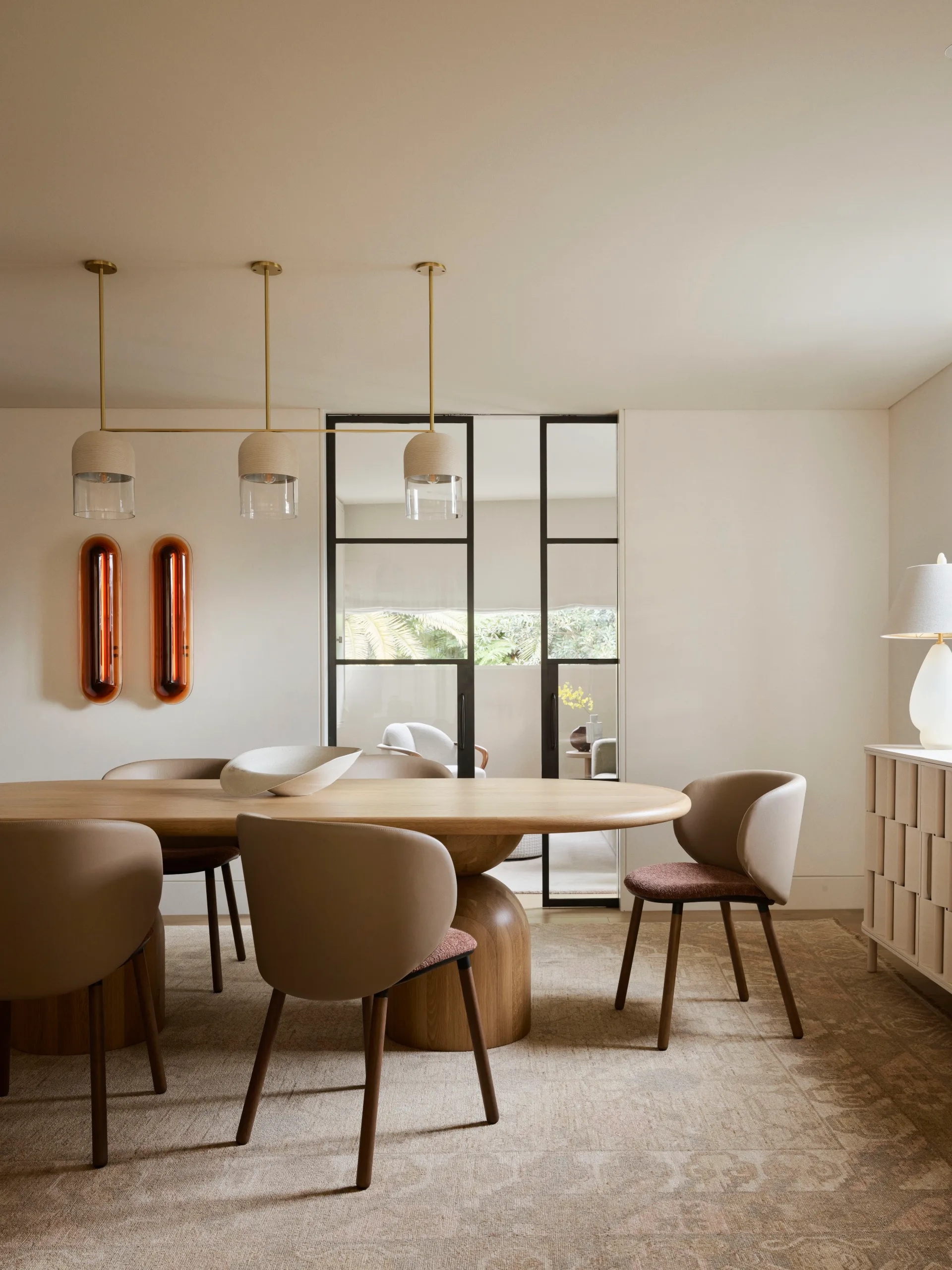
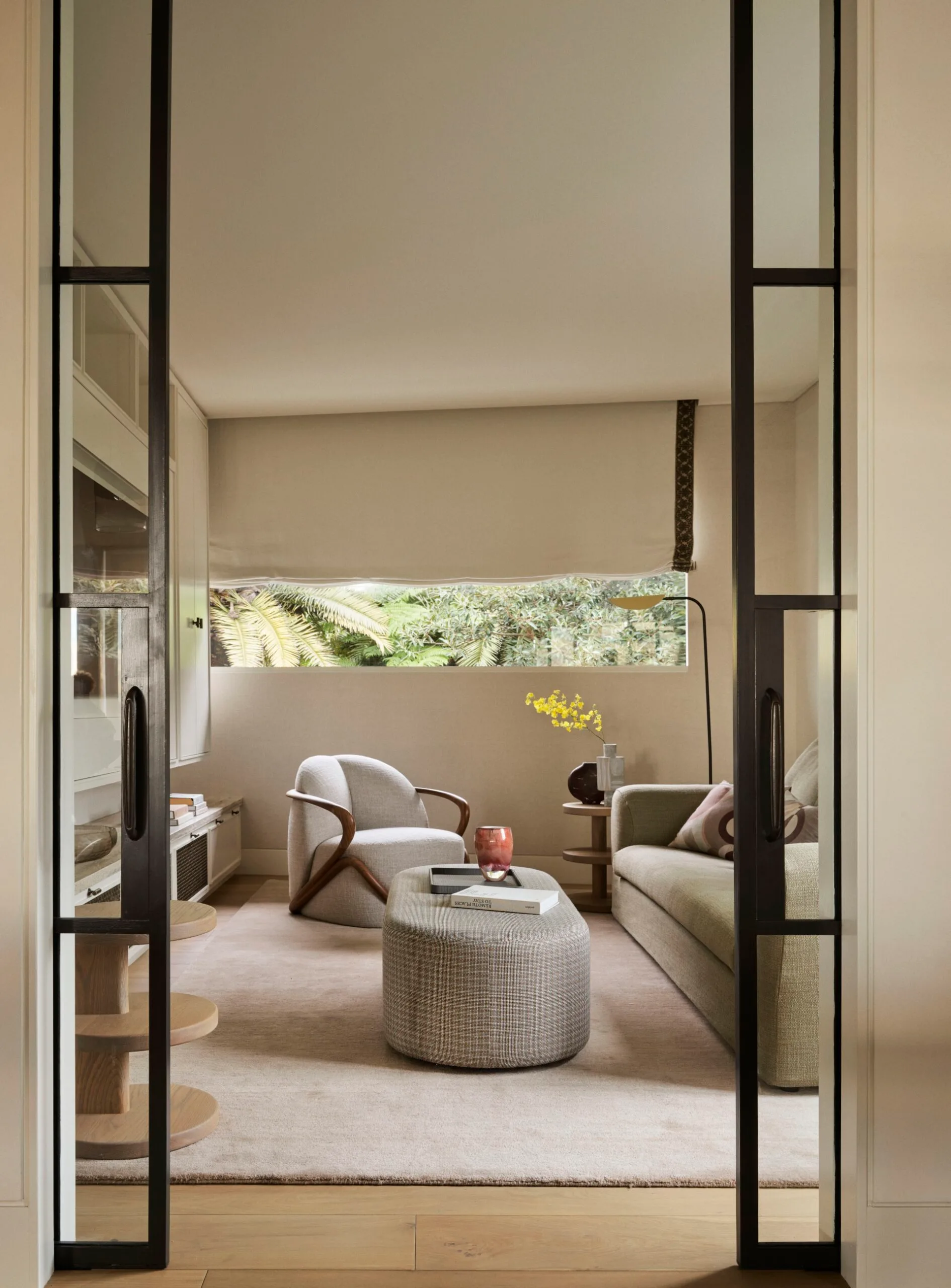
When Anne and Bernard renovated their Sydney penthouse, the designers Marylou Sobel and Stephanie Nadel had to accommodate divergent colour preferences. “I love colour, especially rich reds and oranges but not over the-top, while my hubby prefers monotones,” Anne told Home Beautiful. The compromise was a warm neutral home, with plenty of rich chocolate and gold tones and occasional colour accents through vintage red glass wall lamps and coloured vases.
3. ‘His and hers’ spaces
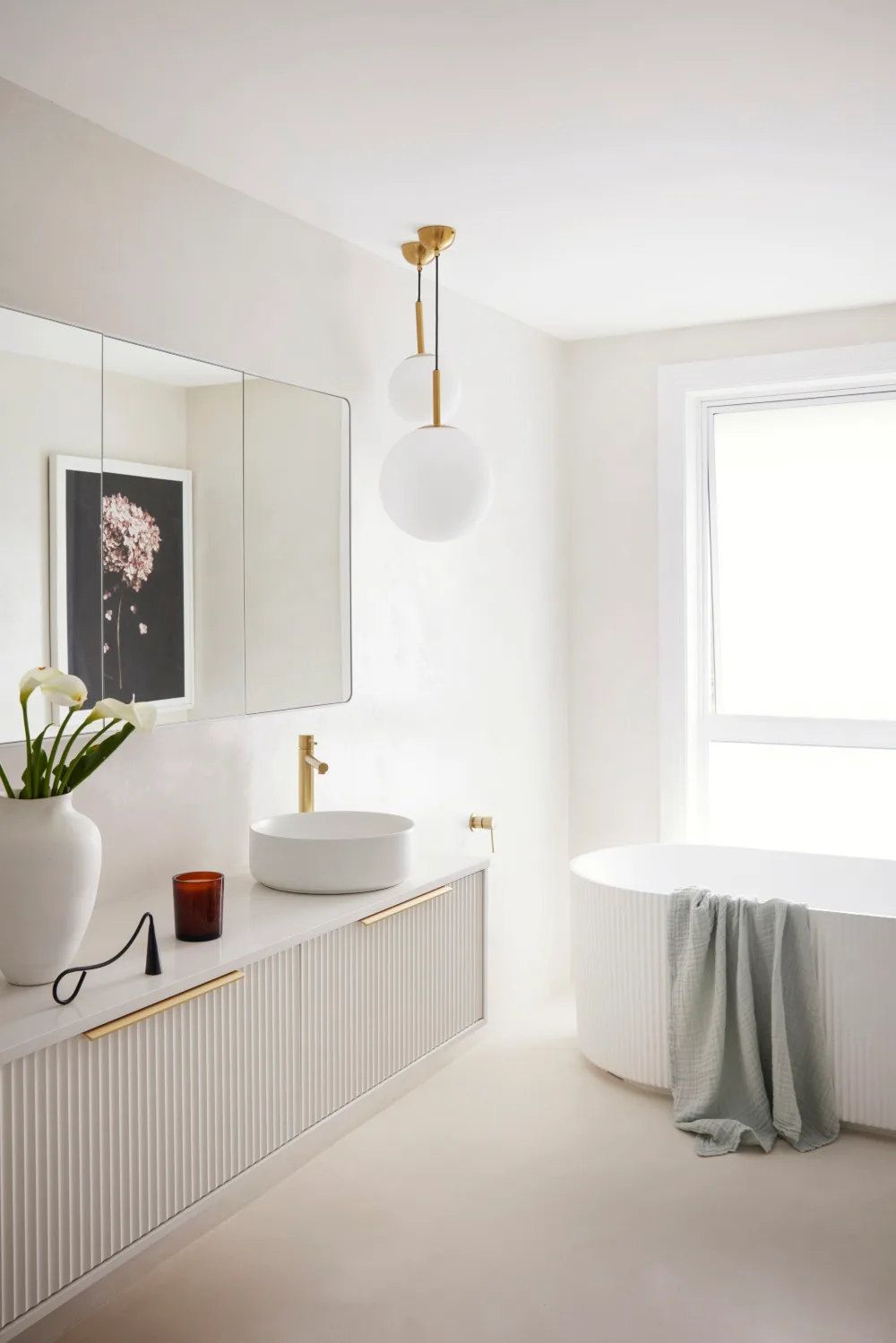
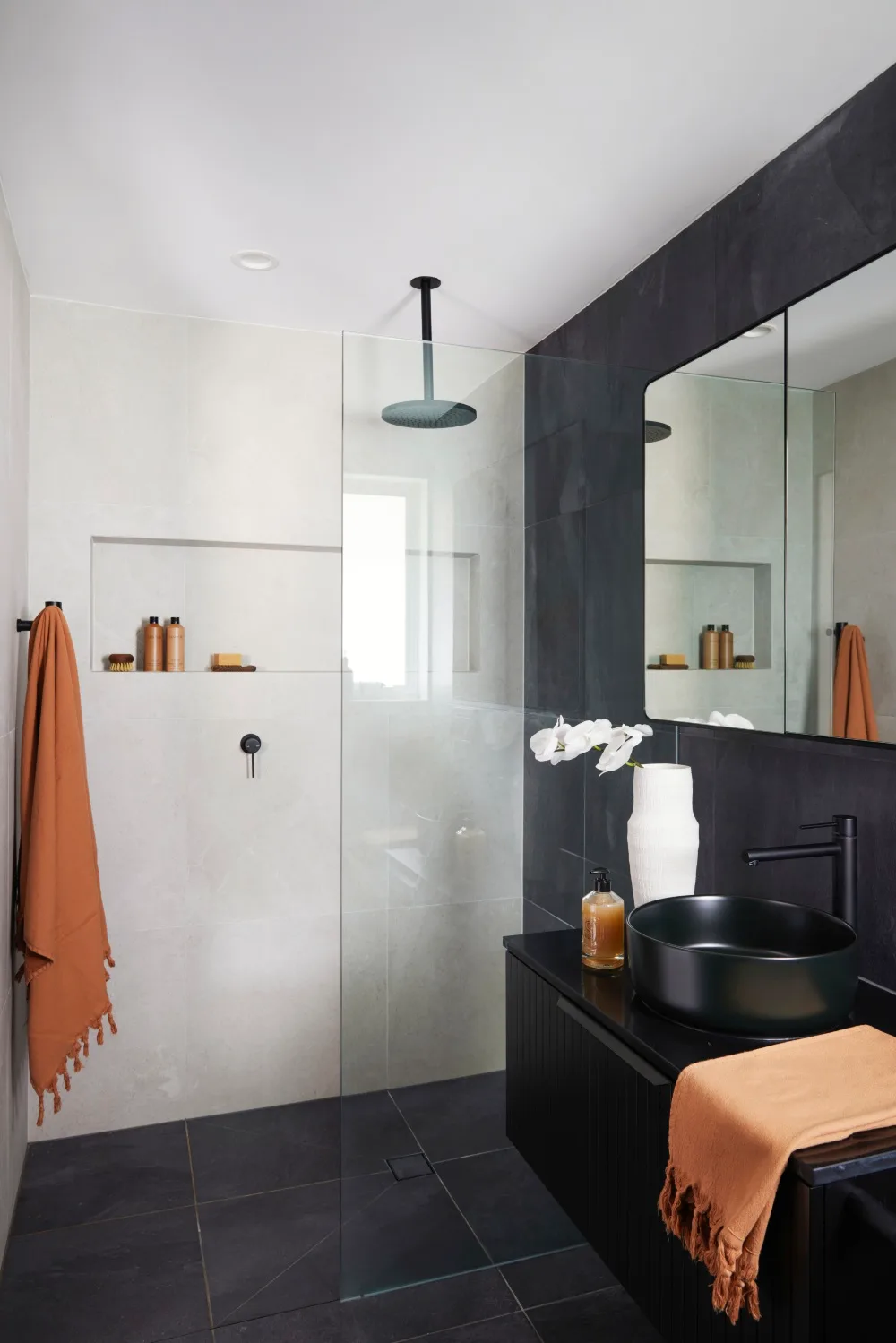
You could also take the approach of Zoe and Benji Marshall, who have separate bedrooms and bathrooms. Their bathrooms are aesthetically different, with Benji’s offering a more masculine, streamlined aesthetic (black and white tiles with black tapware), and Zoe’s bathroom reaching for a more elegant approach with gold tapware, statement lighting, and a fluted tub.
While purchasing a home with private bathrooms for everyone may not be the advice you’re looking for, the ‘his and hers’ approach might prove useful in other areas. Regardless of the ‘gender’ of your occupants, the idea is to simply divvy up spaces or zones, and make them your own.
4. Pick your battles
Benji and Zoe also tapped in to another couples’ design approach: Pick your battles. While Benji didn’t have strong opinions on the décor, there was one thing he desperately wanted to influence: The couch. “As a man who loves to watch his sport on the TV, the couch is the number one thing for me, everything else is fine,” he says. As a result, the pair found a Long Beach-style, deep couch from Lounge Lovers, which is both profoundly comfortable and matches the home’s contemporary coastal theme. Take a look in their home tour.
5. Don’t skip the mood boards
As Wendy Moore will tell you, a mood board is non-negotiable in renovating or redecorating. It’s even better if it’s a physical board. To overcome different tastes, consider a project where you and your partner make a mood board each. You can then come together to see if there’s anything that works in alignment. Pin things you both like on a shared board and see if a theme emerges.
Alisa and Lysandra agree that finding shared elements among the specifics, from tile colours to tapware or even a sofa, can unlock a world of possibility. You may even stumble on the next major fusion style, like Japandi!
6. Tell your stories through art
Interior designer James Treble works with all manner of clients, and isn’t about shutting down ideas altogether. Instead, find a way to embrace your differences, and tell those individual stories.
“I’m really open minded because I get clients, like the blokey blokes, and their version of an artwork is a signed footy jersey in the game’s room,” he shared on The Edit podcast. “And I’m okay with that because it still tells their story… that’s what art is, right? It’s telling a story of a time or a place or something that means something to the person.”
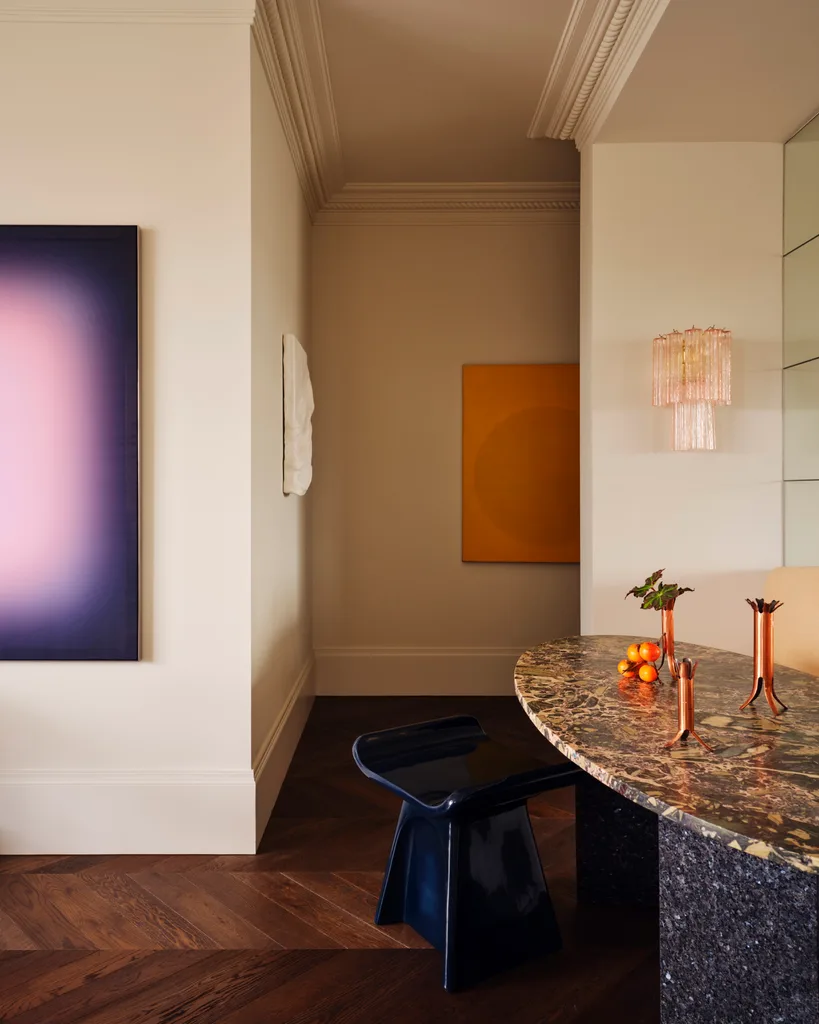
James’ tip is to move objects you can’t agree on to a more discreet location (like an office, rumpus or bedroom), and then try to tie them into that space aesthetically. For example, locate a colour in the specific artwork and see if it can be incorporated into another piece of décor. The result is that the room still looks styled and cohesive, and the debatable artwork is more blended with its surrounds.
7. Same room, different tastes
A reader once asked us how they should deal with their kids who share a room but have very different tastes. “Divide and conquer!” responded Home Beautiful Digital Editor, Diana Moore. “Use a storage wall to demarcate two zones within the room and work your magic in each zone. Enlist the help of your children to decorate their own spaces and organise their belongings to suit themselves.”
The moral of the story? Consider how you can zone a space to accommodate two different styles. You may still need to compromise on a stylistic through-line for cohesion, but consider allowing slightly different artwork or décor in your ‘zones’, like on your bedside tables.

