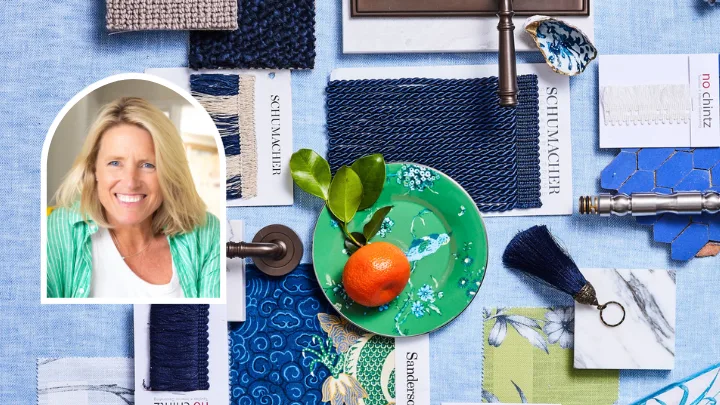
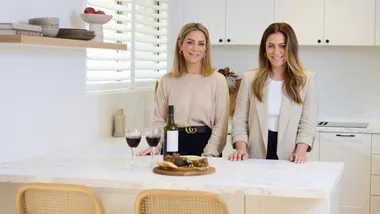
 Mood board: Will Horner / Wendy Moore: Foxtel
Between hosting Selling Houses Australia and completing several of her own renovations, Wendy Moore has some tricks up her sleeve for a seamless home makeover. However, few would expect that making a mood board is high on the list of priorities.
While Wendy admits that setting a renovation budget is your first step, from here, making a mood board is the next best thing.
“[A mood board is] just a great communication tool because we’re not always great at articulating what we like,” Wendy shared with Elle Lovelock on her episode of The Edit podcast. “We’re better at articulating what we don’t like than what we like. And [a mood board] allows you to say, ‘this is what I want, this is how it feels’, and there’s less chance for miscommunication.”
Listen to Wendy Moore on The Edit podcast:
A perfect tool for communicating with your tradespeople, Home Beautiful editor Elle Lovelock agrees a mood board is vital for sharing your vision, as common words used in home design can still result in completely different aesthetics. Wendy agrees that without visual aides, you risk ending up with a room that was not the one you had in mind.
“Most of us are very emotionally driven, so it’s about how it feels,” she adds. “We think people understand that, but unless they’ve got that same vision, it just doesn’t work.”
Want to know how to make the best possible mood board? Wendy has a few hard-earned tips.
How to make a mood board for your home renovation
While there’s always the option to make a digital mood board for your renovation, Wendy finds a physical board to be much more useful.
“A corkboard is perfect,” she says. “That gives you an opportunity to take it to the house, and, as you start to choose materials, as you choose your flooring or the paint colour [etcetera], you can make sure they work with your original vision.”
The ability to move it around the house and visualise it in the space is also invaluable for perfecting your colour schemes. “The colour changes so vastly between the front of the house and back of the house, depending on the natural light. So, [with a physical mood board] you can go, ‘oh, in this room [the colour] throws pinks, and in that room it doesn’t throw much pink’, or ‘that’s not really the right white for me’.”
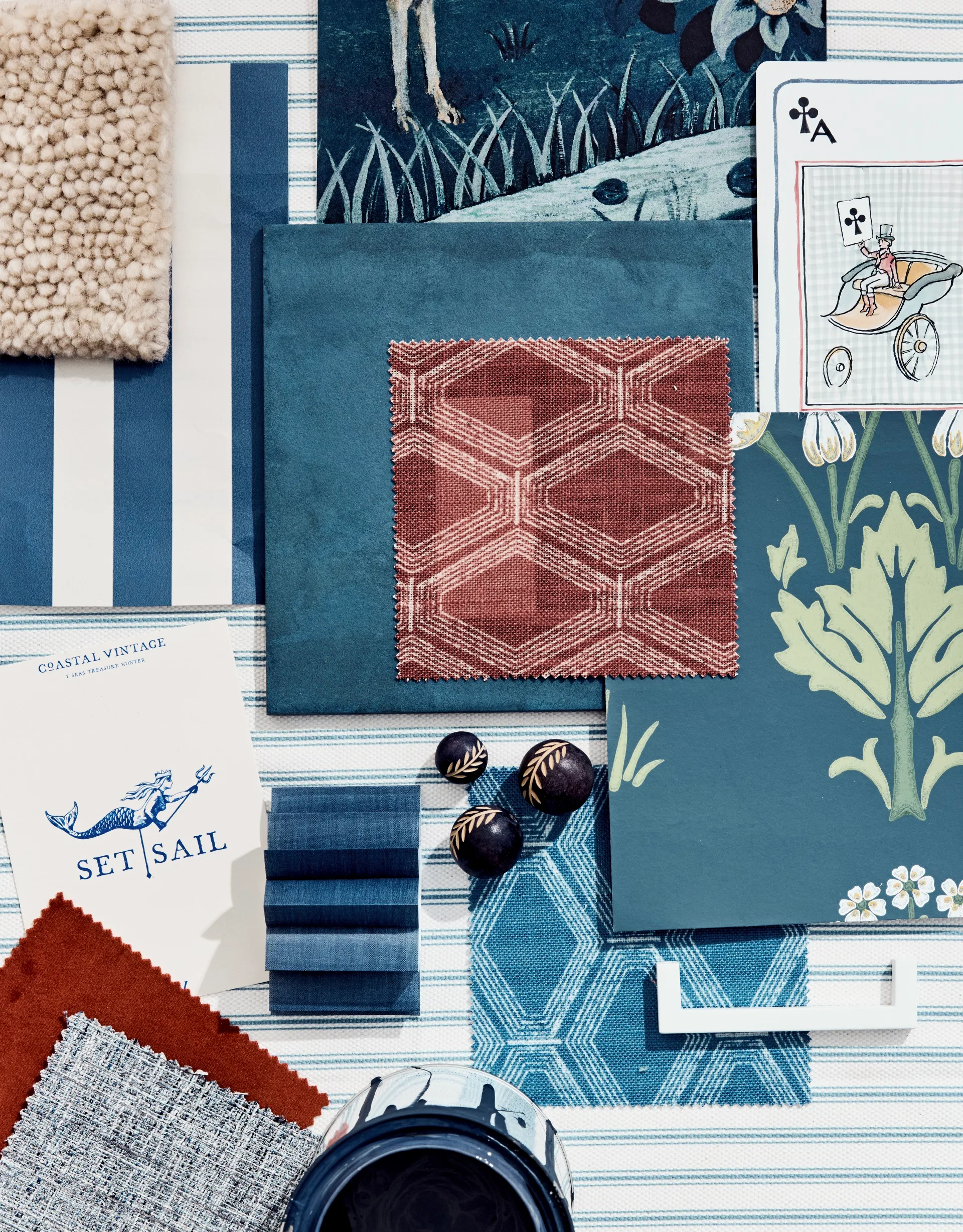
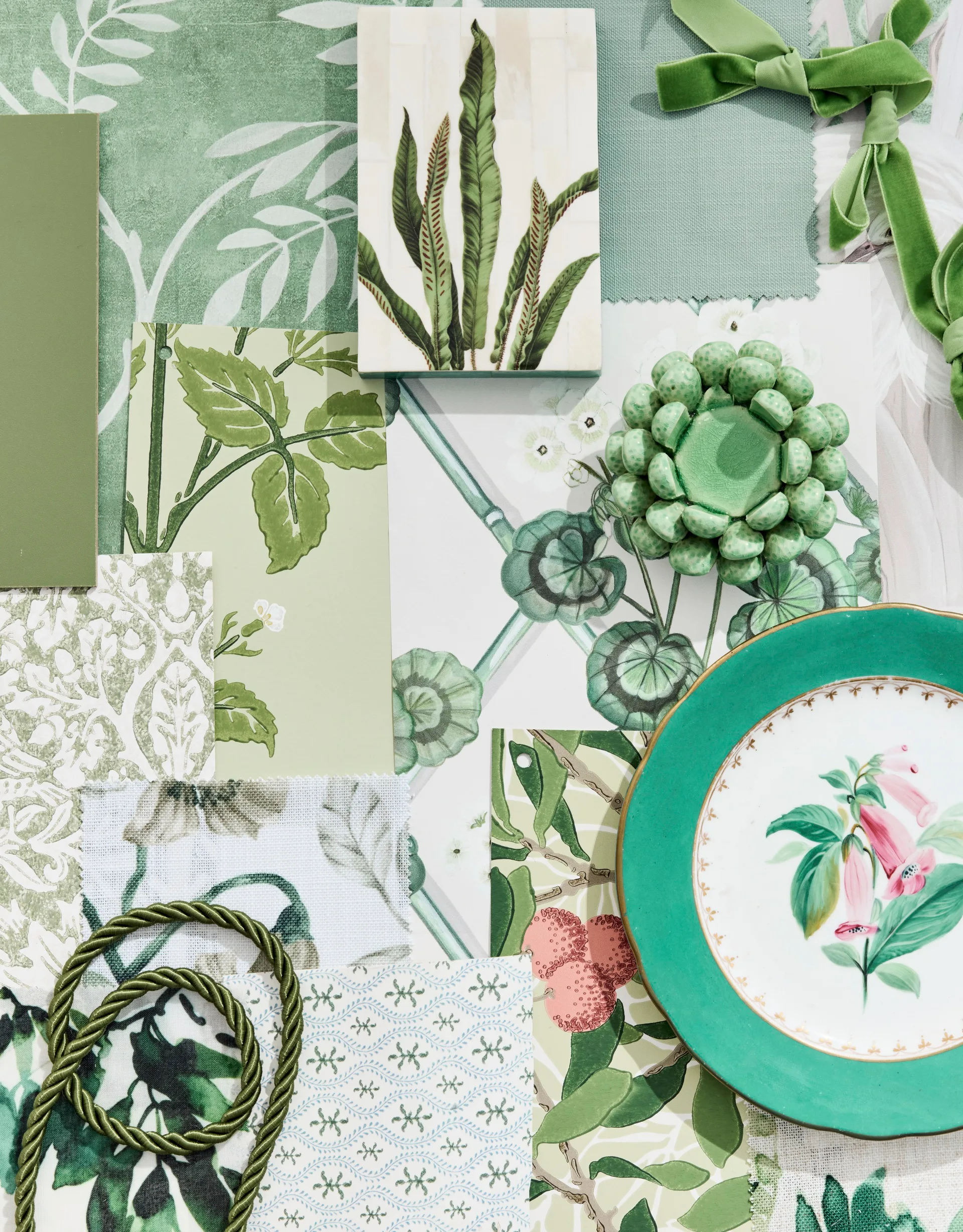
To actually craft your mood board, start by getting some magazines and tearing out pages of things you like. Wendy then recommends sorting them into piles or groups based on style or colour. “You’ll start to see which piles are getting bigger pretty quickly,” she explains. This can help refine your tastes. For example, you might think you love mid-century design, but during this process you’ll see you keep gravitating towards modern country aesthetics.
“It gives you an idea of what consistently appeals to you,” Wendy reiterates.
You can then start pinning to your mood board. You might wish to take your mood board images with you when shopping for paint samples, fabrics, furniture or flooring. Swatches and samples can also be added to the board as you progress.
Wendy Moore’s mood board tips: A step-by-step guide
- Get a stack of homes magazines, and tear out pages of things you like.
- Organise these pages into piles based on colour, style, or any other category that makes sense for your project. See which styles emerge as favourites.
- Pin your images to a cork board — something you can easily move around your home — adding swatches, samples and other visual aides as you collect them.
- Place the board in different rooms to see how it works with the light in that space.
- As you make decisions on products, refer back to your mood board to ensure your style is consistent, and you aren’t wasting money on erroneous purchases.
If you prefer to hunt for images online, you can always print these out, or save them in a folder in your phone. However, as Wendy explains, digital imagery doesn’t offer the benefits of visualising how actual colours exist in a space.
Want more tips? Listen to Wendy Moore’s episode of The Edit by Home Beautiful, or watch it on YouTube:

Related stories
Native ad body.
Native ad body.


Native ad body.