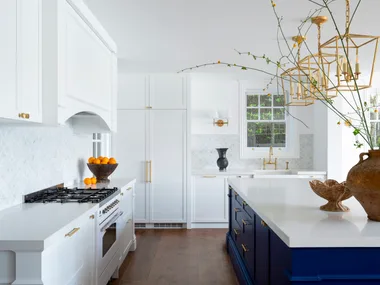
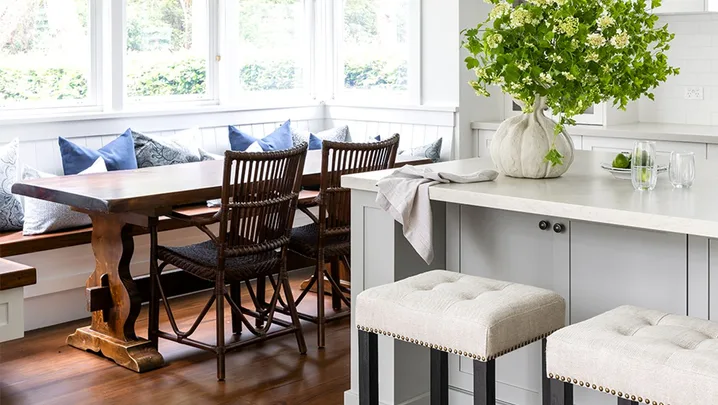
 Photo: Simon Whitbread / Styling: Corina Koch
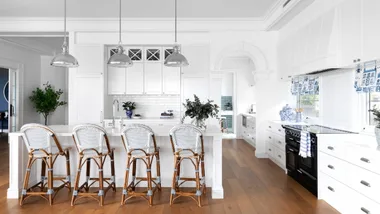
For decades, the modern Hamptons style kitchen has been one of Australia’s most enduring renovation styles. Its blend of classic joinery, natural materials and relaxed coastal influences has helped it outlast countless design trends.
But while the Hamptons aesthetic remains popular, the way Australians are interpreting it is changing.
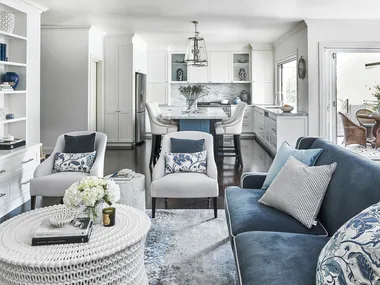
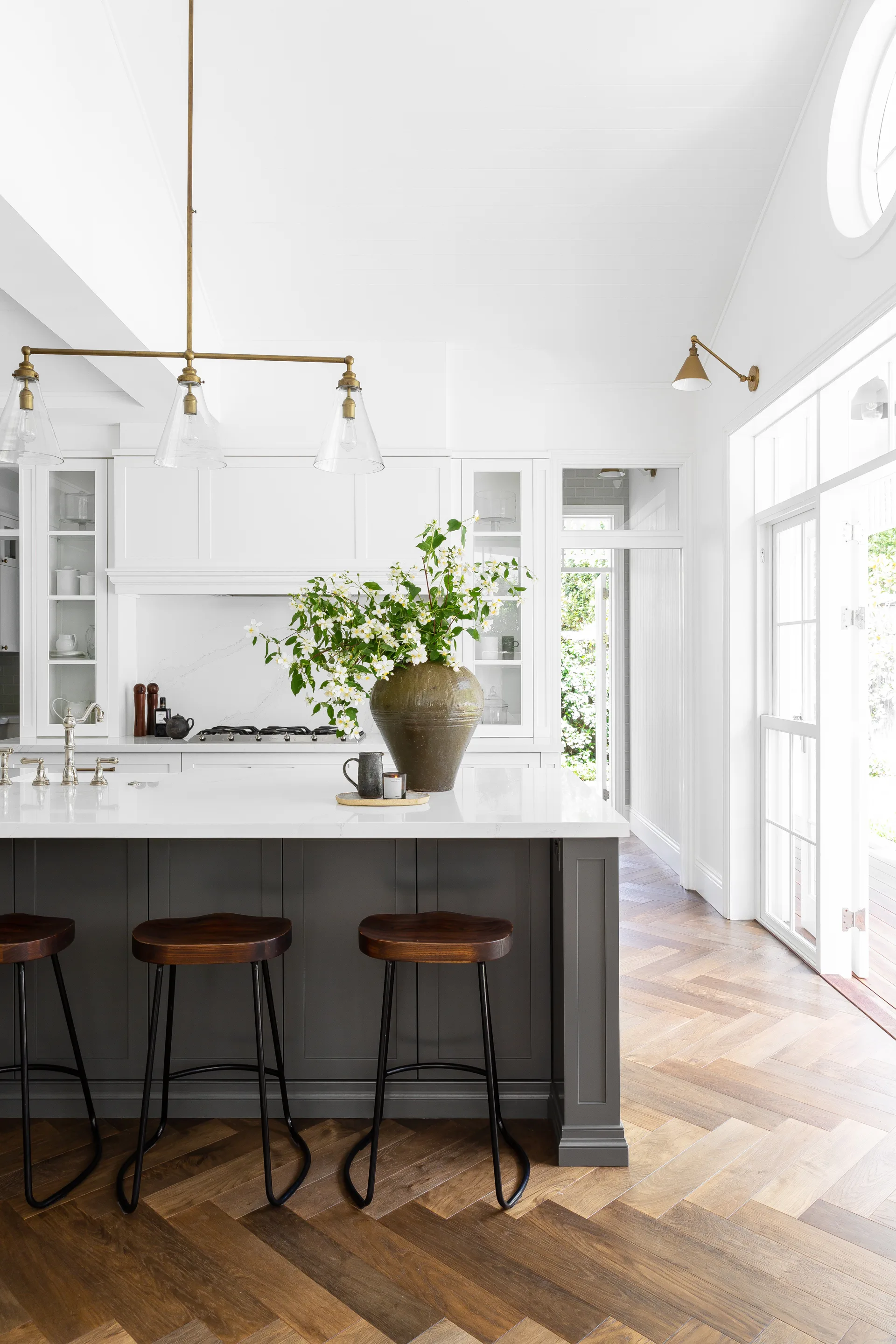
Today’s most beautiful Hamptons kitchens feel less themed and more timeless, borrowing from the style’s traditional foundations while embracing warmer colours, practical materials and a more restrained approach to decorating.
If you’re planning a renovation, here’s what’s worth keeping—and what designers are leaving behind. From shaker style cabinetry to lighting, natural stone bench tops and styling, we’ve asked Home Beautiful stylists and interior decorators to tell us the specific elements that will give you an elegant, East Coast design in the hardest-working room in the home.
NEED TO KNOW
- Worth Copying: Shaker cabinetry
- Looking dated: Overly decorated cabinetry
- Worth copying: Natural stone and stone-look surfaces
- Marble vs engineered alternatives: what you’re really paying for
- Looking dated: All white everything
- Worth copying: Layered materials
- The three-layer rule: How it works in Hamptons kitchens
- Worth copying: Butlers sink
Worth Copying: Shaker cabinetry
If there’s one feature that defines a modern Hamptons kitchen, it’s shaker-style cabinetry.
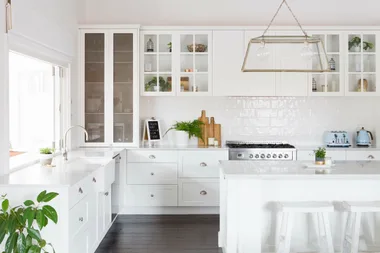
Simple, elegant and highly versatile, shaker doors bring subtle architectural detail without feeling overly ornate. They work equally well in heritage homes, coastal properties and contemporary family kitchens, making them one of the safest long-term design investments.
“As the Hamptons style is steeped in luxury, cabinetry tends to be very detailed,” says interior decorator Tahn Scoon. “Door and drawer fronts are never flat but instead feature shaker profiles. Cabinetry hardware is also ornate, and generally made from solid metal.”
For a modern look, many designers are opting for slimmer shaker profiles rather than heavily detailed mouldings, creating a cleaner and more refined finish.
Looking dated: Overly decorated cabinetry
While Hamptons style is rooted in traditional design, excessive ornamentation can quickly make a kitchen feel outdated.
Heavy corbels, intricate mouldings and elaborate decorative details were once hallmarks of luxury Hamptons homes, but today’s interpretations tend to favour simplicity. The most successful modern Hamptons kitchens focus on craftsmanship and proportion rather than decorative excess.
Worth copying: Natural stone and stone-look surfaces
Stone remains one of the most sought-after materials in modern Hamptons kitchens (and most kitchens) thanks to its timeless appearance and ability to elevate a space.
Marble continues to be a favourite, particularly Carrara and Calacatta varieties, but many homeowners are also turning to porcelain and other stone alternatives that offer a similar look with improved durability and lower maintenance.
The goal is less about achieving a specific material and more about introducing texture, movement and natural character. The stone will play centre stage in a kitchen island, which is the heart of most Hamptons kitchens.
“The island is the focal point and often includes elaborate skirting instead of kickboards, shaker or criss-cross front and side panels and is most commonly topped with Carrara marble,” says Tahn. “Of course, a more affordable option is engineered stone. The new marble-look versions look almost as good as the real thing – and have the added benefit of being a little hardier.”
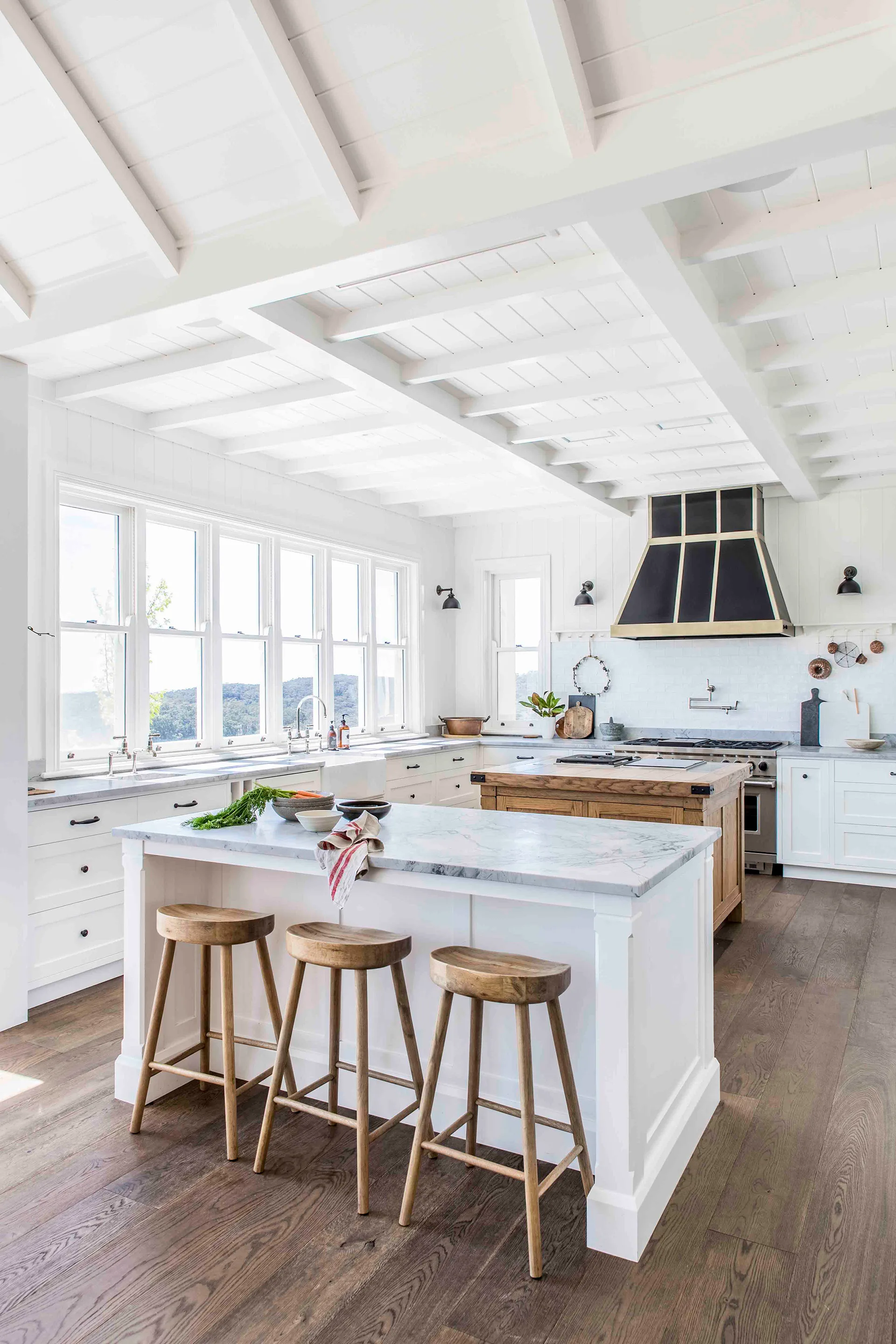
“I love the natural stone benchtops and splashback – the movement and texture bring interest.”
MELISSA BALZAN, INTERIOR DESIGNER
While material choice can dramatically influence the look and longevity of a Hamptons kitchen, it can also have a significant impact on your renovation budget.
Natural stones such as Carrara marble, Calacatta marble and quartzite typically sit at the premium end of the market, while porcelain, sintered stone and newer silica-free engineered alternatives can achieve a similar aesthetic for less ongoing maintenance.
As a general guide, Australian homeowners can expect to pay anywhere from around $700 per square metre for entry-level stone surfaces to more than $3,000 per square metre for premium imported marble, with factors such as slab thickness, edge profiles, cut-outs, installation complexity and stone origin all influencing the final price.
To simplify the comparison, we’ve ranked each material by relative cost and maintenance requirements rather than exact prices, as quotes can vary substantially between suppliers and states.
Marble vs engineered alternatives: what you’re really paying for
| Material | Look | Approx. installed cost (AUD/m²) | Maintenance | Best for |
| Carrara Marble | Soft grey veining, classic Hamptons look | $$$ | High – requires sealing and can etch or stain | Traditional luxury kitchens |
| Calacatta Marble | Dramatic bold veining, premium appearance | $$$$ | High – sealing required, prone to scratching and etching | Statement islands and high-end homes |
| Porcelain Slabs | Can closely mimic marble | $$$ | Low – non-porous and highly durable | Busy family kitchens |
| Engineered Stone Alternative* | Consistent marble-inspired patterns | $$ | Low – easy cleaning, no sealing | Homeowners wanting a marble look with less upkeep |
| Quartzite | Natural stone with marble-like veining | $$$ | Medium – harder than marble but still requires sealing | Luxury kitchens needing durability |
| Sintered Stone | Marble-look surfaces with ultra-modern performance | $$ | Very low – heat, stain and scratch resistant | Entertaining kitchens and heavy-use spaces |
*Following Australia’s engineered stone ban, many suppliers now offer silica-free engineered stone alternatives and mineral surfaces that achieve a similar appearance.
Looking dated: All white everything
For years, the quintessential Hamptons kitchen featured white cabinetry, white splashbacks and white benchtops.
While bright, airy spaces remain desirable, all-white kitchens can sometimes feel stark and lacking in personality. Today’s Hamptons kitchens often incorporate warmer tones through timber accents, natural stone, soft greys, muted greens and earthy neutrals. These colours feel more connected to the Australian landscape while maintaining the light and relaxed feel the style is known for.
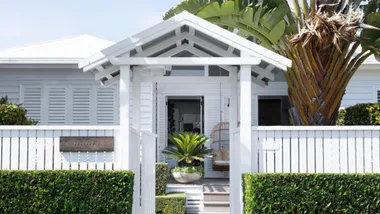
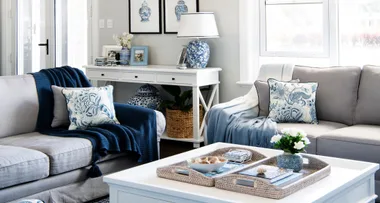
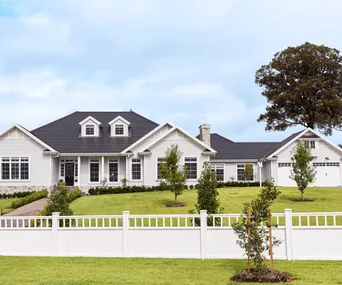
However, if done right, white interiors can create a space that feels elegant and timeless.
“A white interior makes me feel calm as soon as I walk in the door.”
NINA, HOMEOWNER & BUNGALOW 55 INTERIOR STYLIST
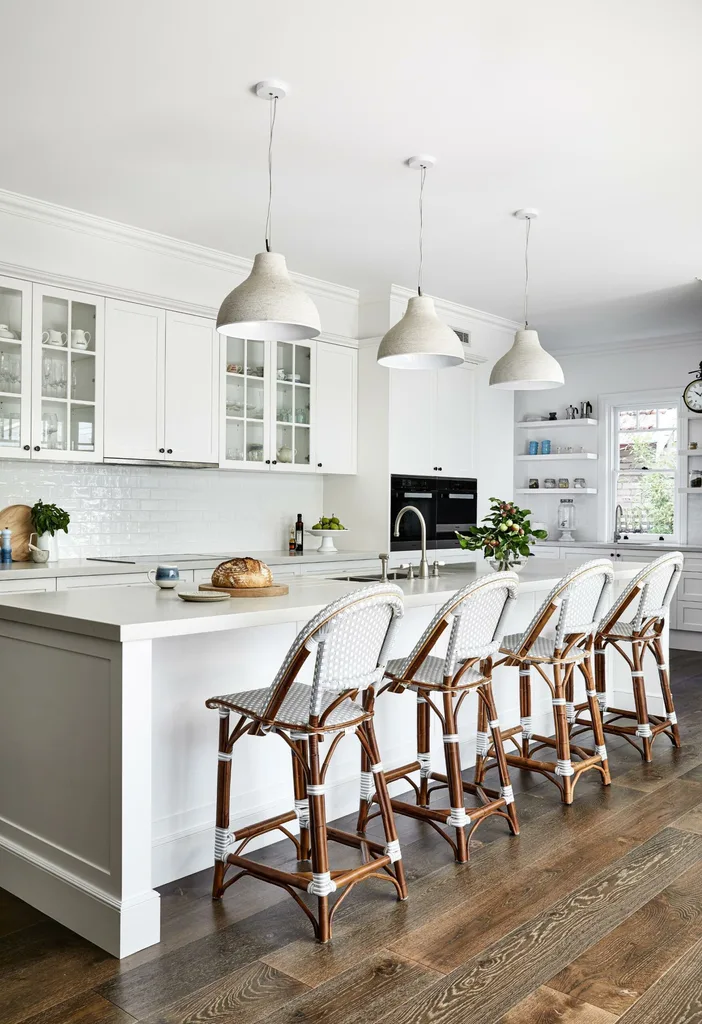
Textured white subway tiles almost disappear from view in this Hamptons-style kitchen.
If you’ve ever wondered what sets USA and Australian Hamptons-style homes apart, it mainly comes down to the colour palette. “The Australian version of a Hamptons kitchen is generally less formal and more pared back, both in design and colour,” says Tahn. In the USA, “white and blue schemes have dominated for a while now, but for a fresh Australian take team white with teal, olive or emerald,” which suits our natural surroundings and works in the country or the coast.
Worth copying: Layered materials
One of the secrets behind a beautiful modern Hamptons kitchen is the thoughtful layering of materials. Rather than relying on colour alone, designers create interest through a mix of textures such as timber, stone, brushed metals, rattan, linen and ceramics.
This layered approach helps a space feel lived-in and collected rather than overly styled or showroom-perfect.
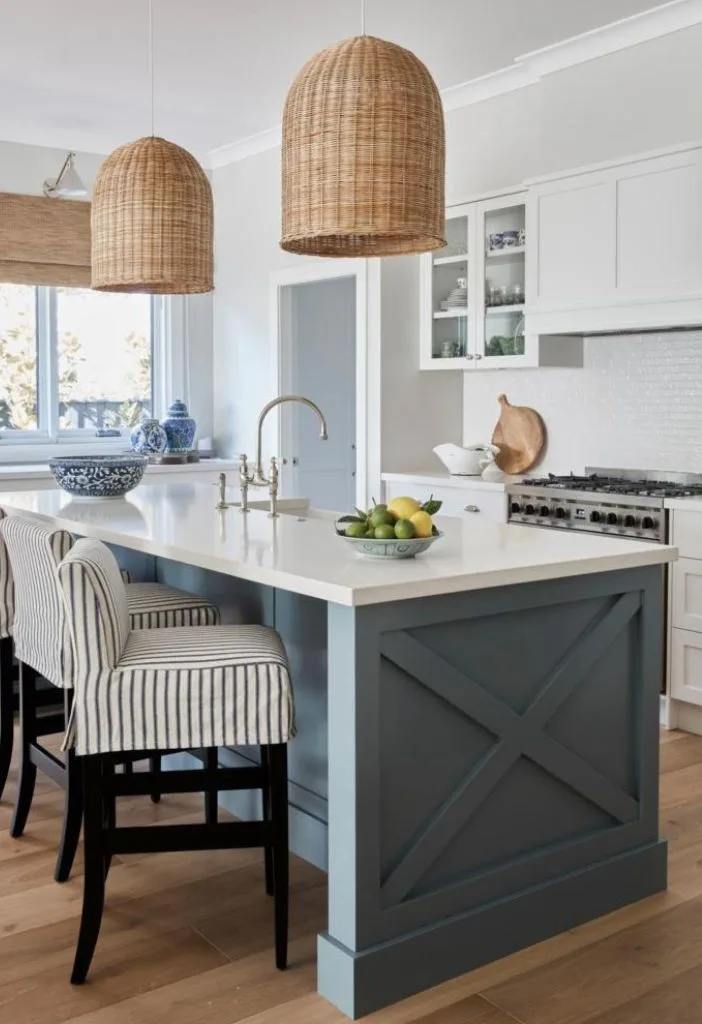
The three-layer rule
Many successful Hamptons kitchens include three key design layers:
Layer one: Architecture:
- Shaker cabinetry
- Profiled joinery
- Traditional detailing
Layer two: Materials
- Stone surfaces
- Timber elements
- Natural textures
Layer three: Styling
- Decorative lighting
- Ceramics and artwork
- Greenery and collected items
Without all three layers working together, a Hamptons kitchen can risk feeling flat.
Tahn also recommends that when styling a modern Hamptons kitchen, “try to create a more unique look by avoiding ubiquitous blue and white ginger jars. Tweak the palette a little. Try adding handmade ceramics in beautiful shades of green, a trio of potted herbs and/or a potted orchid. To create a feeling of abundance, fill bowls with sumptuous fruits, such as pomegranates, apples or cherries – and for a final touch of luxury, replace old cotton tea towels with 100% fine linen.”
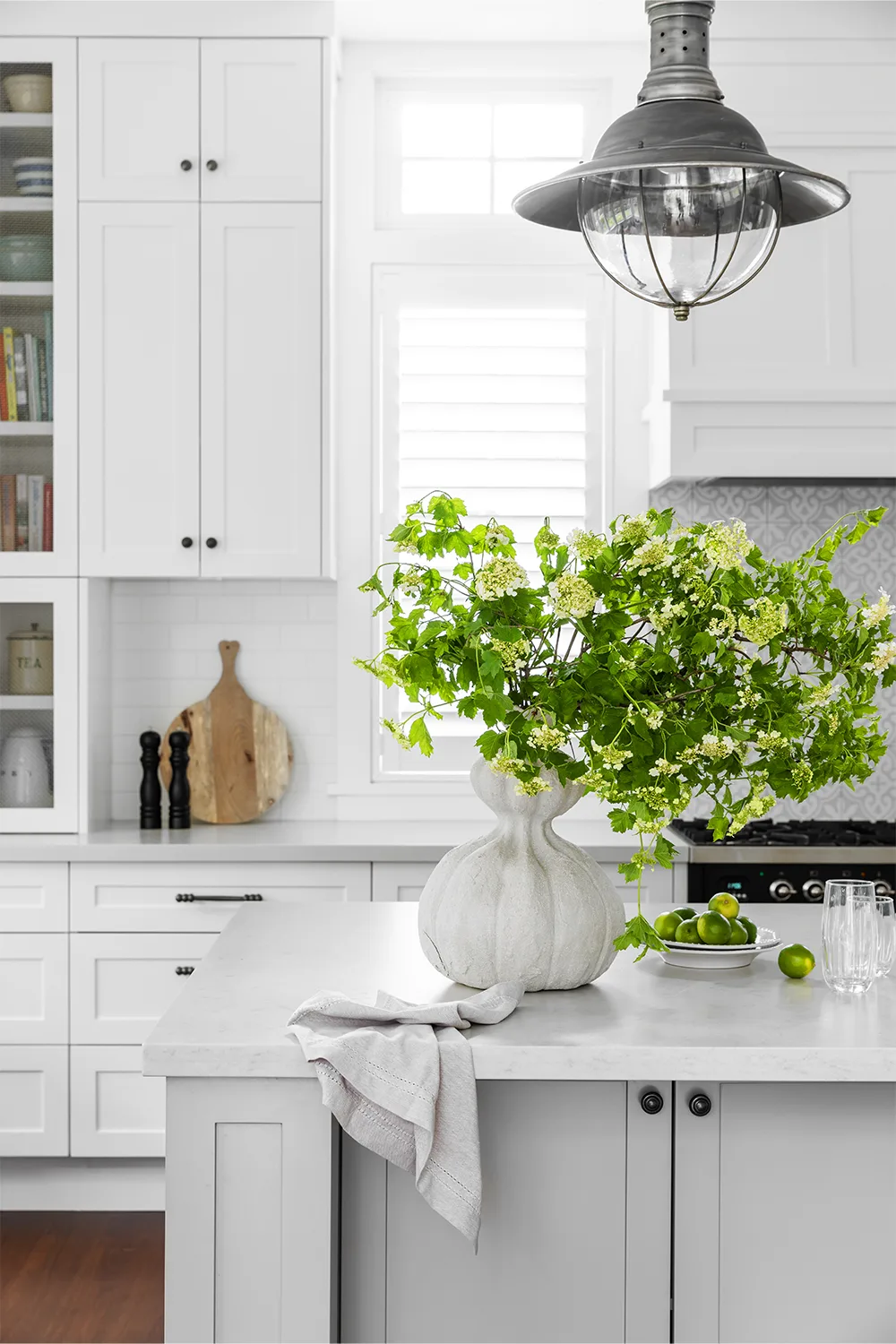
Worth copying: Statement lighting
Lighting remains one of the easiest ways to bring character to a Hamptons kitchen.
Pendant lights above an island bench continue to be a popular choice, helping define zones within an open-plan space while adding visual interest. Glass pendants, natural woven materials and simple lantern-style fixtures all work well when selected in proportion to the room.
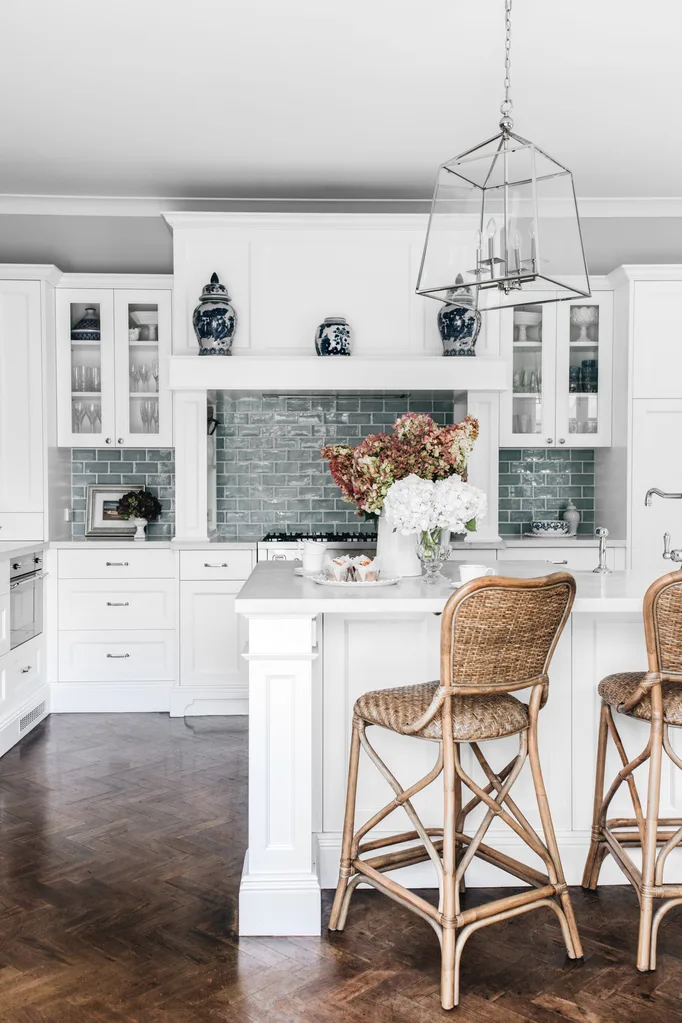
A Horchow lantern hangs above the Carrara marble benchtop, which Melinda says is “hard to maintain. I’d probably use engineered stone next time”.
Looking dated: Oversized lighting
Large, highly decorative lantern pendants have become synonymous with Hamptons interiors, but they can easily overwhelm a kitchen. Today’s approach is more restrained, with many designers favouring simpler fixtures that complement the architecture rather than dominate it.
The best lighting choices feel considered rather than attention-seeking. Hamptons-style “pendants are generous in size and generally made from traditional materials such as metal or glass” says Tahn. “However, for a more contemporary look, try large drum shades in white linen.”
Worth copying: Butler’s sink

Perhaps one of the most quintessential elements of a Hamptons kitchen is the sink. A deep white “butler’s sink suits both traditional and contemporary Hamptons kitchens, and has the added benefit of allowing you to hand wash large serving dishes when entertaining, which presumably they do a lot of on Long Island!”
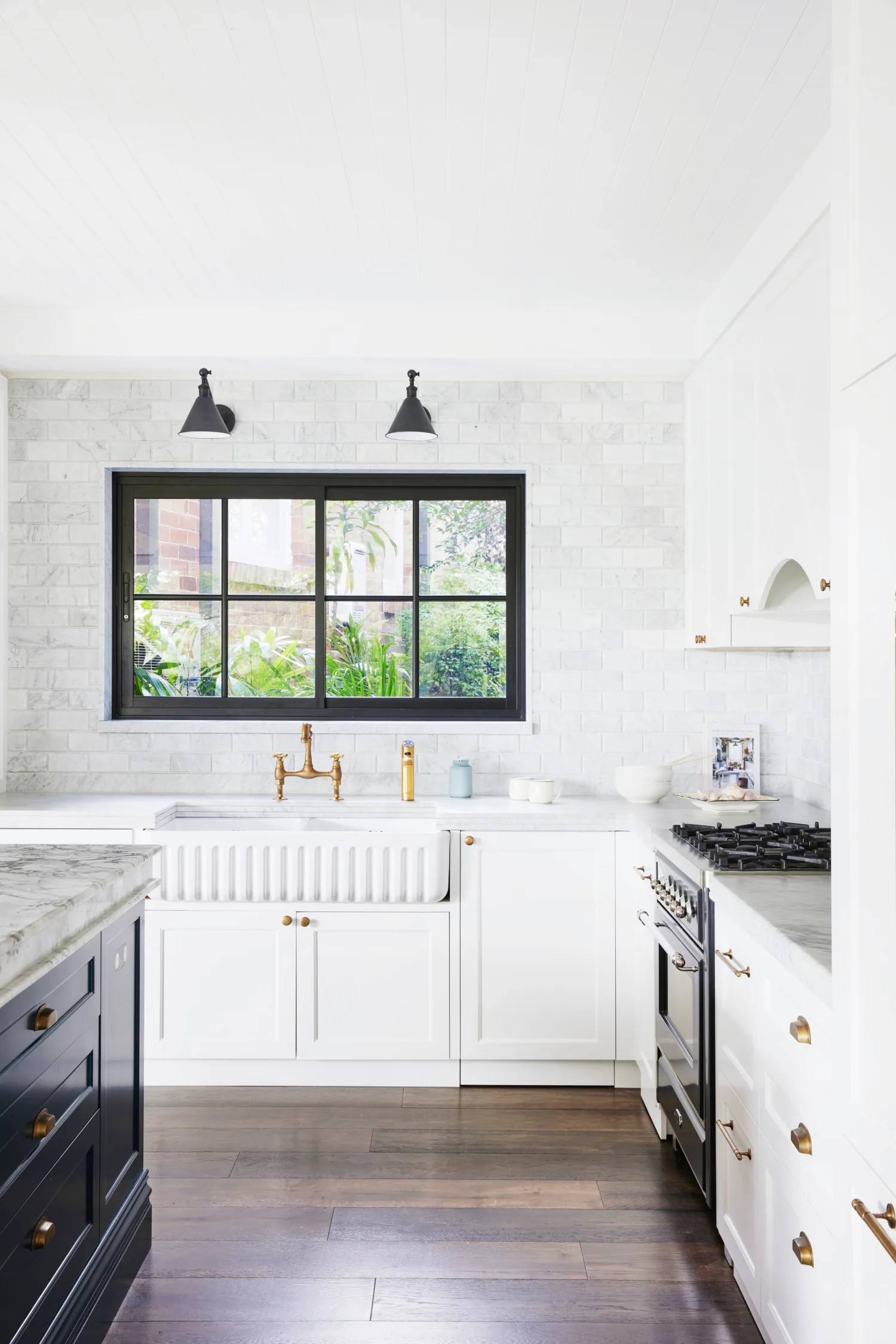
The butler’s sink in this modern Hamptons kitchen is the centrepiece. (Credit: Photography: Chris Warnes / Styling: Lucy Gough)
With its deep basin and exposed apron front, this hardworking fixture brings both character and practicality to a kitchen. Originally designed to accommodate large pots, pans and household tasks, butler’s sinks remain popular today thanks to their generous size and timeless aesthetic.
Its exposed front adds a layer of traditional charm that suits both classic and contemporary interpretations of the style. In an era where many homeowners are prioritising function as much as aesthetics, the butler’s sink continues to earn its place as one of the most enduring features of a Hamptons kitchen.