


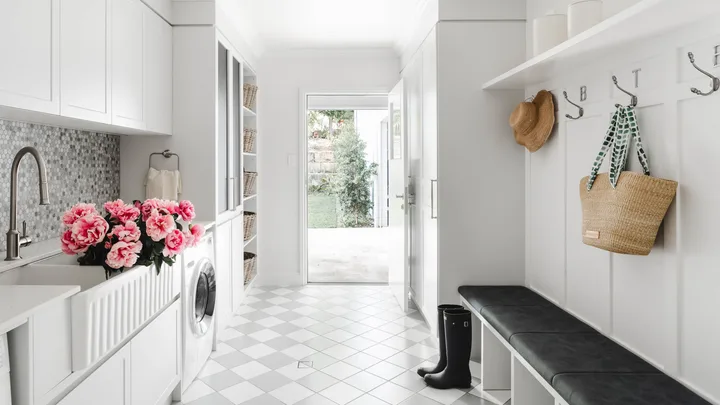
 Photography: Hannah Puechmarin / Styling: Gabrielle Reinhardt
The dream of creating a smart, stylish sanctuary has sparked boundless design briefs for beautiful kitchens and bathrooms. But laundry design ideas? Well, not quite. And for a room that’s the workhorse of the home, where many of us spend several hours each week, it’s surprising that good laundry design can be such an afterthought.
In this article
- Small laundry design ideas: All the essentials
- The best laundry layouts
- Laundry storage solutions and dimensions
- Best materials and flooring for laundries
- Laundry lighting ideas
Small laundry design ideas: What you have to include
If you only have a small laundry layout, prioritise the all-important basics first: a washing machine, heat-pump dryer and hanging rail above your sink. There’s no such thing as too much storage or bench space, so put both high on your wishlist.
Great laundry design, however, goes beyond these bare basics to support your household’s habits, needs and rituals, both in form and function. As interior designer Kate Walker of KWD tells us, “Design should never ask people to adapt to the room; the room should adapt to the way people naturally live”.
What is the best laundry layout?
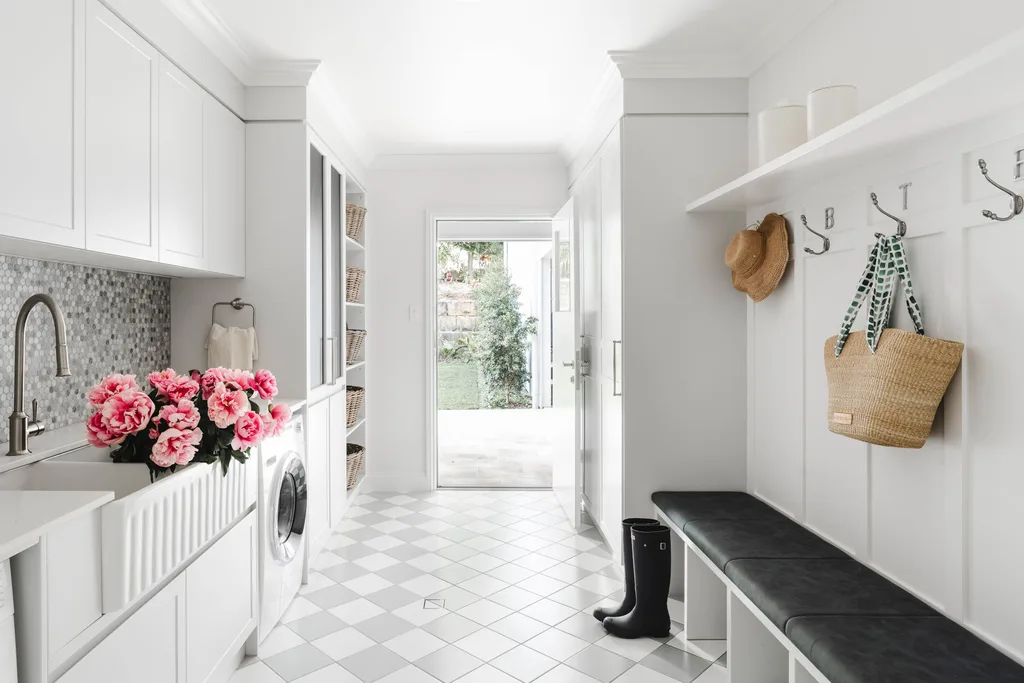
As every home and household is different, there’s no point chasing a one-size-fits-all laundry layout. From galley layouts and single-wall set-ups to small laundry rooms hidden inside a cupboard or shared with your bathroom, the floor plan possibilities are endless.
For your ideal layout, first consider how you wish to use your laundry. Is it just for washing, or will it also serve as a secondary entry or mudroom? Do you air-dry garments or prefer to use the dryer? And do any pets need to be fed or bathed there, too? Next, try to position it with direct outdoor access (this will depend on your floor plan, of course).
Best placement for a laundry
Direct outdoor access is ideal for a laundry. From there, whether you have a small laundry or one that enjoys ample space, think about how your garments will enter and exit the area. “We ran a laundry chute from the upper-level bathroom straight down to the laundry,” says interior designer Jade Pennell of Eucalypt Studio. “I love a laundry positioned near a bathroom; it makes the journey from bathroom to wash cycle so much more seamless.”
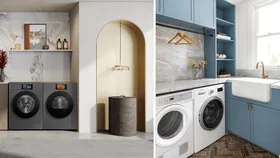
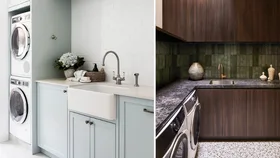
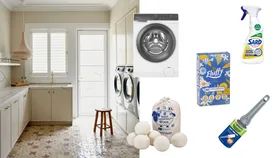
What are the best laundry storage solutions and dimensions?
Perfect your laundry storage with these essential inclusions and measurements
- A tall cupboard, at least 1800 millimetres high and 600 millimetres wide, can hold a broom, freestanding ironing board and stick vacuum cleaner.
- Shallow drawers, 150 millimetres in height, are ideal for storing lint rollers and pegs.
- Deep drawers, up to 450 millimetres in height, are perfect for storing bottles of laundry detergent and cleaning supplies.
- Laundry benchtops should be at least 650 millimetres deep – any less and your appliances can protrude – and as long as possible.
- A hanging rail mounted under high open shelving or 350-millimetre deep upper cabinets makes drying shirts and delicates a breeze. Hanging rails can also be hidden inside vented drying cupboards.
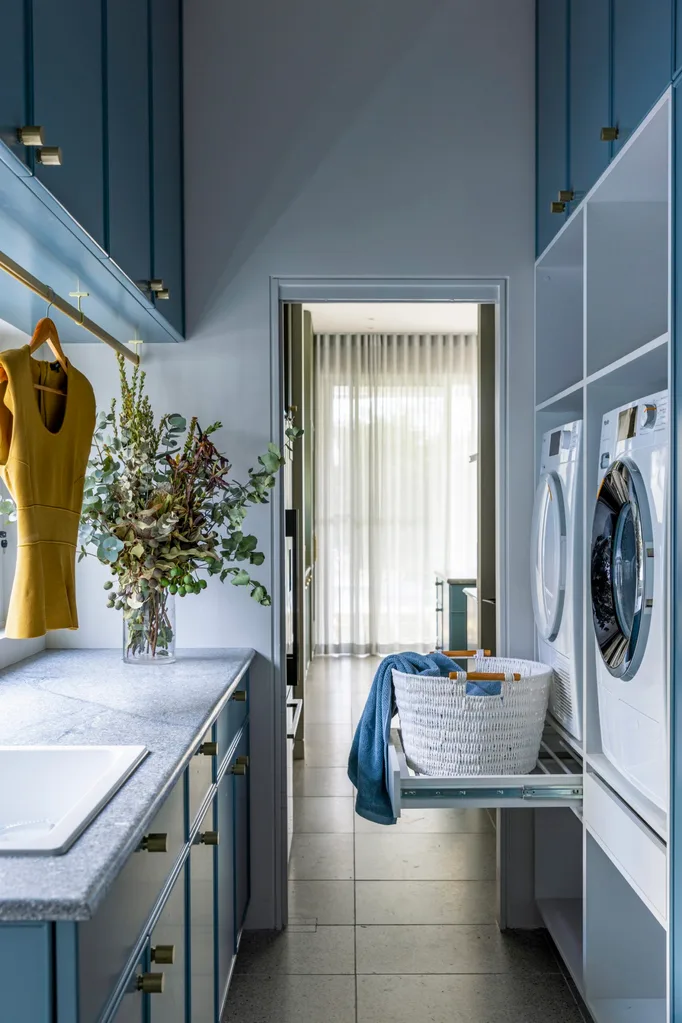
Jacinta also recommends raising your laundry appliances to a more ergonomic height – about 1200 millimetres to their centre point – which makes the dials easier to read, reduces the need to bend and frees up space below them for storage or hampers. “Those little details make everyday life easier,” she says.
How to design a laundry that optimises workflow
The distinct steps in your workflow of sorting, washing, drying, then folding should guide the basics of your laundry design and floor plan, plus space factored in for the final step – ironing and steaming – to ensure a design that works like a dream. Separate hampers are great for sorting lights, brights and darks, while a two-bowl sink lets you give garments a good soak before they’re washed.
“The laundry is one of the most hard-working rooms, so it deserves to be organised, uplifting and enjoyable”
Jacinta Woods, interior designer
For an intuitive space, consider the journey clothes travel once they’ve entered your laundry. “We always start with workflow: sorting, washing, drying, folding and storage should flow in a logical sequence,” says interior designer Jacinta Woods of Woods & Warner. This means side-by-side washers and dryers should open towards each other, benchtops are within arm’s reach with 1200 millimetres between fixtures (1000 millimetres at a pinch), and ironing boards – whether integrated or freestanding – should be surrounded by circulation space.
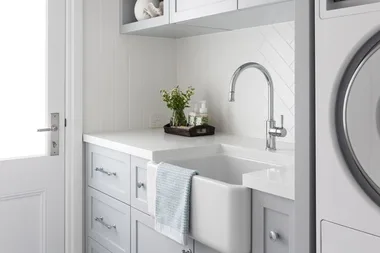
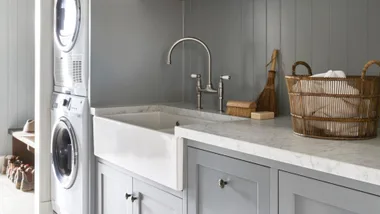
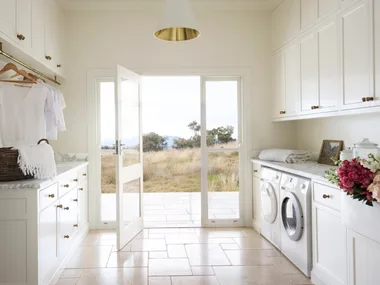
Smart storage ideas for your laundry
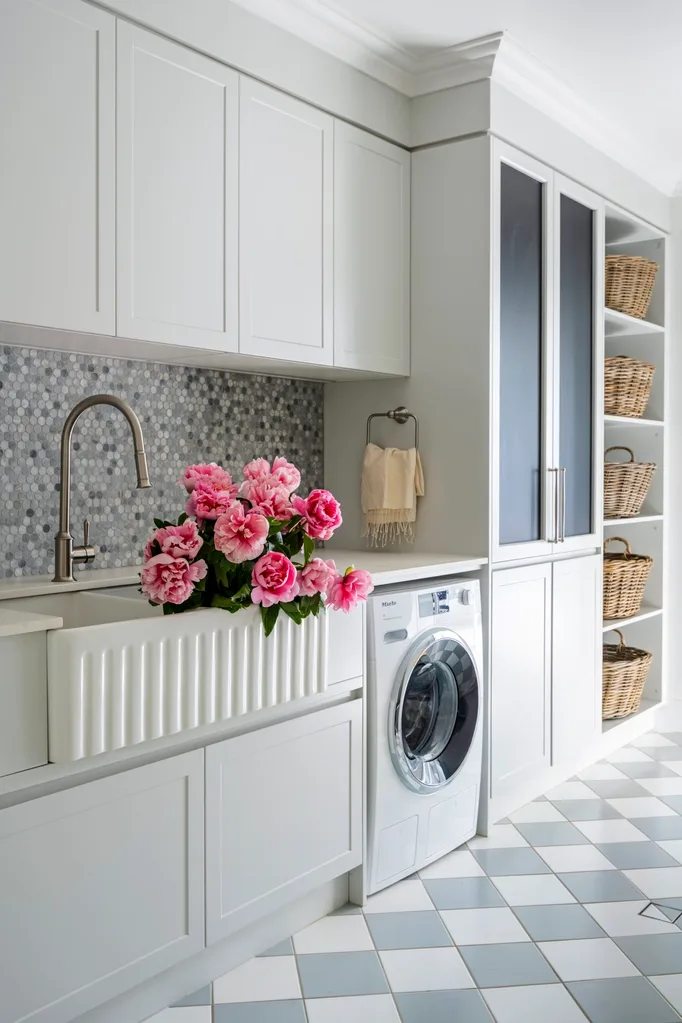
A step up from the humble and hardworking hanging rail, built-in drying racks or cupboards are the ultimate game-changers when it comes to drying clothes indoors.
Ample benchtop space is also a must for folding laundry. Integrated ironing boards, which fold out from your cabinetry and then disappear when not in use, will also keep your laundry looking neat and tidy.
And if you prefer to steam your garments, a well-ventilated hanging spot (even if it’s from the handle of wall-mounted cupboards) will do the trick.
The best materials and flooring for laundries
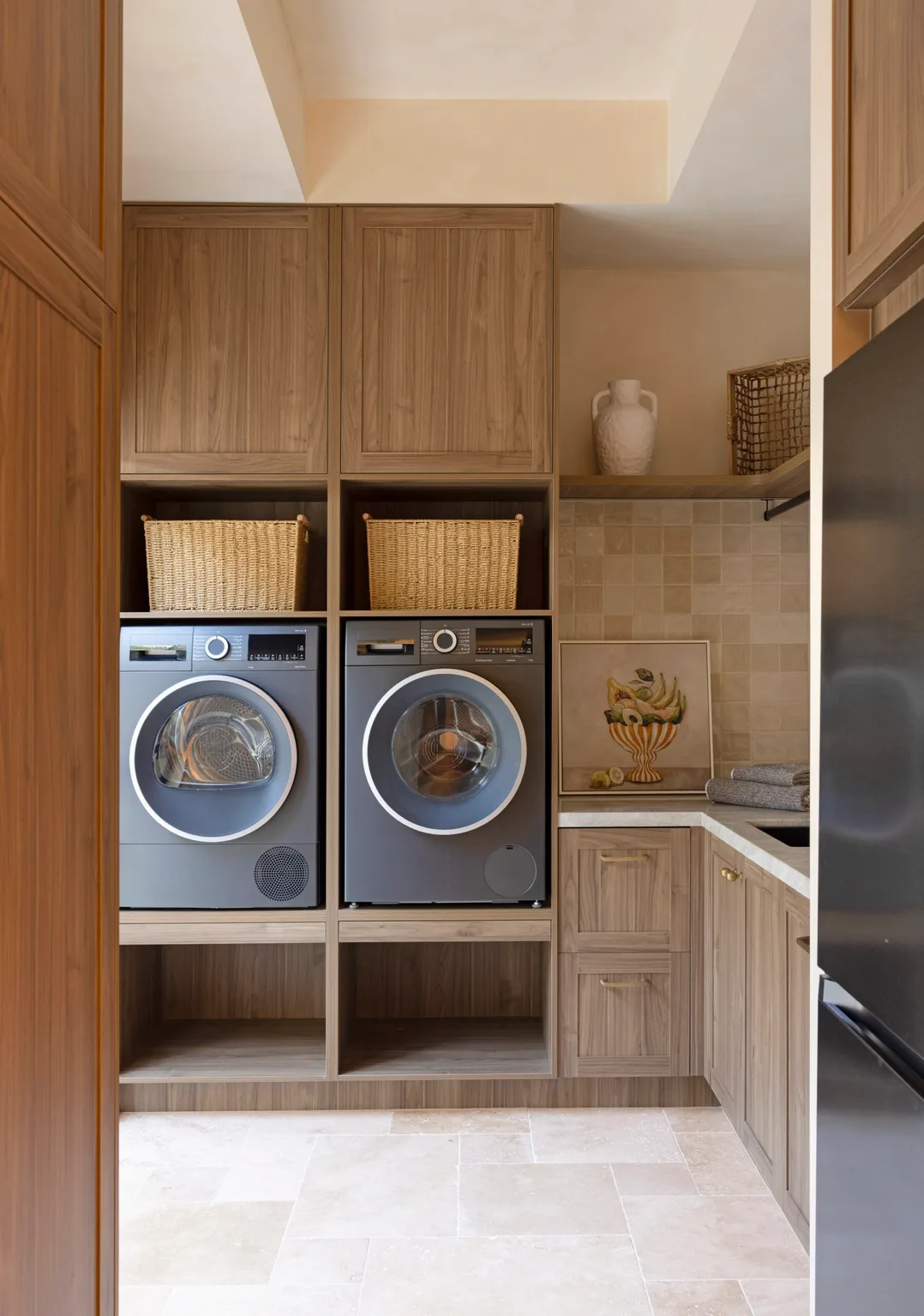
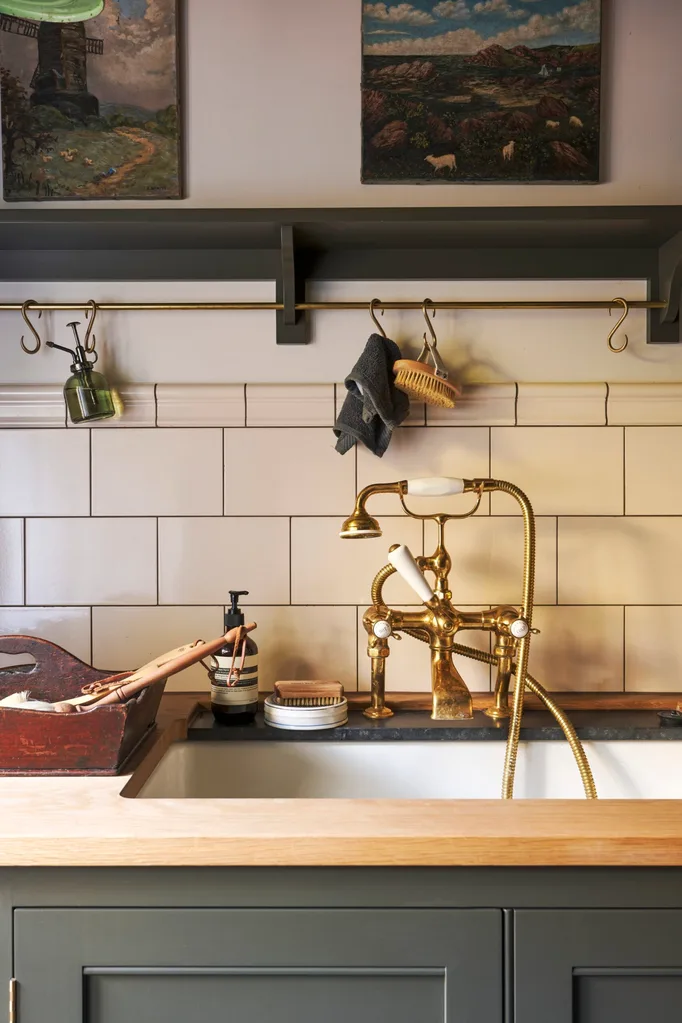
The materials in your laundry need to withstand the daily rigours of moisture, heat, dirt and detergents. As such, porcelain, ceramic, timber, engineered stone and well-sealed natural stone are a laundry’s best friends. For tapware and hardware, finishes that are easily wipeable such as satin, semi-gloss and gloss are best. After all, the materials should improve with age, not deteriorate.
For the earthy laundry design in her family’s Gold Coast home, Danika Downting opted for surfaces that resist scratching, staining and warping, yet are also truly beautiful. Travertine floor tiles from Haus Collective were used on the laundry floor, with quartzite benchtops and ‘Riad’ splashback tiles from Signorino. “If you’re using natural stone, choose something durable that won’t make you nervous when you use the space,” she warns.
“I wanted a good-sized benchtop for folding, good lighting, plenty of hanging space and a place for everything. We also positioned the laundry close to the kitchen, so I can be cooking while getting the washing done”
Danika Downting, homeowner
Danika also raised the washing machine and dryer about 600 millimetres off the floor and loves the practical and ergonomic benefits this design detail offers. “It makes everyday life so much easier, there’s no bending down to load or unload, there’s extra storage underneath for my baskets, and it feels more enjoyable to use,” she says.
As an added bonus, it also freed up room for her to integrate pull-out shelves below each appliance. “They’re one of those little details that make everyday life easier. We use them to rest laundry baskets while loading and unloading, and they can also be used for folding. I’d absolutely include them again,” she says.
How to improve laundry room ventilation
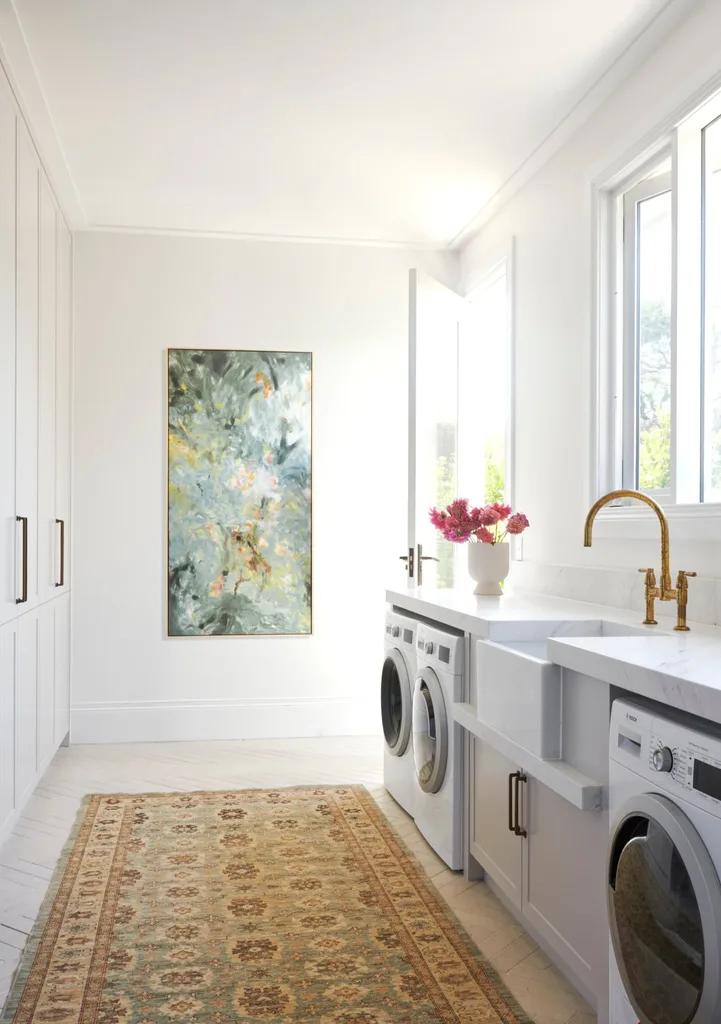
Laundry ventilation may not be the most scintillating subject, but ignoring it in early planning stages is a recipe for design disaster. Throwing open a door to a sunny spot outside helps prevent mould and odours, and lets clothes dry naturally, which is gentler on fabric fibres and power bills. Operable windows or louvres can also air your laundry naturally.
You’ll thank your future self for integrating discreet dehumidifiers, extraction fans and heated towel rails or cabinetry to dry delicates, too. “The best ventilation is the least visible,” explains Kate. “When we design drying cupboards, ventilation becomes part of the joinery itself, concealed within bespoke grilles or finely detailed openings that complement the cabinetry. True luxury is when technical requirements quietly disappear into the design.”
Everything you need to know about laundry lighting
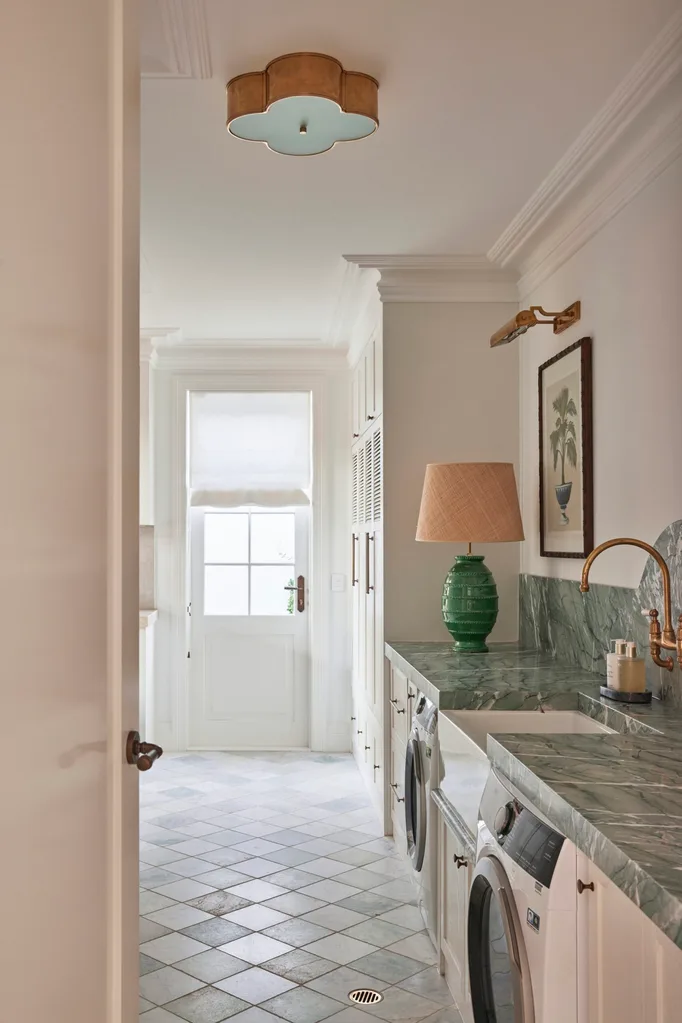
Natural sunlight streaming into a laundry improves ventilation and drying time, and brightens both the room and mood on washing days, so aim to orientate your space to a northern aspect. Laundries also need a mix of ambient, task and accent lighting – solely installing downlights can lead to folding clothes in your own shadow. This is where stunning sconces or LED strip lighting concealed beneath overhead joinery will brighten your workspace.
“I approach lighting in layers,” says Kate. “Ambient light establishes an even level of illumination; while task lighting provides focused light where folding, ironing and stain treatment occur; and decorative lighting introduces warmth and personality.”
Gorgeous accent lights have the added benefit or infusing your laundry with a touch of glamour, and (thankfully!) there’s no reason this room should be purely utilitarian. Along with gleaming hardware, an artwork or two and ornamental touches, decorative lighting can be the jewellery of your laundry, elevating this important space from basic to beautiful.

Be the first to read this story by subscribing to Home Beautiful magazine

