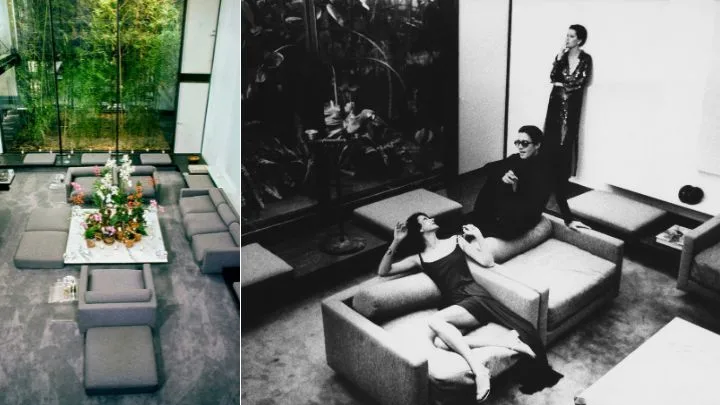
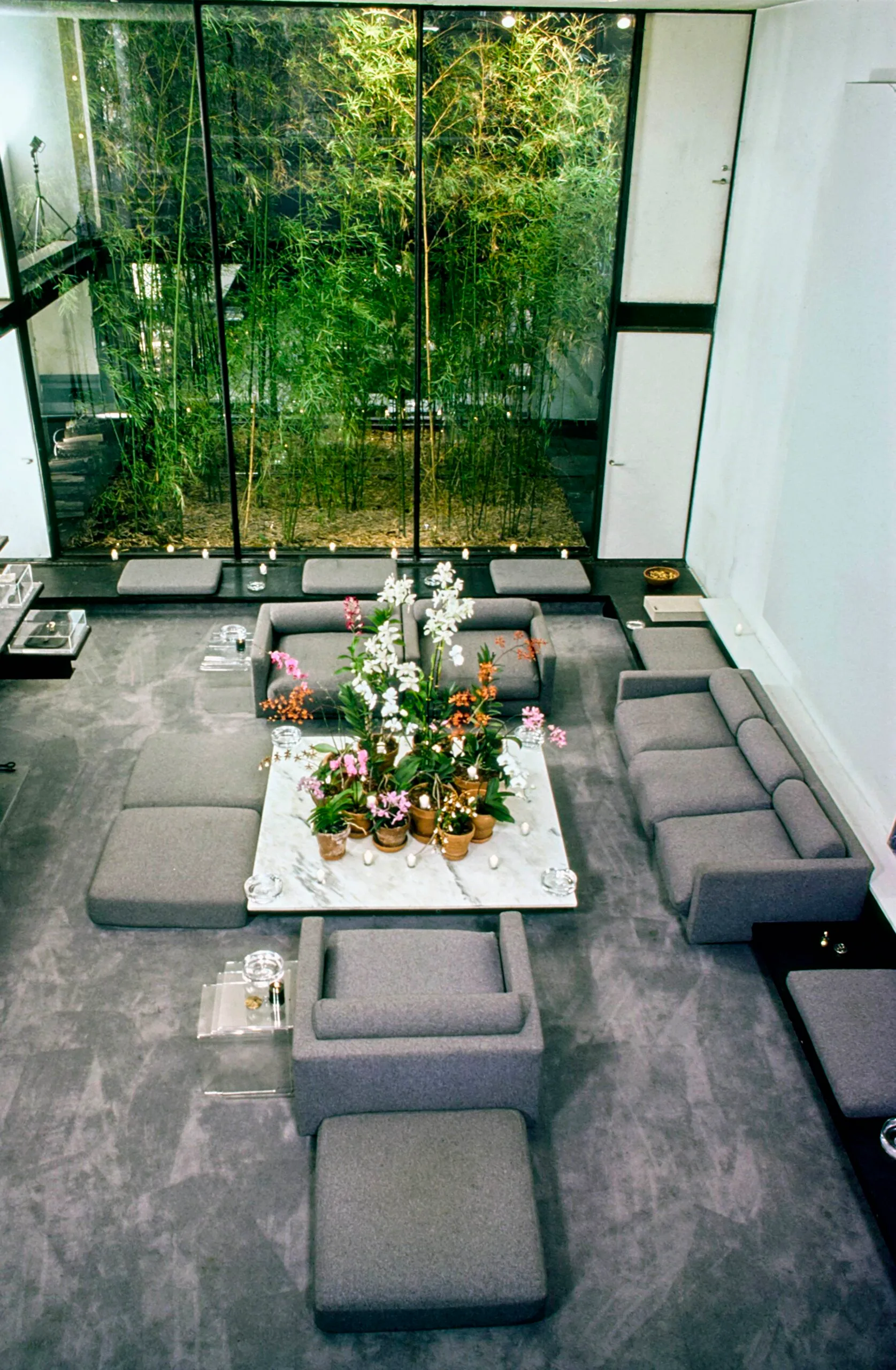
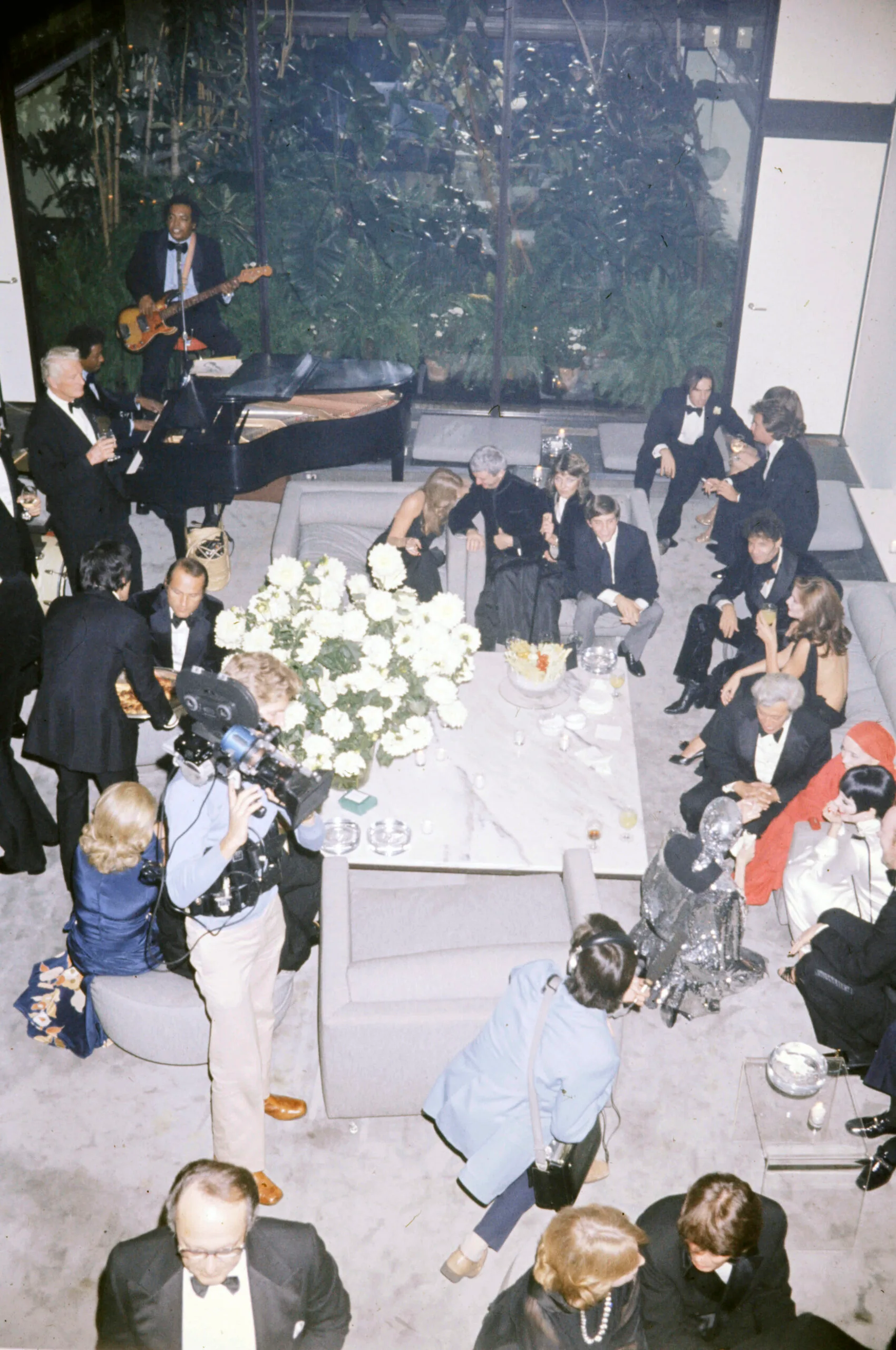
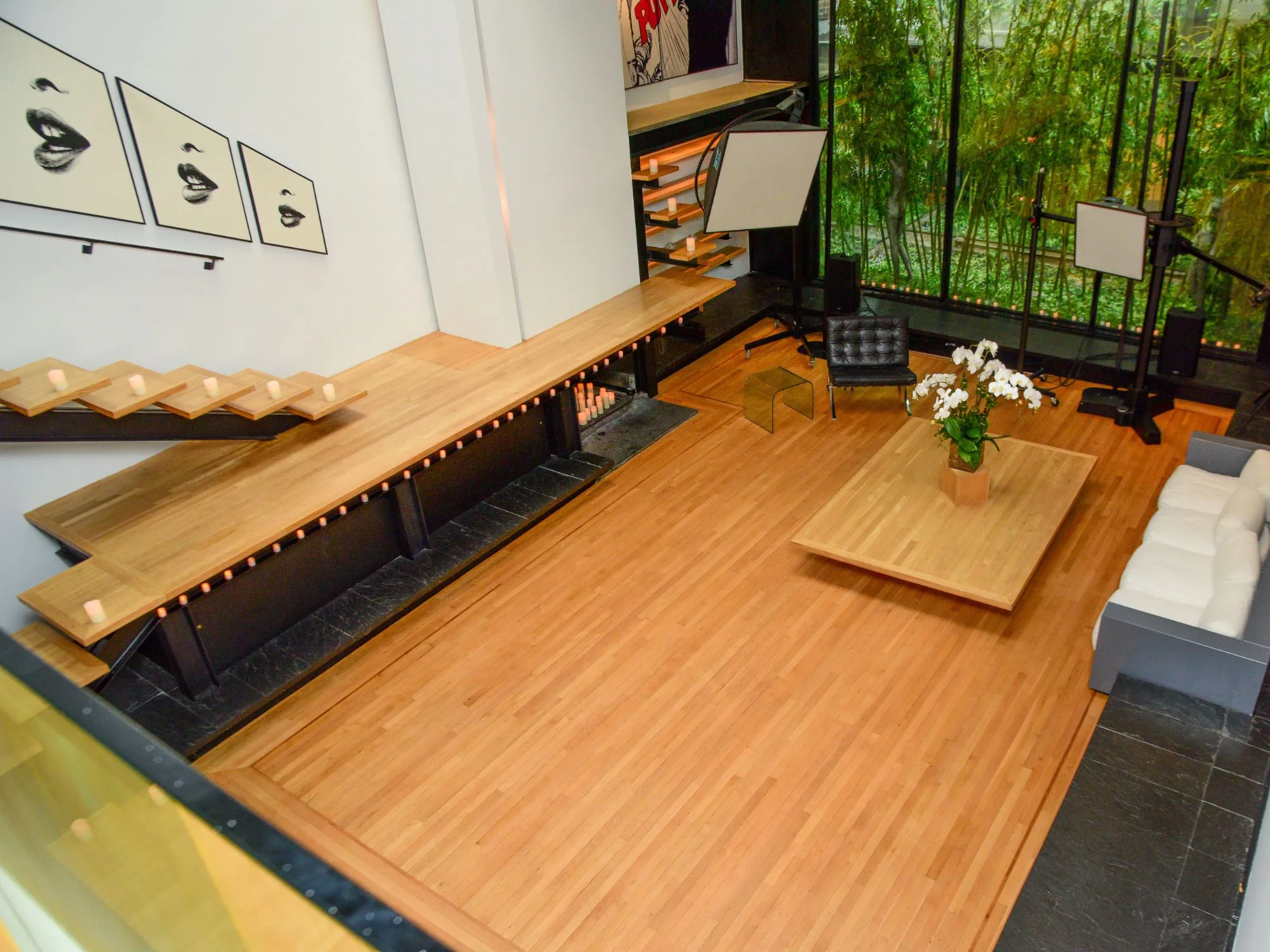
During this era, the home became beloved for its sunken, grey-hued living area, where glittering guests would lounge on the low-slung sofas and plush ottomans surrounding a central marble coffee table. The home’s most distinct space, the 32-foot tall living room is beset by towering windows peering into the interior bamboo greenhouse garden. The room is connected to its overlooking balcony by a similarly iconic floating staircase, which is today lined with artworks reminiscent of the pop art era.
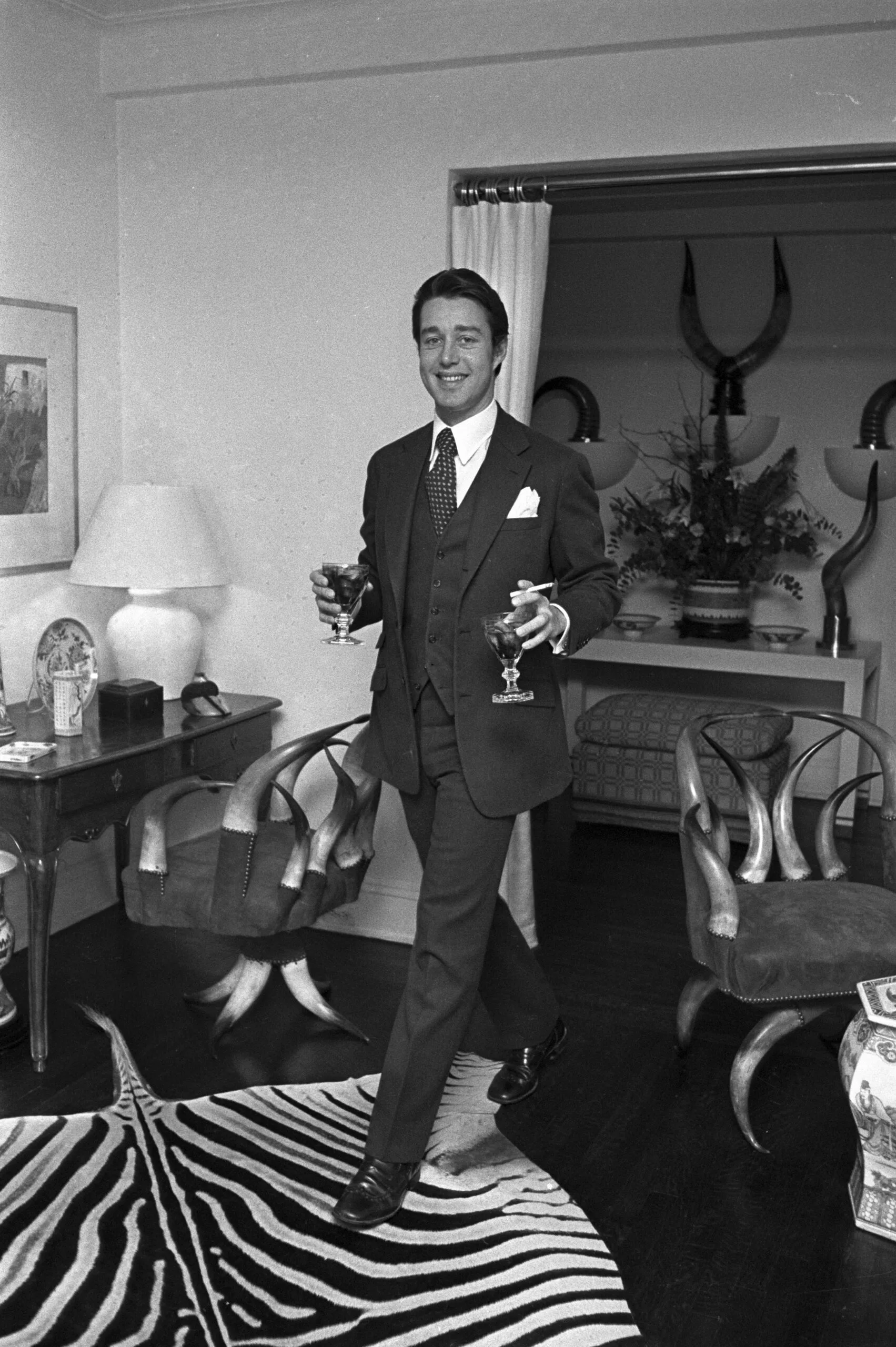
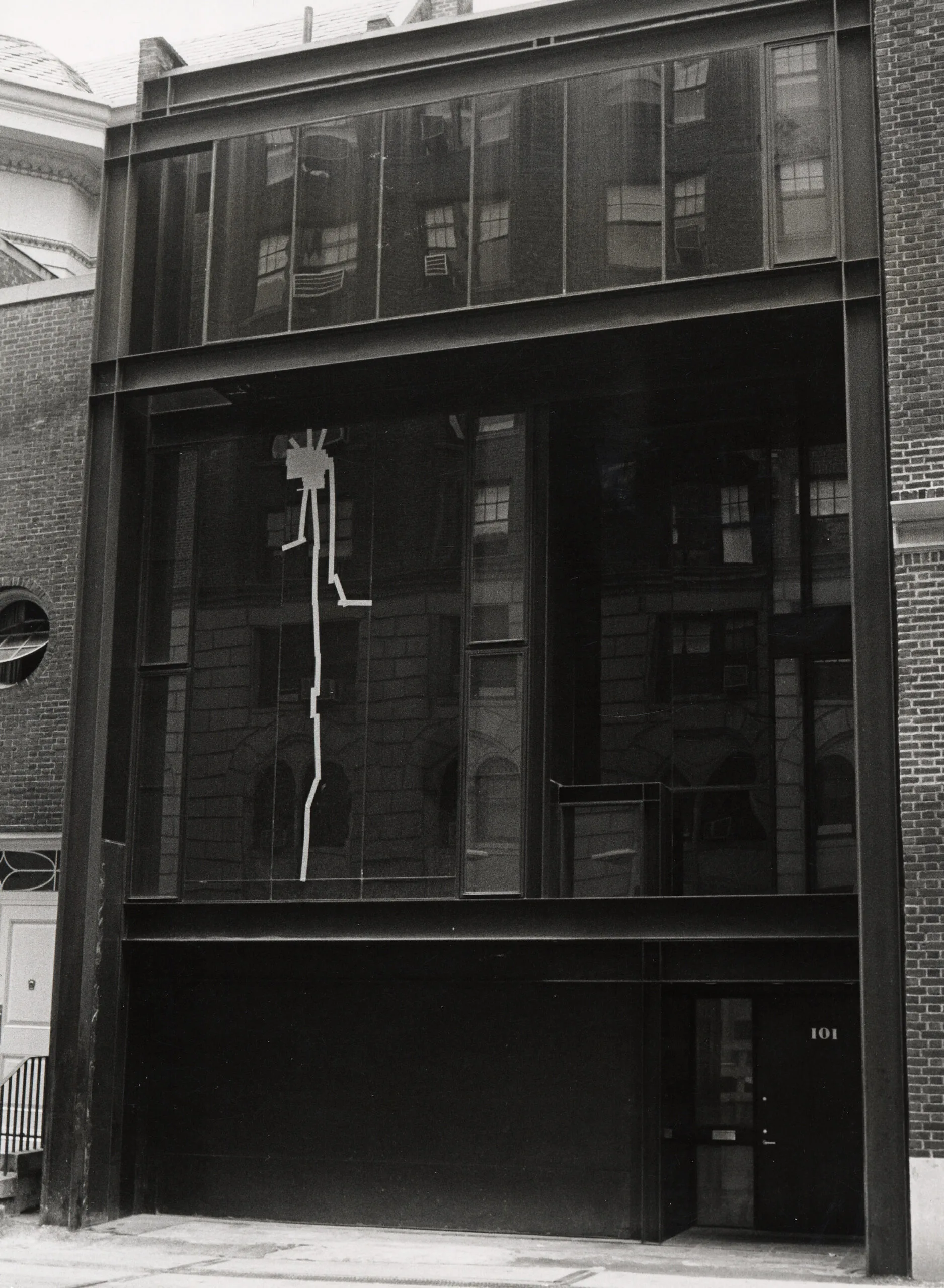
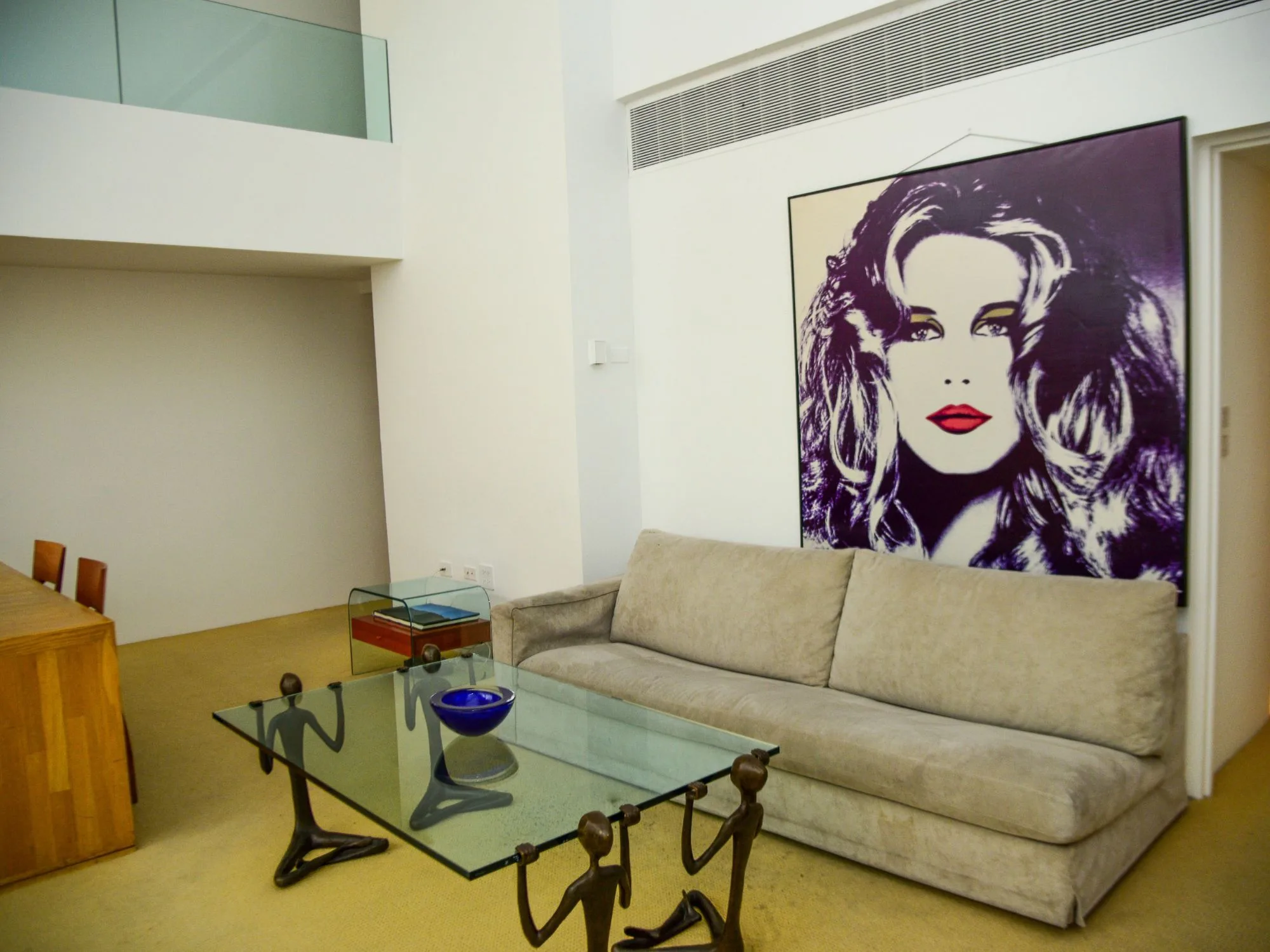
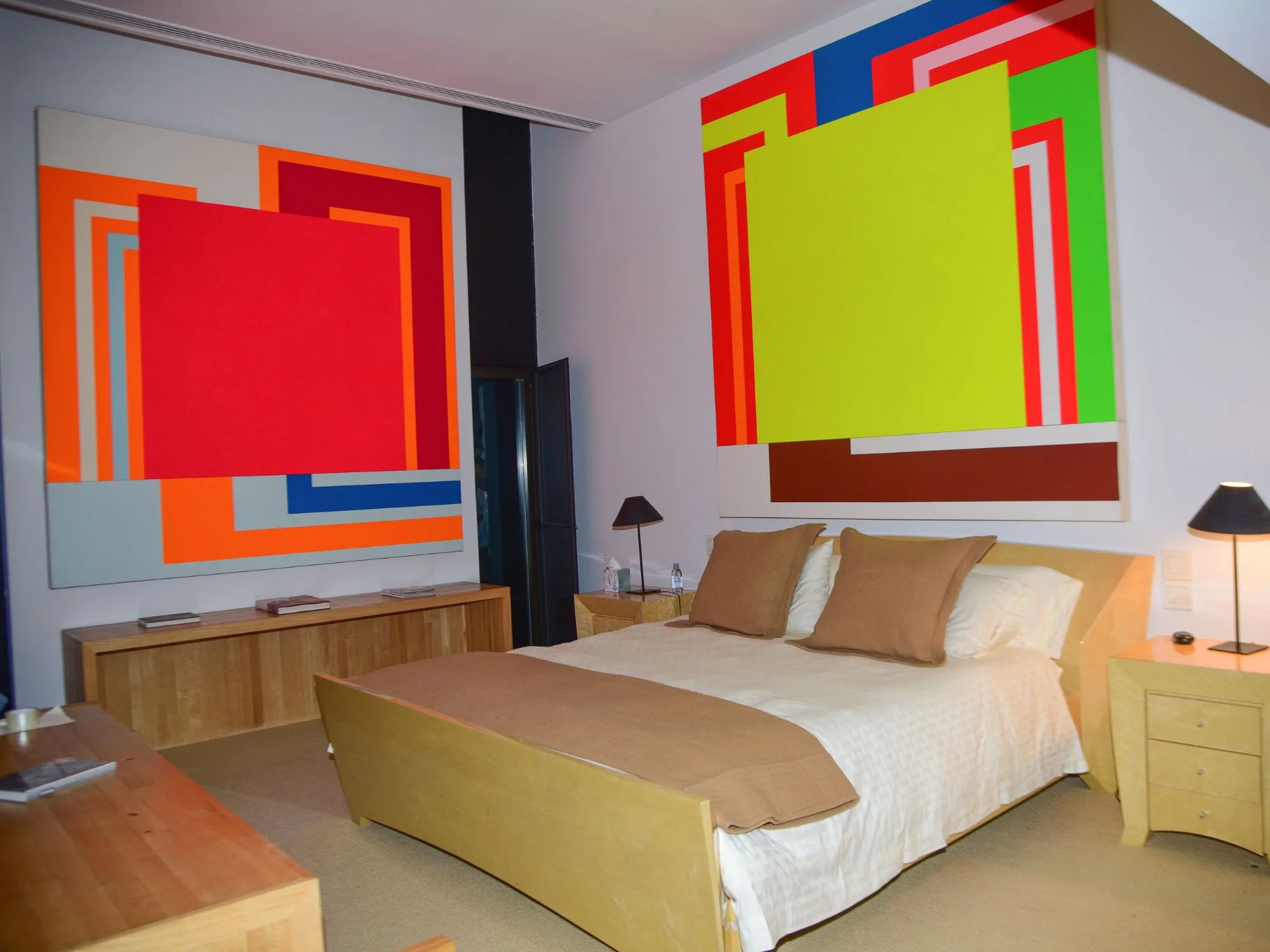
While the exterior of Halston House showcases the distinct clean lines and geometric shape of Rudolph’s Brutalist style, the property’s steely external modesty conceals a more elegant interior of soaring ceilings, large plexi-glass windows and, of course, distinct artistic flair.
The four storey, split level floor plan created a maze of rooms and living zones — perfect for Halston’s style of entertaining and the epitome of Rudolph’s sculptural style.
The legacy of Halston House
On par with Andy Warhol’s The Factory or Studio 54, Halston House is an artefact of ’70s-’80s New York. Having been the residence of several icons of gay culture, the property also holds a special significance to the LGBTQ+ community.
Along with the Rudolph Townhouse at 23 Beekman Place, and the Modulighter Building, it’s one of only a handful of Paul Rudolph buildings in Manhattan.
The property is often evoked as a prime example of minimalism, with Australian interior designer Greg Natale calling it “one of my favourite buildings ever”. Natale continues to use the modernist masterpiece as inspiration for his own home. “I love how clean it is,” he told Elle Lovelock on Home Beautiful’s The Edit podcast. “I love glossy textures, I love marble, I love metal.”
“Halston’s townhouse was really clean and minimal, and that’s a really easy style to get at home,” he added. The design can be mimicked with white paint, block colours, and luxe materials, like chrome metal, black glass, and marble.
Who owns Halston House now?
Fashion designer Tom Ford is the current owner of Halston House. The property was sold in 2019 for US $18 million (approx. AU $26 million).
Halston House owners:
| Alexander Hirsch and Lewis Turner | 1966 – 1974 |
| Halston | 1974 – 1990 |
| Gunter Sachs and Gianni Agnelli | 1990 – 2019 |
| Tom Ford | 2019 – present |
Where is Halston’s townhouse?
The former residence of designer Halston still sits at 101 East 63rd Street on Manhattan’s Upper East Side. It remains a private residence, and is not open to the public.
Hear interior designer Greg Natale speak about Halston House and more of his design influences on The Edit podcast:

Related stories
Native ad body.
Native ad body.
Native ad body.