Installing a new staircase may not seem like something to stress over, but there’s a lot to think about. There are the usual interior considerations, such as style, safety and cost, but each decision comes with its own ramifications that are often overlooked.
One such example? “Stairs have a huge effect on heating costs because an open stair creates a chimney that pulls all your hot air to the upper level,” explains architect Madeleine Scarfe, who works primarily in the NSW South Coast. We tackle these unexpected elements, and more, to help you navigate your own stairway to heaven.
Form fitting
The most practical design is the straight staircase. “They slot into the standard form of most houses, and you can use the space underneath,” says Madeleine. “Single runs work best in central circulation spaces, because they give a space height and often provide the opportunity to bring in light from the upper level.”
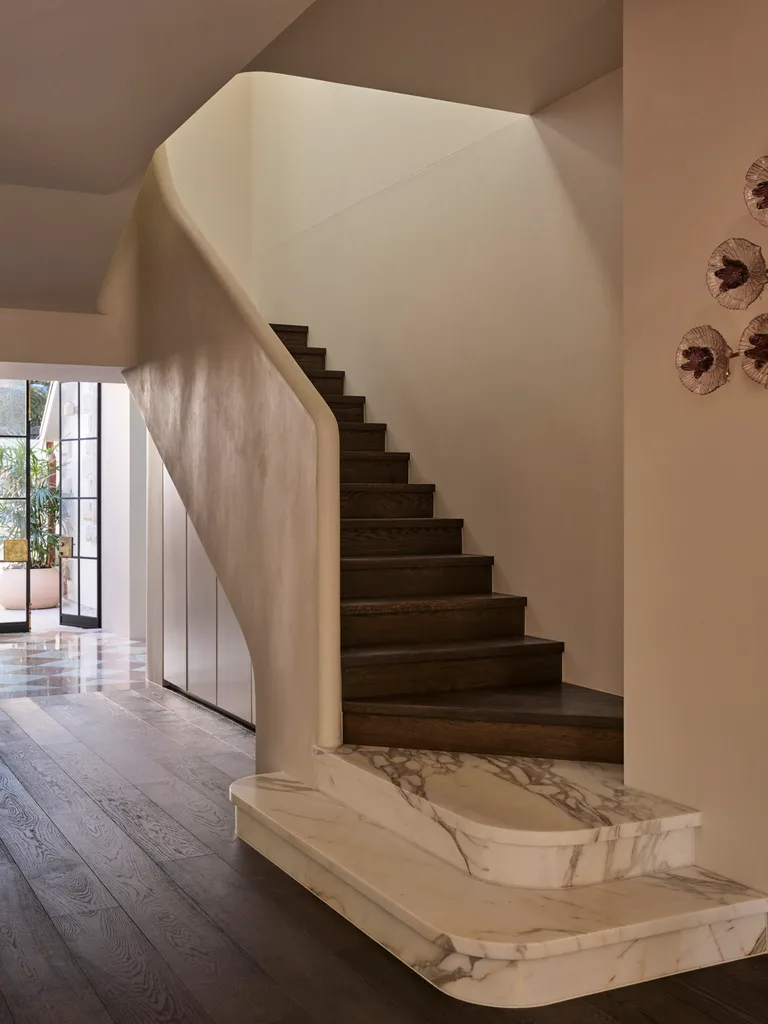
Straight designs can also include stairs that wind back on themselves, with a landing in the middle.
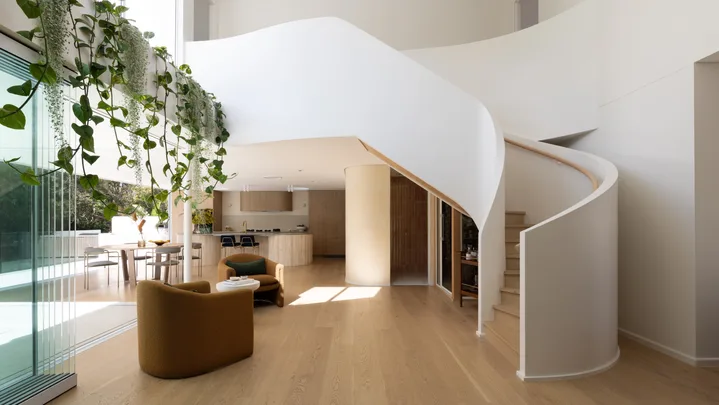
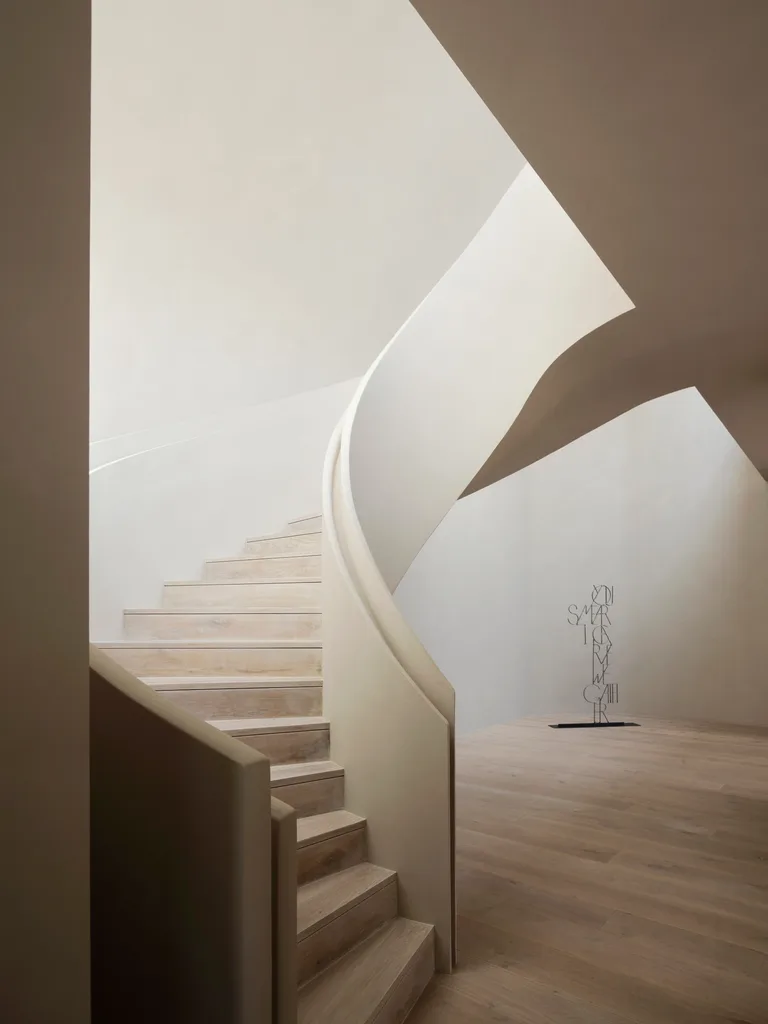
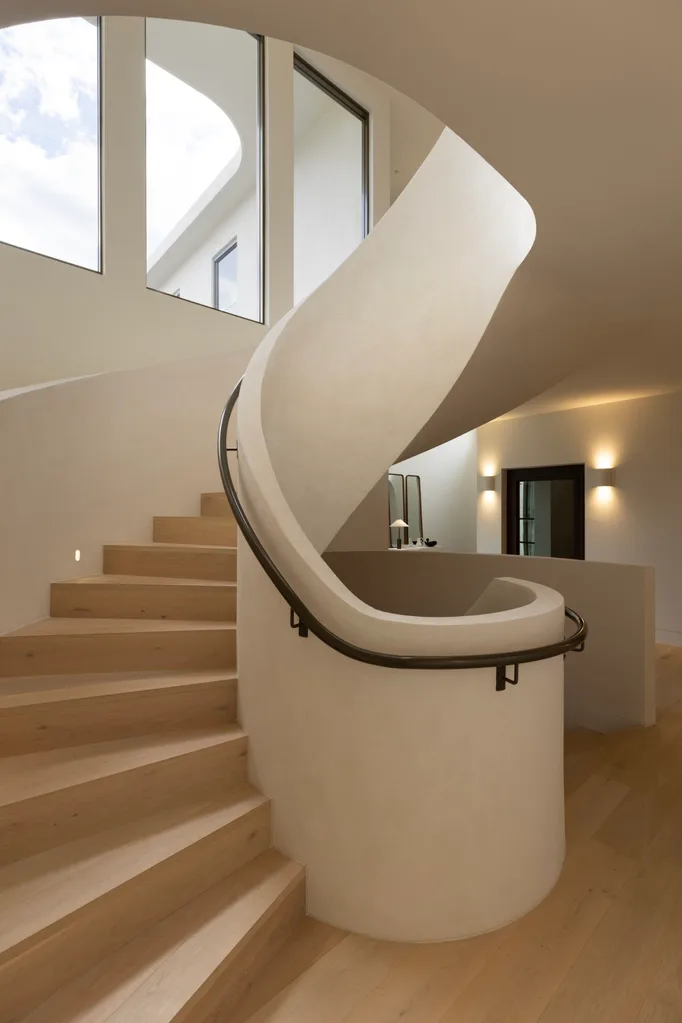
“These are more common in renovations because the two ends are in a similar place in the floor plan,” explains Madeleine. If curves are your thing, be aware that they generally take up more space and are more complicated (and therefore more expensive) to build. The space underneath can also be awkward to fill but, when done right, a curved staircase is architecturally impactful and contemporary.
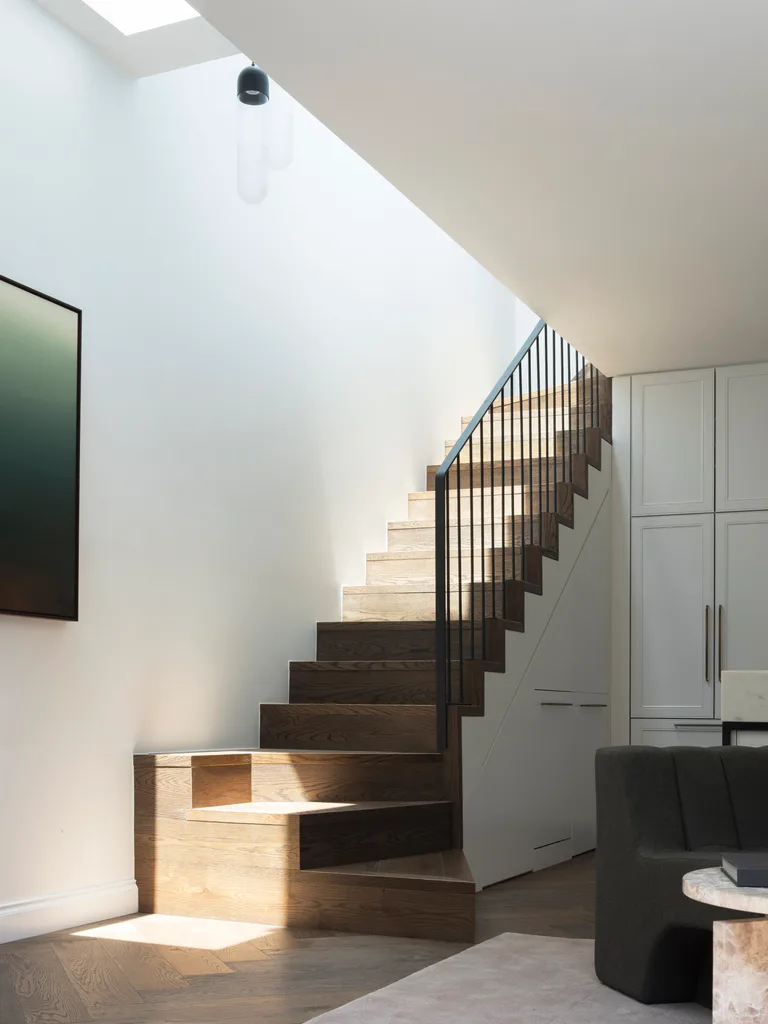
More winding than their curved counterpart, spiral stairs are an efficient use of space and can be cost effective. “But they are not very comfortable for the user and it’s hard to carry things up and down,” warns Madeleine. Consider them for secondary spaces like attics and mezzanines.
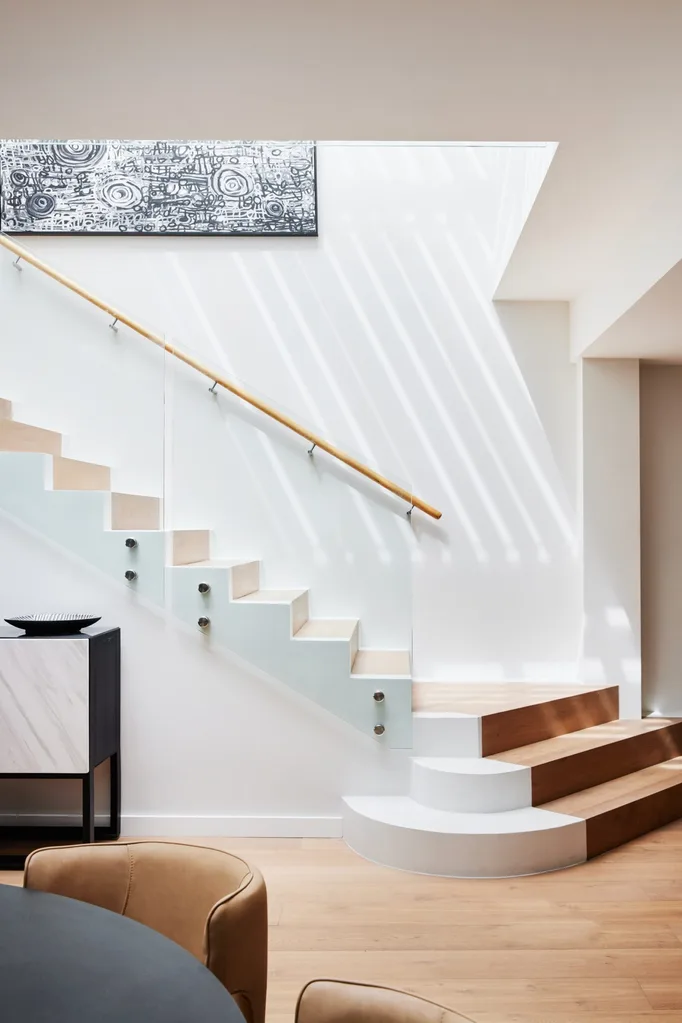
A sculptural option is an open riser staircase with treads that appear to ‘float’. “These are generally used to help a stair ‘disappear’ when looking at it horizontally, so that your view through is uninterrupted,” explains Madeleine. There are strict safety guidelines around open riser staircases, including the allowable gaps between treads.
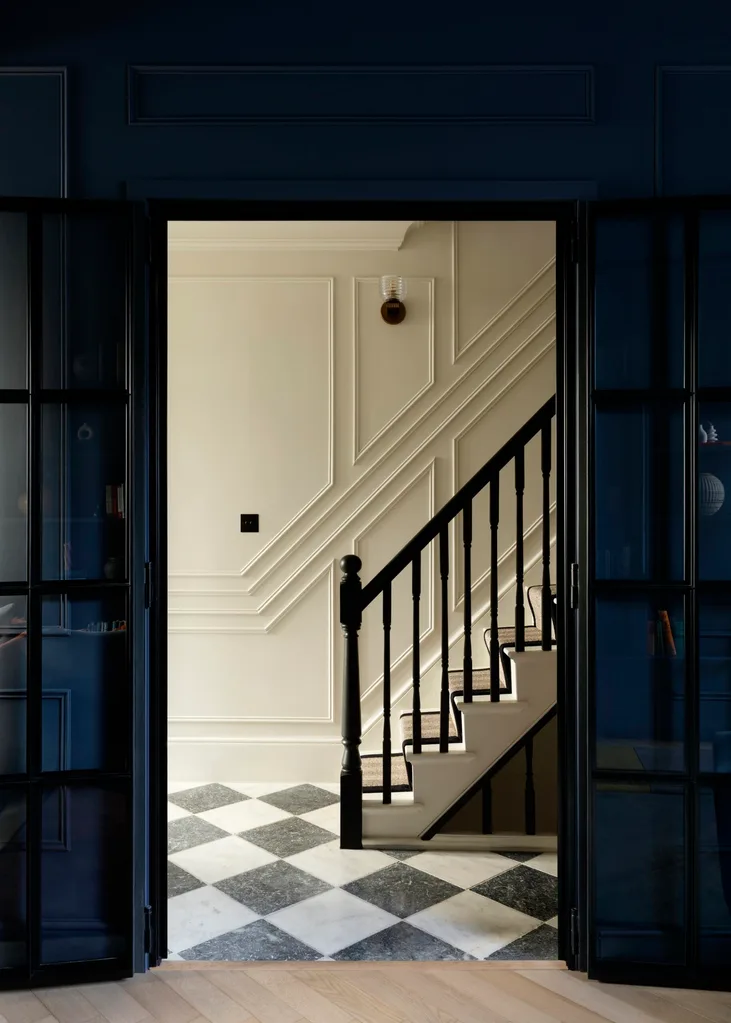
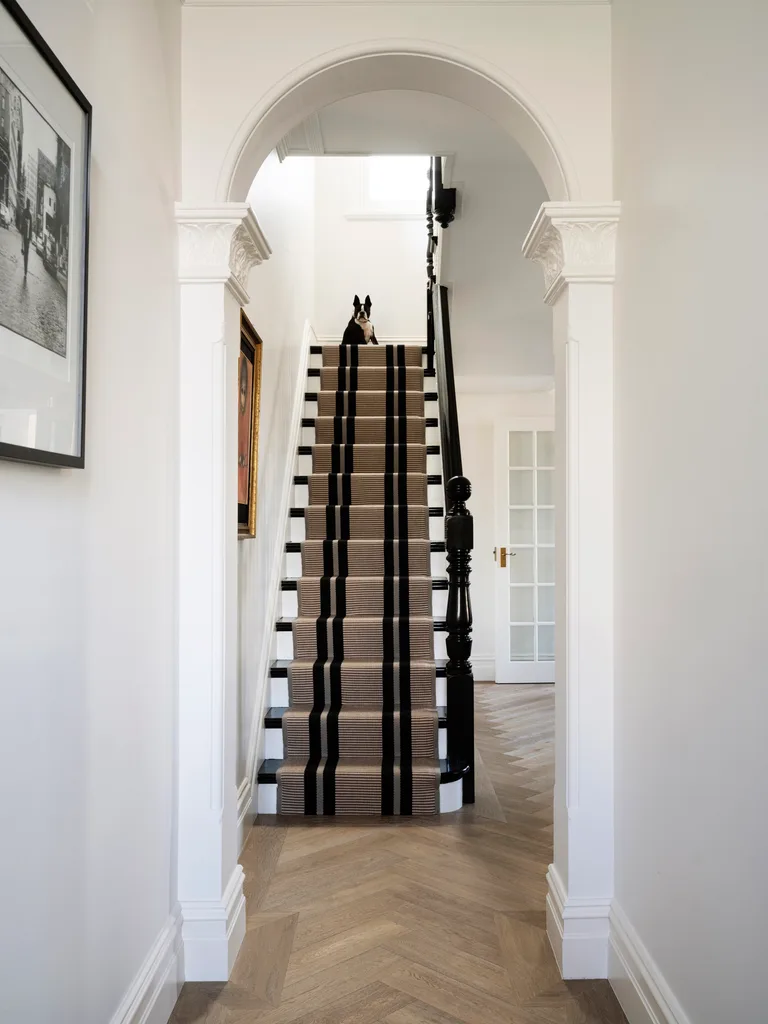
“A runner can visually widen your staircase and instantly transforms the space by dressing it with elevated elegance.”
JULIA FAIRLEY, HB SENIOR COPY EDITOR
Step to it
Step to it Most foot traffic lands on the front edge of each stair, with a nosing enhancing safety and protecting from damage. The most common styles are square, which are flush with the riser, or pencil round nosing, which has an overhang, says Michael Digger of Digger Brothers Building. “The square or flush look is more modern, whereas the pencil round is more gentle underfoot,” he explains. Typically, nosing is comprised of the same material as the tread, although this isn’t always the case, adds Annabelle McQuillan, principal building designer at Bespoke Belle. “Occasionally we design stainless steel or brass raised strips into the nosing to improve grip and provide visual definition,” she reveals.
Material mission
Timber is the most common medium for stairs and for good reason, says Michael, who adds that it’s warmer and softer underfoot than most materials. “Timber treads and a steel centre beam stringer are a good aesthetic combination, especially for open stairs,” he explains. Microcement – applied over a substrate such as concrete, tiles or MDF – is naturally slip-resistant and has a contemporary look which is increasingly popular. “The material often depends on where the stairs lead,” adds Annabelle. “Carpet is a popular and affordable option when stairs connect to a carpeted bedroom area, while tiles are used for their durability, particularly for stairs leading from garages or entries into living spaces.”
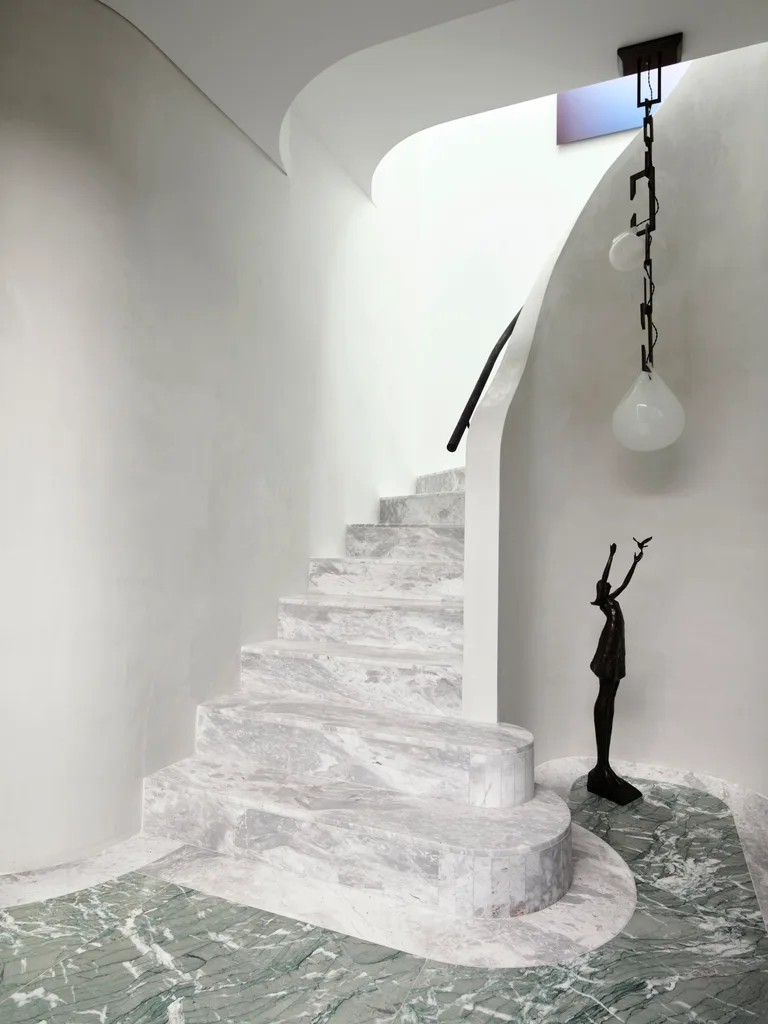
“The curves of helical staircases evoke a sense of unveiling as you travel up or down each flight.”
JULIA FAIRLEY, HB SENIOR COPY EDITOR
Getting a grip
A balustrade may be required to comply with building codes, which state that a barrier must be in place to prevent falls of one metre or more. “Balustrades can be solid, semi-solid or glass, and this choice will come down to privacy and how much light you wish to pass to and from the stairwell,” says Annabelle. Height rules apply, and it’s important to keep this in mind if you update your floor in future, as this could reduce the height. Once you have the safety essentials sorted, take cues from the existing interiors or proposed palette. “Walking up and down a stair, you are constantly aware of your immediate surrounds, so make the materials tactile and the visual cues appropriate to the activity,” suggests Madeleine.
Going under
Certain staircase designs leave more space underneath than others so it’s good to consider what you want to do with this area before you start construction. You could enclose the space for a classic cupboard under the stairs; devise a ‘mudroom’ with a storage bench and coat rack; or simply create a display area. Indulge your senses with a cellar, one of the only spaces in the home that actually benefits from darkness. Or, keep it practical with a powder room. The latter option can work well with a lower, sloped ceiling. As Madeleine explains, “Slotting a toilet under the stairs is a good use of space because the lowest part of the sloping ceiling coincides with the one place you can guarantee that people are sitting down!”
STEP BY STEP
A glossary of staircase components
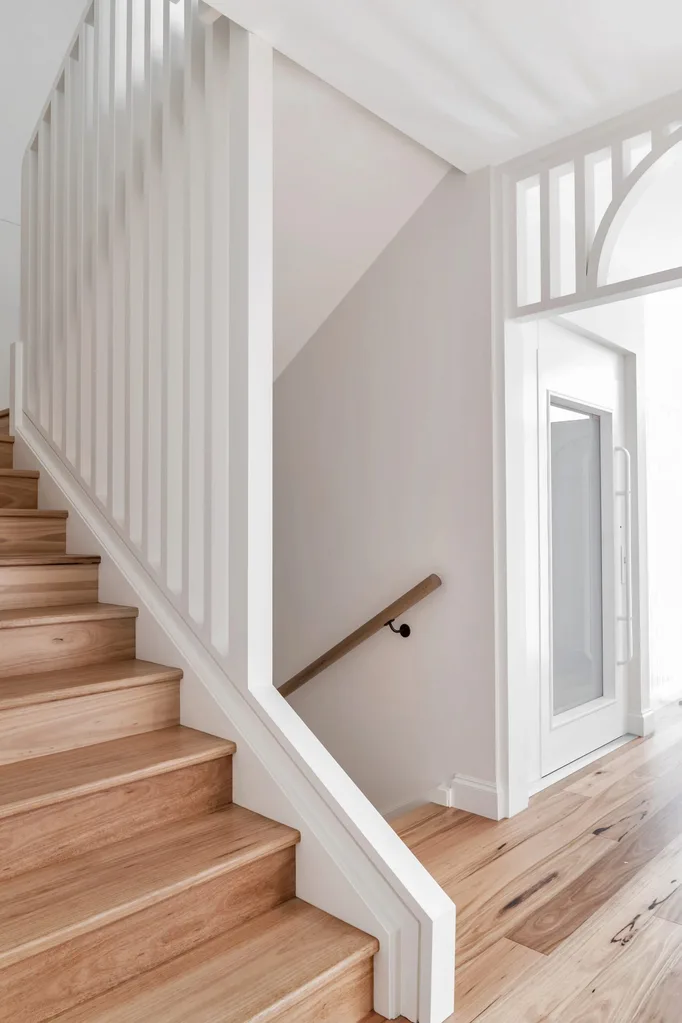
Each step is made up of a tread
(the surface people walk on) and
a riser (the vertical section that
connects each step to the next).
Floating steps are the exception,
comprised of treads without risers.
Many steps, especially in heritage
homes, feature nosing (the part of the
tread which extends beyond the riser).
Steps without this overhang are called
flush risers or square-edge steps.
Steps that have a tapered or triangular
shape, which change the direction of
the staircase, are called winders.
A stringer is the structural backbone
underneath. On the side of the steps,
a balustrade is the barrier, often
comprised of balusters, which are the
vertical posts beneath a handrail.
Word of warning: There are strict
guidelines around stair construction,
including measurements and safety
regulations. Check building codes
and always consult a licensed
professional before you begin work

Be the first to read this story by subscribing to Home Beautiful magazine

Related stories
Native ad body.

Native ad body.

Native ad body.