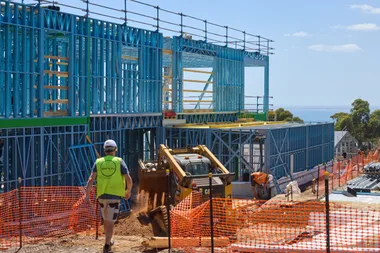
For decades, the idea of robots helping to build homes felt like something reserved for science fiction. Today, it’s edging closer to reality.
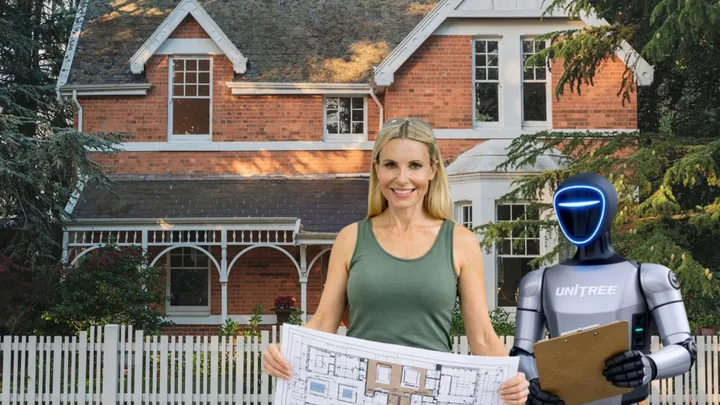
Australian renovation expert Cherie Barber has introduced an AI-powered humanoid robot to a building site, positioning the technology as a glimpse into the future of construction. Dubbed “Tinnie”, the robot is being used as an apprentice-style assistant. It is capable of accessing building information, supporting site inductions and helping workers retrieve project details on demand.
Cherie told Home Beautiful that it could be the first residential home renovation to incorporate a humanoid robot on site. “One of the biggest advantages is speed. Rather than spending time searching through manuals, websites or regulations, Tinnie can retrieve information almost instantly, helping the team make more informed decisions on site.”
“We’re essentially testing whether a humanoid robot can become a valuable knowledge resource for builders, tradespeople and project managers working on residential construction projects.”
CHERIE BARBER
While the move has sparked widespread curiosity, it also raises a bigger question. What role could humanoid robots play in the future of Australian home building?

At a recent Metricon conference in Byron Bay, Home Beautiful witnessed that future firsthand. Delegates were introduced to “QUTie”, a humanoid robot developed through research at Queensland University of Technology. QUTie offered a rare glimpse into how people and robots may one day work side-by-side on construction sites.
Listen to the panel of architects and designers at Home Beautiful’s live podcast recording at the Metricon Design Summit:

Why builders are looking to robots
Australia’s building industry is facing a perfect storm. Labour shortages, rising construction costs and ambitious housing targets have left builders searching for new ways to improve efficiency without compromising quality.
Humanoid robots are increasingly being explored as part of the solution.
Unlike traditional industrial robots, which are designed for highly controlled environments such as factories, humanoid robots are built to operate in spaces designed for humans. They can navigate stairs, move through doorways, carry tools and interact with people using speech and gestures.
That makes them particularly interesting for the construction sector, where no two job sites are ever exactly the same.
“Like any new team member, it needs to be trained, programmed and given information relevant to the project before it can become genuinely useful.”
CHERIE BARBER
Meet QUTie, the humanoid robot turning heads
Standing in front of a crowd of builders, developers and industry leaders in Byron Bay, QUTie looked remarkably at home.
The humanoid robot waved to attendees, responded to commands and demonstrated how humans and machines might one day collaborate in real-world environments.

While QUTie is not yet laying bricks or hanging plasterboard, researchers see robots like it as an important stepping stone towards a future where machines can support workers in practical ways.
The experience challenges common assumptions about robotics. Rather than replacing people, the focus was firmly on assistance and collaboration.
What can a robot apprentice actually do?
Despite the headlines, today’s humanoid robots are still far from replacing qualified tradespeople.
Instead, they are being developed to handle repetitive tasks, retrieve information, improve safety monitoring and support workers on site.
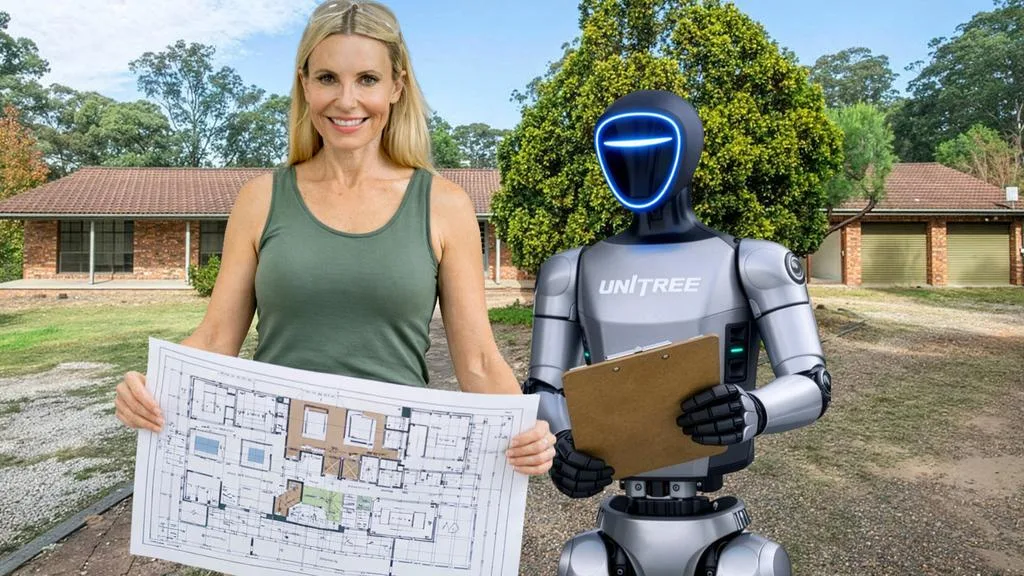
In Cherie Barber’s case, Tinnie acts more like a digital apprentice than a tradie, helping workers access project information quickly and efficiently.
“Tinnie’s not here to replace humans, skilled tradies or pick up a drill.”
CHERIE BARBER
Future applications could include:
● Carrying materials around a site
● Monitoring safety hazards
● Performing site inspections
● Recording project progress
● Accessing building codes and regulations
● Assisting with quality control checks
For builders juggling increasingly complex projects, the ability to instantly retrieve information could prove just as valuable as physical labour.
Will robots ever build our homes?
Not entirely. Construction remains one of the most challenging environments for robotics. Every site is different, weather conditions change daily and many tasks require human judgement, creativity and problem-solving.
That’s why experts believe the future is less about replacement and more about partnership.
Rather than taking jobs away from tradespeople, robots are expected to help workers become more productive by handling repetitive, physically demanding or administrative tasks.

The result could be safer sites, faster construction timelines and improved productivity across the industry.
What it means for homeowners
For homeowners planning a renovation or new build, the impact of robotics may arrive sooner than expected.
The first changes are unlikely to come in the form of robots building entire homes. Instead, homeowners may benefit through faster project delivery, improved accuracy, better safety outcomes and more efficient construction processes behind the scenes.
As Australia’s housing challenges continue to grow, innovations like humanoid robotics are increasingly moving from research laboratories into the real world.
The robot tradie may still be learning the ropes, but one thing is becoming clear: the future of building is already under construction.




Related stories

Native ad body.

Native ad body.




Native ad body.