 Photography: Marnie Hawson / Styling: Belle Hemming Bright ; @nealewhitaker
When Neale Whitaker says you should make a change to your home — you do it! A former judge on The Block, and now on My Reno Rules, Neale knows a thing or two about home renovations.
However, when it comes to the best renovation tweak he’s made to his own home, there’s one thing he would recommend to all.
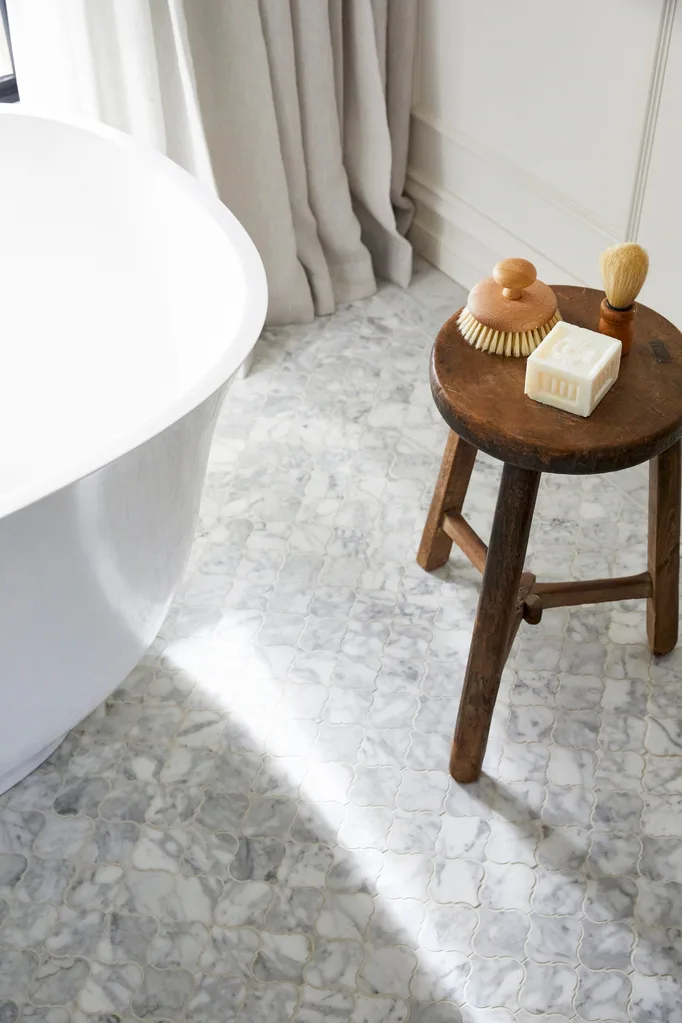
“The one thing that I can’t believe I left so late in life to do, that has made a huge difference, is putting underfloor heating in our bathrooms,” he shared on The Edit podcast.
Listen to Neale Whitaker on The Edit:
Neale took the plunge into underfloor heating while renovating his previous home in Berry, and was surprised at its affordability.
“I always imagined it would be a very expensive thing to do, and of course it’s actually not. Not if you’re already renovating your bathroom,” he continued. “But my goodness, it’s wonderful. It’s life changing in the colder months.”
The benefits of underfloor heating go beyond simply having a warm bathroom in winter. It can also help to reduce mould and even cut electrical costs. Underfloor heating (UFH) can also offer improved air quality when compared with some other forms of indoor heating, which is a boon for allergy sufferers.
Ready to heat your bathroom floors from below? Read on for our guide to underfloor heating.
Jump ahead:
Types of underfloor heating
Before we get into costs and installation, there are a few types of underfloor heating to wrap your head around:
- In-slab heating: These are built into the concrete slabs of your home’s foundation. These are easier to install in new builds, as opposed to renovations. Slab heating can be hydronic or electric, but hydronic (a water-based heating system) is more common.
- In-screed heating: The screed is a thinner layer of concrete poured over the slab. This is the better choice for renovators, and is most likely to be electric as opposed to hydronic. (But can be either!) Underfloor screed heating warms up quicker and is more popular in Australia than slab heating.
- Under-tile or carpet heating: In this type, the heating system is built into a mat laid beneath your floor. Think of it like an electric blanket beneath your tiles or carpets. Along with in-screed heating, underfloor heating mats are a popular, affordable option for Australian renovators.
Each of these systems will require specialised tradespeople to install. (Don’t worry, we’ll dive deeper into the pros and cons of each heating type below.)
How much does underfloor heating cost in Australia in 2026?
ServiceTasker says underfloor heating in Australia costs between $40 and $120 per square metre. Meanwhile, online trades directory Hipages, offers this cost breakdown for the different types of underfloor heating:
- In-slab hydronic: From $65 per sqm
- In-slab electric: From $40 per sqm
- In-screed hydronic: From $105 per sqm
- In-screed electric: From $115 per sqm
- Under-tile or under-carpet: From $70 per sqm
Smaller installations are likely to increase the cost per square metre. The average size of a bathroom in Australia is 6 square metres. If we use a more costly estimate of $120 per square-metre, it still only costs a total of $720 to do the whole bathroom.
This excludes potential extra costs, such as thermostats and boilers for hydronic systems. (Note: Some states offer rebates for certain types of hot water heaters.)
However, installation costs alone should not dictate your choice of UFH type. You’ll also need to consider how much the system costs to run, and the best system for your property.
How much does it cost to run?
We know how much it costs to install, but how much will underfloor heating cost to run?
This depends on a number of factors, including heating type, room size, building materials, local climate and room aspect. However, if you’re looking for a rough estimate, Hipages suggests it costs $50 per month to heat a small bathroom of 4 sqm or less. Meanwhile, Sustainability Victoria estimates that heating an entire small house (100 sqm) costs approximately $2,104 per year with electric in-slab heating. A large house (220sqm) costs $4,629 per year. (Note: Electric in-slab heating is the most expensive type of UFH to run.)
Solar panels can also be used to reduce the energy costs of underfloor heating.
Compatible flooring types
Almost all floor types are compatible with underfloor heating, including tiles, hybrid floorboards, and some carpets.
There are three main flooring types that typically don’t work with underfloor heating: Hardwood timber floorboards, cork flooring, and really thick carpets. Timber floorboards and cork can be damaged, cracked or warped by underfloor heating, meanwhile thick carpets (and underlays!) can act like an insulator, trapping heat in the floor and not letting it rise. Thermal Overall Grade (TOG) ratings measure a fabric’s insulative warmth. As a rule for heated floor coverings, like rugs and carpets, the TOG rating shouldn’t exceed 2.5.
Many people wonder if underfloor heating can be used with travertine floors, and the short answer is yes! Natural stone can work well with underfloor heating. Though may be slow to heat up, it will hold the heat for longer.
If you’re wondering which floor types are best for underfloor heating, The Classic Outfitter claims tiles are “especially suitable as they conduct and retain heat very effectively”. We would also add concrete to that list.
What are the benefits of underfloor heating
In the words of Neale Whitaker, underfloor heating really “punches above its weight in terms of the impact”. A relatively affordable addition, if you’re already renovating, underfloor heating can provide more than comfort.
Energy efficiency
For one, UFH can be quite energy efficient, allowing rooms to stay warm for longer. Instead of blasting your heater or air-conditioning intermittently during winter, underfloor heating can operate at a lower temperature, with a lower energy blast, and trap the heat in for longer.
Enhanced comfort
As heat rises, heating from the ground-up means a more even heat distribution. Plus, the heat actually makes contact with our bodies via our feet!
Cleaning and mould reduction
Principal designer at Bespoke Belle Building Design, Annabelle McQuillan, told Home Beautiful that underfloor heating is a godsend for bathroom cleaning. “This not only adds a touch of luxury, but it also helps dry out the space faster. That means less moisture hanging around and less cleaning in the long run,” she said.
Extending underfloor heating in your bathroom to your shower as well will also help it dry out quicker, making mould less likely.
Visual appeal
Avoid standalone heaters, air conditioning units and vents and clunky radiators by hiding your heater under your floor! For those sensitive to noise, underfloor heating is also silent compared to air-powered systems.
Property value
Underfloor heating is one of those luxury perks, like walk-in robes or butler’s pantries, that can add value to your property should you wish to sell.
What are the downsides to underfloor heating?
If you have the budget, there are few downsides to adding underfloor heating to your home, particularly if it’s only a small space, like a bathroom.
Difficult to install
Of course, installation can be tricky if you’re not already ripping up your floors or building them anew. However, if you’re already renovating, this obstacle is moot!
Additional floor height
Furthermore, some slab and screed heating can add height to your floors. Having said that, we’re talking a maximum additional floor height of around 50mm.
Not suitable for all flooring or furnishings
Finally, you may need to consider your floor type and also the placement of some furniture. While UFH is unlikely to damage furniture, rugs or bulky furniture items can trap the heat close to the floor, reducing its flow around the room. This can render your underfloor heating ineffective. Also, be careful not to lay floor heating systems in your pantry or beneath any cabinets with heat-sensitive products! If you have a walk-in pantry with a door, this could trap the heat inside and spoil your goods.
Slow with poor temperature control
The major downside is perhaps temperature control, particularly if you have in-slab floor heating systems. With slab heating, the room can take up to 2 days to warm up! So, there’s no such thing as arriving home after work and popping the heater on for a quick blast before bed. Given the slow-release of heat, it’s also tricky to make quick changes to the temperature.
Repairs
Another downside is repairs. Should something falter, part of your floor will need to be removed to address the issue. However, heating specialists Thermogroup say the need for repairs is “extremely rare”. In the unlikely case it needs repairing, Thermogroup also says the issue can be located to a small area, and won’t require removing a large area of flooring. Note that, if installed correctly, underfloor heating is extremely low-maintenance and largely failsafe.
Pros and cons: Compare different types of underfloor heating
| Type | Cost (Australia, 2026) | Pros | Cons |
| In-slab heating | Hydronic: $75 per sqm* Electric: $40 per sqm | Energy efficient; Most affordable installation; Best for new builds; Great thermal storage; Best for cold climates where constant heating is required; Best for whole-house or large open plan spaces; Even heat distribution | Slow! Can take 1-2 days to heat the slab before reaching your floors; Not easy to install; Bad for warm climate homes (most of Australia); May require additional boilers and pumps, adding to the expense |
| In-screed heating | Hydronic: $105 per sqm* Electric: $115 per sqm | Faster than slab heating; Best for renovations; The best ‘happy medium’ solution between slab and mat UFH, being faster than slab, but still offering some thermal storage | Comparatively expensive installation costs; Can add floor height (up to 50mm); Higher risk of cracking if installation is poor; Lower thermal storage than slab heating |
| Under-tile heating | $70 per sqm | Most affordable for renovators; Easy to install; Best for small rooms, particularly bathrooms; Best solution for small-scale renovations (single room); Best under tiles; Fastest to heat up; Least floor height increase; Easiest to retrofit | Not ideal for large rooms; Highest running cost for large rooms; Poor thermal storage; Not ideal underneath carpet or timber floors |
If you’re building or renovating, your contractor should be able to guide you through the best options for you and your home. However, if you’re looking for some help with independent research, bookmark this article and browse our pros and cons of each underfloor heating type.
*Excludes boiler cost

Related stories
Native ad body.
Native ad body.



Native ad body.