 Photography: Martina Gemmola
According to residential architect Ali Whelan, something is missing when our lives are too easy.
“There’s no point of friction between the supermarket and putting the food in your fridge. There’s no moment where you stop on that journey and experience some friction, [like] finding your keys, getting in your front door, that means there’s a moment to pause.”
You might go: ‘But I’m constantly losing my keys!’ However, Ali is coming from a design perspective; referencing how cars are increasingly keyless, our garages are accessed from within our homes, the garage doors are automated, and even grocery checkouts don’t require another person. Disruption is minimised and our journey is completely cut-off from incidental human interaction. Per Whelan, these “moments of friction” offer a vital chance for us to actually engage with our surrounds – and our neighbours.
Hear more about the future of housing on The Edit podcast:
This removal from community has resulted in some architects seeking ways to inject it back into our lives. As a Principal at Breathe architecture and design firm, Ali has worked on several projects with community-mindedness at their core. For example, the Nightingale Housing developments ensure that communal spaces, including productive gardens, outdoor cooking areas, communal laundries and unassigned parking lots are baked into their projects. The idea is to resist overly streamlined builds that can prevent us from interacting with our physical environments.
“It’s beautiful and connected in a lot of ways. It’s not necessarily something that we educate people on so much as it’s something that people buy into and really care about,” Ali told Home Beautiful editor, Elle Lovelock, during Metricon’s National Love of Design Summit. “People are actively seeking out social connection.”
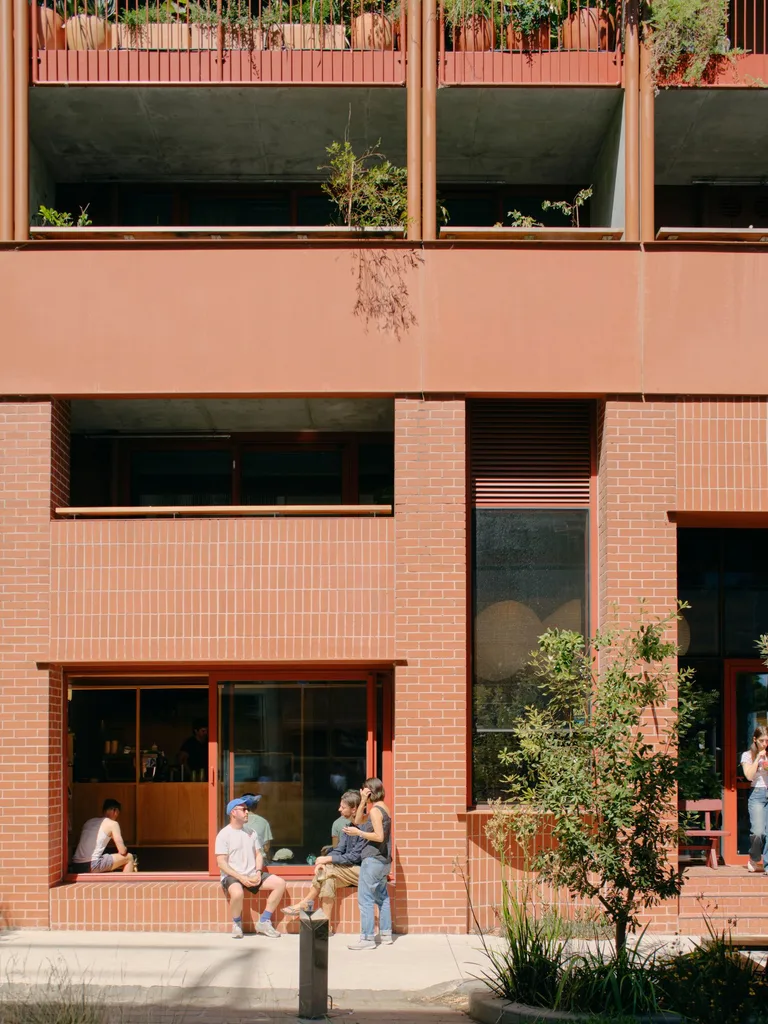
This year, Kennedy Nolan and Brickworks published a report into how future neighbourhoods could better respond to the needs of modern life. The results focused on sustainability, not only in terms of the environment, but in regard to long-term livability. This partly hinged on community.
“When we reflected on what makes a great suburb, a sense of community was certainly an important ingredient,” Patrick Kennedy, Principal at Kennedy Nolan told Home Beautiful. “Looking at the new suburbs being built now, we were conscious that the streets felt pretty closed-off and blank. Smaller front gardens, a dominance of garage doors and driveways, an absence of footpaths and virtually no trees to provide shade and protection combine to work against a shared public realm. And yet, it is the shared public spaces which provide a setting for informal community bonding.”
People are craving community
While some homeowners may relish anonymity in their communities, Ali’s observation that some people go out of their way to seek community was recently corroborated by The Block winner Steph Ottavio.
Steph, who won season 19 of The Block with her husband Gian, recently told Home Beautiful about how a strong sense of community was baked into her search for a new home.
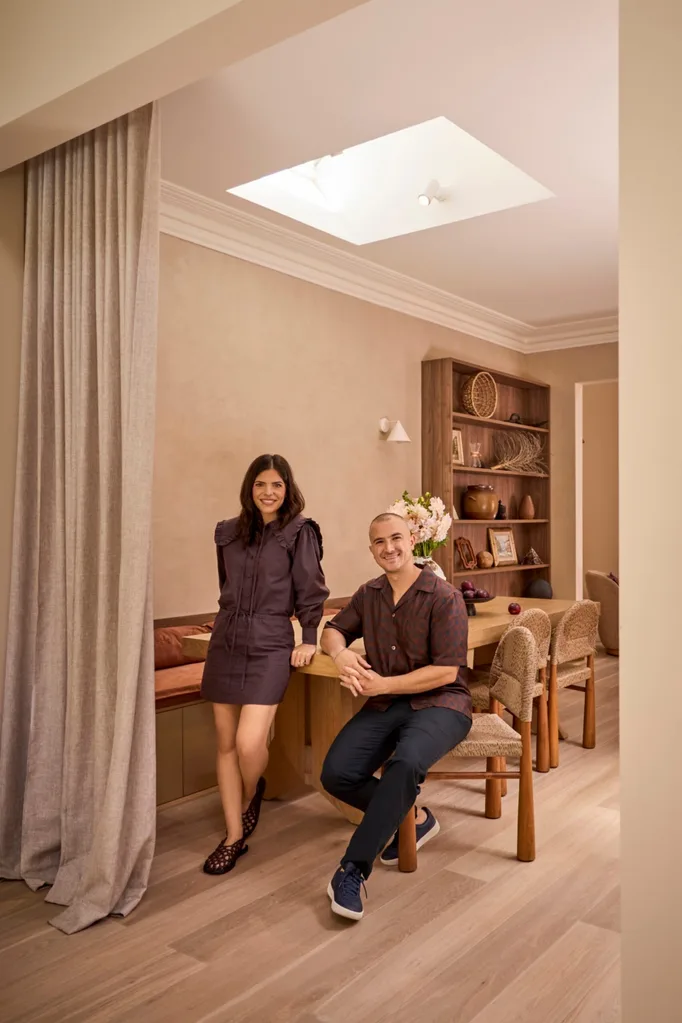
Following the elation of their reality TV win, Steph found herself with the “blues”, feeling a lack of purpose. On a quest to “strip back down to basics”, discover what she valued, and incorporate it back into her life, part of her healing involved a turn towards connection in community. “It was not so much about the house anymore, it was about finding a community,” she shared on The Edit podcast.
“It made me feel more alive. It made me realise we’re all in the same boat. You’ll chat to someone and they’ll be like, ‘Oh, you know what? I’m struggling with this, too.’ And straight away, there’s a weight off.”
— Steph Ottavio on discovering a sense of community
“It’s about understanding, in yourself, how to feel content and how to feel whole and not be so distracted by this constant dopamine fix that we need from everything. And for me, what that was when I really started to enjoy that sense of community,” she shares. “I loved being able to just wake up, watch the sunrise, have a tea, go to the markets, interact with people around me, speak more to, you know, the local people, talk to the people down the street, ask people how their day is going. It’s so simple.
“It made me feel more alive. It made me realise we’re all in the same boat. You’ll chat to someone and they’ll be like, ‘Oh, you know what? I’m struggling with this, too.’ And straight away, there’s a weight off.”
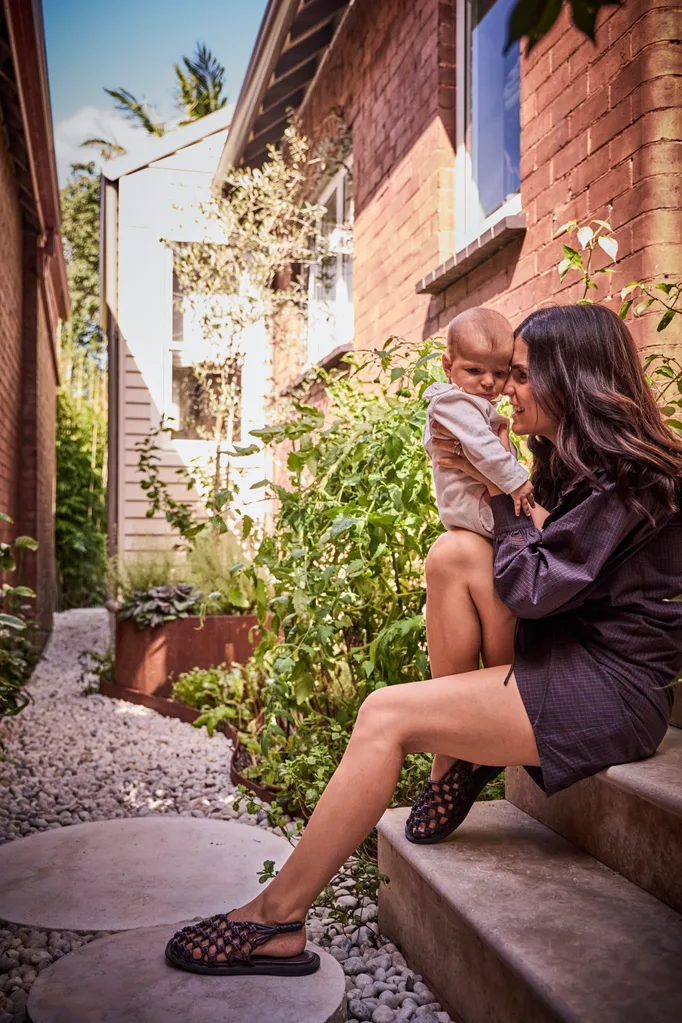
While homeowners may have their own methods of extending a hand to their neighboours, when it comes to designing urban housing projects, architects are faced with the challenge of creating ‘community’ before people have even moved in.
How architects are putting community back into builds
It can be difficult to encourage community without being dictatorial or patronising. After all, it’s impossible to tell someone how to live their lives at home. Therefore, the smartest architects are instead looking at ways to encourage ‘incidental’ contact between neighbours.
“Making you get out of your car before you’re in the garage, making you take the stairs instead of the lift, or catching the lift up to the rooftop to do your laundry—those moments of friction, they’re minor inconveniences that add a great deal of value to people’s lives, and I think that’s kind of not coherent with the most effortless, seamless way of living,” Ali shared at the National Love of Design Summit.
“Making you get out of your car before you’re in the garage, making you take the stairs instead of the lift, or catching the lift up to the rooftop to do your laundry—those moments of friction [are] minor inconveniences that add a great deal of value to people’s lives.”
— Ali Wheelan, architect
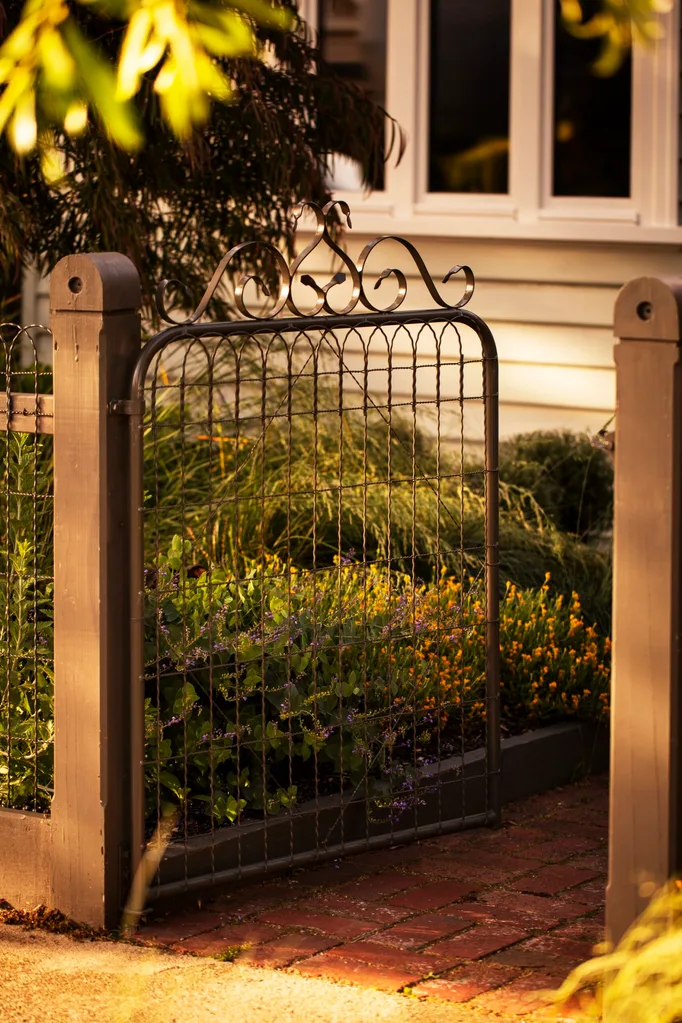
Meanwhile, Kennedy Nolan’s Our Next Neighbourhood project with Brickworks was creative in ways people could live independent lives, that didn’t remove them entirely from their neighbours. One idea was simply planting the right trees. “We could see some simple ways to address these concerns, [such as] through the introduction of canopy trees which provide shade and shelter and encourage lingering,” he shared.
“We proposed visually permeable facades so that it’s possible to glimpse life beyond front door and to encourage human connections. We also made places to perch and stop on the street for informal gatherings and to send a friendly psychological message.”
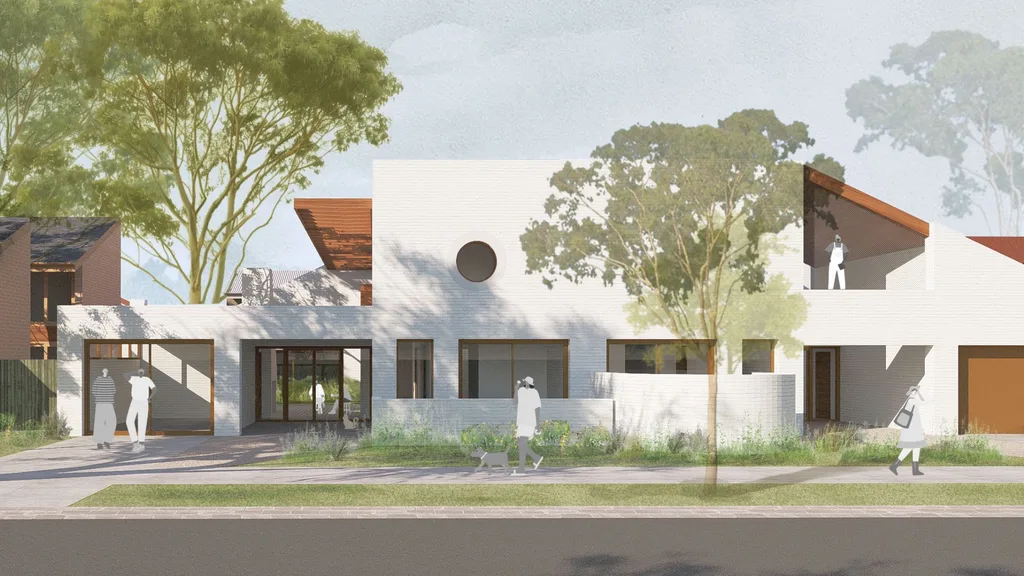
Adaptable spaces were also key for longevity and expanding our homes for our social benefit. “Finally, we looked at how garages can be adapted to other uses – as carports, which open sightlines and are places to play, or home offices, or granny flat or guest rooms. All these uses offer activation to the street and encourage human connection.”
Why is community important?
Connection with our surrounds, including our neighbours, is a vital aspect of our wellbeing. “Our research shows that when people engage with their communities, they experience improved mental well-being and reduced loneliness,” National Executive Officer of Relationships Australia, Nick Tebbey, said upon the launch of the organisation’s Neighbours Every Day campaign for 2025.
“This is crucial, as recent research reveals that nearly one in three Australians report feeling lonely, with over 15 percent saying they often or always feel lonely.”
Researchers behind the Loneliness and the Built Environment project in Finland also found that the design of buildings and neighbourhoods plays a crucial role in a solution for mental and social health.
“Well-designed spaces – such as accessible public areas, shared facilities, and thoughtfully planned housing – can encourage everyday encounters and strengthen community ties,” the project’s architectural lead and Professor of Architectural Design at Tampere University, Fernando Nieto, said.
In Australia, a demand for housing in most of our major cities has led to high-density solutions. While apartment living is often linked to greater isolation, Patrick suggests that proper design is part of the solution, and can help make dense housing more desirable as a long-term living solution.
“We believe that functional communities are healthier and happier, and that this in turn can lead to denser and more sustainable environments.”
Sustainability isn’t just an environmental buzzword. It is also about the longevity of a housing project and the wellbeing of its inhabitants. In fact, you’ll often find sustainable green spaces, like community gardens and parks, have the combined benefit of serving both environment and people.
“We believe that functional communities are healthier and happier, and that this in turn can lead to denser and more sustainable environments.”
— Patrick Kennedy, Principle at Kennedy Nolan
As more people require housing in urban spaces, experts across multiple realms agree: the key to success is in wellbeing. When you create communities instead of ‘housing’, it seems you can guarantee people will be happier in their homes for longer – a solution we would all love to see.
Watch the full panel discussion from Metricon’s National Love of Design Summit, or listen to The Edit on your chosen podcast platform.

Related stories
Native ad body.
Your home exterior has more potential than you think
Native ad body.
Native ad body.